The Power of Play: A Parents Guide to Age-Appropriate Activities for Every Stage of Childhood
Play is far more than a simple pastime for children—it is the primary vehicle through which they learn, grow, and make sense of the world around them. As a parent, understanding how to harness the power of age-appropriate play can transform everyday moments into profound developmental opportunities. When you tailor play experiences to your child’s cognitive, physical, emotional, and social stage, you don’t just keep them entertained; you actively nurture their curiosity, resilience, problem-solving abilities, and emotional intelligence. This guide walks you through each major developmental phase, offering practical, research-backed strategies for using play to support your child’s growth—from the first coos of infancy to the complex social negotiations of adolescence.
Infants (0–12 Months): Sensory Play and Bonding
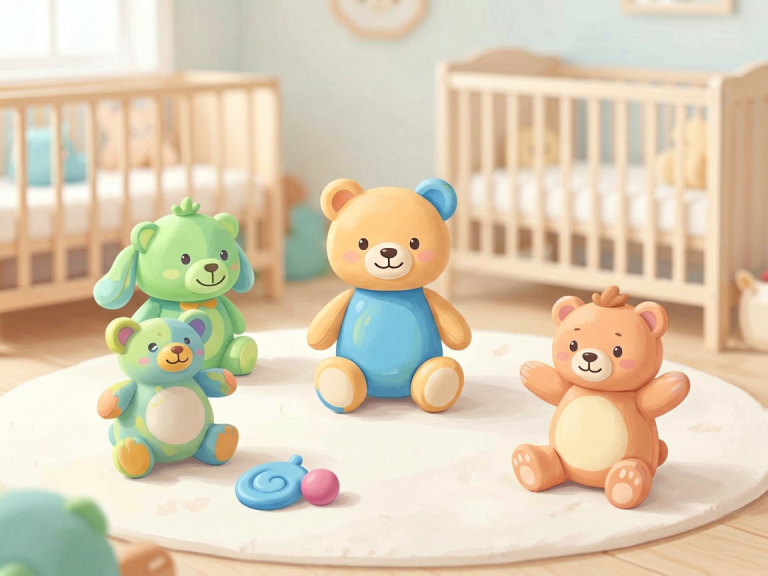
During the first year of life, babies explore primarily through their senses—sight, sound, touch, taste, and smell. Their brains are forming millions of neural connections every second, and parent-facilitated play is the catalyst that strengthens these connections. At this stage, “age-appropriate play” means offering safe, stimulating experiences that build trust and sensory awareness.
What parents can do:
Focus on face-to-face interactions. Hold your baby close and make exaggerated facial expressions; babies are hardwired to study human faces. Use a soft, sing-song voice to narrate simple actions like “I see your little toes!” This kind of responsive play teaches turn-taking and emotional attunement. Provide tactile objects with different textures—a crinkly cloth, a smooth wooden rattle, a plush toy with varied fabrics. Let your baby mouth these items (under supervision) because oral exploration is key at this age. Tummy time is also a form of play: place your baby on a mat with a mirror or black-and-white contrast cards to encourage neck strength and visual tracking.
Why it matters:
Sensory play builds the foundation for later cognitive skills. When you respond to your baby’s coos and babbles with warmth and enthusiasm, you are teaching the first lessons of communication and social connection. Age-appropriate play in infancy is not about fancy toys; it is about your presence, your voice, and your gentle guidance through the sensory world.
Toddlers (1–3 Years): Exploration, Imitation, and the Joy of “No”
Toddlers are on a mission to assert their independence while still clinging to the safety of their caregivers. Their play becomes more intentional, filled with imitation of adult behaviors and a growing desire to cause effects in their environment. This is the age of “me do it,” and parents can channel that determination into productive, age-appropriate play that builds language, motor skills, and early problem-solving.
What parents can do:
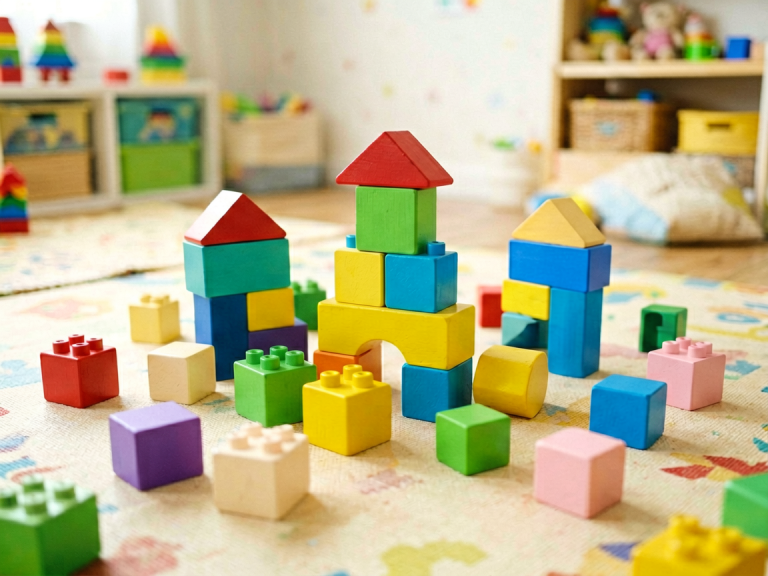
Embrace pretend play. Offer a toy phone, a play kitchen, or a set of plastic tools, and let your toddler imitate you talking on the phone or cooking. Join in by asking simple questions: “Are you making soup? What’s in it?” This builds vocabulary and narrative thinking. Provide open-ended materials like stacking blocks, shape sorters, and large puzzles with knobs—these encourage trial-and-error learning. Messy play is also crucial: finger painting with non-toxic washable paint, playing with sand or water tables, or squishing playdough. Yes, it creates cleanup, but it develops fine motor control and sensory integration.
Why it matters:
Toddlers learn cause and effect through physical play (“I push the block, it falls”). Imitation play strengthens social understanding and empathy. By offering choices during play (“Do you want to play with the red ball or the blue truck?”), you respect their budding autonomy while setting gentle limits. Age-appropriate play at this stage is about allowing safe risk-taking—climbing low structures, balancing on curbs—while staying close enough to catch them if they fall.
Preschoolers (3–5 Years): Creativity, Social Scripts, and Emotional Regulation
The preschool years are a golden age of imagination. Children begin to create elaborate scenarios, assign roles to themselves and others, and negotiate the rules of their fantasy worlds. They are also learning to manage big emotions—frustration, jealousy, excitement—and play is their most powerful tool for practicing these skills. Age-appropriate play for preschoolers should emphasize cooperative interaction, storytelling, and physical adventures.
What parents can do:
Encourage dramatic play by supplying dress-up clothes (simple scarves, hats, old neckties), puppets, and a “prop box” with everyday items like empty cereal boxes or a cardboard “spaceship.” Join in as a willing participant: “You are the dragon? What should I do? Run away or fight?” This builds narrative competence and emotional vocabulary. Introduce simple board games like Candy Land or memory matching games—these teach turn-taking, following rules, and handling losing. Outdoor play is essential: climbing playground structures, riding tricycles, digging in dirt, and playing chase all develop gross motor skills and risk assessment. Art projects with child-safe scissors, glue, and recycled materials foster creativity and fine motor precision.
Why it matters:
When parents facilitate pretend play, they help children work through real-life worries (a trip to the doctor becomes a game with stuffed animals). Cooperative games teach social problem-solving: “How can we both be the superhero?” (Answer: one flies, one has super strength.) The key is to follow the child’s lead while gently scaffolding—asking questions that extend the play rather than directing it. This approach builds confidence and emotional regulation.
School-Age Children (6–12 Years): Structured Play, Rule Systems, and Mastery
As children enter formal schooling, their play becomes more organized. They are drawn to games with rules—sports, board games, card games—and they crave mastery of skills. Peer relationships grow in importance, and play becomes a primary arena for learning cooperation, competition, and compromise. Age-appropriate play for school-age children should balance structured activities with plenty of free, unstructured time.
What parents can do:
Introduce more complex board games (checkers, chess, Settlers of Catan junior) to teach strategic thinking and delayed gratification. Encourage team sports, dance classes, or martial arts to develop discipline, teamwork, and physical fitness—but let the child choose the activity to avoid burnout. Build projects together: LEGO kits, science experiments, model airplanes, or simple woodworking. These teach following instructions, patience, and pride in accomplishment. Equally important is unstructured outdoor play: building forts, exploring nature, riding bikes, or inventing backyard games with neighborhood friends. Parents can facilitate by providing loose parts (sticks, ropes, old tires) and setting safe boundaries (a visible yard, a “check in” rule).
Why it matters:
At this stage, play teaches real-world skills: how to handle winning and losing gracefully, how to negotiate rule changes, how to work toward a long-term goal (e.g., finishing a 500-piece puzzle). Age-appropriate play means respecting the child’s need for autonomy in designing their own games while offering guidance when conflicts arise. Parents should resist the urge to overschedule—kids need downtime to invent, daydream, and just play without adult intervention.
Adolescents (13+ Years): Identity, Risk-Taking, and Social Connection
Teenagers often seem to abandon play in favor of screens and social drama, but the need for age-appropriate play remains profound. For adolescents, play becomes more abstract, social, and identity-driven. They explore who they are through role-playing (Dungeons & Dragons, improvisation, online multiplayer games), physical challenges (rock climbing, skateboarding, hiking), and creative expression (music, art, writing). Parents can use play to maintain connection during a time when teens naturally pull away.
What parents can do:
Respect their need for peer-oriented play. Host video game nights with friends—it’s not mindless; strategy games build collaboration and quick thinking. Encourage sports or outdoor activities that involve manageable risk, like mountain biking or surfing, under proper safety guidance. Engage in co-play that doesn’t feel childish: play a complex card game like Bridge, do a difficult escape room together, or learn a new skill like cooking a challenging recipe as a team. Family game nights with strategy-based games (Codenames, Ticket to Ride) can still be a hit if you treat teens as equals. Importantly, listen to their interests—if they love building in Minecraft, join their world and ask about their builds.
Why it matters:
Play in adolescence helps teens test boundaries in a safe environment. It provides a pressure valve for academic stress and social anxiety. When parents play alongside teens—without hovering or criticizing—they send a powerful message: “I see you, I respect your world, and I’m still here to have fun with you.” Age-appropriate play for teens is about trusting them to take calculated risks while offering unconditional support.
The Foundation: Your Attitude Toward Play
Across all ages, the most critical factor in using play effectively is your mindset. Children are exquisitely sensitive to adult approval and anxiety. If you treat play as a chore or a prescribed curriculum, your child will sense the pressure and the magic will fade. Instead, approach play with curiosity, humor, and a willingness to be silly. Let your baby drop the rattle ten times and hand it back with a laugh. Let your toddler “cook” you a mud pie and pretend to eat it. Let your preschooler win at Candy Land sometimes—and then gently help them lose another time. Let your school-age child teach you the rules of their favorite video game. Let your teen choose the music for a family car ride and sing along badly.
Age-appropriate play is not a rigid checklist; it is a dynamic dance between parent and child. It requires observation—watching what captures your child’s attention, what frustrates them, what they return to again and again. It requires flexibility—adjusting your expectations when they are tired, hungry, or overstimulated. And it requires presence: putting down your phone, looking into their eyes, and entering their world for a few minutes or an hour.
Conclusion: Play Is the Work of Childhood—and the Gift of Parenthood
From sensory games that build a baby’s brain to shared hobbies that bridge the gap with a teenager, age-appropriate play is a thread that weaves through every stage of development. As a parent, you are not just a supervisor of play; you are a co-creator, a cheerleader, a gentle guide, and sometimes the audience. By matching your playful interactions to your child’s evolving abilities and interests, you provide the richest possible environment for learning, connection, and joy.
Remember that the best play does not require fancy equipment or elaborate plans. A cardboard box can be a castle, a car, or a spaceship. A walk in the park can become an adventure in bug hunting or cloud watching. Laughter shared over a silly game is a bonding experience no app can replicate. So put away the screens, trust your instincts, and play—with intention, with love, and with the beautiful knowledge that in every moment of play, you are building your child’s future.