The Power of Pretend: Engaging Play Activities at Home to Foster Imagination and Development
Introduction: Why Pretend Play Matters at Home
In an era dominated by screens, structured schedules, and academic pressure, the humble act of pretend play often gets overlooked. Yet, for children, pretending is not merely an entertaining pastime—it is a fundamental building block of cognitive, social, and emotional growth. When children engage in pretend play at home, they step into worlds of their own creation, where they can be superheroes, chefs, doctors, or astronauts. These spontaneous, imaginative moments are far more than child’s play; they are the testing grounds for problem-solving, empathy, language development, and self-regulation. The home environment, with its familiar yet flexible resources, offers an ideal stage for such transformative activities. This article explores a wide variety of pretend play activities that parents and caregivers can easily set up at home, explains their developmental benefits, and provides practical tips for fostering a rich imaginative environment—all while ensuring that the fun never stops.
The Cognitive and Emotional Benefits of Pretend Play
Before diving into specific activities, it is essential to understand why pretend play holds such a critical place in child development. Research in developmental psychology consistently shows that children who engage in regular, high-quality pretend play demonstrate stronger executive function skills, including working memory, inhibitory control, and cognitive flexibility. When a child pretends that a cardboard box is a spaceship, they must hold that fictional premise in mind, suppress the reality of the box, and adapt their behavior accordingly—a sophisticated mental exercise.
Emotionally, pretend play provides a safe space for children to process complex feelings. A child who feels anxious about a new sibling might role-play being a nurturing parent to a doll, thereby gaining a sense of control. Similarly, pretending to be a brave knight allows a child to confront fears in a manageable, imaginative context. Socially, when siblings or friends join in, children learn negotiation, turn-taking, and compromise. The home, as the primary environment where children feel most secure, becomes the perfect laboratory for these vital lessons.
Age-Appropriate Pretend Play Activities at Home
For Toddlers (Ages 1–3): Simple Sensory and Mimetic Play
At this stage, pretend play is just beginning to emerge. Toddlers often imitate everyday actions they observe in adults. Providing them with safe, simple props can ignite their first imaginative sparks. One highly effective activity is “Kitchen Chef” —hand a toddler a set of plastic bowls, spoons, and empty food containers. Let them “cook” by scooping pretend ingredients like dried beans or water (with supervision). They will stir, pour, and taste, all while developing fine motor skills and understanding cause-and-effect relationships.
Another favorite is “Animal Sounds and Movements.” Encourage your toddler to pretend to be a cat, a dog, or a lion. Get down on all fours and meow or roar together. This not only builds vocabulary but also strengthens gross motor coordination and body awareness. For a quieter moment, create a “Teddy Bear Picnic.” Arrange a small blanket on the floor, invite a few stuffed animals, and pretend to share a snack. Your toddler will practice social routines like offering food and saying “please” and “thank you.”
For Preschoolers (Ages 3–5): Expanding Narratives and Role-Playing
Preschoolers’ imaginations blossom rapidly. They can now hold more complex storylines and take on distinct roles. One classic activity is “Doctor’s Office.” Gather a toy medical kit (or household items like a flashlight, bandages, and a notepad) and take turns being the doctor and the patient. This activity helps children demystify medical experiences, reduces anxiety about check-ups, and builds empathy as they care for their “patients.” You can extend the game by making “prescriptions” on small slips of paper and asking the patient to “rest” or “drink juice.”
Another excellent option is “Grocery Store Adventure.” Set up a mini shop using pantry items, a cash register (or simply a calculator), and play money. Your preschooler can be a shopper or a cashier. They will practice counting, sorting, and categorizing—all while engaged in imaginative commerce. To add literacy, have them write simple shopping lists. Moreover, this activity teaches real-world skills like waiting in line and exchanging goods.
“Pirate Treasure Hunt” offers an opportunity for active, cooperative play. Create a simple map with landmarks like “the sofa mountain” and “the lamp island.” Hide a small treasure (a toy or a treat) and let your preschooler navigate to find it. Along the way, they must overcome pretend obstacles: a shark-infested rug or a bridge made of pillows. This boosts problem-solving, spatial awareness, and physical activity.
For Early School-Age Children (Ages 5–8): Complex Scenarios and Collaboration
Children in this age group enjoy more elaborate settings and prolonged engagement. “Restaurant” is a perennial hit. Discuss a menu together—perhaps pizza, salad, and ice cream. Set up a table with real plates and napkins, and take orders on a notepad. One child can be the chef, another the waiter, and others the customers. They will learn sequencing (taking orders, cooking, serving), social etiquette, and even basic math when calculating a pretend bill. For extra fun, use play-dough to create fake food items.
“Space Station” requires minimal materials and maximum imagination. A large cardboard box can become the command module; string lights or a flashlight can simulate stars. Children can assign roles: commander, scientist, pilot. They might “repair” the ship using toy tools, “communicate” with mission control via a cardboard walkie-talkie, or “collect rock samples” from the carpet. This activity naturally integrates problem-solving (how to fix the engine), collaboration (working as a team), and vocabulary development (learning terms like orbit, gravity, or astronaut).
“Fairy Tale Reenactments” allow children to become characters from beloved stories. After reading *The Three Little Pigs*, gather pillows for straw, sticks, and “bricks” (blocks). Act out the tale, with one child being the big bad wolf (who must learn to regulate his huffing and puffing) and others being the pigs. This deepens comprehension, encourages retelling, and sparks creative variations: what if the pigs built a house of candy? Such tweaks foster divergent thinking.
Creating an Enriching Environment for Pretend Play at Home
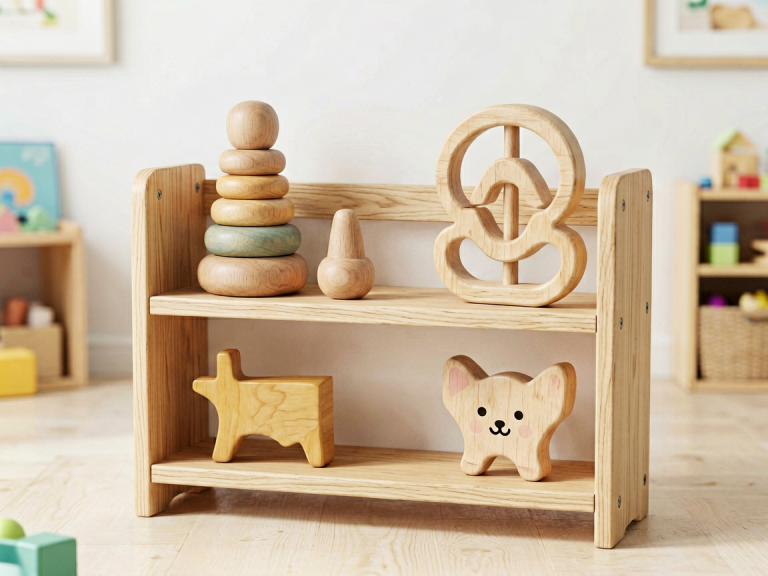
To support these activities, the physical home environment can be thoughtfully arranged. Designate a “pretend corner” or a small cabinet where props are stored. Rotate items periodically to maintain novelty. Keep a bin of dress-up clothes—old scarves, hats, ties, aprons, and costume jewelry. Simple materials like cardboard boxes of various sizes, fabric scraps, and empty containers are far more valuable than expensive toys because they inspire open-ended use. Place a child-sized table and chairs in the area; they can become a doctor’s desk, a restaurant table, or a spaceship console.
Equally important is the psychological environment. Children need unstructured time—not every moment planned or directed. Allow them to initiate their own pretend play without interruption. Resist the urge to correct “unrealistic” scenarios (a dinosaur driving a car is perfectly fine). Instead, join in respectfully by asking open-ended questions: “What happens next?” or “How does the patient feel?” This affirms their creative authority.
The Role of Parents and Caregivers: Intentional Participation
While independent play is valuable, adult involvement can elevate pretend play to new levels. Parents can act as “play partners” without dominating the narrative. For instance, if your child is building a castle from blocks, ask, “Is there a dragon nearby? Should I be the knight or the dragon?” Follow their lead. When you take on a role, use exaggerated voices and gestures—your enthusiasm is contagious.
However, it is equally important to step back. Observe your child’s play for cues about their inner world. A child who repeatedly pretends to be a lost puppy may be working through feelings of separation anxiety. A child who always insists on being the boss might be asserting independence. Use these insights to offer comfort or to discuss emotions gently later.
Another powerful tool is parallel play: engage in your own pretend activity nearby. If you are “cooking” with play dough while your child is “fixing” a cardboard car, you model imagination without intruding. Verbally narrate your own actions: “I am stirring the soup. I think it needs more salt.” This exposes your child to narrative structure and vocabulary.
Overcoming Challenges: When Pretend Play Seems Difficult
Some children struggle to engage in pretend play. They may be more concrete in their thinking, have limited exposure, or face developmental delays. In such cases, start with highly structured scenarios. Use a familiar routine: “Let’s pretend we are brushing our teeth” while using a pretend toothbrush. Gradually introduce more abstract elements. Provide visual cues: a picture of a farm can prompt a child to pretend to feed the animals. If a child is resistant, do not force it. Instead, model pretend play yourself and invite them to join when they show interest.
For children with special needs, pretend play can be adapted. A child on the autism spectrum might benefit from social stories that outline the steps of a pretend activity. Use clear, repetitive language and predictable sequences. For example, a “tea party” can follow a script: first, set the table; second, pour the tea; third, take a sip; fourth, say “yum.” Gradually, the child may internalize the script and improvise.
Conclusion: The Lasting Gift of Pretend Play at Home
Pretend play activities at home are not luxuries; they are necessities for holistic development. Whether a child is building a blanket fort, selling tickets for a cardboard train, or nursing a teddy bear back to health, they are actively constructing meaning, managing emotions, and sharpening their minds. The beauty of these activities lies in their simplicity—no expensive gadgets or elaborate setups required. A cardboard box, a few kitchen utensils, and a willing heart are enough to launch a thousand adventures.
As parents and caregivers, we have the privilege of being gatekeepers to this magical world. By carving out time, providing loose parts, and joining in with genuine curiosity, we gift our children with the most precious resource: the confidence to imagine, the skills to collaborate, and the joy of creating their own stories. In a world that often rushes children toward measurable outcomes, pretend play reminds us that the deepest learning happens when the play is real, the laughter is loud, and the possibilities are endless. So go ahead—put on that silly hat, pretend to drink the invisible juice, and let your child lead you into their kingdom. The journey will enrich both of you far more than any app or worksheet ever could.