The Power of Screen-Free Play: Nurturing Your Two-Year-Olds Development Without Digital Distractions
In an era where tablets and smartphones have become ubiquitous babysitters, the two-year-old stands at a critical crossroads of development. At this age, a child’s brain is forming up to one million neural connections per second, laying the foundation for language, motor skills, emotional regulation, and social understanding. Yet many parents, exhausted and seeking a moment of peace, hand their toddler a screen without fully realizing what is being traded away. Screen-free play is not merely a nostalgic ideal; it is a biological necessity for the two-year-old. This article explores why unplugged play matters, what types of activities best support a toddler’s growth, and how to create an environment where creativity and connection flourish without a single pixel.
Why Screen-Free Play Matters for Two-Year-Olds
The two-year-old brain is wired for hands-on, multisensory exploration. Every time a toddler picks up a block, feels the texture of sand, or hears the crinkle of paper, their brain is making sense of the physical world through touch, movement, and cause-and-effect feedback. Screen-based interactions, by contrast, are passive and two-dimensional. A study published in *JAMA Pediatrics* found that higher screen time in toddlerhood was associated with lower performance on developmental screening tests, particularly in communication and problem-solving skills. The reason is simple: screens deliver pre-packaged stimuli that require little active thought, whereas unstructured play demands that the child plan, experiment, and adapt.
Moreover, screen time at age two often displaces crucial experiences. When a toddler stares at a glowing rectangle, they are not practicing balance, learning to share, or discovering how a tower of blocks collapses. They are also missing out on the rich emotional feedback that comes from real human interaction—the raised eyebrow of a parent, the gentle correction of a caregiver, the joyous laugh of a sibling. These micro-moments teach empathy, patience, and resilience in ways no app can replicate. Screen-free play, therefore, is not just about avoiding harm; it is about actively building the neural architecture for a lifetime of learning.
The Building Blocks of Toddler Play: Sensory, Motor, and Social Foundations
To design effective screen-free play for a two-year-old, we must first understand what their developing body and mind crave. At this stage, children are driven by an insatiable curiosity about how things feel, move, and interact. Their play naturally falls into several interconnected categories, each serving a distinct developmental purpose.
Sensory Play: The Foundation of Learning
Sensory play engages the five senses—touch, sight, sound, smell, and taste—in a way that screens cannot replicate. For a two-year-old, pouring rice through a funnel, squishing playdough, or painting with water on a warm sidewalk provides rich tactile feedback that strengthens neural pathways. Sensory activities also promote calm and focus. When a toddler is overwhelmed, sensory bins filled with beans, sand, or cooked pasta can become a soothing, grounding experience. The key is to offer safe, open-ended materials that invite exploration without a prescribed outcome.
Gross Motor Play: Building Strength and Coordination
Two-year-olds are natural movers. They are learning to run, jump, climb, and balance. Screens keep them seated, but active play builds the core strength, leg muscles, and spatial awareness that will later support handwriting, sports, and even posture in school. Simple activities like pushing a wagon, crawling through a cardboard tunnel, dancing to music, or playing “follow the leader” help develop both large muscles and the vestibular system responsible for balance. Outdoor play is especially valuable because uneven terrain, grass, and gentle slopes challenge the body in ways a flat floor cannot.
Fine Motor Play: Preparing the Hands and Mind
At two, a child’s fingers are gaining dexterity. They begin to hold crayons with a tripod grip, thread large beads, and turn pages of a board book. Fine motor play is essential for future writing and self-care tasks like buttoning or using utensils. Screen-free activities such as stacking rings, fitting shape sorters, tearing paper, or scooping and pouring in water play strengthen the small muscles of the hands and hand-eye coordination. These tasks also teach persistence: a child who struggles to fit a square peg into a round hole learns to problem-solve and try again.
Pretend Play: The Gateway to Social and Emotional Intelligence
Between 24 and 36 months, children begin to engage in symbolic play—using one object to represent another. A cardboard box becomes a car, a banana becomes a telephone. This type of play is crucial for abstract thinking and language development. When a toddler “feeds” a stuffed animal or “drives” to the grocery store, they are practicing narrative structures, learning to take turns, and exploring emotions. A screen cannot offer the same depth of imaginative engagement because it dictates the narrative. In screen-free pretend play, the child is the director, the actor, and the audience all at once.
Practical Screen-Free Play Ideas for Everyday Life
Knowing the categories is one thing; implementing them daily is another. Parents often feel pressure to entertain their toddler with elaborate activities, but the simplest setups are often the most effective. Below are concrete, low-cost ideas that align with a two-year-old’s developmental stage.
Sensory Bins and Water Play
Fill a shallow plastic bin with dry rice, lentils, or oatmeal. Add scoops, small cups, and a few toy animals. For water play, fill a basin with a few inches of warm water and provide plastic containers, funnels, and sponges. Always supervise water play closely. Children can spend 20 minutes pouring and stirring—an eternity in toddler time—while learning volume, cause and effect, and vocabulary like “empty,” “full,” “wet,” and “dry.”
Building and Manipulatives
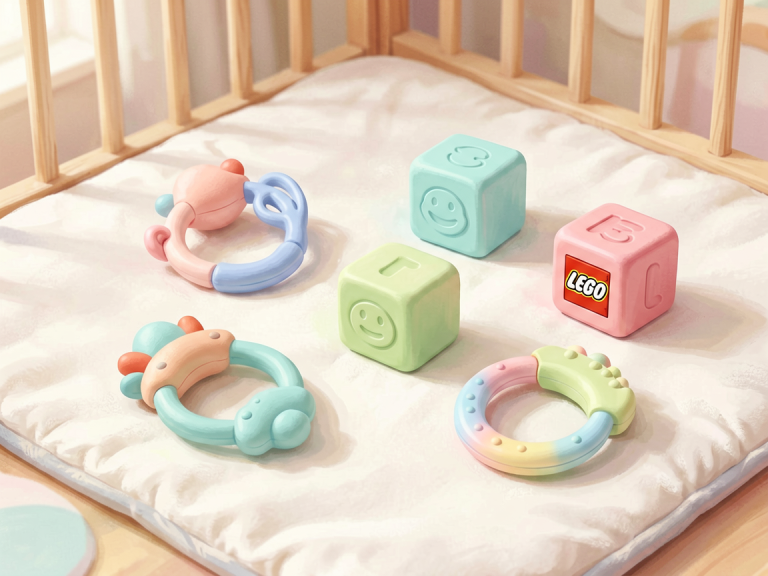
Large wooden blocks, Duplo bricks, or even empty cardboard boxes encourage stacking, balancing, and knocking down. Two-year-olds love repetition; they will build the same tower and crash it ten times. This repetition is actually how they master spatial relationships and develop the persistence that will serve them in later problem-solving. Add a few toy cars or figures to extend the play.
Art Without the Mess (Well, Almost)
Offer large crayons, washable markers, and finger paints on a highchair tray or an old plastic tablecloth. The goal is not a recognizable picture but the process of making marks. Drawing scribbles strengthens grip and allows the child to express emotions. For a no-mess alternative, give them a paintbrush and a cup of water to “paint” on construction paper, sidewalks, or even the side of the house.
Music and Movement
Put on simple, upbeat songs and let your toddler march, stomp, clap, and spin. Provide simple instruments like a shaker (fill a sealed bottle with rice) or a small drum. Clapping along to a rhythm develops auditory processing and coordination. You can also play “freeze dance” where the child stops when the music stops—a fun way to practice impulse control.
Outdoor Adventures
The backyard or a local park is a treasure trove of screen-free stimulation. Collect leaves, sticks, and rocks. Dig in the dirt with a small shovel. Blow bubbles and chase them. Push a toy lawnmower or a stroller down the sidewalk. Outdoor play also exposes children to natural light, which regulates circadian rhythms and promotes better sleep—a welcome benefit for any parent.
Creating a Screen-Free Environment That Works
A well-intentioned parent may want to eliminate screens, but the pull of a glowing phone is powerful—for both child and adult. To succeed, you must design your home environment to support screen-free play.
Begin by establishing clear boundaries. Keep televisions and tablets out of the playroom and away from eating areas. Designate a “device charging station” in a central but off-limits location, such as the parent’s bedroom or a high shelf. When a device is not visible, the temptation diminishes. Next, organize toys by category in low, open bins so your toddler can choose independently. Rotating toys every week or two keeps them fresh without overwhelming the child.
Equally important is the parent’s own screen use. A two-year-old learns by imitation. If they see you scrolling during playtime, they will crave that glowing object. Practice intentional screen-free periods—even 30 minutes of fully present, eye-contact play can fill a toddler’s emotional cup. Put your phone in another room and engage in parallel play: you build with blocks near them, or you draw while they draw. Your presence is the most powerful play material of all.
Overcoming Challenges: When Your Toddler Demands Screens
Despite best intentions, some toddlers will beg for screens. This is normal. Two-year-olds have not yet developed impulse control, and screens are designed to be addictive. When a tantrum erupts over a denied tablet, do not panic. The key is to redirect, not fight.
First, acknowledge the feeling: “I know you want to watch your show. It’s hard to stop. But we are going to have more fun building a fort.” Then physically guide them toward a different activity. Sometimes, simply sitting on the floor and starting to play yourself will draw them in. Use a timer for especially tough transitions: “We can watch one short video after lunch, but now it’s playtime.” The child learns that screens are not forbidden but are limited to specific times.
Another effective strategy is to create a “yes” environment. Instead of constantly saying “no” to screens, say “yes” to other engaging options. Keep a basket of special, screen-free toys that only come out when the screen desire arises—a set of colorful nesting cups, a pop-up toy, or a sensory bottle. Novelty can break the cycle.
The Long-Term Gifts of Screen-Free Play
Choosing screen-free play for a two-year-old is not about perfection. It is about prioritizing what matters most: real-world experiences, connection, and the slow unfolding of a child’s unique imagination. The toddler who stacks blocks today is building the neural framework for abstract thought. The toddler who splashes in a puddle is learning physics through her skin. The toddler who pretends a cardboard tube is a trumpet is developing creativity that no algorithm can replicate.
As parents, we are constantly told that we are not doing enough. But in the quiet moments of unstructured play, something profound happens. A child learns to entertain herself. She discovers the joy of mastery. She feels the warmth of a parent watching, smiling, and present. These are the moments that shape a lifetime of curiosity, resilience, and love for learning. Put down the remote. Pick up the blocks. The screen can wait—your two-year-old cannot.