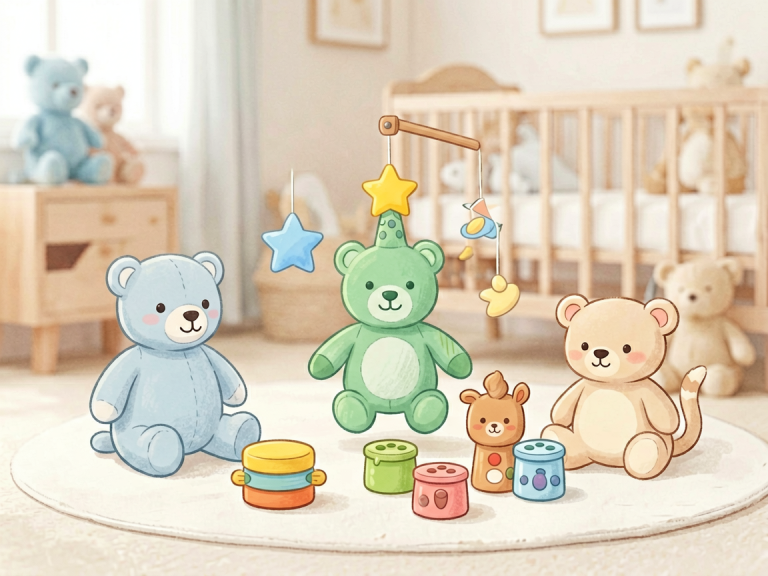
The Power of Screen-Free Play: Reimagining Preschoolers’ Time Away from TV
In an age where digital devices are woven into the fabric of daily life, many parents find themselves relying on television as a convenient babysitter for their preschoolers. A half-hour cartoon here, an educational show there—it adds up quickly. Yet research consistently warns that excessive screen time in early childhood can hinder language development, reduce attention spans, and limit opportunities for creative exploration. The solution is not merely to restrict TV, but to actively replace it with something richer: screen-free play. For preschoolers, whose brains are developing at an astonishing rate, unstructured, hands-on play is not just an alternative—it is a necessity. This article explores why screen-free play should take center stage, how it nurtures essential skills, and practical strategies for families to make the transition both joyful and sustainable.
—
The Hidden Costs of Television Time
It is easy to assume that educational television offers preschoolers a head start in learning. Programs like *Sesame Street* or *Bluey* are carefully crafted to teach letters, numbers, and social skills. However, even high-quality screen content cannot replicate the interactive, multi-sensory experience of real-world play. When a child watches TV, they are a passive recipient of images and sounds. Their eyes move, but their body remains still; their mind processes information, but they do not act upon it. Over time, this passivity can weaken the neural pathways responsible for initiative, problem-solving, and physical coordination.
Moreover, excessive screen exposure has been linked to delayed speech in toddlers. A 2019 study published in *JAMA Pediatrics* found that for every additional 30 minutes of screen time per day, children had a 49% increased risk of expressive language delay. The reason is simple: language develops through back-and-forth conversation, facial expressions, and real-time responses—elements that a television cannot provide. Screen time also displaces sleep, outdoor activity, and family interaction, all of which are critical for a preschooler’s well-being. Reducing TV time is therefore not about depriving children of entertainment, but about reclaiming the hours needed for genuine growth.
—
Unlocking Creativity Through Unstructured Play
One of the most profound benefits of screen-free play is its ability to ignite a child’s imagination. Without a screen dictating the narrative, a preschooler becomes the director of their own world. A cardboard box transforms into a spaceship; a handful of pebbles becomes a counting game; a blanket over a chair creates a secret fort. This kind of open-ended play—often called “loose parts play”—encourages divergent thinking, the cognitive skill of generating multiple solutions to a single problem.
Consider a child building with wooden blocks. There is no right or wrong way. They may stack, topple, rearrange, and experiment for an hour, learning about balance, gravity, and cause-and-effect. Compare this to an app-based building game, where the rules are pre-programmed and the possibilities are limited by the software’s design. In unstructured play, the child is the architect of their own learning. They practice persistence when a tower falls, and they celebrate their unique creation. This sense of agency builds confidence that a passive viewing experience can never match.
—
Physical Development: Moving Beyond the Couch
Preschoolers are naturally kinetic beings. Their bodies crave movement—running, jumping, climbing, balancing, and manipulating objects. Television time, by definition, requires stillness. Replacing even 30 minutes of screen time with active play can have a remarkable impact on gross and fine motor skills. Simple activities like playing catch, digging in the sand, or threading beads strengthen hand-eye coordination and core muscles. Outdoor play, in particular, exposes children to varying textures, temperatures, and terrains, which stimulates the vestibular system and supports spatial awareness.
Screen-free play also fights the rising tide of childhood obesity. According to the World Health Organization, children aged 2–4 should have no more than one hour of sedentary screen time per day, and even that should be replaced with active play whenever possible. When parents swap a TV show for a game of “Simon Says” or an obstacle course in the living room, they are not just passing time—they are laying the foundation for a lifetime of healthy habits.
—
Social and Emotional Learning in Real Time
Television characters can teach empathy in theory, but real empathy is learned through face-to-face interaction. When preschoolers engage in pretend play together, they negotiate roles, share materials, and resolve conflicts. “You be the doctor and I’ll be the patient,” requires them to read emotions, take turns, and cooperate. These are complex social skills that cannot be learned from a screen. Screen-free play also allows children to experience boredom—a crucial, often overlooked emotion. Boredom sparks creativity; it forces the child to invent their own amusement rather than waiting for a TV show to do it for them.
Furthermore, unstructured play gives children the chance to regulate their own emotions. A child who becomes frustrated while building a puzzle learns to take a deep breath, try a different approach, or ask for help. These coping mechanisms develop resilience. In contrast, a screen-based activity often ends when the episode ends, leaving the child without a natural opportunity to wrestle with difficulty.
—
Practical Steps: How to Transition from TV to Play
Making the shift from television to screen-free play does not have to be abrupt or stressful. The key is to start small and create an environment that invites play. Here are evidence-based strategies:
1. Redesign the Play Space
Remove distractions. Store tablets and remotes out of sight, and instead arrange accessible, open-ended toys. A low shelf with wooden blocks, art supplies, a few animal figurines, and dress-up clothes invites exploration. Rotate toys weekly to maintain novelty.
2. Establish Screen-Free Zones and Times
Designate the dining table and all bedrooms as screen-free zones. Set “no TV” windows, such as the first hour after waking and the hour before bedtime. Use that time for reading, music, or outdoor play.
3. Model Playfulness
Preschoolers imitate adults. If parents put away their phones and join in—building a Lego tower, drawing a picture, or simply sitting on the floor—the child internalizes that play is valued even by grown-ups.
4. Embrace Boredom
When a child says “I’m bored,” resist the urge to turn on the TV. Instead, offer a simple prompt: “What could you make with these empty boxes?” Let them struggle with the question. The pause is productive.
5. Schedule Outdoor Time Every Day
Nature is the ultimate screen-free playground. Even 20 minutes in the backyard or a nearby park encourages running, observing insects, collecting leaves, and inventing games. Outdoor play reduces stress and improves attention.
6. Create a “Play Date” Culture
Invite a friend over for intentional, unstructured play. Without screens, children naturally engage in cooperative storytelling or physical games. Parents can step back and allow the children to navigate interactions themselves.
—
The Long-Term Impact: Why This Matters
Replacing TV time with screen-free play is not a minor lifestyle tweak—it is an investment in a child’s cognitive, physical, and emotional future. Studies show that children who engage in frequent, high-quality pretend play have stronger executive function skills, including self-control, working memory, and cognitive flexibility. These abilities are better predictors of academic success than early reading or math drills. Moreover, children who learn to entertain themselves through play grow into independent thinkers who do not rely on external stimulation to feel satisfied.
Parents often worry that cutting screen time will lead to tantrums or complaints. Short-term resistance is common, but it fades quickly when the new routine becomes normal. The first few days may be challenging; by the end of the first week, most children discover the joy of deep engagement. They start to prefer the richness of building a block city over the flatness of a cartoon.
—
Conclusion: A Call for Playful Revolution
In a culture that constantly pushes screens into the hands of the youngest children, choosing screen-free play is a conscious act of rebellion—and of love. It says to a preschooler: *You are more interesting than any show. Your imagination is powerful. Your body deserves to move. Your relationships matter.* The time we reclaim from television is not empty time; it is fertile ground for growth, discovery, and connection. By filling those hours with free play, we give our children the greatest gift of all—the chance to be the authors of their own childhood stories.
Let the TV off, and let the play begin.