The Power of Unplugging: Screen-Free Activities to Foster Language Development
Introduction
In an era dominated by digital screens, children’s language development is increasingly shaped by passive consumption of video content, apps, and online games. While educational technology can offer benefits, excessive screen time has been linked to reduced conversational turns, delayed vocabulary acquisition, and weaker pragmatic skills. The antidote lies not in banning screens entirely, but in intentionally integrating rich, screen-free activities that demand active participation, imagination, and real-time interaction. This article explores a range of evidence-based, engaging, and practical screen-free activities that parents, caregivers, and educators can use to nurture language skills—from vocabulary growth and syntactic complexity to narrative ability and social communication.
Why Screen-Free Matters for Language
Before diving into specific activities, it is essential to understand the linguistic advantages of unplugged interactions. Screen-based learning often relies on one-way communication: a child watches or listens without needing to respond meaningfully. In contrast, face-to-face, screen-free activities create opportunities for back-and-forth exchanges, turn-taking, and immediate feedback. These interactions support the development of what linguists call “contingent responsiveness”—the ability to adjust one’s language based on a partner’s cues. Moreover, screen-free settings allow for multisensory engagement (touch, smell, movement), which strengthens memory and word association. Finally, reducing screen time frees up space for the kind of repetitive, playful, and emotionally charged language that children need to master complex structures.
Engaging in Meaningful Conversations
One of the most powerful yet often overlooked activities is simply talking with purpose. But “talking” needs structure to be maximally effective. Instead of asking closed questions like “Did you have fun today?” adults can use open-ended prompts such as “What was the most interesting thing that happened this morning?” or “How did you feel when your friend shared the toy?” These questions require children to recall, sequence events, and express emotions—all of which strengthen narrative language.
A particularly effective technique is “elaborative reminiscing.” During a quiet moment—perhaps at dinner or before bed—adults can guide children to retell a shared experience in detail. For example, after a trip to the park, a parent might say, “Remember when we saw that big dog? What color was its fur? And what did it do when you threw the stick?” This kind of dialogue forces the child to retrieve specific vocabulary (e.g., “golden retriever,” “fetch,” “wagged”), use past-tense verbs, and organize thoughts into a coherent sequence. Research shows that children whose parents engage in elaborative reminiscing develop stronger autobiographical memory and more advanced narrative skills.
Storytelling and Oral Narratives
Long before children learn to read, they become storytellers. Encouraging oral storytelling—without books, screens, or scripts—builds creativity, sequencing, and expressive language. One structured game is “Story Circle,” where a group of children or family members take turns adding a sentence to a communal tale. The first person starts with “Once upon a time, there was a tiny dragon who lived in a teapot.” The next adds, “Every morning, he sneezed cinnamon.” The challenge forces each participant to listen carefully, recall the plot, and extend it logically. This activity develops cohesion (linking ideas with “because,” “then,” “suddenly”) and complex syntax (using subordinate clauses like “although he was small, he could roar loudly”).
For younger children, “puppet play” serves a similar purpose. Using simple sock puppets or paper-bag characters, children can act out familiar stories—or invent new ones. The act of animating a puppet encourages them to adopt different voices, use dialogue tags (“she said angrily”), and describe actions. Puppet play also lowers anxiety: children who are shy about speaking directly often find it easier to speak through a character.
Reading Aloud Together (Without E-Books)
Reading aloud is a classic activity, but its screen-free version holds unique advantages. When a parent reads a physical picture book, the child can point to illustrations, turn pages, and ask questions. This tactile engagement promotes joint attention, a crucial precursor to language. More importantly, shared reading allows for “dialogic reading,” where the adult pauses to ask questions about the story. For instance, instead of simply reading the text, a parent might say, “What do you think will happen next? Why does the bear look worried?” This turns the child from a passive listener into an active meaning-maker.
To maximize language development, choose books with rich vocabulary, rhyming patterns, or repetitive structures. For older children, chapter books without illustrations demand that they construct mental images purely from language, which strengthens comprehension and inferencing skills. Another variation is “choral reading,” where the child reads along with the adult in unison, building fluency and prosody (the rhythm and intonation of speech).
Word Games and Puzzles
Screen-free word games are deceptively simple yet highly effective for vocabulary building and phonological awareness—the ability to hear and manipulate sounds, which is a strong predictor of later reading success. Classic games like “I Spy” target descriptive language. For example, “I spy with my little eye something that is round, red, and smooth” forces the child to generate attributes and compare them to objects in the room. This activity trains the brain to use adjectives, category names, and relational terms.
“Rhyme Time” is another excellent game. Say a word like “cat” and challenge the child to find or say as many real or nonsense rhymes as possible (hat, bat, sat, zat). This strengthens phonemic awareness and can be played anywhere—in the car, while waiting in line, or during a walk. For older children, “20 Questions” encourages logical thinking and question formation (e.g., “Is it alive? Can it fly? Is it bigger than a car?”). Each question must be grammatically correct and constraining, which builds syntactic skill.
Puzzles like crosswords, word searches, and anagrams (using letter tiles) are also fantastic, but they work best when done collaboratively. A parent and child can solve a crossword together, discussing definitions and synonyms. This promotes metalinguistic awareness—thinking about language as a system.
Dramatic Play and Role-Playing
Unstructured dramatic play—such as pretending to run a restaurant, a hospital, or a spaceship—is one of the richest contexts for language learning. When children adopt roles (customer, doctor, pilot), they must use register-specific vocabulary (e.g., “prescription,” “boarding pass,” “menu”) and practice discourse patterns (greetings, requests, polite denials). A child playing “shopkeeper” naturally says, “How can I help you today?” and later, “That will be five dollars, please.” This spontaneous use of complex sentences and social formulas is far more memorable than rote drilling.
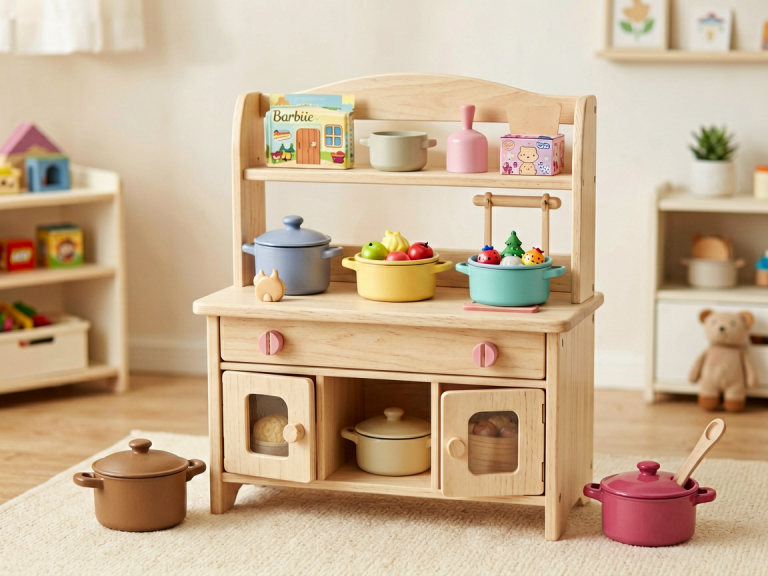
Adults can scaffold this play by introducing props and asking open-ended questions. For instance, in a pretend kitchen, a parent might say, “Chef, what are you cooking for tonight’s special? How do you make the sauce?” The child must then explain a procedure, using temporal language (“first, then, finally”) and cause-effect structures (“if you add too much salt, the soup will be ruined”). For older children, more complex scenarios—like planning a pretend expedition to Mars—can incorporate research, negotiation, and extended monologues.
Nature Walks and Descriptive Language
The natural world provides an endless supply of stimuli for language development. A simple walk through a park or garden can become a “sensory scavenger hunt.” Give the child a list (orally, not on a phone) of things to find: something rough, something soft, something that makes a sound, something that smells sweet. As they collect or point to each item, ask them to describe it in multiple ways. “How does the bark feel? Is it bumpy? What color? Does it remind you of anything?” This builds a rich vocabulary of sensory adjectives and comparative language.
Another powerful activity is “nature journalling” using a physical notebook. After a walk, children can draw what they saw and dictate a caption or a short story. The act of translating visual experience into words strengthens the connection between observation and expression. For bilingual families, naming objects in both languages during the walk reinforces lexical retrieval across languages.
Cooking and Following Instructions
Cooking is a multi-step, time-sensitive activity that naturally requires precise language. When a child helps prepare a recipe, they must follow sequential instructions (“First, measure two cups of flour. Then, crack the egg into the bowl”). This teaches the imperative mood, ordinal numbers, and measurement terms. More importantly, cooking involves negotiation and clarification: “Wait, did you say one teaspoon or one tablespoon? How do I know when the dough is ready?” These moments prompt the child to use question forms and seek clarification—a key pragmatic skill.
For language enrichment, ask the child to “read” the recipe aloud (even if they cannot fully decode the text; they can use picture cues and memory) or to describe each step to a younger sibling. You can also introduce “recipe modification” challenges: “We’re out of lemons. What could we use instead to make it sour? How would the taste change?” This encourages conditional reasoning and hypothesis language (“if… then…”).
Music, Singing, and Rhymes
Music and language share deep neural connections. Singing songs—especially those with repetitive choruses, call-and-response patterns, or action movements (like “Head, Shoulders, Knees, and Toes”)—builds phonological memory, vocabulary, and rhythm. Nursery rhymes, in particular, are rich in rhyme, alliteration, and assonance, which are the building blocks of phonemic awareness. For older children, creating new verses to familiar tunes (“sung poetry”) requires them to manipulate syllables and find rhyming words.
A less obvious activity is “song storytelling”: after learning a song like “The Wheels on the Bus,” ask the child to invent a new verse (e.g., “The driver on the bus says ‘Move on back’”). This requires them to match a line to the song’s meter and rhyme scheme, a challenging but playful linguistic task. Additionally, clapping or drumming along to syllables in words (“ap-ple has two claps”) helps children segment speech sounds.
Conclusion
In a world where screens are ubiquitous, deliberate screen-free activities are not a nostalgic luxury but a developmental necessity. From conversational reminiscing and puppet play to nature walks and cooking, each activity offers unique opportunities for children to practice vocabulary, syntax, pragmatics, and phonology in low-stress, high-engagement environments. The key is consistency and intentionality: setting aside even 20 minutes a day for unplugged interaction can yield measurable gains in a child’s language trajectory. By embracing these hands-on, face-to-face practices, we give children the richest gift of all—the ability to use language to connect, imagine, and make sense of their world.