Screen-Free Learning Activities at Home: Nurturing Creativity, Curiosity, and Connection
In an age where digital devices dominate every corner of childhood—from online classes to streaming entertainment—the concept of screen-free learning may seem almost revolutionary. Yet the home environment offers a rich, untapped landscape for educational experiences that do not require a single pixel. Screen-free learning is not about rejecting technology entirely; it is about restoring balance, fostering deep engagement, and reminding children (and adults) that the world beyond the glowing rectangle is full of wonder, texture, and tangible discovery. This article explores a variety of meaningful, hands-on learning activities that can be implemented at home without screens, organized by domain, and explains why each activity supports cognitive, emotional, and physical development.
Why Go Screen-Free? The Case for Unplugged Learning
Before diving into activities, it is worth understanding what screen-free learning accomplishes. Research consistently shows that excessive screen time can impair attention span, reduce opportunities for imaginative play, and interfere with sleep and social skills. Conversely, screen-free activities encourage active rather than passive learning. They require children to manipulate physical objects, negotiate with others, solve real-world problems, and engage multiple senses simultaneously. When children build a tower of blocks, plant a seed, or write a letter by hand, they are not merely consuming information—they are constructing meaning through direct experience. This type of learning is often more memorable and deeply internalized. Moreover, screen-free activities strengthen family bonds, as they invite shared participation without the distractions of notifications or autoplay videos.
Hands-On Science and Nature Exploration
Indoor Experiments and Observation Stations
Science does not require a laboratory or a YouTube tutorial. Simple kitchen chemistry can captivate young minds for hours. For example, mixing baking soda and vinegar in a plastic bottle causes a fizzy eruption that teaches about acid-base reactions. Adding a few drops of food coloring makes it visually spectacular. Another classic is the “walking water” experiment: place three glasses of water—two colored, one empty—and connect them with paper towels. Capillary action draws the colored water into the empty glass, creating a new color. Children can predict, observe, and record their results in a homemade science journal. These experiments develop hypothesis testing, patience, and documentation skills.
Nature observation is equally powerful. Set up a “window station” with a pair of binoculars, a bird identification chart, and a notebook. Encourage children to record the birds, insects, and weather patterns they notice each day. Over a week, they can graph the frequency of different species, noticing migration trends or seasonal changes. This activity builds scientific observation skills and a sense of connection to the natural world.
Gardening and Earth Science
If you have outdoor space or even a windowsill, gardening offers endless learning opportunities. Planting seeds—whether beans in a cup or sunflowers in a garden bed—teaches biology, responsibility, and patience. Children can measure growth with a ruler, draw the stages of germination, and learn about photosynthesis through simple experiments (e.g., covering one leaf with foil to see what happens). Composting introduces cycles of decomposition and soil health. For families without a yard, growing herbs in small pots or sprouting an avocado pit in water provides similar lessons. Gardening also encourages outdoor time, fine motor skills through digging and watering, and a sense of accomplishment when the first green shoot appears.
Hands-On Mathematics and Logic
Real-World Math in the Kitchen
The kitchen is a mathematics laboratory disguised as a room for cooking. Measuring cups and spoons teach fractions and volume. Doubling a recipe requires multiplication; halving a recipe introduces division. Telling time on an analog clock while monitoring the oven builds time-telling skills. Even simple counting for younger children— “We need five carrots, three potatoes, and two onions; how many vegetables total?”—becomes an engaging game. Older children can calculate the cost per serving or adjust proportions for different pan sizes. Baking also requires sequencing and following multi-step instructions, which bolsters executive function.
Puzzles, Board Games, and Logical Challenges
Board games are among the most effective screen-free learning tools. Games like “Monopoly” or “The Game of Life” teach money management, probability, and strategic thinking. “Qwirkle” or “Blokus” develop spatial reasoning. “Mastermind” or “Clue” require deductive logic and systematic elimination. For younger children, simple matching games or “Chutes and Ladders” reinforce counting and turn-taking. Crossword puzzles, Sudoku, and logic grid puzzles further challenge problem-solving without a screen. The tactile experience of moving pieces, shuffling cards, and rolling dice engages multiple senses and makes abstract concepts concrete.
Building and Engineering with Blocks
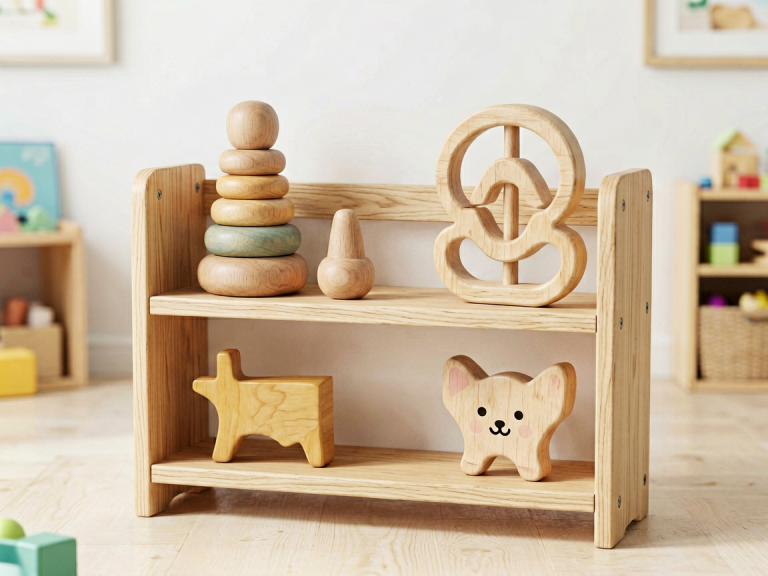
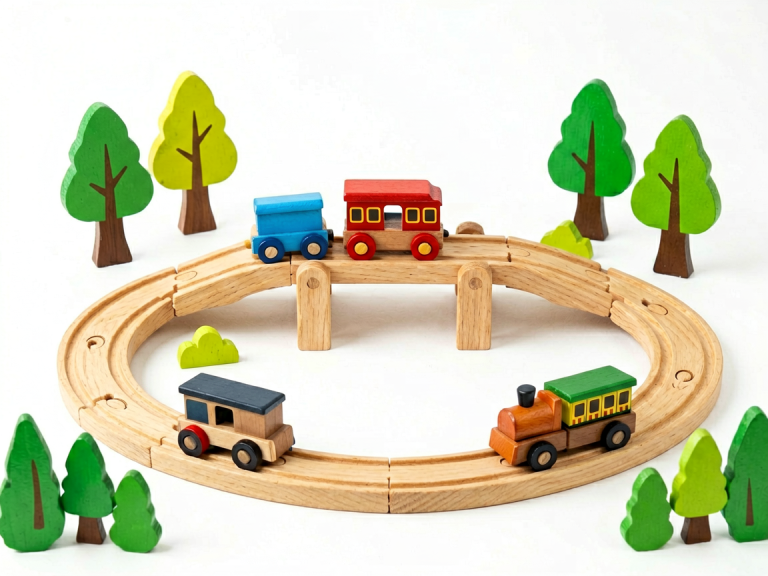
Construction toys—wooden blocks, LEGO bricks, magnetic tiles, or even recycled cardboard—allow children to explore geometry, balance, and structural engineering. Challenge them to build a bridge that can hold a certain weight, a tower taller than themselves, or a marble run with loops and jumps. These projects require planning, trial and error, and resilience when structures collapse. Older children can measure angles, calculate load distribution, and document their designs. This type of open-ended play fosters creativity and a growth mindset, as children learn that failure is simply a step toward improvement.
Language and Literacy Without Screens
Storytelling, Puppetry, and Oral Traditions
Reading aloud remains one of the most powerful literacy activities. But beyond reading, children can become storytellers themselves. Provide a simple puppet (even a sock with googly eyes) and ask them to retell a favorite story or create an original one. This develops narrative structure, vocabulary, and public speaking confidence. Encourage older children to write and perform a short play for the family. They can design simple costumes, set up a “stage” with chairs and blankets, and invite neighbors (via a safe distance) to watch. Oral storytelling traditions also build listening comprehension and memory.
Creative Writing and Journaling
A blank notebook can become a treasure chest of ideas. Encourage children to keep a nature journal, a dream journal, or a “thank you” journal where they write one thing they are grateful for each day. Prompt them with questions like, “If you could invent a new animal, what would it look like and where would it live?” or “Write a letter to your future self.” Handwriting strengthens fine motor skills and activates brain areas associated with memory more than typing does. For reluctant writers, try “story stones”—paint or draw simple images on small stones (a castle, a dragon, a key) and have children arrange them in sequence to create a story.
The Lost Art of Letter Writing
In an era of instant messaging, writing and mailing a physical letter is a profound learning experience. Children must plan the content, address the envelope, affix a stamp, and understand postal routes. They learn empathy as they consider what would interest the recipient. The anticipation of waiting for a reply teaches patience. Pen pals—perhaps a grandparent, a cousin in another state, or even a child in another country through a reputable exchange program—offer cultural learning and authentic purpose for writing.
Arts, Crafts, and Music
Process-Oriented Art Projects
Screen-free art emphasizes the process, not the product. Provide a variety of materials: paint, clay, fabric scraps, natural objects (leaves, acorns, feathers), and recyclables. Invite children to create without a predetermined outcome. They might make a collage representing a feeling, a sculpture of an imaginary creature, or a painting using only colors they can find in the garden. This type of open-ended art develops creativity, fine motor control, and emotional expression. For older children, try art history-inspired projects: study a famous painting (from a book or a print) and recreate it with household materials, discussing the artist’s techniques and historical context.
Music, Rhythm, and Sound Exploration
Music learning can happen entirely without screens. Simple percussion instruments—drums made from oatmeal containers, shakers made from rice in a sealed plastic egg, xylophones or recorders—allow children to explore rhythm and melody. Teach them to clap out syllables in words (a precursor to reading), sing rounds like “Row, Row, Row Your Boat,” or compose a simple song about their day. Listening to music from different cultures and trying to identify instruments is another screen-free activity. For older children, learn to read sheet music using flashcards or a printed guide, or build a homemade instrument (e.g., a rubber band guitar or a water glass xylophone) explaining pitch and vibration.
Handicrafts and Practical Skills
Learning to sew a button, knit a scarf, weave a potholder, or fold origami builds patience, precision, and a sense of accomplishment. These crafts also teach geometry (fractions in quilting, symmetry in origami) and problem-solving (fixing a dropped stitch). They provide a tangible, useful product—a repaired shirt, a gift for a friend—that reinforces the value of hands-on work. Similarly, woodworking with simple tools (under supervision) teaches measurement, safety, and spatial reasoning.
Physical Movement and Outdoor Learning
Active Games That Teach
Traditional outdoor games are inherently educational. Tag develops agility and spatial awareness; hopscotch teaches balance and number sequencing; jump rope builds cardiovascular health and rhythm; hide-and-seek requires counting and strategic thinking. Organize a mini-Olympics with events like a three-legged race, egg-and-spoon race, or sack race. These activities teach cooperation, rule-following, and grace in winning and losing.
Nature Scavenger Hunts
Create a list of natural items to find: a smooth stone, a leaf with five points, something that makes a sound, a feather, a piece of bark. Children can check items off as they discover them, learning classification and observation. For older children, add scientific challenges: “Find a plant that is pollinated by wind” or “Identify three types of clouds.” Scavenger hunts can also be adapted for the indoors on rainy days, searching for household items of a certain shape, color, or texture.
Mapping the Neighborhood
Take a walk with a clipboard and pencil. Ask children to draw a map of your street or block, noting landmarks, trees, mailboxes, and house numbers. This develops spatial awareness, scale, and directionality. They can later use the map to plan a short hike or track the distance they walk each day. Mapping also connects to geography and history—why are streets named that way? What was here before?
Life Skills and Practical Learning
Home Economics and Responsibility
Daily chores are powerful learning opportunities. Sorting laundry by color teaches classification; folding clothes develops fine motor skills and geometry; setting the table reinforces counting and spatial arrangement; organizing a closet teaches categorization and decision-making. Involving children in meal planning—writing a grocery list, comparing prices at the store, understanding nutritional labels—builds math and health literacy. These skills are foundational for independence and are best learned through hands-on practice.
Financial Literacy Through Play
Create a “family economy” where children earn pretend money for chores and spend it on privileges (like choosing the weekend movie or picking dessert). This teaches budgeting, saving, and delayed gratification. Set up a small store with play money where they “buy” toys or treats from a parent. Older children can manage a simple budget for a family outing, calculating costs of gas, tickets, and snacks. These real-world applications make abstract concepts like interest and tax tangible.
DIY Repair and Simple Mechanics
Fix a broken toy, tighten a loose screw, or assemble a piece of furniture together. Children learn the names and functions of tools (screwdriver, wrench, hammer), how to read assembly instructions, and the satisfaction of making something work again. This builds mechanical reasoning, persistence, and self-reliance. For older children, taking apart an old appliance (with permission) to see the inner workings can spark curiosity about motors, circuits, and gears.
Creating a Screen-Free Culture at Home
The most effective screen-free learning happens when the environment supports it. Designate a “device-free zone” such as the dining table or a cozy reading corner. Keep art supplies, puzzles, and books easily accessible. Model screen-free behavior yourself—read a paper book, cook without checking your phone, engage in conversation. Schedule regular “screen-free hours” or “screen-free Sundays” to establish habits. Recognize that children may initially resist; screens are designed to be addictive. Start with short, engaging activities and gradually extend the time. Celebrate the creativity and connection that emerge when the glow of the screen fades.
In conclusion, screen-free learning activities at home are not a nostalgic return to the past but a proactive choice for a richer, more grounded educational experience. They cultivate curiosity, resilience, creativity, and practical skills that no app can replicate. By weaving these activities into daily life, we give children the gift of discovering the world with their own hands, eyes, and minds—and that is a lesson no screen can teach.