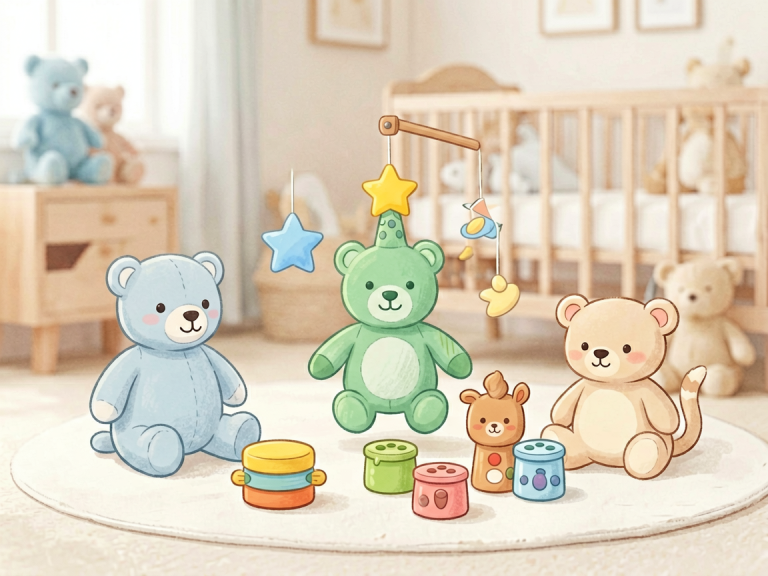
From Screen-Free Play to Quiet Time: Nurturing Calm and Independence in 5-Year-Olds
Introduction
In an age where digital devices are ever‑present, the idea of “screen‑free play” can feel almost revolutionary. Yet for a five‑year‑old, play without screens is not just a nostalgic ideal—it is a developmental necessity. At this age, children are bursting with curiosity, imagination, and a growing need for autonomy. They are also, however, often overwhelmed by the constant stimulation of modern life. The challenge for parents and educators is to channel that vibrant energy into activities that not only entertain but also gradually prepare a child for the invaluable skill of quiet time—a period of calm, self‑directed rest. This article explores how intentional screen‑free play can serve as a bridge from high‑energy engagement to peaceful stillness, offering practical strategies and activities that support a five‑year‑old’s emotional regulation, creativity, and sense of inner peace.
—
The Importance of Screen-Free Play for 5-Year-Olds
Five‑year‑olds are at a unique developmental crossroads. They have mastered basic motor skills, are beginning to understand social rules, and possess an ever‑expanding vocabulary. Yet their attention spans are still relatively short, and they rely heavily on sensory and hands‑on experiences to make sense of the world. Screen‑free play provides the ideal environment for this exploration.
Cognitive and Emotional Benefits
When a child engages in play without a screen, they are forced to use their own imagination, problem‑solve, and delay gratification. Building a tower of blocks, for example, teaches cause and effect, spatial reasoning, and patience when the tower inevitably falls. Dramatic play—such as pretending to run a grocery store—allows a child to practice empathy, negotiation, and language skills. These experiences are often more rich and varied than those offered by passive screen time, where the child is a consumer rather than a creator.
Moreover, screen‑free play helps regulate a child’s nervous system. Screens, especially fast‑paced videos or games, can overstimulate a young brain, making it harder for the child to later settle down. In contrast, activities like sorting pebbles, drawing, or playing with clay have a naturally calming rhythm. They allow the child to enter a state of “flow,” where time seems to disappear and the mind becomes focused and peaceful. This state is the precursor to successful quiet time.
—
Understanding the Transition from Play to Quiet Time
Quiet time is not the same as nap time for a five‑year‑old. Many children at this age have outgrown daily naps but still need a period of rest to recharge. Quiet time can take many forms: lying on a mat looking at books, listening to soft music, or simply sitting with a stuffed animal. The key is that the activity is calm, solitary, and low‑stimulation.
The challenge is that a child who has been running, shouting, and building can rarely switch instantly to a calm state. The transition from active play to quiet time requires a deliberate “winding down” process. Screen‑free play, when chosen wisely, can be the perfect tool for this transition. The goal is to select activities that naturally become less and less arousing, leading the child step‑by‑step toward stillness.
The Role of “Low‑Energy” Play
Not all screen‑free play is equally suited for winding down. High‑energy games like tag or hide‑and‑seek are wonderful for gross motor development but should be scheduled earlier in the day. For the period leading up to quiet time (say, 20–30 minutes before), parents should offer “low‑energy” play options. These are activities that engage the hands and mind but require little jumping or loud vocalization. Examples include playing with playdough, doing a simple puzzle, threading beads, or looking at a sensory bin filled with rice and small toys. The repetitive, tactile nature of these activities helps the child’s brain begin to slow down.
Signals and Routines
Children thrive on predictability. Establishing a clear routine that signals the approaching quiet time can make the transition smoother. For instance, after lunch, the child might put away toys, then choose one low‑energy screen‑free activity. A parent might set a timer for 15 minutes and say, “This is our quiet play time. When the timer rings, we will move to our quiet time corner.” This verbal and visual cue helps the child mentally prepare.
—
Engaging Screen-Free Activities That Naturally Lead to Calm
Below are several screen‑free activities specifically chosen for five‑year‑olds. Each activity is designed to be engaging yet calming, and can be gradually extended to fill the transition time before quiet time.
1. Calming Sensory Bins
A sensory bin filled with dry beans, rice, or sand, along with scoops, small cups, and hidden treasures (like plastic animals or letters), can captivate a five‑year‑old for 20 minutes or more. The repetitive motions of scooping, pouring, and finding objects are meditative. As the child focuses on the texture and the task, their breathing often slows, and they become absorbed. Afterward, they are naturally more receptive to sitting quietly.
2. Storytelling with Objects
Instead of reading a book, encourage the child to create their own story using small toys or natural objects like pinecones and stones. For example, place a handful of animal figurines on a cloth “landscape.” Ask the child to tell you what the animals are doing. This activity stimulates language and imagination but is done while seated at a table or on the floor, keeping the body still. The story can end with the animals going to sleep, which subtly mirrors the transition to quiet time.
3. “Slow” Art Projects
Art does not have to be messy or chaotic. Offer a tray with paper and crayons or non‑toxic watercolor paints. Instead of encouraging free drawing, provide a simple pattern—a circle, a leaf—and ask the child to trace or color inside it. The controlled movement of the hand, combined with the visual focus, has a calming effect similar to adult mandala coloring. Alternatively, sticker books where the child places stickers in designated spaces can be equally soothing.
4. Quiet Building Challenges
Instead of traditional block towers, try a “quiet building” challenge: give the child a set of wooden blocks or magnetic tiles and ask them to build something that is very tall but very thin, or a house for a tiny mouse. The focus on precision and balance requires concentration and tends to hush the child’s voice naturally. As the structure grows, the child learns to move slowly and deliberately.
5. Listening Games
Before quiet time, a parent can sit with the child and play a “listening game.” Close your eyes and take turns naming sounds you hear—a bird, the refrigerator humming, footsteps outside. This game teaches mindful listening and helps the child become aware of the present moment. After two or three rounds, you can say, “Now let’s sit in silence for one minute and see if we can hear even quieter sounds.” This directly prepares the child for quiet time.
—
Creating a Consistent Routine
Consistency is the backbone of successful quiet time. A five‑year‑old who knows what to expect is far more likely to cooperate. Here is a sample sequence that integrates screen‑free play into the transition:
- 12:30 PM – Lunch ends. The child helps clear the table (a simple chore that signals transition).
- 12:45 PM – “Low‑energy play” begins. The parent offers one or two of the activities described above. The parent should sit nearby, but not necessarily engage directly—they can read a book or do their own quiet task, modeling calm behavior.
- 1:00 PM – A gentle 5‑minute warning. “Two more minutes of play, then we’ll clean up for quiet time.”
- 1:05 PM – Clean up together. The child puts the activity back in its designated basket.
- 1:10 PM – Quiet time begins. The child goes to a special corner with a soft mat, a few books, and a comfort object. The parent may set a timer for 30–45 minutes. The rule: no talking, no leaving the spot. If the child is restless, the parent can sit nearby for the first few minutes and then gradually move away.
Over time, the child will associate the screen‑free play with the calm that follows. They may even begin to choose quieter activities on their own, sensing that it makes the transition easier.
—
Practical Tips for Parents
- Respect the child’s cues. Some days, a child may be more energetic and need a longer play time before quiet time. Adjust the schedule accordingly, but keep the overall structure.
- Limit screen time in the morning. If a child watches a screen early in the day, they may be more wired later. Try to keep all screens off at least an hour before quiet time begins.
- Model calm yourself. If you are stressed or checking your phone, the child will mirror that energy. Use the screen‑free play time as an opportunity to sit quietly with your own thoughts or a book.
- Be patient with resistance. The first few days, a child may protest quiet time. Stay firm but gentle. Remind them that quiet time is not punishment—it is a time for their body to rest. After a week or two, most children start to look forward to it.
- Rotate activities. Even the best screen‑free activity can become boring if offered every day. Keep a basket of “quiet time preparation” toys and swap them weekly to maintain novelty.
—
Conclusion
Screen‑free play for five‑year‑olds is far more than a nostalgic antidote to technology. It is a powerful tool for helping children learn to regulate their own energy and emotions. By carefully selecting low‑energy activities that naturally wind down the nervous system, parents can create a seamless bridge from vigorous play to restorative quiet time. The result is not just a peaceful afternoon, but a child who grows up with the inner resources to find calm in a busy world. In a society that constantly demands attention, teaching a child to embrace stillness is one of the greatest gifts we can give. Start today—put away the screens, gather some blocks or a bowl of rice, and watch as your five‑year‑old discovers the quiet joy within.