Beyond the Blueprint: How Open-Ended Play Shapes the Minds of Preschool Boys
Introduction
In a world increasingly preoccupied with early academic benchmarks and screen-based entertainment, the simple act of unstructured, open-ended play is often undervalued—especially for preschool boys. Yet research in developmental psychology and neuroscience consistently reveals that this type of play is not merely recreation; it is a profound learning engine. Open-ended play refers to activities with no fixed outcome, no prescribed rules, and no single “correct” way to engage. A pile of wooden blocks, a cardboard box, a handful of clay, or a patch of mud can become anything a child’s imagination dictates. For preschool boys, whose natural tendencies toward physical exploration, risk-taking, and hands-on problem-solving are often channeled into rigid classroom expectations, open-ended play offers a vital counterbalance. This article explores why such play is uniquely powerful for boys aged three to five, how it fosters essential cognitive, social, and emotional growth, and how parents and educators can nurture it intentionally.
The Nature of Open-Ended Play
Open-ended play is fundamentally different from structured activities like puzzles with one solution, board games with fixed rules, or instructional toys that “teach” a specific skill. In open-ended play, the child is the director. A set of magnetic tiles might become a castle, a rocket ship, or an animal enclosure—each transformation driven by the boy’s evolving narrative. There is no pressure to “get it right,” which liberates the child to experiment, fail, and try again without fear of judgment.
For preschool boys, whose brains are wired for active, kinesthetic learning, this freedom is especially important. Neuroscientific studies show that when children engage in self-directed play, their prefrontal cortex—the area responsible for executive functions like planning, impulse control, and flexible thinking—is highly activated. Boys often demonstrate higher levels of physical energy and a preference for rough-and-tumble play, both of which are naturally embedded in open-ended contexts. A cardboard tube becomes a sword, a stick becomes a magic wand, and a blanket becomes a cave. These seemingly simple actions are, in fact, complex cognitive operations.
Why Preschool Boys Thrive with Open-Ended Play
Preschool boys, on average, tend to develop language skills slightly later than girls and may show more interest in movement than in sitting still for lengthy conversations. This does not mean they are less capable learners; it means they learn differently. Open-ended play capitalizes on their strengths: spatial reasoning, cause-and-effect experimentation, and social negotiation through action rather than words.
For instance, a group of boys building a fort from sofa cushions must negotiate who holds which corner, how high the structure can go before it topples, and what to do when someone’s “roof” collapses. These are not trivial problems. They require teamwork, frustration tolerance, and creative revision. In a classroom that emphasizes worksheets and rote memorization, such opportunities are scarce. Open-ended play allows boys to engage their whole bodies and minds, meeting their developmental needs where they are.
Cognitive Benefits: Problem-Solving, Creativity, and Executive Function
One of the most significant cognitive outcomes of open-ended play is the development of executive function—the set of mental skills that enables children to manage themselves and their learning. When a preschool boy decides to build a bridge from Duplo blocks that must span a gap, he engages in goal-setting, planning, and self-monitoring. If the bridge collapses, he must analyze why—was the foundation too narrow? Were the blocks too light?—and adjust his strategy. This iterative process is the foundation of scientific thinking.
Creativity also flourishes in open-ended environments. Unlike coloring books that prescribe a predetermined image, open-ended materials invite divergent thinking. A boy might use a plastic dinosaur as a character in a story, a tool to measure the height of a plant, or a weight to test the strength of a paper bridge. Each use requires him to think flexibly, to see beyond the object’s intended function. Longitudinal studies have found that children who engage in frequent imaginative play score higher on measures of creativity and cognitive flexibility in later years.
Furthermore, open-ended play supports symbolic thinking—the ability to use one thing to represent another. This skill is a precursor to literacy and numeracy. A boy who uses a stick as a horse is practicing the same cognitive leap he will later need to understand that a written word represents a spoken sound.
Social and Emotional Development: Navigating Relationships and Building Resilience
Preschool boys often face social expectations that can be challenging: they are told not to run, not to shout, and to share nicely. Yet their natural social style is often active and physical. Open-ended play provides a safe arena for them to practice social skills without the constant pressure of adult correction.
When two boys decide to build a robot from recycled boxes, they must communicate their ideas, negotiate roles, and handle disagreements. One boy may want to paint the robot red; the other insists on blue. Resolving this conflict—whether through compromise, persuasion, or a new creative idea—teaches emotional regulation and perspective-taking. These are not skills that can be taught through a lecture; they must be lived.
Open-ended play also builds resilience. Because there is no preset “win” condition, failure is not a dead end but a stepping stone. A tower of blocks that keeps falling becomes a lesson in patience and persistence. For boys, who often receive messages that they must be “tough” or “successful,” this low-stakes environment is crucial. They learn that it is okay to make mistakes, to ask for help, and to try again—lessons that form the bedrock of a growth mindset.
Physical and Motor Skill Development Through Active Play
The physicality of open-ended play is especially beneficial for preschool boys, whose gross motor skills are rapidly developing. Running to chase a ball, climbing a playground structure, digging in a sandbox, or carrying heavy blocks all strengthen muscles, improve coordination, and build spatial awareness. Fine motor skills, too, are honed: manipulating small building pieces, threading beads, molding clay, or pouring water into a container all require precise hand movements.
Moreover, outdoor open-ended play offers sensory-rich experiences that indoor screens cannot replicate. The feel of wet sand, the smell of grass, the sound of leaves crunching—these activate multiple neural pathways and support sensory integration. Boys who struggle with attention or hyperactivity often benefit immensely from such full-bodied play, as it helps regulate their nervous systems and improves their ability to focus later.
Practical Ideas for Parents and Educators
To foster open-ended play for preschool boys, adults need to shift from directing to facilitating. Here are actionable strategies:
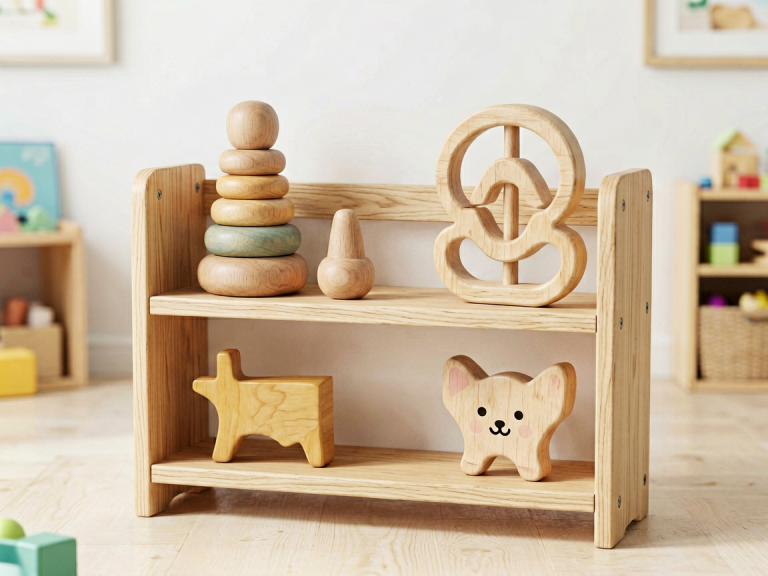
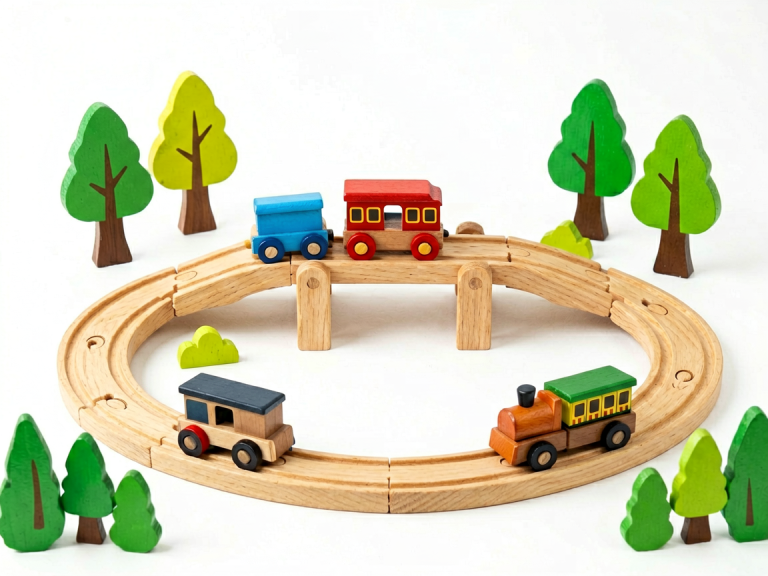
- Curate, Don’t Control. Provide open-ended materials—blocks, loose parts (popsicle sticks, bottle caps, fabric scraps), art supplies, sand, water, and natural objects like pinecones and rocks. Avoid toys with a single function or electronic toys that dictate the play.
- Create a “Yes” Space. Designate an area—indoors or outdoors—where the child can make messes, build large structures, and move freely. A corner of the living room with a mat and a bin of blocks can be enough.
- Embrace Rough-and-Tumble Play. Many boys thrive on wrestling, chasing, and mock fighting (within safe boundaries). This is not aggression; it is a form of social learning that teaches boundaries, empathy, and self-control. Supervised, it is highly beneficial.
- Ask Open Questions. Instead of saying, “That’s a nice tower,” ask, “What made you decide to put the big block on the bottom?” or “What will happen if we add one more block to the top?” Such questions prompt reflection and deeper thinking.
- Limit Screen Time. Screens, even educational ones, are often passive and closed-ended. Replace a portion of screen time with free play, especially outdoors.
- Model Playfulness. When you join your child’s play—without taking over—you validate his ideas. Be the customer in his restaurant, the passenger in his spaceship, or the dinosaur in his jungle.
Conclusion
The power of open-ended play for preschool boys cannot be overstated. In an era of standardized testing and early academic pressure, it is tempting to prioritize structured learning over unstructured exploration. Yet the evidence is clear: boys who have ample opportunities for open-ended play develop stronger problem-solving abilities, greater emotional resilience, more sophisticated social skills, and a love of learning that no worksheet can instill.
A boy with a cardboard box and an hour of unhurried time is not merely playing; he is constructing the architecture of his own mind. He is learning to imagine, to persist, to collaborate, and to create meaning from chaos. For parents and educators, the task is not to direct this process but to protect it—to carve out time and space for the kind of play that has no blueprint, no finish line, and no right answer. In that sacred space, the deepest learning unfolds.
*(Word count: approximately 1,180)*