Sparking Curiosity: The Best Science Toys for 6-Year-Old Girls
—
Introduction: Why Science Toys Matter for 6-Year-Old Girls
At the age of six, a girl’s mind is like a sponge—eager to absorb, question, and explore. This is a critical period for cognitive development, where foundational attitudes toward learning, problem-solving, and gender roles begin to form. Yet, for decades, the toy industry has often steered young girls toward dolls, princess costumes, and kitchen sets, while science, technology, engineering, and math (STEM) toys were marketed primarily to boys. This gender divide is not just a matter of marketing; it can subtly shape a girl’s self-perception of her own abilities in science and math.
Fortunately, the tide is turning. More and more parents, educators, and toy manufacturers recognize that science toys for 6-year-old girls are not only fun but essential for nurturing curiosity, critical thinking, and confidence. When a six-year-old builds a simple circuit, watches crystals grow, or mixes baking soda and vinegar to create a fizzy volcano, she learns that she can be a creator, an investigator, and a problem-solver. These early hands-on experiences build a strong foundation for later STEM learning and help break down the stereotype that science is “for boys.”
This article explores the best types of science toys for 6-year-old girls, why they matter, and how to choose the right ones. Whether you are a parent, aunt, uncle, or family friend, understanding the power of these toys can help you inspire the young girl in your life.
—
The Importance of Science Toys for Young Girls
Before diving into specific recommendations, it’s worth examining why science toys are particularly crucial for girls at this age. Research in developmental psychology and education reveals several key benefits:
1. Countering Stereotypes Early
By age six, children have already internalized some gender stereotypes. Studies show that girls as young as five may begin to believe that boys are “smarter” or “better” at science and math. Introducing science toys in a playful, non-threatening way can counteract these messages. When a girl successfully builds a magnetic levitation toy or grows her own geode, she gains tangible evidence that she can excel in scientific activities.
2. Developing Fine Motor and Spatial Skills
Many science toys involve assembly, pouring, measuring, and manipulating small parts. These activities improve hand-eye coordination, fine motor skills, and spatial reasoning—abilities that are strongly linked to later success in STEM fields. For example, constructing a model of the solar system or assembling a simple pulley system requires careful placement and understanding of three-dimensional relationships.
3. Encouraging a Growth Mindset
Science is all about trial and error. A chemistry set for a six-year-old (with proper supervision) teaches that an experiment might “fail” the first time—but that failure is just a step toward learning. This mindset is invaluable. It teaches resilience, patience, and the idea that intelligence can grow through effort. Girls who learn this early are less likely to give up when faced with challenging math or science problems later.
4. Fostering Creativity
Science and creativity are not opposites. In fact, good science requires imagination: hypothesizing what might happen, designing experiments, and finding novel solutions. Science toys often allow open-ended play. A simple magnet set can lead to hours of exploration: “What happens if I put this magnet under the paper? Can I make the paper clip dance?” This kind of play builds creative thinking skills.
—
Top Science Toy Categories for 6-Year-Old Girls
Not all science toys are created equal. For a six-year-old girl, the best toys are those that are safe, engaging, and developmentally appropriate. Here are the top categories, with specific examples and explanations.
1. Chemistry and Reaction Kits
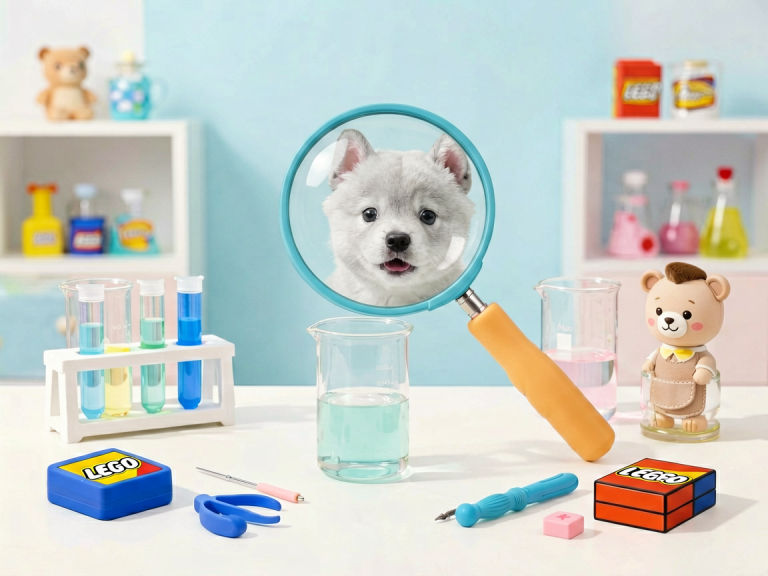
Simple chemistry sets designed for early elementary children are fantastic. Look for kits that include safe, non-toxic ingredients like baking soda, citric acid, food coloring, and glow-in-the-dark powders. A classic example is the “Volcano Kit” where girls can create eruption after eruption. Another winner is the “Crystal Growing Lab,” where a girl can mix a solution and watch beautiful crystals form over a few days. These kits teach the basics of chemical reactions, patience, and observation.
Why it works for 6-year-old girls: The dramatic results—fizzing, color changes, sparkling crystals—immediately capture attention. Girls love the “magic” of science, and explaining that it’s not magic but chemistry empowers them.
2. Magnetic and Electricity Exploration Sets
Magnets are endlessly fascinating. A set with different-shaped magnets, iron filings, and a magnetic wand allows a girl to explore invisible forces. For electricity, consider a simple snap-circuit kit (such as Snap Circuits Jr.) where pieces snap together without soldering. A six-year-old can build a working fan, a light switch, or a siren.
Why it works: These toys provide immediate feedback. When a girl connects the circuit and the light bulb glows, she experiences a sense of accomplishment. It also demystifies how everyday electronics work—from flashlights to doorbells.
3. Nature and Biology Kits
Many six-year-old girls are already fascinated by living things. A bug-catching kit with a magnifying glass, tweezers, and a viewing container encourages outdoor exploration. A butterfly garden kit—where you raise live caterpillars and watch them metamorphose—is a profound lesson in life cycles. Similarly, a simple microscope for kids (with plastic slides) lets them examine leaves, salt crystals, or their own hair.
Why it works: These toys connect science to the real world. A girl who examines a ladybug’s legs or watches a chrysalis open learns that science is about discovery and wonder, not just lab coats.
4. Engineering and Construction Toys
Engineering toys build spatial reasoning and logical thinking. For this age, consider building sets like LEGO Duplo (with simple machines), magnetic tiles (Magna-Tiles or Picasso Tiles), or a gear set. A “Marble Run” kit where a girl designs tracks for marbles to roll down teaches gravity, angles, and design.
Why it works: These toys allow for open-ended play. A girl can follow instructions or create her own inventions. She learns to plan, test, and rebuild—essential engineering skills.
5. Astronomy and Space Exploration
Space-themed toys ignite imagination. A solar system model that glows in the dark, a star projector, or a simple telescope for kids (with low magnification) can turn bedroom ceilings into a planetarium. Many girls love learning about planets, rockets, and astronauts.
Why it works: Space science combines storytelling with facts. A six-year-old can pretend to be an astronaut while learning that Jupiter is the largest planet. This dual approach (narrative + information) is highly effective for young learners.
6. Weather and Earth Science Kits
Kits that let a girl make a tornado in a bottle, create a rain gauge, or simulate a volcanic eruption are both fun and educational. A “weather station” set with a thermometer, anemometer, and wind vane teaches data collection and the scientific method.
Why it works: These toys make abstract concepts tangible. When a girl sees a “tornado” form in two soda bottles, she understands vortexes better than any textbook could explain.
—
How to Choose the Right Science Toy
With so many options, how do you pick the best science toy for a specific six-year-old girl? Here are practical guidelines:
1. Prioritize Safety
Always check age recommendations and safety certifications. Avoid toys with small parts that pose choking hazards unless the child is beyond that stage. Chemicals should be non-toxic, and electronics should be low-voltage (battery-operated, not plug-in). Read reviews from other parents.
2. Follow the Child’s Interests
Does she love animals? Choose a biology or bug kit. Is she fascinated by building? Go with magnetic tiles or a marble run. Does she ask “why” constantly? A chemistry kit with explanation cards might be perfect. Tailoring the toy to her existing passions increases engagement.
3. Look for Open-Ended Play
Toys that have only one correct outcome can become boring quickly. Better are toys that allow multiple ways to play. For example, a set of magnets can be used to create sculptures, test polarity, or play games. Open-ended toys encourage creativity and repeated use.
4. Include a “How It Works” Component
The best science toys come with simple explanations—either in a booklet, online video, or through parental guidance. A girl who understands *why* the baking soda and vinegar react will remember the concept longer. Look for kits that include age-appropriate science facts.
5. Consider Collaboration
Some science toys are designed for solo play; others work better with a friend or adult. If the girl enjoys social play, choose a kit that allows two or three kids to work together, like a large marble run or a cooperative building set. This also develops communication and teamwork skills.
6. Avoid Gendered Marketing
Ignore the “girls only” pink packaging. Science toys should be for everyone. Many companies now produce gender-neutral or inclusive designs. If the toy is pink but also high-quality, that’s fine—but don’t let marketing dictate your choice. The toy’s content matters far more than its color.
—
Encouraging a Lifelong Love of Science
Giving a six-year-old girl a science toy is just the first step. How you present it and follow up can make all the difference. Here are tips to maximize the impact:
Be a Co-Explorer
Sit down with her and play. Ask open-ended questions: “What do you think will happen if we add more water?” “Why do you think the magnet sticks here but not there?” Let her take the lead. Your enthusiasm is contagious.
Celebrate “Failures”
If an experiment doesn’t work, don’t rush to fix it. Instead, say, “That’s interesting! Let’s try a different way.” This teaches that science is about process, not just correct answers.
Connect Play to Real Life
Point out science in everyday situations. “Remember how we made that crystal? That’s similar to how sugar dissolves in your tea!” Or, “That magnet on our fridge is the same kind we used in the toy!” This builds transferable knowledge.
Provide Diverse Role Models
Introduce her to stories of female scientists—past and present. Books like *Rosie Revere, Engineer* or *Ada Twist, Scientist* are wonderful companions to science toys. Watching videos of real women astronauts or marine biologists can also inspire.
Rotate Toys
Don’t give her all the science toys at once. Introduce one, let her explore it thoroughly, and then put it away for a while. Rotating toys keeps them fresh and prevents overwhelm.
Encourage Journaling
For a six-year-old, a simple “science notebook” with crayons and stickers can be a place to draw what she observed. This builds observation and recording skills, which are fundamental to science.
—
Conclusion: Every Girl Can Be a Scientist
The right science toy for a 6-year-old girl is more than a present—it is a key that unlocks a world of curiosity, confidence, and possibility. By choosing toys that are safe, engaging, and aligned with her interests, you not only provide hours of fun but also plant the seeds for a lifelong love of learning. She may grow up to be a doctor, an engineer, an astronaut, or simply a person who asks good questions and thinks critically. And that, in itself, is a wonderful gift.
So the next time you are shopping for a birthday or holiday, skip the sparkly pink dolls (unless she truly wants them) and consider a science toy. Watch her eyes light up as she makes a discovery. That moment of wonder is where the future begins.