Sparking Curiosity: The Best Science Toys for Preschool Boys
Introduction
In the early years of life, a child’s brain is like a sponge, absorbing every sight, sound, and sensation. For preschool boys, this period is especially magical—their energy is boundless, their questions endless, and their imagination vivid. While the toy aisle often overflows with flashing lights and roaring vehicles, there is a quieter, more profound category of playthings that can shape a child’s future: science toys. These are not just gadgets; they are tools for discovery, critical thinking, and joy. This article explores why science toys matter for preschool boys, what to look for when choosing them, and how to use them to nurture a lifelong love of learning.
The Importance of Science Toys for Early Development
Science toys are far more than mere entertainment. At the preschool stage, boys are naturally inclined to explore cause and effect, test boundaries, and manipulate objects. A simple set of plastic gears or a magnetic building kit teaches them about physics, geometry, and problem-solving without any formal instruction. These toys also foster fine motor skills, hand-eye coordination, and spatial awareness—all crucial for later academic success.
Moreover, science toys help counterbalance the gender stereotypes that can subtly creep into early childhood. While many “boy toys” emphasize speed and destruction, science toys focus on creation and understanding. A preschool boy who learns to connect a battery to a light bulb or create a simple chemical reaction with baking soda and vinegar is not just having fun; he is internalizing the scientific method: hypothesis, experiment, observation, and conclusion.
Research shows that early exposure to STEM (Science, Technology, Engineering, and Math) concepts can boost confidence and interest in these fields later in life. For boys who may otherwise gravitate toward rough-and-tumble play, science toys offer a different kind of adventure—one that rewards patience, careful observation, and creative thinking.
Key Features to Look For in Science Toys for Preschool Boys
Not all toys labeled “science” are appropriate for three- to five-year-olds. When selecting, parents and educators should consider these essential features:
- Safety First: Preschool boys often test toys with their mouths as well as their hands. Any science toy must be made of non-toxic materials, have no small parts that could be choking hazards, and be sturdy enough to withstand enthusiastic use. Look for ASTM or CE safety certifications.
- Open-Ended Play: The best science toys allow multiple ways to play. A simple set of wooden blocks can become a gravity experiment, a balance scale, or a tower-building challenge. Open-ended toys encourage exploration rather than a single correct outcome.
- Sensory Engagement: Preschoolers learn through their senses. Toys that involve touch, sight, sound, and even smell are more engaging. For example, a nature exploration kit with magnifying glass, tweezers, and specimens invites tactile investigation.
- Adult Involvement: Very young children benefit from guided play. Choose toys that come with simple, illustrated instructions or that naturally invite a parent to join in. Tools like a kids’ microscope or a water table are perfect for shared discovery.
- Gender-Neutral Themes: Although the keyword is “boys,” avoid science toys that reinforce pink/blue stereotypes. A real science toy is for every child. Opt for bright, neutral colors and themes like space, dinosaurs, oceans, or mechanics that appeal broadly.
Top Categories of Science Toys for Preschool Boys
Here are several categories that consistently capture the imaginations of preschool boys and deliver genuine learning value:
1. Building and Construction Sets
These are the classics for a reason. From magnetic tiles (like Magna-Tiles) to interlocking plastic gears and wooden blocks, building sets teach structural engineering, balance, and geometry. Preschool boys love to build towers and knock them down—but when they experiment with different base widths or gently add blocks, they learn about stability and center of gravity. Look for sets that include wheels, axles, or simple machines like levers and pulleys to introduce basic physics.
2. Magnet Kits
Magnets are mesmerizing for young children. A set of colorful magnetic wands, horseshoe magnets, and metal filings in a sealed container provides hours of invisible-force play. Boys can discover which objects attract and which repel, learn about poles, and even create simple magnetic fields. Some kits come with magnetic building rods and balls that allow for 3D constructions—a great introduction to chemistry and physics concepts at a preschool level.
3. Water and Sand Exploration
Water tables, sand pits, and floating/sinking experiments are delightfully messy but deeply educational. A simple set of plastic boats, funnels, tubes, and measuring cups lets boys experiment with volume, displacement, and buoyancy. Adding a drop of food coloring can spark conversations about color mixing. For colder months, a kinetic sand set with molds and scoops offers similar sensory learning without the cleanup.
4. Simple Chemistry and Lab Kits
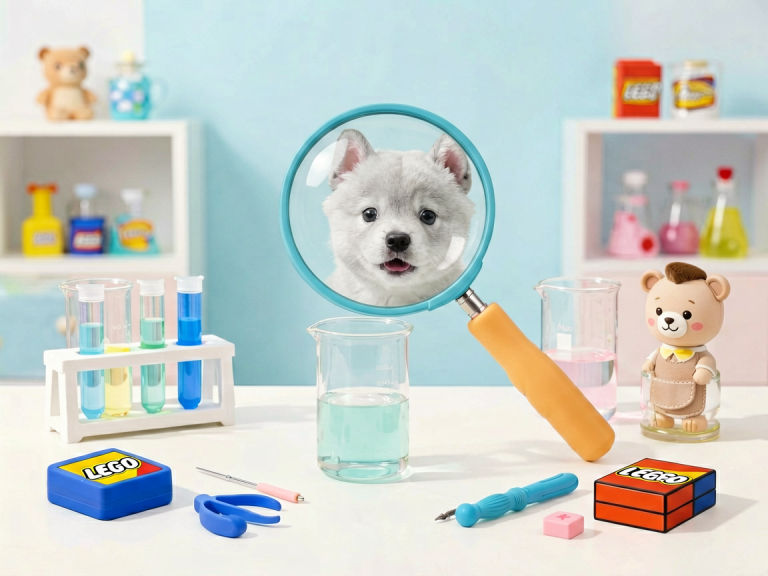
Preschool-appropriate chemistry kits avoid harsh chemicals. Instead, they use safe ingredients like baking soda, vinegar, citric acid, and cornstarch. A “fizzing” volcano experiment never fails to excite. Look for kits that include goggles, a plastic test tube rack, and pipettes to make the child feel like a real scientist. These activities teach cause-and-effect, measurement, and the joy of anticipation.
5. Nature and Outdoor Exploration Kits
Preschool boys love bugs, rocks, leaves, and dirt. A kid-friendly exploration set might include a bug catcher, a magnifying glass, a compass, a simple field guide with pictures, and a collection bag. Using these tools outdoors turns a walk in the park into a biology lesson. They learn to observe patterns (the veins in a leaf, the legs of a beetle), classify objects (smooth vs. rough rocks), and ask questions (Why does that ant carry food?).
6. Light and Shadow Kits
Transparent color blocks, flashlights, and shadow puppets introduce the science of light and optics. Boys can experiment with mixing colored light on a white wall, observe how shadows change shape when the light source moves, or create a simple periscope from a kit. These activities are easy to set up and deeply engaging, especially just before bedtime.
7. Simple Robots and Coding Toys
Yes, coding can start in preschool. Toys like Botley the Coding Robot or a simple programmable mouse teach basic logical sequencing without screens. Boys press arrow buttons to make the robot move left, right, forward, or backward, learning about commands and loops. There is no reading required—the toys use visual cues and immediate feedback. This foundational logic is the same as that used in advanced computer science.
How to Engage Your Preschool Boy with Science Toys
Buying the toy is only half the battle. To maximize learning and fun, incorporate these strategies:
- Ask Open-Ended Questions: Instead of “What color is that?” try “What do you think will happen if we tilt the ramp more?” or “How can we make the boat float higher?” These questions encourage prediction and reasoning.
- Embrace Mess and Failure: Science is about trial and error. If the tower falls, celebrate the discovery of what made it weak. If the volcano doesn’t erupt, ask why and try again with more vinegar. A child who is not afraid to fail becomes a fearless innovator.
- Create a “Science Corner” at Home: Designate a small shelf or tub where science toys are stored and easily accessible. Rotate them every few weeks to keep interest fresh. Include a child-safe notebook and crayons for drawing observations.
- Connect to Real Life: When you cook, talk about how heat changes food. When you fix a toy, explain how gears work. When it rains, discuss the water cycle. Point out that the same principles they play with in their science toys are at work in the world around them.
- Invite Playdates: Science can be social. Two preschool boys working together on a marble run learn collaboration, negotiation, and communication. They also learn from each other’s approaches, which deepens understanding.
Conclusion
Science toys for preschool boys are not about turning every child into a future physicist or engineer overnight. They are about honoring the natural curiosity that already burns brightly in every young mind. A boy who learns that he can make something happen—by mixing, building, or predicting—carries that confidence into every future challenge. By choosing thoughtful, safe, and open-ended science toys, and by engaging alongside him in the wonder of discovery, we do more than teach facts. We plant the seeds of a lifelong love for asking “why” and “how.” And that is the most powerful gift a child can receive.
*(Word count: approximately 1,050)*