A Comprehensive Guide to Teaching Fine Motor Skills to Babies: From Grasping to Precision
Introduction
Every tiny hand that reaches out to touch a rattle, every clumsy attempt to pick up a Cheerio, and every joyful moment when a baby finally grasps a toy represents a critical milestone in early development. Fine motor skills—the coordinated movements of small muscles in the hands, fingers, and wrists—are the foundation for everything from self-feeding to writing, buttoning a shirt to typing on a keyboard. Teaching these skills to babies is not about formal lessons or flash cards; it is about creating an environment rich with opportunities for exploration, repetition, and guided practice. This article provides a detailed, research-based roadmap for parents, caregivers, and early childhood educators on how to nurture fine motor development from birth through the first 18 months. By understanding the sequential nature of these skills and offering appropriate activities at each stage, you can help your baby build the dexterity, strength, and coordination that will serve them for a lifetime.
Why Fine Motor Skills Matter More Than You Think
Fine motor skills are often underestimated, but they are intimately connected to cognitive development, language acquisition, and self-confidence. When a baby successfully picks up a small object, they are not just exercising their pincer grasp—they are also practicing problem-solving, hand-eye coordination, and spatial awareness. Research indicates that early fine motor proficiency correlates with later academic success, particularly in mathematics and reading, because these skills share neural pathways with attention, planning, and memory. Moreover, mastering fine motor tasks gives babies a sense of agency and independence. The ability to hold a spoon, turn a page, or stack blocks boosts self-esteem and motivates further exploration. Therefore, teaching fine motor skills is not merely about physical milestones; it is an investment in your baby’s holistic growth.
Understanding the Sequence of Fine Motor Development
Before diving into specific activities, it is essential to recognize that fine motor skills develop in a predictable, hierarchical sequence. Newborns begin with reflexive grasping—their hands automatically close around an object placed in their palm. By around three months, this reflex fades, and babies start to intentionally swipe at dangling toys. Between four and six months, they discover their own hands and begin to transfer objects from one hand to the other. The ulnar grasp (using the whole palm) emerges around six months, followed by the radial grasp (using the thumb and fingers) at seven to eight months. The pincer grasp—the ability to pick up small items between the thumb and index finger—typically appears between nine and twelve months. From twelve to eighteen months, babies refine their precision, learning to use tools like crayons and spoons, and begin to imitate more complex hand movements. Each stage builds on the previous one, so patience and appropriate scaffolding are crucial.
Activities for Newborns to Three Months: Laying the Groundwork
In the earliest weeks, your baby’s fine motor development is largely passive, but you can still stimulate their sense of touch and promote awareness of their hands. During this stage, the primary goal is to encourage your baby to open their hands and begin to bat at objects.
Provide varied textures. Gently stroke your baby’s palm with different fabrics—soft fleece, satin, a cotton ball, or a slightly rough washcloth. This sensory input helps the brain map tactile sensations and encourages the natural reflex to grasp. You can also place a soft rattle in their hand for a moment, letting them feel the weight and texture even if they cannot hold it consciously.
Use high-contrast visual toys. Newborns see best in black, white, and bold patterns. Hang a black-and-white mobile or a simple toy with large stripes just within their line of sight. As they follow it with their eyes, they are practicing the visual tracking that underpins later hand-eye coordination. When they accidentally swipe at it, celebrate that movement.
Tummy time with purpose. Lay your baby on their tummy for short, supervised sessions. This strengthens the shoulder, arm, and hand muscles that are essential for fine motor control. Place a small, rattling toy just out of reach to encourage them to lift their head and reach forward. Even if they only make a jerky arm movement, that effort is building the neural connections for reaching and grasping.
Activities for Three to Six Months: Reaching and Exploring
At this stage, your baby becomes an active explorer. Their hands are no longer just fists; they are tools for discovery. Encourage bilateral coordination (using both sides of the body) and the transfer of objects.
Offer easy-to-grasp toys. Choose rattles, rings, or soft blocks with a diameter that fits comfortably in a baby’s palm. Look for toys with contrasting colors or sounds—the auditory reward motivates repeated grasping. Place the toy directly in front of your baby and let them reach for it. If they struggle, nudge it closer so that success is manageable.
Play with fabric books and teethers. Soft, crinkly fabric books with flaps or textures invite grabbing and mouthing—a key part of fine motor exploration at this age. Teethers with different shapes (e.g., a ring, a triangle, a key-like silhouette) help babies practice holding and manipulating objects. When your baby accidentally drops a toy, pick it up and offer it again; repetition is the engine of learning.
Introduce the concept of “give and take.” Gently offer a toy to your baby, and when they grasp it, hold out your hand and say, “Give it to Mama.” Even if they release it accidentally, you are modeling the social exchange that supports motor control. This also helps them learn voluntary release, which is a precursor to stacking and building.
Activities for Six to Nine Months: Grasping and Transferring
This is a period of explosive fine motor growth. Your baby will likely master the palmar grasp and start using their fingers more deliberately. You can now introduce activities that challenge their dexterity without causing frustration.
Provide a variety of finger foods. Soft, dissolvable foods like small pieces of banana, steamed carrot, or baby puffs are perfect for practicing the pincer grasp that is just emerging. Place a few pieces on their high-chair tray and let them fish for them. The small size forces the baby to use thumb and forefinger rather than their whole hand. Always supervise to prevent choking, and choose foods that are age-appropriate.
Use stacking cups and nesting toys. Sets of cups that fit inside one another or stack in a tower are excellent for hand-eye coordination and spatial reasoning. Show your baby how to place a smaller cup inside a larger one, or how to knock over a tower. The act of releasing a cup precisely onto another requires control of the wrist and fingers.
Encourage banging and shaking. Babies love to make noise. Give them a small drum (or an upside-down plastic bowl) and a soft mallet, or simply let them bang two wooden blocks together. This repetitive motion strengthens the forearm and hand muscles. Provide toys that rattle when shaken, as babies learn to associate their own movements with auditory feedback.
Activities for Nine to Twelve Months: The Pincer Grasp and Pointing
The emergence of the pincer grasp is one of the most exciting milestones. Your baby can now pick up tiny objects with precision. This is also the stage when they begin to point—a skill that combines fine motor control with communication.
Introduce sensory bins. Fill a shallow container with dry rice, oatmeal, or sand (using edible materials if your baby still mouths everything). Bury small toys or large beads inside and encourage your baby to dig them out. The resistance of the material helps strengthen the fingers, and the hunt for hidden objects refines the pincer grasp. However, stay close to prevent ingestion of non-food items.
Practice with board books. Turn the pages of a sturdy board book together. At first, you may need to lift the page, but soon your baby will try to flip it themselves. This action requires using the thumb and index finger to grasp the thin edge—a perfect pincer exercise. Choose books with flaps, textures, or simple images to sustain interest.
Use cause-and-effect toys. Toys that respond to a specific action—like a pop-up puppet that appears when a button is pressed, or a singing toy that is activated by a lever—teach babies that their hand movements have consequences. Start with large buttons or levers that require a palm press, then gradually introduce smaller ones that demand a fingertip press.
Activities for Twelve to Eighteen Months: Tool Use and Refinement
As your baby becomes a toddler, fine motor skills become more purposeful. They can now use simple tools, imitate marks on paper, and begin to manipulate small objects with increasing precision. Your role shifts from facilitator to cheerleader.
Offer crayons and non-toxic markers. Chunky crayons (egg-shaped or thick triangular ones) are easier for small hands to hold. Show your baby how to make marks on paper. Do not expect any recognizable shapes—scribbling is the goal. The act of grasping the crayon and applying pressure builds the muscles needed for later writing. You can also try “finger painting” with edible pudding or yogurt for sensory fun.
Introduce shape sorters and simple puzzles. A shape sorter with three or four basic shapes (circle, square, triangle) challenges your baby to match and insert. Initially, they may try to force a square into a circle hole; gently guide their hand to the correct opening. This activity requires visual discrimination, hand-eye coordination, and the ability to rotate the shape using their wrist and fingers.
Practice with large beads and laces. Beads that are at least 1.5 inches in diameter with large holes can be strung onto a stiff lace or a shoelace. Show your baby how to thread the lace through the hole and pull it out the other side. This is a complex, multi-step task that combines bilateral coordination (holding the bead with one hand and the lace with the other) with fine motor precision. Start with just two or three beads and gradually increase the number.
Encourage self-feeding with a spoon. Even if most of the food ends up on the floor, letting your baby practice with a spoon is invaluable. Use a short-handled, soft-tipped spoon and give them a small amount of thick food like yogurt or mashed potatoes. Guide their hand to their mouth at first, then gradually let them take over. The motion of scooping and lifting requires wrist rotation and finger control.
Safety Considerations and Environmental Setup
When teaching fine motor skills, safety must be paramount. Babies explore with their mouths, so all objects given to them should be larger than a toilet paper roll to prevent choking. Regularly inspect toys for loose parts, sharp edges, or peeling paint. Avoid small magnets, button batteries, or anything that could be swallowed. During sensory activities like water play or rice bins, always supervise closely and never leave a baby unattended near any liquid or small objects.
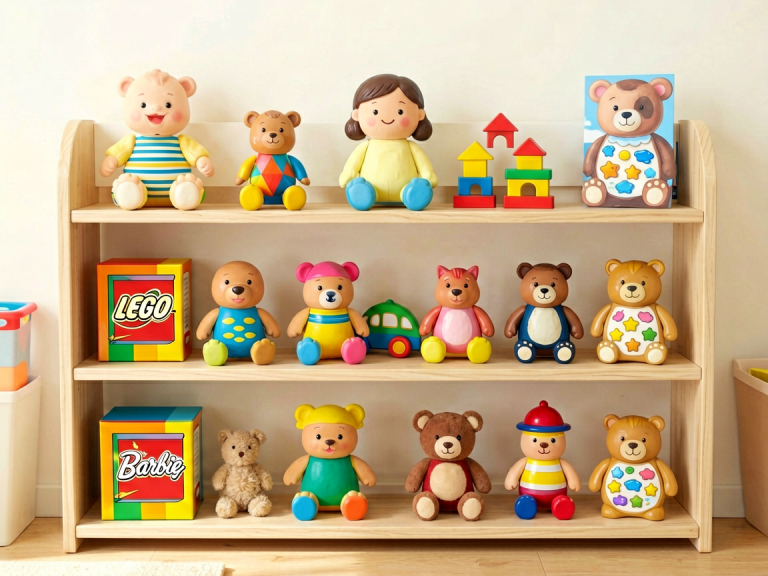
Create an environment that invites exploration. Place toys at your baby’s reach, either on a low shelf or in a basket on the floor. Rotate toys every few weeks to maintain novelty. Keep the play area free from clutter so your baby has room to spread out and practice without distraction. Most importantly, follow your baby’s cues. If they become frustrated or turn away, move on to a different activity or take a break. Learning should feel like play, not work.
The Role of Parental Patience and Encouragement
Teaching fine motor skills is not about achieving milestones on a rigid timeline. Every baby develops at their own pace. Some will master the pincer grasp at nine months; others may not until eleven months—and both are perfectly normal. Your most powerful tool is your presence and encouragement. Narrate what your baby is doing: “You are picking up the red block! You are putting it in the cup!” This verbal reinforcement helps them connect their actions with language and builds their sense of accomplishment. Avoid over-correcting; if your baby drops a toy repeatedly, laugh together and hand it back. The repetition itself is how the brain strengthens those neural pathways.
Remember that fine motor skills are also tied to larger muscle groups. Core stability (from tummy time and crawling) and shoulder strength (from reaching and rolling) provide the foundation for hand control. So ensure your baby gets plenty of opportunities for gross motor play as well. The body works as an integrated system.
Conclusion
Teaching fine motor skills to babies is a gentle, joyful process that unfolds naturally when you provide the right tools, time, and attention. From the first reflexive clench of a newborn’s fingers to the proud scribble of a toddler, each small success builds confidence and competence. By offering varied sensory experiences, age-appropriate challenges, and a safe, supportive environment, you are not just helping your baby grasp objects—you are helping them grasp the world. So let those tiny hands explore, drop, pick up, and try again. With each clumsy attempt, a future of writing, drawing, and creating begins.