The Art of Choosing Learning Toys: A Practical Guide for Nurturing Minds Through Play
Introduction
In a world brimming with plastic gadgets, flashing lights, and digital screens, the simple concept of a “learning toy” has become both a marketing buzzword and a genuine parental dilemma. Every toy store aisle whispers promises of cognitive leaps, STEM readiness, and motor skill mastery. But how does one separate genuine educational value from mere entertainment? The answer lies not in the price tag or the brand, but in a thoughtful, child-centered approach. Choosing the right learning toys is a delicate balance between understanding child development, recognizing individual interests, and embracing the messy, joyful process of discovery. This guide unpacks the principles, pitfalls, and practical strategies for selecting toys that truly teach—without turning playtime into a chore.
—
1. Understanding the Core Principles of Learning Through Play
Before diving into specific toy categories, it is essential to grasp what makes a toy “educational.” A learning toy is not simply one that drills facts or forces memorization; it is a tool that encourages active engagement, problem-solving, creativity, and social interaction. According to developmental psychologists, the best learning toys align with Vygotsky’s “zone of proximal development”—they challenge a child just enough to stretch their abilities without causing frustration.
For instance, a simple set of wooden blocks is a classic learning toy because it promotes spatial reasoning, balance, symmetry, and even early physics (why does a tall tower fall?). In contrast, a battery-operated toy that sings the alphabet may only teach passive recognition. The key is to look for toys that invite open-ended play, where the child—not the toy—drives the action. Look for items that have multiple uses, can be combined with other objects, and allow for trial and error.
Remember, the most powerful learning often happens when things go “wrong.” A puzzle piece that doesn’t fit teaches resilience and observation. A marble rolling off a ramp teaches gravity. Choose toys that celebrate the process, not just the correct outcome.
—
2. Age Appropriateness: Matching Toys to Developmental Stages
One of the most common mistakes parents make is buying toys that are either too simple or too advanced. A toy that is too simple bores the child and offers no cognitive stretch; one that is too complex frustrates and is quickly abandoned. Here is a breakdown of developmental stages and suitable learning toys:
Infants (0–12 months): At this stage, sensory exploration is paramount. Look for toys that stimulate sight, sound, and touch. High-contrast black-and-white cards, soft rattles, textured fabric books, and grasping toys support visual tracking and fine motor development. Avoid toys with small parts that pose choking hazards.
Toddlers (1–3 years): This is the age of cause-and-effect, language explosion, and physical mobility. Shape sorters, stacking cups, simple puzzles with large knobs, push-and-pull toys, and musical instruments (drums, shakers) build hand-eye coordination and introduce basic concepts like colors and shapes. Pretend play toys (e.g., toy kitchen, doctor kit) nurture imagination and language.
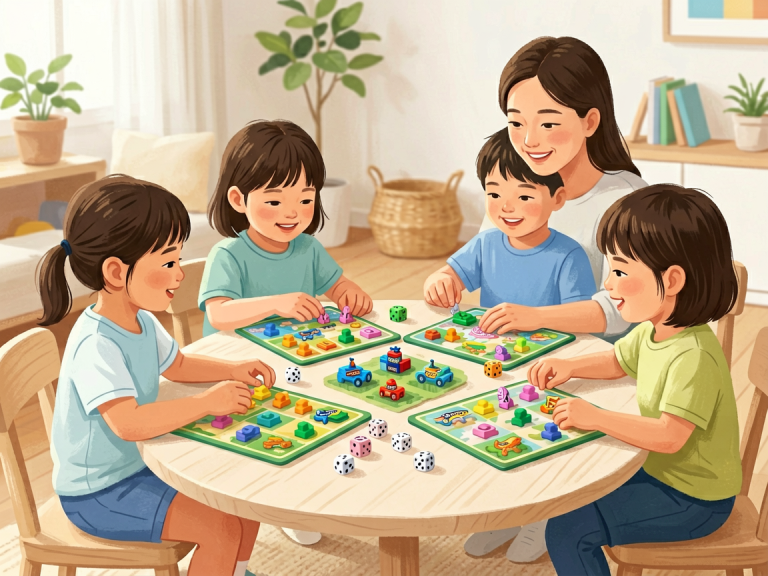
Preschoolers (3–5 years): Cognitive leaps occur here. Construction sets like LEGO Duplo or magnetic tiles foster engineering thinking. Board games with simple rules (e.g., Candy Land, Chutes and Ladders) teach turn-taking, counting, and pattern recognition. Art supplies (crayons, playdough, scissors) develop fine motor skills and self-expression. Science kits with safe experiments can spark curiosity.
Early School Age (5–8 years): Children begin to grasp abstract concepts. Strategy games like chess or checkers, complex puzzles (100+ pieces), coding toys (e.g., Code-a-Pillar, simple robotics), and building sets with gears and pulleys encourage logical reasoning. Books with interactive elements, math games, and measurement tools (rulers, scales) align with school curricula.
Older Kids (8+): At this stage, focus on hobbies and advanced problem-solving. Science kits (chemistry, electronics), model-building, complex strategy games (e.g., Settlers of Catan), language learning games, and creative tools (stop-motion animation apps, sewing kits) support sustained interest and deep learning.
Always check the manufacturer’s age recommendations, but also observe your child. A gifted three-year-old might enjoy a four-year-old’s puzzle; a cautious six-year-old might need simpler tools. The goal is to find the sweet spot where challenge meets confidence.
—
3. Evaluating Educational Value: Beyond the Label
Not all toys labeled “educational” live up to the hype. To critically assess a toy’s learning potential, ask yourself these questions:
- Does it promote active versus passive play? A toy that requires the child to manipulate, build, create, or think actively is far more valuable than one that lights up and sings by itself. Avoid “edutainment” gadgets that do the work for the child.
- Does it support multiple domains of development? The best toys address more than one area. A simple set of blocks, for example, works on fine motor skills (grasping, stacking), spatial awareness (geometry), creativity (building castles), and social skills (sharing, collaboration).
- Can it be used in open-ended ways? Open-ended toys, like wooden blocks, art materials, or loose parts (buttons, stones, pegs), have no single “correct” use. They adapt to the child’s imagination and grow with them. Closed-ended toys (like a single-function puzzle) have their place but should not dominate the collection.
- Does it encourage problem-solving and critical thinking? Look for toys that present a challenge—a maze, a logic puzzle, a design task. The child must figure out how to achieve a goal, which builds executive function skills.
- Does it foster collaboration or social learning? Many learning experiences are enriched by interaction. Cooperative board games, building projects, or dress-up sets that encourage group play teach negotiation, empathy, and communication.
Avoid toys that are overly prescriptive, such as those that shout “Correct!” after every action. These can stifle creativity and create anxiety. Instead, choose toys that whisper possibilities.
—
4. Safety, Durability, and Material Considerations
A learning toy is useless if it breaks in a week or harms the child. Safety should be the very first filter.
- Check for certifications. Look for safety marks like ASTM (American Society for Testing and Materials) or CE (Conformité Européenne). These ensure the toy has been tested for hazards. Avoid toys with toxic paints, phthalates, or lead—especially for younger children who mouth objects.
- Assess durability. Children are not gentle. A toy that shatters easily not only frustrates but creates sharp edges. Wooden toys, high-quality plastics (ABS), and fabric items with reinforced seams tend to last. Consider toys that can be repaired or have replaceable parts.
- Material choices matter. Wooden toys are classic, non-toxic, and pleasant to touch. Plastics can be lightweight and washable. Natural materials like cotton, wool, or untreated wood often have sensory benefits and lower environmental impact. For children with allergies, avoid latex or strong synthetic scents.
- Avoid small parts for young children. Choking hazards are the leading cause of toy-related injuries. Use a toilet paper roll test: if a toy or part fits inside, it’s too small for children under three.
- Consider noise levels. Some electronic toys emit sounds above 85 decibels, which can damage hearing. Opt for toys with volume controls or those that make gentle, natural sounds. Quieter play also encourages more thoughtful interaction.
- Sustainability as a learning tool. Choose toys made from recycled or renewable materials. This teaches children environmental responsibility. Brands that offer replacement parts or take-back programs extend the toy’s life.
—
5. Aligning Toys with Your Child’s Unique Interests and Learning Style
Every child is wired differently. A toy that fascinates one may bore another. The key is to observe your child’s natural curiosities.
- For the builder: Look for construction kits, magnetic tiles, marble runs, or even recycled materials (cardboard boxes, tape, tubes). These children love to see how things fit together and come apart.
- For the artist: Art supplies (watercolors, clay, collage materials), musical instruments, or storytelling kits (puppets, blank books) allow self-expression. Avoid kits with pre-drawn outlines; let them create from scratch.
- For the scientist: Magnifying glasses, simple microscopes, nature collection kits, magnet sets, or science experiment boxes appeal to children who ask “why.” Encourage them to record observations in a journal.
- For the mover: Physical learning toys like balance boards, hopscotch mats, jump ropes, or obstacle course components support kinesthetic learners. Even math can be learned through hopping on numbered spots.
- For the social learner: Cooperative games, drama sets, or group puzzle challenges. These children thrive when interacting and can learn empathy and teamwork through play.
- For the screen-aware child: Not all digital learning is bad. Choose apps or interactive toys that require active thinking, not passive swiping. Coding robots that use tangible blocks or apps like Osmo blend physical and digital play.
Rotate toys every few weeks. When a child gets bored, put the toy away for a month and reintroduce it. Often, it will feel new again, and the child may discover deeper engagement the second time.
—
6. Avoiding Common Pitfalls and Marketing Traps
Toy companies spend billions convincing parents that their product is the magic key to genius. Be a savvy shopper:
- Beware of “brain-boosting” claims. There is no toy that can make a baby “smarter” in a month. True learning is cumulative and context-dependent. No single toy teaches everything.
- Don’t overbuy. A room filled with dozens of toys often leads to scattered attention. Research shows that fewer, high-quality toys lead to deeper, more focused play. Aim for a curated collection of 10–15 open-ended toys that complement each other.
- Avoid gender stereotyping. Learning toys should be gender-neutral. A tool set is not just for boys; a dollhouse is not just for girls. Restricting toys limits skill development. A boy who plays with a kitchen learns life skills; a girl who plays with building blocks learns spatial reasoning.
- Remember that the toy is not the teacher. No gadget replaces a caring adult’s interaction. Even the most brilliant learning toy becomes meaningless if a child plays alone in silence. Ask questions, play alongside them, and extend the learning: “What happens if we add another block? How did you make that pattern?”
- Watch for trends. Fad toys (e.g., fidget spinners, certain collectibles) rarely have lasting educational value. They are designed for short-term novelty. Invest in timeless toys that have been loved for generations: building blocks, art supplies, board games, puzzles.
—
7. The Role of Simplicity: Why Less is Often More
Some of the best learning toys are the simplest: a cardboard box, a stick, a pile of sand. They force the imagination to work harder. When evaluating a toy, consider its “play potential.” A toy that can be used in 50 different ways is far more valuable than one that offers only 5 pre-programmed activities.
Montessori philosophy emphasizes real, purposeful materials. A child-sized broom teaches practical life skills more effectively than a toy vacuum with flashing lights. A set of polished stones and tweezers builds fine motor control and concentration better than a noisy electronic game.
Simple toys also encourage mindfulness. Without bells and whistles, children must engage their own minds. This builds attention span, patience, and creative problem-solving—skills that are increasingly rare in a fast-paced, digital world.
—
8. Final Thoughts: Trust Your Child and Your Instincts
After reading all the criteria, you might feel overwhelmed. But remember: you know your child better than any expert or toy company. Watch them play. What do they return to again and again? What makes their eyes light up? That is your compass.
A learning toy is ultimately a vehicle—a means for a child to explore, experiment, and express. It doesn’t have to be expensive, trendy, or complex. A set of colored blocks, a magnifying glass, a basket of pinecones—these can be profound teachers. The magic is not in the toy itself, but in the relationship the child builds with it.
Choose toys that respect childhood: its messiness, its slowness, its wonder. Avoid the pressure to “optimize” every waking moment. Play is not a tool to produce geniuses; it is the very soil in which genius grows. By choosing learning toys thoughtfully, you are not just buying an object—you are sending a message to your child that you value their curiosity, their imagination, and their unique way of discovering the world.
And that, more than any toy, is the greatest lesson of all.