The Art of Solitary Discovery: Cultivating Independent Play Activities at Home
Introduction
In an era dominated by structured schedules, extracurricular classes, and digital entertainment, the simple yet profound act of independent play has become an undervalued treasure. Independent play is not merely a way to keep children occupied while parents attend to chores or work; it is a fundamental pillar of healthy child development. It fosters creativity, problem-solving skills, emotional regulation, and a deep sense of self-reliance. When a child engages in self-directed play at home, they are not just passing time—they are building the architecture of their own mind. This article explores the philosophy, practical strategies, and a rich repertoire of independent play activities that can transform a home into a laboratory of imagination and growth. By understanding the dynamics of solitary play, parents can gently step back and watch their children bloom into confident, resourceful individuals.
The Importance of Independent Play: More Than Just "Keeping Busy"
Before diving into specific activities, it is essential to grasp why independent play matters so deeply. Psychologists and child development experts have long emphasized that unstructured, self-chosen play is the primary vehicle through which children make sense of the world. When a child plays alone, they are free from the pressure of peer competition, adult direction, or the need to perform. This freedom allows them to experiment with ideas, fail without judgment, and persist in the face of difficulty.
Independent play also strengthens executive function skills—the mental processes that enable planning, focus, and self-control. For example, a child building a fort from blankets and pillows must visualize the structure, gather materials, adjust their strategy when a blanket slides off, and negotiate with their own frustration. These micro-challenges build cognitive resilience. Furthermore, solitary play provides a necessary emotional reset. In a world that constantly demands social interaction and external stimulation, quiet moments of self-engagement allow children to process their feelings, daydream, and develop a rich inner life. This is the foundation of creativity and authentic self-expression.
Creating a Play-Friendly Environment: The Stage for Independence
The home environment can either invite or inhibit independent play. To encourage children to play on their own, parents must deliberately design spaces that are both safe and inspiring. This does not require a elaborate playroom filled with expensive toys. Instead, focus on accessibility, open-ended materials, and a sense of ownership.
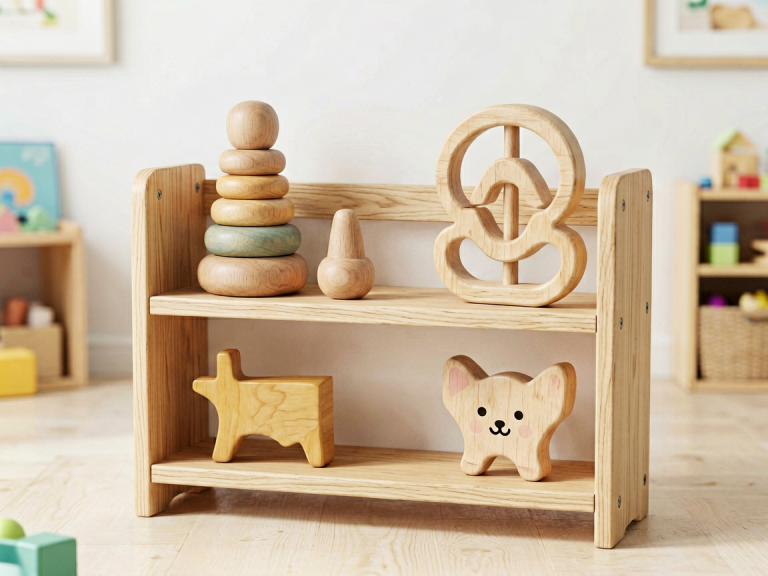
First, consider the principle of "low shelves, high freedom." Toys and materials should be placed at the child's eye level, organized in clear bins or trays. When children can see and reach their playthings without asking for help, they are more likely to initiate play. Rotate toys periodically to maintain novelty—keeping only a few options available at a time prevents overwhelm and encourages deeper engagement.
Second, include open-ended materials that can be used in countless ways. Blocks, wooden planks, fabric scraps, cardboard boxes, art supplies, and natural objects like pinecones or stones invite endless possibilities. Unlike single-purpose toys (e.g., a plastic squeaking hammer that only "works" one way), open-ended materials spark divergent thinking. A cardboard box can become a spaceship, a castle, a car, or a hiding place—all within a single afternoon.
Third, create distinct zones for different types of play. A quiet corner with a soft rug, pillows, and a basket of books invites reading and reflection. A small table with art supplies encourages drawing and crafting. A space on the floor with a building set invites construction. By clearly delineating these zones, the child’s brain learns to associate each area with a specific mode of play, making transitions easier and play more focused.
Age-Appropriate Independent Play Activities: From Toddlers to School-Age Children
Independent play looks vastly different at various developmental stages. What fascinates a two-year-old will bore an eight-year-old. Therefore, it is crucial to tailor activities to the child’s cognitive and motor abilities while still stretching their imagination.
*For Toddlers (Ages 1–3): Sensory Exploration and Simple Manipulation*
At this age, independent play is short-lived—often just 5 to 15 minutes—but highly valuable. Focus on activities that engage the senses and require basic motor skills. A "sensory bin" filled with dry rice, beans, or sand, along with scoops, cups, and small toys, can hold a toddler’s attention for a surprising stretch. Water play, using a shallow basin and floating toys or plastic cups, is another classic. Simple puzzles with large knobs, stacking rings, and shape sorters also promote solitary concentration. Importantly, parents should resist the urge to "help" too quickly; allowing a toddler to struggle with fitting a shape into a slot builds perseverance.
*For Preschoolers (Ages 3–5): Pretend Play and Constructive Projects*
Children in this age group have blossoming imaginations and longer attention spans. They can engage in independent play for 20 to 40 minutes if the activity is compelling. One powerful strategy is to set up "invitations to play." For example, arrange a small basket of dress-up clothes and a mirror in a corner; leave a collection of toy animals and a few fabric scraps for making "blankets"; place a set of wooden blocks next to a picture of a simple building. The child, seeing these deliberately arranged materials, feels an implicit invitation to begin.
Another excellent activity is "storytelling with props." Provide a small box containing a few figurines (people, animals) and some natural items like stones or twigs. Challenge the child to create a story using these items, perhaps recording it on a simple voice recorder. This merges imaginative play with narrative skills. Additionally, art projects that require minimal adult assistance—such as glueing, cutting safety scissors, and drawing with crayons—can become extended solitary pursuits if the materials are well-stocked and the child knows where to find them.
*For School-Age Children (Ages 6–10): Complex Projects and Skill-Building*
Older children crave autonomy and mastery. Independent play for this group can involve building elaborate models, engaging in scientific experiments, or writing and illustrating their own books. LEGO sets with step-by-step instructions offer satisfying structure, but also leave room for free building. A "maker box" containing a hot glue gun (with supervision), recycled materials, string, and simple tools encourages engineering and design.
Board games designed for solo play—such as basic logic puzzles, Rubik’s cubes, or solitaire variations—can also be excellent. Alternatively, children can create their own "treasure hunt" by hiding small objects around the house and drawing maps for themselves. Gardening, if space allows, is another deeply fulfilling independent activity: a child can tend to a small potted plant, water it, observe its growth, and keep a journal. For tech-savvy children, coding apps or digital art platforms (when used mindfully) can also be a form of independent creative play.
The Parent’s Role: Invisible Support and Gentle Distance
One of the greatest challenges for parents is knowing when to intervene and when to remain invisible. The goal is not to abandon the child, but to provide a secure base from which they can explore independently. This requires a delicate balance. Parents should first model how to use materials, then step back. They should be available for brief check-ins or to help when frustration peaks, but avoid solving the problem for the child. Instead, ask guiding questions: "What could you try next?" or "What happened just before it fell?"
Another key is to establish a predictable rhythm. If children know that every afternoon from 3 to 4 p.m. is "quiet independent play time," their brains will anticipate and prepare for it. During this time, parents can be nearby—perhaps reading a book themselves—but not interacting. This parallel presence provides comfort without intrusion. Over time, children internalize the routine and begin to look forward to their solitary adventures.
Overcoming Common Obstacles: Boredom, Resistance, and Screen Addiction
Even in the most thoughtfully prepared home, children will sometimes resist independent play. Boredom is not a problem to be fixed; it is a gateway to creativity. When a child says, "I’m bored," resist the impulse to offer a solution. Instead, say, "What a wonderful opportunity to think of something new!" Keep a "boredom jar" filled with simple ideas written on slips of paper—ideas like "build a tower using only books," "draw a map of your room," or "make up a dance to your favorite song." The act of choosing a slip and following through builds initiative.
Screen addiction is another common hurdle. Rather than banning screens entirely, create clear boundaries: no screens during independent play time. Instead, ensure that the alternatives are visible and inviting. Sometimes, simply turning off the Wi-Fi for an hour can magically reawaken a child’s capacity for pretend. Also, consider that some screen-based activities—like using a drawing app or constructing virtual worlds—can be a legitimate form of independent play if they are creative and open-ended. The key is to avoid passive consumption.
The Long-Term Benefits: What Independent Play Cultivates
The fruits of independent play are not always immediately visible, but they ripen over time. Children who regularly engage in self-directed play at home tend to become more confident learners. They are less dependent on external validation and more comfortable with their own company. They develop what psychologist Mihaly Csikszentmihalyi called "flow"—the state of complete absorption in an activity, which is the hallmark of deep satisfaction and happiness.
Furthermore, independent play teaches children to manage their own time and emotions. When a child chooses to build a clay sculpture, and it collapses halfway through, they must decide whether to cry, fix it, or start over. These tiny moments of choice shape the adult they will become. They learn that frustration is temporary, that persistence yields results, and that their own mind is a source of endless resourcefulness.
Conclusion: A Gift of Presence and Absence
Ultimately, fostering independent play at home is a gift that requires both presence and absence. Presence, in the form of intentional environment design, gentle guidance, and emotional support. Absence, in the willingness to step back and trust the child’s own instincts. This dance is not easy; our culture often urges us to fill every minute with instruction, entertainment, or interaction. But by carving out space for solitude and self-direction, we give our children something far more valuable than any class or toy: the knowledge that they are capable, creative, and whole on their own. So the next time you see your child deeply engaged in arranging pebbles in a pattern, or whispering a story to a stuffed animal, pause. Do not interrupt. You are witnessing the quiet miracle of independent play—and it is one of the most beautiful things a home can hold.