The Best Toys for Creative Play: Unlocking Imagination and Cognitive Growth
In an age dominated by screens, flashing lights, and pre-programmed entertainment, the concept of "creative play" has never been more essential—nor more endangered. Parents and educators alike are searching for tools that can nurture a child’s natural curiosity, problem-solving abilities, and imaginative thinking. The best toys for creative play are not the ones that buzz, beep, or do the thinking for the child. Instead, they are the silent partners in a child’s journey of discovery: open-ended, flexible, and endlessly reconfigurable. This article explores the most effective categories of toys that foster genuine creativity, backed by developmental psychology and real-world experience.
The Philosophy Behind Creative Play Toys
Before diving into specific recommendations, it is crucial to understand what makes a toy “creative.” A creative toy does not prescribe a single outcome. It does not have a “correct” way to be played with. Instead, it invites the child to impose their own structure, narrative, and rules. This is the principle of *open-ended play*. According to child development experts, such play strengthens executive functions, including working memory, cognitive flexibility, and inhibitory control. Toys that support this philosophy encourage children to experiment, fail, revise, and invent. They are the antithesis of passive entertainment.
Open-Ended Building Blocks: The Foundation of Constructive Imagination
Perhaps no toy category is more emblematic of creative play than building blocks. From classic wooden unit blocks to interlocking plastic systems like LEGO, the humble block allows children to construct anything from a castle to a spaceship to a simple tower. The key is that the child is the architect. They must decide how high to stack, how to balance weight, and what shape to create. The best building sets are those that include a variety of shapes, sizes, and colors, but avoid overly specific pieces that dictate a particular model.
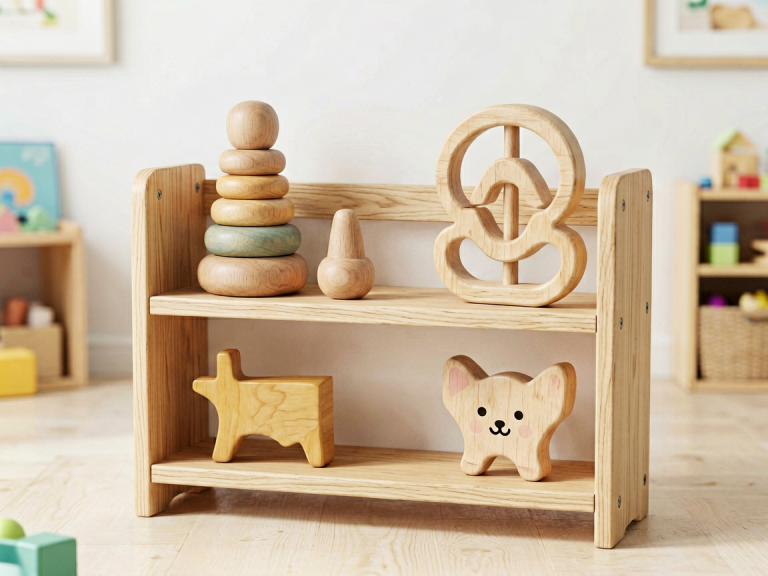
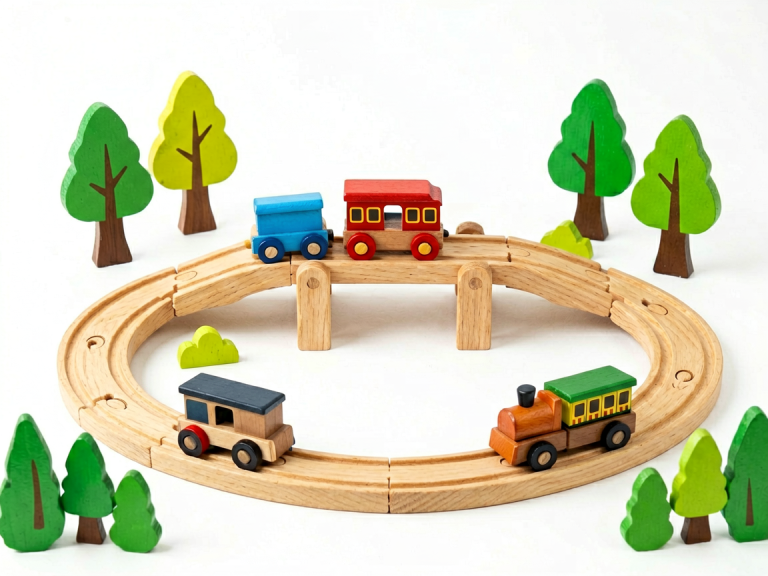
Wooden blocks, in particular, offer tactile satisfaction and durability. Their natural texture and weight provide sensory feedback that plastic often lacks. For younger children (ages 1–4), large, lightweight foam blocks or cardboard bricks are ideal for safe stacking and knocking down. For older children (ages 5+), more complex systems like magnetic tiles or modular construction kits (e.g., K’NEX or Tinkertoys) introduce structural engineering concepts. The most effective building toys are those that can be combined with other materials—for example, adding fabric scraps as roofs or toy animals as inhabitants. This cross-category integration is a hallmark of deep creative play.
Art Supplies: The Unlimited Canvas of Expression
Creativity often finds its most direct outlet through art. However, not all art supplies are created equal. The best toys for creative play in this domain are those that offer minimal constraints and maximum exploration. A simple set of washable markers, a stack of plain white paper, and a pair of safety scissors can provide hours of open-ended creation. But the truly transformative art toys go a step further.
Consider watercolor paint sets with a brush and a water dish. Unlike crayons or colored pencils, watercolors invite unpredictability: colors bleed, blend, and create textures that children cannot fully control. This lack of control forces the child to adapt, to see accidental shapes as opportunities, and to develop a tolerance for ambiguity. Similarly, modeling clay or playdough is a three-dimensional art medium that allows children to sculpt, flatten, roll, and combine. Clay can become a bowl, a monster, a flower, or a tiny planet. The act of manipulating a malleable substance strengthens fine motor skills and spatial reasoning.
For older children (ages 7+), more sophisticated art tools like smock, easel, and acrylic paints or air-dry clay enable more complex projects. But the most important feature remains freedom: no coloring books, no paint-by-numbers, no expectations. The child must be the sole director of their artistic process.
Imaginative Role-Play Props: Costumes and Loose Parts
Creative play often involves pretending to be someone or something else. This type of play—often called dramatic or symbolic play—is essential for developing empathy, language skills, and social understanding. The best toys in this category are not elaborate, battery-operated dress-up kits but rather simple costumes and loose parts that can be repurposed.
A basic collection of fabric scarves, hats, capes, and masks allows a child to transform into a wizard, a doctor, a superhero, or an alien. Adding a play kitchen with pots, pans, and plastic food invites cooking scenarios. But the most powerful role-play tools are loose parts: generic objects like cardboard tubes, bottle caps, wooden spoons, and fabric remnants. These items have no fixed purpose, so a cardboard tube can become a telescope, a microphone, a magic wand, or a rolling pin. The child’s imagination assigns meaning.
Puppets—whether hand puppets, finger puppets, or simple sock puppets—are another exceptional tool for creative role-play. Puppets allow children to act out dialogues, explore emotions, and create narratives in a safe, indirect way. They can be purchased or handmade, which itself becomes a creative activity. The best puppet sets include multiple characters with neutral expressions, so the child can project different moods onto them.
Construction and Engineering Kits: STEM Meets Creativity
While some parents worry that science and engineering toys are too structured for creative play, the right kits actually spark inventiveness. The key is to choose kits that are open-ended rather than those that lead to a single model. For example, magnetic building tiles (like Magna-Tiles) allow children to create geometric shapes, bridges, and even simple machines. Similarly, gear sets (such as those from Learning Resources) let children design their own spinning contraptions.
Coding toys for young children—like Botley the Coding Robot or Code-a-Pillar—introduce basic logic without a screen. Children arrange command cards or physical segments to make the robot move, but they can also use the same robot in free-play mode, driving it through obstacle courses they build themselves. The best of these toys balance instruction with improvisation.
For older children (ages 8+), simple electronics kits (like Snap Circuits or littleBits) allow them to build working flashlights, alarms, or radios. The creativity emerges when they deviate from the manual—connecting components in novel ways to achieve a new function. These toys teach that creativity is not separate from technical knowledge; rather, it is the engine that drives innovation.
Natural and Sensory Materials: Connecting with the Real World
In an era of plastic dominance, the best creative play toys often come from nature. Sand, water, mud, leaves, stones, and pinecones are the original open-ended play materials. A sandbox with a few scoops, buckets, and molds can occupy a child for an entire afternoon as they dig tunnels, build castles, and create landscapes. Water play, with cups, funnels, and floating toys, teaches physics and cause-and-effect in a gentle, exploratory way.
Sensory bins—plastic tubs filled with rice, beans, sand, or water beads—are a controlled way to bring natural materials indoors. Adding scoops, measuring cups, small animals, and containers transforms the bin into a micro-world. The child decides whether the rice is a desert, a snowfield, or a construction site. Sensory play is particularly beneficial for children who need tactile stimulation or who are developing fine motor control.
Play silks (large, lightweight pieces of dyed silk) are another remarkable natural-material toy. They can be draped to form tents, used as rivers in imaginary landscapes, tied into capes, or wrapped around dolls. Their beauty and versatility stimulate both visual and tactile senses.
The Role of Simplicity: Why Less Is More
A common mistake among well-meaning adults is to overcomplicate the toy selection. The best toys for creative play are often the simplest. A cardboard box can become a spaceship, a house, a car, or a time machine—if the child is allowed to see it as such. The most creative play happens when there are fewer distractions. A room cluttered with specialized, single-use toys actually inhibits creativity because the child is overwhelmed by fixed choices.
Therefore, the ultimate “toy” for creative play is time and space. A child needs unhurried, uninterrupted blocks of time to immerse themselves in their own worlds. They need an environment where mess is accepted, where they can spread materials across the floor, and where an unfinished project can remain intact until the next day. Adults can support this by providing a few high-quality, open-ended toys rather than a mountain of novelty items.
Conclusion: Choosing Toys That Grow With the Child
The best toys for creative play are those that adapt to the child’s developmental stage and remain interesting across years. A set of wooden blocks bought at age two can still engage a ten-year-old if used in combination with other materials. A costume trunk from a thrift store can spark new stories each season. The goal is not to buy the “latest” or the “most educational” toy, but to cultivate a play environment that honors the child’s innate drive to create, explore, and imagine.
When evaluating a toy, ask: Does it allow multiple uses? Does it require the child’s active input? Does it leave room for failure and revision? Can it be combined with other toys? If the answer is yes, then it is likely a candidate for the list of best toys for creative play. In a world that increasingly pushes children toward passive consumption, giving them the tools to build their own worlds is one of the greatest gifts we can offer. The toy itself is just a catalyst; the real magic comes from the child’s mind.