The Power of Play: A Guide to Beginner Toys for Logical Thinking
In an age dominated by screens and passive entertainment, the ability to think logically has become one of the most valuable skills a child—or even an adult—can cultivate. Logical thinking is not just about solving math problems or coding; it is the foundation of problem-solving, critical analysis, and structured reasoning. Fortunately, the seeds of this skill can be planted early through play. The right toys can transform a simple afternoon into a classroom where cause and effect, sequencing, and deduction are learned naturally and joyfully. For beginners—whether toddlers taking their first steps in reasoning or older children who have never been exposed to structured challenges—selecting the right “beginner toys for logical thinking” is crucial. This article explores the landscape of such toys, categorizing them by type and explaining why each one works, how to use it effectively, and what specific logical skills it develops.
Why Logical Thinking Matters (And How Toys Help)
Logical thinking is the mental process of using reason to reach a conclusion. It involves pattern recognition, deductive reasoning, sequential processing, and the ability to understand if-then relationships. While some children seem naturally inclined toward logic, research in developmental psychology shows that these abilities are largely built through experience and practice. Toys that are specifically designed to challenge the mind in a low-stakes, playful way provide that experience. For beginners, the key is that the toys must be accessible—not so difficult that they cause frustration, but challenging enough to stretch thinking. They should also offer immediate feedback: when a piece fits, a puzzle is solved, or a circuit lights up, the child understands instantly whether their reasoning was correct. This feedback loop reinforces logical processes without the need for external praise or correction. Moreover, these toys encourage persistence and iteration—two hallmarks of a logical mindset. A child who tries a wrong move and then tries again is learning that mistakes are data, not failures.
Building Blocks and Construction Sets: The Foundation of Spatial Logic
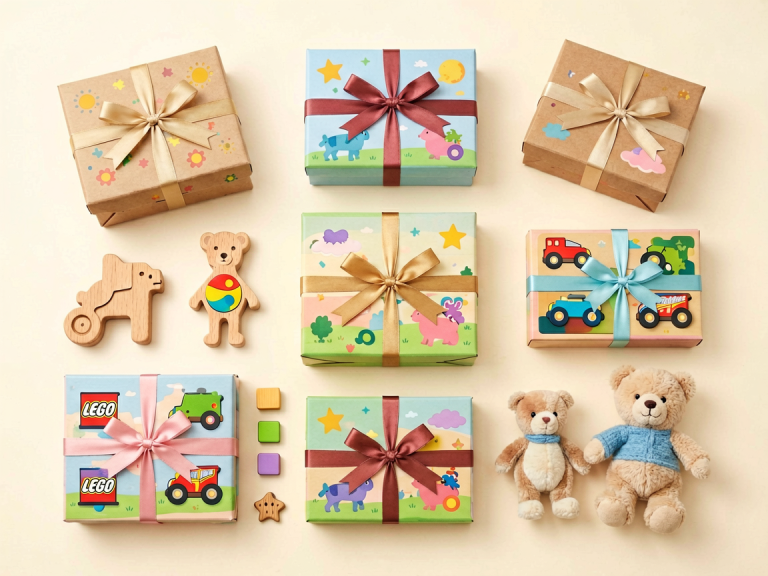
One of the most classic categories of beginner toys for logical thinking is building blocks and construction sets. From simple wooden blocks to interlocking plastic bricks like LEGO Duplo, these toys teach spatial reasoning, symmetry, balance, and cause-and-effect. When a child stacks a block too high and it falls, they learn about gravity and structural stability. When they attempt to build a tower that matches a picture, they engage in visual-spatial analysis—figuring out how the pieces in the picture correspond to the pieces in their hands.
For absolute beginners, large, colorful blocks that are easy to grasp are ideal. Children as young as 18 months can explore stacking and knocking down, which lays the groundwork for understanding that actions have consequences. As they grow, interlocking blocks with basic connectors introduce the concept of constraints—not every piece can connect to every other piece, so the child must choose based on shape and function. This is a rudimentary form of logical classification.
More advanced construction sets, such as those with gears, pulleys, or magnetic tiles, introduce mechanical logic. A gear set, for example, teaches that turning one gear will cause another to turn, but only if the teeth mesh. This is an early lesson in cause-effect sequences and directional thinking. Magnetic tiles, on the other hand, allow children to build 3D structures that are both strong and transparent, helping them visualize internal relationships. The best part? These toys scale with the child: a toddler can simply stack them, while a five-year-old can build a bridge that must support weight—requiring planning and trial-and-error optimization.
Jigsaw Puzzles and Pattern Games: Sequencing and Deduction
Jigsaw puzzles are arguably the quintessential logic toy for beginners. A simple puzzle with four to twelve large pieces teaches the child to recognize that a piece’s shape, color, and image must match a specific spot. This is pure logical deduction: “This piece has a straight edge, so it must go on the border. This piece has a blue sky, so it must fit where the sky is missing.” The process of eliminating possibilities, testing fits, and rotating pieces mentally are all exercises in logical thinking.
For very young beginners, peg puzzles (where pieces fit into cutout holes) are a first step. They teach matching and one-to-one correspondence. As the child progresses, floor puzzles with 24 to 48 pieces challenge them to develop strategies: sorting pieces by edge versus interior, grouping by color, or assembling a recognizable part of the image first. These strategies are essentially algorithms—step-by-step procedures for solving a problem.
Beyond jigsaw puzzles, pattern recognition toys like wooden shape sequences (e.g., “circle, square, circle, square—what comes next?”) are excellent for teaching inductive reasoning. The child must observe a repeating pattern and predict the next element. This skill is foundational for mathematics and logic. Similarly, classification games where the child sorts items by size, color, or shape help develop the ability to identify attributes and group objects logically. Many toy sets combine these: for instance, a set of animal figures that must be sorted by habitat or number of legs turns classification into a narrative game.
Board Games and Card Games: Rules, Strategy, and Turn-Taking
Board and card games are social logic toys that teach rule-based reasoning and strategic thinking. For beginners, games with very simple rules and short play times are best. Classic examples include “Candy Land” (for very young children), which teaches turn-taking and the concept of following a path—a linear sequence. While it relies largely on luck, it still requires the child to understand that the spinner determines a move, which is a simple cause-effect relationship.
Slightly more advanced beginner games introduce decision-making. Games like “Hi Ho! Cherry-O” require players to count and to choose whether to spin again or stop. “Uno” (or its junior version) teaches color and number matching, and introduces the idea that certain cards have special powers (reverse, skip, wild). This is a direct lesson in conditional logic: “If I play a skip card, then the next player loses a turn.” The child must understand the rules and anticipate outcomes.
Perhaps the most powerful logical board game for beginners is “Connect Four” or “Tic-Tac-Toe”. These simple two-player games involve pattern recognition and prediction. In Connect Four, the child must think one or two moves ahead: “If I drop my red disc here, it will create a line of three; but if my opponent drops a disc here, they will block me.” This is the essence of strategic logic—reasoning about what might happen next based on current actions. Even a three-year-old can begin to grasp the idea of blocking, which is a big cognitive leap.
Card games like “Go Fish” or “Old Maid” teach memory and matching, which are linked to logical classification. “Go Fish” requires asking for a specific card, deducing from the response whether the other player might have it, and remembering which cards have been seen. These skills—memory, inference, and probability—are all logical subskills.
Logic Puzzles, Tangrams, and Brain Teasers: Focused Reasoning
For children who have mastered the basics, dedicated logic puzzles are the next step. These come in many forms, but the most beginner-friendly are those with physical pieces that provide tactile feedback. Tangrams, for example, consist of seven geometric shapes that must be arranged to form a specific outline. This challenges spatial logic and problem decomposition: the child must figure out how to break the target shape into the available pieces. Tangram sets often come with progressively harder patterns, making them ideal for self-paced learning.
Rubik’s Cube is too complex for absolute beginners, but there are simplified versions—like the 2×2 cube or cube-shaped puzzles with only two colors—that teach the concept of rotation and alignment. Even a wooden interlocking puzzle (e.g., a burr puzzle) where pieces must be disassembled and reassembled in a specific order teaches sequential logic and the idea that sometimes you must go backwards to move forwards.
There are also commercial logic game series like “ThinkFun’s” line (e.g., “Robot Turtles” for preschoolers, or “Chocolate Fix” for slightly older kids). Robot Turtles is a board game that teaches programming logic—movement, sequences, and debugging—without any screens. Children lay down cards to move their turtle to a gem, and when the path is wrong, they must “debug” by figuring out which card caused the error. This is an incredibly direct and fun way to learn logical sequencing. “Chocolate Fix” is a puzzle where chocolates (different shapes and colors) must be arranged in a tray to match given clues, teaching deductive reasoning: “If the strawberry chocolate is not on the top row, then it must be in the middle… etc.”
Another excellent category is maze and maze-construction toys. Marble runs, where children build tracks for a marble to roll from start to finish, are fantastic for understanding gravity, momentum, and sequencing. The marble’s path is a physical representation of a logical flow. Similarly, coding board game “Code Master” from ThinkFun uses a map and programming tokens to guide an avatar through a landscape, teaching conditional loops and planning.
Choosing the Right Toy: Age, Interest, and Challenge Level
Selecting the ideal beginner toy for logical thinking depends on the child’s age and current abilities. For toddlers (1–3 years), focus on sensory and cause-effect toys: simple stacking blocks, shape-sorters, peg puzzles, and large interlocking bricks. These lay the neuronal groundwork for pattern recognition and classification. For preschoolers (3–5 years), introduce pattern games, simple board games (like “Candy Land” or “Connect Four” junior), magnetic tiles, and 12–24 piece puzzles. At this stage, the goal is to build vocabulary around logic: words like “match,” “same,” “different,” “first,” “then,” “because,” and “if.”
For early elementary (5–7 years), move to strategy board games (Checkers, Connect Four standard), tangrams, marble runs, and logic puzzle sets like “Robot Turtles” or “Chocolate Fix.” Children in this age group can handle multi-step reasoning and enjoy the thrill of a well-earned victory. They also begin to understand the concept of rules as constraints—that you cannot cheat the game, and that following rules logically leads to a fair outcome.
For older beginners (7–10 years), if a child has had little exposure to logic toys, start with the same categories but at a slightly higher difficulty. A 48-piece puzzle might be right, and a game like “Blokus” (a geometry-based strategy game) or “Rush Hour” (a sliding car puzzle) can challenge them without overwhelming. The key is to find the sweet spot where the activity is just hard enough to require effort but easy enough to achieve success within a reasonable time. If a toy is too hard, the child may give up; if too easy, they will become bored.
Conclusion: Play as the Engine of Thought
Toys are not mere distractions; they are the tools with which a growing mind builds its own architecture of reasoning. Beginner toys for logical thinking—whether they are simple building blocks, puzzles, board games, or dedicated logic sets—offer a safe, engaging, and repeatable environment for practicing the mental habits that underlie all higher learning. They teach children that problems can be broken into smaller parts, that failure is a step toward success, and that the world operates according to patterns and rules that can be understood and manipulated.
As a parent, educator, or adult learner, the best approach is to provide a variety of these toys, rotate them to maintain interest, and play alongside the child. Ask open-ended questions during play: “Why did you choose that piece?” “What do you think will happen next?” “Can you find another way to solve this?” These conversations turn play into a rich learning experience. The goal is not to produce a prodigy, but to foster a mind that is comfortable with complexity, curious about relationships, and confident in its own ability to figure things out. And that is the greatest gift a toy can give.