The Power of Play: A Parent’s Guide to Fostering Learning Through Play
In a world that often prioritizes structured academics, early literacy drills, and screen‑based “educational” apps, the simple act of play can feel almost rebellious. Yet decades of research in child development, neuroscience, and education converge on a powerful truth: play is not the opposite of learning—it is learning in its most natural and effective form. This guide is designed for parents who want to understand the science behind play, discover practical strategies to turn everyday moments into rich learning opportunities, and feel confident that when their child is happily absorbed in play, something profound is happening.
Why Play Matters: The Foundation of Lifelong Learning
Play is often dismissed as a frivolous pastime, but from an evolutionary perspective, it is the primary way young mammals—including human children—acquire essential life skills. When a child builds with blocks, they are not merely stacking shapes; they are experimenting with physics, balance, and spatial reasoning. When two children argue over a toy and then negotiate a turn, they are practicing social‑emotional regulation, language, and conflict resolution. When a toddler repeatedly drops a spoon from the high chair, they are conducting a mini‑scientific experiment on gravity and cause‑and‑effect. Play is inherently motivating, self‑directed, and low‑stakes—exactly the conditions under which the brain is most receptive to forming new neural connections.
Understanding Play‑Based Learning: More Than Just Fun
To harness the power of play, parents must first understand what constitutes true play‑based learning. It is not a structured lesson disguised as a game, nor is it an adult‑directed activity with rigid outcomes. Genuine play is child‑led, open‑ended, and process‑oriented. The child chooses what to do, how to do it, and when to stop. The adult’s role shifts from “teacher” to “observer, facilitator, and co‑player.”
For example, consider a simple activity like playing with water in the backyard. A play‑based approach gives the child cups, funnels, and a small tub, and lets them pour, splash, and experiment on their own terms. The learning that emerges includes mathematical concepts (volume, capacity, displacement), fine‑motor skills (pouring carefully), scientific thinking (what sinks or floats), and language (describing the feel of water). An adult‑directed version, on the other hand, might involve a worksheet on measuring cups—far less engaging and far less effective.
The Science Behind Play and Brain Development
Neuroscience reveals that play triggers the release of brain‑derived neurotrophic factor (BDNF), a protein that supports the growth and survival of neurons. Play also activates the prefrontal cortex, the region responsible for executive functions such as planning, impulse control, and cognitive flexibility. In a landmark study, rats allowed to play developed more complex neural circuitry than those denied play, and the effects lasted into adulthood. For human children, play has been linked to improved memory, attention, and creativity.
Crucially, play reduces cortisol (the stress hormone) and increases dopamine and serotonin, which enhance mood and motivation. When children are stressed or anxious, their brains are in survival mode and learning shuts down. Play creates a state of relaxed alertness that is optimal for acquiring new skills. This is why a child who resists a formal phonics lesson may effortlessly learn letter sounds through a playful activity like scavenger hunt for objects that start with “B.”
Age‑Appropriate Play Ideas for Infants to Preschoolers
Each developmental stage calls for different types of play, but the core principle remains the same: follow the child’s lead.
*Infants (0–12 months)*: Play for babies is about sensory exploration and attachment. Give them safe objects to mouth, shake, and feel—a wooden rattle, a crinkly fabric, a soft ball. Peek‑a‑boo teaches object permanence. Talking and singing during play builds language pathways. The key is face‑to‑face interaction; your presence is the most valuable “toy.”
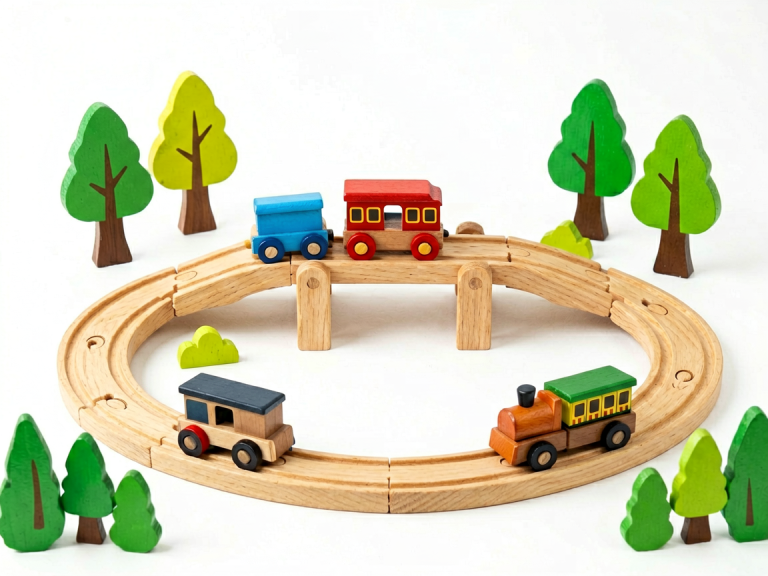
*Toddlers (1–3 years)*: Toddlers are natural scientists. Provide simple puzzles, stacking cups, blocks, and push‑pull toys. Pretend play emerges around 18 months—a cardboard box becomes a car, a blanket becomes a cape. This is the beginning of symbolic thinking, which underpins reading and math. Encourage messy play with play‑dough, sand, or finger paint; it strengthens fine motor skills and creativity. Avoid over‑structuring; allow your toddler to dump, spill, and repeat.
*Preschoolers (3–5 years)*: This is the golden age of imaginative play. A costume trunk, empty food containers, and toy animals can spark elaborate storylines. Board games with simple rules teach turn‑taking and basic counting. Outdoor play—climbing, running, digging—builds gross motor skills and risk‑assessment abilities. Provide open‑ended materials like LEGO, magnetic tiles, and art supplies. Resist the urge to correct or direct; instead, ask open‑ended questions: “What happens if you add another block?” or “Tell me about your castle.”
Creating a Play‑Friendly Environment at Home
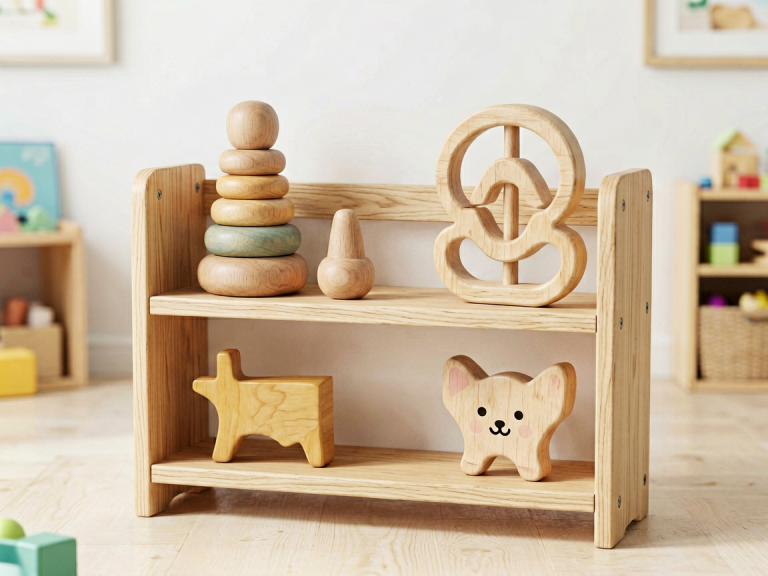
You don’t need a Pinterest‑perfect playroom. What matters is accessibility, safety, and variety. Designate a low shelf where your child can reach toys independently. Rotate toys every few weeks to maintain interest—a bin of wooden blocks can be thrilling again after a month in storage. Include both “loose parts” (pinecones, fabric scraps, bottle caps) and “closed‑ended” toys (puzzles, matching games) for different types of thinking.
Limit screens, especially for children under two. The American Academy of Pediatrics recommends no screen time for infants and toddlers except video chatting. When screens are used, choose interactive, slow‑paced content and watch together, turning it into a conversation. More importantly, ensure ample time for unstructured, outdoor play—nature offers the richest sensory and cognitive experiences.
The Role of Parents: Facilitating Without Interfering
Many parents struggle to step back. We want to teach, correct, and ensure our child is “learning.” But true play‑based learning requires trust. Here are practical strategies:
- Observe first. Before jumping in, watch what your child is doing. Note their focus, their strategy, their frustration points. This tells you what they are working on.
- Join as a co‑player. Avoid taking over. If your child is building a tower, ask, “Can I add a block here?” Let them decide. Follow their rules.
- Ask process‑oriented questions. Instead of “What color is that?” (a quiz), say “I wonder how you made that pattern” (inviting reflection).
- Support without solving. If a puzzle piece doesn’t fit, resist the urge to twist it in. Say, “Hmm, that one seems tricky. What could you try differently?” This builds persistence.
- Narrate learning. Occasionally comment on what they are doing: “You poured the water slowly and it filled the big cup. Now you’re pouring fast—look, it splashed!” This helps children connect actions to outcomes.
Common Myths About Play and Learning
Myth 1: “Play is just for fun; real learning happens in school.” In fact, play is the foundation for academic skills. Children who engage in rich pretend play develop stronger narrative skills (essential for reading comprehension). Those who build with blocks learn early math concepts like geometry and measurement.
Myth 2: “If it’s not structured, it’s not educational.” Structure can stifle curiosity. A child who freely explores a nature collection may learn more about classification than one completing a worksheet on “sorting leaves.”
Myth 3: “My child needs to be constantly entertained by me.” On the contrary, independent play builds self‑regulation and creativity. It’s healthy for your child to sometimes be bored; boredom is a springboard for invention.
Myth 4: “Play‑based learning means no academic instruction.” That’s not true. Play‑based approaches can embed academic content, but they do so in a meaningful, child‑driven context. For example, reading a recipe together while baking teaches measurement, sequencing, and reading—all through play.
Practical Tips for Integrating Play into Daily Routines
Play doesn’t require special time slots; it can infuse everyday activities:
- Morning rush: Turn getting dressed into a game. “Can you put your shirt on before I count to ten? Ready, set—wait, you need to put your arm in first! Okay, go!”
- Mealtime: Let your child help stir, pour, and measure. Talk about textures, colors, and tastes. Playing with food (within reason) is sensory learning.
- Bath time: Provide cups, funnels, and waterproof toys. Count toy ducks. Predict whether a soap bottle will float or sink.
- Errands: At the grocery store, ask your child to find three yellow items or count the apples. Turn the walk to the playground into a treasure hunt for specific leaves or shapes.
- Bedtime: Bedtime stories are a form of play. Let your child “read” the pictures, make up alternate endings, or act out the story with stuffed animals.
Conclusion: Letting Children Lead Their Learning
The most profound gift you can give your child is the freedom to play. It is not laziness or a waste of time—it is the engine of cognitive, social, and emotional growth. As a parent, your role is not to program your child’s mind with facts, but to create a rich, safe, and responsive environment where curiosity can flourish. Trust the process. Watch your child’s focus, their joy, their persistence. In those moments of deep play, they are not just entertaining themselves; they are building the brain they will use for the rest of their lives. So put away the flashcards, step back, and let the learning begin through the most powerful tool ever invented: play.