The Power of Play: How Educational Toys Shape Young Minds
In an age where screens dominate children's attention, the humble educational toy stands as a beacon of purposeful play. These carefully designed objects do more than simply entertain; they serve as tools for cognitive development, social learning, and emotional growth. From wooden blocks that teach physics to coding robots that demystify logic, educational toys for kids have evolved into sophisticated instruments that bridge the gap between fun and learning. This article explores the multifaceted benefits of educational toys, offers guidance on selecting age-appropriate options, and discusses how parents and educators can integrate them into daily routines to maximize their impact.
The Cognitive Benefits of Educational Toys
Educational toys are engineered to stimulate specific areas of a child's brain, fostering skills that extend far beyond the playroom. Puzzles, for instance, enhance spatial reasoning and problem-solving abilities. When a toddler tries to fit a triangular block into a square hole, they are not merely playing—they are engaging in trial-and-error learning, developing hand-eye coordination, and building foundational mathematical concepts. Similarly, building sets like LEGO or magnetic tiles encourage children to visualize three-dimensional structures, plan ahead, and execute complex assembly sequences. Research has shown that such activities strengthen executive functions, including working memory, cognitive flexibility, and inhibitory control.
Language development also receives a significant boost from educational toys. Alphabet puzzles, story cards, and interactive talking books expose children to new vocabulary in context. Unlike passive screen time, these toys require active participation: a child must physically manipulate objects, repeat sounds, or match images. This multisensory engagement creates stronger neural connections. For older children, board games like Scrabble or Bananagrams combine literacy with strategic thinking, requiring them to spell words under time pressure while adapting to opponents' moves. The cognitive load imposed by these games sharpens attention spans and encourages persistence—a quality that predicts academic success.
Fostering Social and Emotional Development Through Play
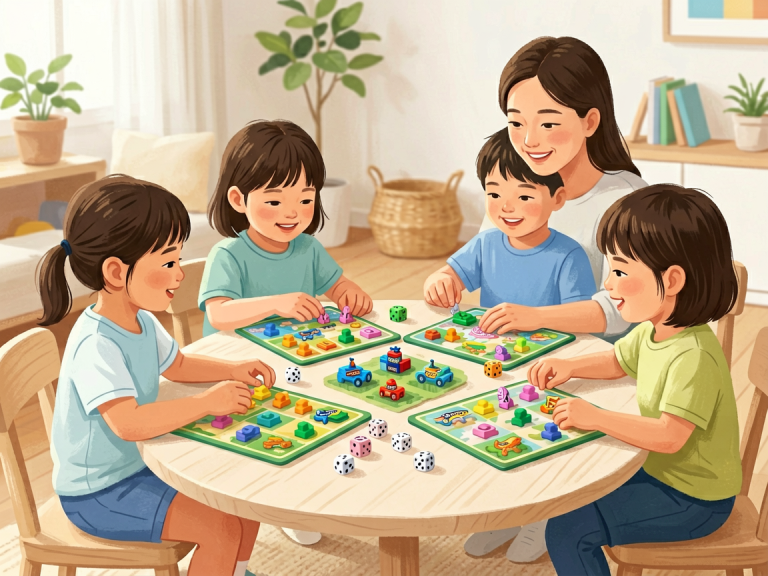
While cognitive gains are often highlighted, the social and emotional benefits of educational toys are equally profound. Cooperative games, such as "The Sneaky, Snacky Squirrel Game" or "Hoot Owl Hoot!", teach children how to take turns, share resources, and work toward a common goal. In these settings, kids learn to regulate their emotions when they lose a turn or feel frustrated. Unlike competitive sports that may overwhelm sensitive children, cooperative board games provide a safe space to practice empathy and patience. Role-playing toys—like doctor kits, play kitchens, or puppet theaters—allow children to simulate real-world scenarios. Through pretend play, they explore different social roles, negotiate rules, and express complex feelings. A child comforting a crying doll learns nurturing behavior; a group of kids running a pretend grocery store practices polite communication and basic arithmetic.
Moreover, educational toys can help children with special needs. Sensory toys, such as stress balls, textured puzzles, or weighted lap pads, provide calming input for children with autism or ADHD. These tools enable them to focus and self-regulate, making them valuable in both home and classroom environments. Additionally, toys that require turn-taking can improve social reciprocity for children who struggle with social cues. The key is that educational toys are not one-size-fits-all; they can be adapted to meet individual developmental needs.
Choosing the Right Educational Toys for Different Age Groups
Selecting age-appropriate toys is crucial for maximizing educational value while avoiding frustration or safety hazards. For infants (0–12 months), the best educational toys are those that engage the senses: high-contrast mobiles, soft rattles, and textured teething rings. These items support visual tracking, auditory discrimination, and tactile exploration. As babies grow into toddlers (1–3 years), they benefit from shape sorters, stacking cups, and simple puzzles with large pieces. These toys build fine motor skills and introduce concepts like size, color, and cause-and-effect.
Preschoolers (3–5 years) thrive with more complex toys that encourage creativity and language. Magnetic drawing boards, alphabet magnets, and play dough sets stimulate imagination while reinforcing pre-writing skills. Construction kits with interlocking parts, such as Duplo or Plus-Plus, allow for open-ended building that develops planning and storytelling. Meanwhile, science kits geared toward this age—like simple sink-or-float experiments—introduce the scientific method in a playful context.
School-age children (6–12 years) are ready for advanced challenges. Coding toys, such as Botley or Code-a-Pillar, teach sequencing and logic without screens. Math board games like Sum Swamp or Money Bags turn arithmetic into a fun competition. For children interested in STEM, robotics kits (e.g., LEGO Boost or littleBits) provide hands-on engineering experiences. At this stage, it is also important to introduce strategy games like chess or checkers, which develop critical thinking and foresight. Finally, for preteens and teenagers (13+), advanced puzzles like Rubik's cubes, logic game sets, and model-building kits can sustain interest while promoting problem-solving and patience.
The Role of Technology in Modern Educational Toys
The integration of technology has created a new category of educational toys that blend physical play with digital interaction. Smart tablets designed for kids, such as the LeapFrog LeapPad, offer curated educational apps that adapt to a child’s learning level. Interactive globes, like the LeapFrog Magic Adventures Globe, teach geography through touch-sensor technology. These devices can provide immediate feedback, track progress, and adjust difficulty automatically—advantages that traditional toys lack. However, experts caution that technology should complement, not replace, hands-on play. The American Academy of Pediatrics recommends limiting screen time for children under 2 years old and ensuring that digital toys encourage active involvement rather than passive consumption.
One standout example of successful tech integration is augmented reality (AR) toys. For instance, the Merge Cube allows children to hold a digital object in their hand using a tablet or phone. They can explore a 3D dinosaur skeleton or manipulate a virtual solar system. This type of play bridges the gap between the virtual world and tangible learning, making abstract concepts concrete. Another innovation is the use of voice-activated assistants within toys. Amazon’s Echo Dot Kids Edition can play educational games, tell stories, and answer questions—all controlled by a child’s voice. When used appropriately, these technologies can enhance curiosity and provide on-demand learning opportunities.
Nevertheless, parents must remain vigilant. High-tech educational toys are often expensive and may distract children with flashy animations. The best approach is to choose toys that require active problem-solving rather than passive observation. A coding robot that kids build and program is far more educational than a battery-operated toy that simply moves on its own. Balance is key: incorporate screen-based toys only after ensuring that a child has ample time for unstructured, imaginative play and outdoor activities.
Practical Tips for Parents and Educators
To truly harness the power of educational toys, intentionality is essential. First, observe your child’s interests. A child fascinated by dinosaurs will learn more from a fossil excavation kit than from a generic puzzle. Aligning toys with a child’s passions increases engagement and self-directed learning. Second, rotate toys regularly. Keeping a limited number of toys available at any given time reduces overstimulation and encourages deeper focus. A toy rotation system—where some toys are stored away and brought out later—maintains novelty and prevents boredom.
Third, engage in play alongside your child. Joint attention during play, known as "scaffolding," allows adults to introduce new vocabulary, ask open-ended questions, and model problem-solving strategies. For example, while building a tower with blocks, you might ask, "What could we do to make it taller without falling?" This kind of interaction transforms a simple toy into a rich learning experience. Fourth, prioritize open-ended toys that can be used in multiple ways. A set of wooden blocks, for instance, can be a castle, a spaceship, or a zoo depending on the child’s imagination. Such toys encourage creativity and adaptability—skills that are increasingly valued in the 21st century.
Finally, be wary of marketing claims. Not every toy labeled as "educational" is truly valuable. Look for toys that have been recognized by experts, such as those that have won the Parents' Choice Award or the Oppenheim Toy Portfolio Best Toy Award. Reading reviews from educators and child development specialists can also help separate genuinely beneficial toys from gimmicks. Remember that the most effective educational toys are those that make children think, create, and interact—not simply press buttons for instant gratification.
Conclusion
Educational toys for kids are far more than mere playthings—they are catalysts for growth. By stimulating cognitive functions, nurturing social-emotional skills, and adapting to different developmental stages, these toys provide a foundation for lifelong learning. In a world that is increasingly complex and fast-paced, giving children the tools to think critically, collaborate effectively, and approach problems with creativity is one of the greatest gifts we can offer. Whether it is a simple wooden block or a sophisticated coding robot, the right educational toy, used with intention and parental involvement, can transform play into a profound learning journey. So next time you watch a child deeply absorbed in a puzzle or meticulously arranging building pieces, remember: they are not just playing—they are building the architecture of their own minds.