The Power of Play: How Learning Through Play Shapes Brighter, Happier Kids
—
Introduction
In an era where academic pressure often begins before kindergarten, and where structured extracurricular activities fill every hour of a child’s afternoon, the simple concept of “play” can seem almost frivolous. Yet a growing body of research in neuroscience, developmental psychology, and early childhood education tells a different story: play is not the opposite of learning; it is the very engine of it. For children, especially those under the age of ten, learning through play is not a luxury—it is a biological and cognitive necessity. Playful learning engages the whole child: their hands, hearts, and minds, weaving together skills that worksheets and lectures cannot teach. This article explores the profound reasons why play is the most natural and effective way for children to learn, the scientific evidence behind it, and practical strategies for parents and educators to harness its power.
—
The Science Behind Play-Based Learning
To understand why learning through play works so well, we must first look at the developing brain. During childhood, the brain is at its most plastic—meaning it builds and prunes neural connections at an astonishing rate. Play, especially unstructured, self-directed play, stimulates the release of key neurochemicals such as dopamine, which enhances motivation and reward perception, and brain-derived neurotrophic factor (BDNF), which supports neuron growth and synaptic plasticity. When children build a tower of blocks, pretend to be pirates, or chase a ball, they are not merely “having fun”—they are actively constructing neural pathways that support problem-solving, creativity, and emotional regulation.
Psychologists have long recognized the value of play. Jean Piaget, the father of cognitive development theory, argued that play is the work of childhood. Through play, children repeatedly test hypotheses about how the world works. A toddler who drops a spoon from a high chair is conducting a physics experiment on gravity; a preschooler who assigns roles in a game of house is exploring social structures and language. These playful moments are, in fact, the raw material of intelligence. Modern neuroimaging studies confirm that playful environments activate the prefrontal cortex, which governs executive functions like impulse control, flexible thinking, and planning—skills far more predictive of later success than early reading ability.
—
Cognitive Benefits: More Than Just Fun
When we talk about “learning through play,” we are not abandoning academic goals. On the contrary, play provides a rich context for acquiring foundational academic knowledge in a way that is meaningful and memorable.
1. Language and Literacy
Children who engage in dramatic play—pretending to be a doctor, a shopkeeper, or a superhero—naturally expand their vocabulary and practice narrative skills. They negotiate plotlines, explain rules, and describe imaginary objects. Research published in the journal *Early Childhood Research Quarterly* found that preschoolers who had regular opportunities for pretend play showed significantly stronger oral language skills six months later compared to peers in more didactic settings. For older children, playing word games, creating stories with puppets, or even building a “spelling castle” with letter blocks can transform literacy practice from a chore into an adventure.
2. Mathematics and Logical Thinking
Mathematical concepts like counting, sorting, pattern recognition, and spatial reasoning emerge naturally during block play, board games, and puzzles. A child stacking differently shaped blocks discovers principles of balance and geometry. A pair of children playing a simple card game like “War” practices one-to-one correspondence and comparison of quantities. In a landmark study, researchers found that children who played with number and shape puzzles at age three demonstrated stronger math skills at age five, even after controlling for parental education and income. The key is that play makes math tangible. Instead of memorizing that “2 + 2 = 4,” a child experiences it by adding two pretend cookies to two more on a plate.
3. Creativity and Problem-Solving
Open-ended play—with loose parts like blocks, art supplies, sand, and water—requires children to invent solutions without a single correct answer. This is the essence of divergent thinking, a cornerstone of creativity. When a child decides that a cardboard box is a rocket ship, they are practicing symbolic thought, which underpins abstract reasoning. Moreover, when the “rocket” fails to stand upright, the child must troubleshoot: maybe adding a counterweight, or changing its shape. This iterative process of trial and error builds resilience and a growth mindset—the belief that intelligence can be developed through effort.
—
Social and Emotional Development: The Hidden Curriculum
Perhaps the most underappreciated benefit of learning through play is its profound impact on social and emotional skills. In a world where anxiety and loneliness are rising among children, play offers a natural laboratory for emotional intelligence.
1. Self-Regulation and Executive Function
When children engage in cooperative play—like a game of tag with rules, or building a fort together—they must constantly monitor their impulses, negotiate with others, and delay gratification. The very structure of play demands executive function. In a game of “Simon Says,” a child must suppress the instinct to move when not authorized. In a group art project, a child must wait for a turn with the glue stick. These moments are miniature rehearsals for emotional self-control. Longitudinal studies by researchers such as Adele Diamond have demonstrated that children who frequently engage in dramatic, rule-governed play score higher on tests of inhibitory control and cognitive flexibility.
2. Empathy and Perspective-Taking
Pretend play is a powerful vehicle for empathy. When a child takes on the role of a patient in a hospital game, or a parent in a family game, they must step into another person’s shoes. They imagine what that character feels, wants, and fears. This act of perspective-taking stimulates the same neural circuits involved in real-world empathy. Play also teaches conflict resolution. If two children both want to be the firefighter, they must negotiate, compromise, or invent a new role. They learn to read facial expressions, interpret tone of voice, and respond to social cues—all in a low-stakes environment where mistakes can be fixed with laughter.
3. Confidence and Agency
Play is one of the few domains in a child’s life where they have genuine control. In a classroom, adults dictate the schedule and rules. In play, children are the authors of their own experience. This sense of agency builds self-confidence. A child who builds a lopsided castle and declares it a masterpiece feels pride in their creation, even if it doesn’t match an adult’s standard of perfection. This internal motivation—doing something because it is intrinsically enjoyable—is far more sustainable than external rewards like stickers or grades. It fosters a love of learning that can last a lifetime.
—
Practical Strategies for Parents and Educators
Understanding the theory is one thing; implementing it in daily life is another. Here are actionable ideas to infuse learning through play into any environment.
1. Create an Open-Ended Play Environment
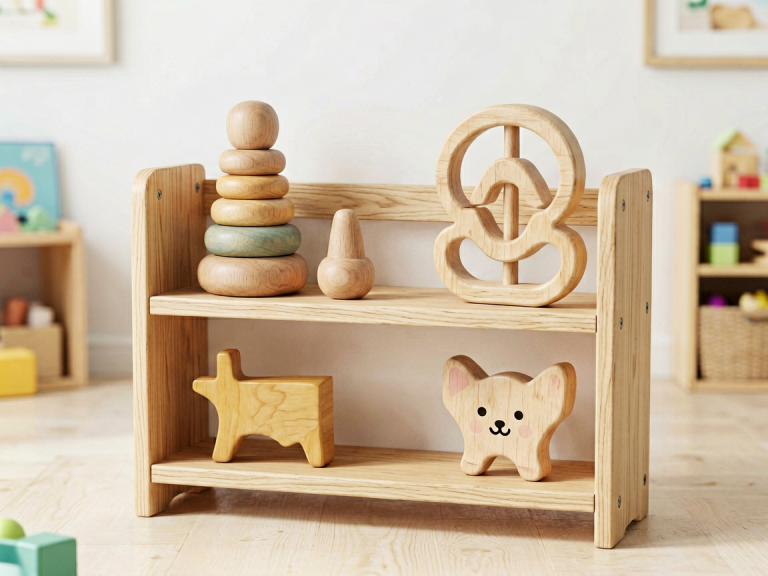
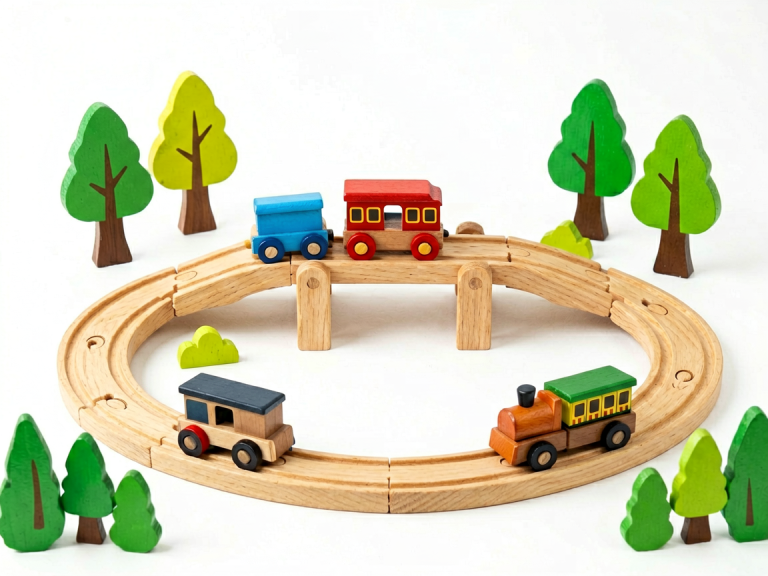
Invest in toys that do not dictate a single use. Blocks, LEGOs, playdough, wooden trains, art supplies, sand, water tables, and dress-up clothes are far more valuable than battery-operated, single-purpose toys. Rotate materials to keep curiosity fresh. Arrange the space so that children can access items independently; a low shelf with bins is more empowering than a high closet.
2. Embrace the Power of Pretend
Set aside time for uninterrupted dramatic play. For younger children, join in without taking over. Ask open-ended questions like, “What happens next in our story?” or “How should we fix the dragon’s wing?” For older children, encourage them to plan and perform a short play, write a script, or build a model city. Even school subjects can be woven in: a play about a market stall naturally involves counting money, while a play about space exploration sparks science inquiry.
3. Use Playful Approaches to Academic Skills
Turn math practice into a game. Instead of a worksheet, play “store” with real coins and items. For literacy, make a treasure hunt where each clue requires reading a word. Use board games like *Sequence* for pattern recognition or *Blokus* for spatial reasoning. Even a simple dice game where children add the numbers to move a token reinforces mental arithmetic.
4. Value Outdoor and Risky Play
Outdoor play—climbing trees, balancing on logs, building dams in a stream—offers unique physical and cognitive challenges. So-called “risky play” (with adult supervision appropriate to the child’s age) helps children learn to manage fear, assess risk, and gain physical competence. It also provides a sensory-rich environment that modern indoor settings often lack. Studies show that children who spend time in nature have better concentration, lower stress, and increased creativity.
5. Be a Playful Role Model
Children learn by imitation. If they see adults enjoying play—laughing while building a block tower, or getting excited about a board game—they internalize that play is valuable. Conversely, adults who treat play as a break from “real” work may send a subtle message that learning is only serious. Model curiosity: ask questions, wonder aloud, and try new things.
—
Overcoming Misconceptions
Despite the evidence, many parents and educators hesitate to embrace play-based learning, fearing that it will leave children unprepared for the rigors of kindergarten or academic testing. This is a false dichotomy. High-quality play does not exclude learning; it enhances it. In countries like Finland, where formal schooling begins at age seven and early childhood is built around play, children often surpass their peers from more academically intense systems in reading and math by age ten—with greater social skills and well-being. Play is not a distraction from learning; it is the deepest form of it.
Another misconception is that play must always be child-led without any adult guidance. In reality, the most powerful learning through play occurs when adults are present as attentive facilitators. A teacher or parent can gently scaffold a child’s play by introducing new vocabulary, asking strategic questions, or providing materials that extend the theme. The goal is not to take over, but to enrich.
—
Conclusion
Learning through play is not a passing educational fad; it is a return to how human beings have naturally learned for millennia. Children are born scientists, artists, and explorers, and play is their laboratory, canvas, and map. By embracing play—at home, in preschools, and in elementary classrooms—we honor children’s developmental needs and prepare them for a future that demands creativity, collaboration, and adaptability. The next time you see a child lost in a world of imagination, remember: they are not wasting time. They are building the architecture of their own minds. As the legendary educator Friedrich Froebel once said, “Play is the highest expression of human development in childhood, for it alone is the free expression of what is in a child’s soul.” Let us give our children the freedom to play, and watch them learn.