The Power of Play: How Learning Toys Shape the Minds of Preschoolers
Introduction: More Than Just Fun and Games
In the vibrant, curious world of a preschooler, every moment is an opportunity for discovery. From the moment they wake up to the time they drift off to sleep, young children are like sponges, absorbing information from their environment at an astonishing rate. While structured lessons and formal education have their place, the most effective learning during these early years often happens through play. This is where learning toys step in, bridging the gap between entertainment and education. For parents, educators, and caregivers, understanding the role of these toys is not just about keeping children busy—it is about nurturing cognitive development, social skills, fine motor abilities, and emotional intelligence. This article explores the multifaceted world of learning toys for preschoolers, examining their benefits, key categories, criteria for selection, and practical tips for integrating them into daily life.
The Developmental Significance of Learning Toys in Early Childhood
Preschoolers, typically aged three to five, are in a critical phase of brain development. Neuroscientific research shows that the brain forms more than one million new neural connections every second during these years. Learning toys are designed to stimulate these connections by engaging multiple senses simultaneously. Unlike passive entertainment such as television or tablets, well-designed learning toys require active participation. A child building a block tower, for instance, is not just stacking objects; they are developing spatial reasoning, hand-eye coordination, problem-solving skills, and even patience when the tower inevitably falls. Similarly, a simple puzzle teaches pattern recognition, logical sequencing, and the concept of trial and error. These seemingly small activities lay the foundation for later academic skills in mathematics, reading, and science. Moreover, learning toys promote executive function—the set of mental skills that include working memory, flexible thinking, and self-control. When a preschooler decides which piece fits into a shape sorter or how to balance a set of wooden blocks, they are practicing self-regulation and decision-making. Therefore, investing in quality learning toys is not a luxury but a necessity for supporting a child’s holistic growth.
Key Categories of Learning Toys for Preschoolers
To navigate the vast array of options on the market, it helps to categorize learning toys by the skills they target. Each category addresses specific developmental domains, and a well-rounded toy collection should include items from several of them.
*Cognitive and STEM Toys*
These toys introduce basic concepts of science, technology, engineering, and mathematics in a hands-on, playful manner. Examples include counting bears, magnetic building tiles, simple coding robots (like those with directional arrows), and pattern blocks. Such toys encourage logical thinking, sequencing, and quantitative reasoning. For instance, a set of numbered wooden blocks can help a child understand one-to-one correspondence—a foundational math skill. Simple science kits that involve mixing colors or observing magnets in action spark curiosity about the natural world. The key is that these toys do not preach; they allow the child to experiment and discover cause-and-effect relationships on their own.
*Language and Literacy Toys*
Preschoolers are rapidly expanding their vocabulary and beginning to recognize letters and sounds. Learning toys in this category include alphabet puzzles, magnetic letters, story-telling puppets, and interactive books with sound buttons. Board games that require following instructions or describing scenes also promote language development. A particularly effective tool is the set of word-building cards that combine pictures with phonetic sounds. When a child matches the image of a cat with the letters C-A-T, they are not memorizing—they are internalizing the connection between spoken and written language. Additionally, toys that encourage storytelling, such as sequencing cards or felt boards, help children construct narratives, which is a precursor to reading comprehension and creative writing.
*Fine Motor and Sensory Toys*
Preschoolers need to strengthen the small muscles in their hands and fingers to prepare for writing, buttoning, and other daily tasks. Learning toys that target fine motor skills include lacing beads, pegboards, playdough with tools, safety scissors, and threading activities. Sensory bins filled with rice, sand, or water, along with scoops and containers, provide tactile exploration that calms and focuses the mind. These toys are not only educational but also therapeutic; they help children develop hand strength, bilateral coordination, and finger dexterity. Furthermore, sensory play is linked to improved attention spans and emotional regulation, making it a valuable addition to any preschooler’s playtime.
*Social and Emotional Learning (SEL) Toys*
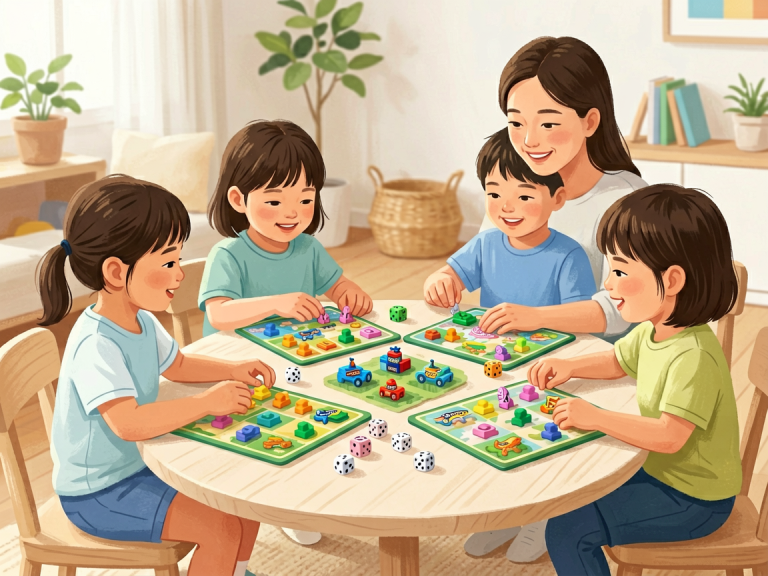
Social skills are just as important as academic ones. Toys that encourage cooperative play, turn-taking, and empathy are crucial during the preschool years. Classic examples include board games designed for young children (such as “Cooperative Candy Land” or simple memory games), role-playing sets (kitchen, doctor’s kit, tool bench), and puppet theaters. When children engage in pretend play with others, they learn to negotiate roles, share resources, and express their feelings in a safe context. Emotion flashcards or “feelings” puzzles help children identify and name emotions like happiness, sadness, and frustration. This emotional vocabulary is essential for building resilience and forming healthy relationships with peers and adults alike.
Criteria for Selecting the Right Learning Toys
Not every toy labeled “educational” is truly beneficial. To maximize the learning potential, parents and educators should evaluate toys based on several criteria.
First and foremost, the toy should be age-appropriate. A toy that is too simple will bore the child, while one that is too complex will frustrate them. For preschoolers, toys should offer a gentle challenge—something that is just beyond their current ability but achievable with effort. Second, open-ended toys are generally superior to closed-ended ones. An open-ended toy, such as blocks, playdough, or a set of magnetic tiles, can be used in countless ways, encouraging creativity and divergent thinking. In contrast, a battery-operated toy that only does one specific thing (e.g., sings a song when a button is pressed) is likely to lose its appeal quickly and offers limited learning opportunities. Third, safety is non-negotiable. Avoid toys with small parts that pose choking hazards, sharp edges, or toxic materials. Look for certifications like ASTM or CE marks. Fourth, consider the toy’s potential for interaction. The best learning toys require the child to actively manipulate, build, or problem-solve, rather than passively observe. Finally, think about durability. Preschoolers are not gentle; toys that break easily lead to frustration and waste. Wooden toys, high-quality plastics, and sturdy fabrics are good investments.
Integrating Learning Toys into Daily Routines
Even the best learning toys will have limited impact if they are simply handed to a child without guidance. Adults play a vital role in scaffolding the learning experience. One effective strategy is to engage in parallel play—sit alongside the child and model how to use the toy in creative ways. For example, while playing with building blocks, an adult might say, “I wonder if we can make a bridge that spans across this gap. What do you think?” This invites the child to think critically and collaborate. Another approach is to use learning toys as part of a themed activity. If the child has a set of animal figures and a puzzle of a farm, combine them into a story about animals on a farm, integrating vocabulary, sequencing, and imagination. Additionally, limit screen time and encourage hands-on play. The American Academy of Pediatrics recommends that preschoolers have no more than one hour of high-quality digital media per day, with priority given to interactive, educational content. However, physical toys remain superior because they engage the whole body and encourage social interaction.
It is also important to rotate toys regularly. When a child has access to the same toys day after day, they may lose interest. By rotating a selection of toys every week or two, you keep the novelty alive and allow the child to rediscover forgotten items. This also prevents overstimulation and helps the child focus more deeply on fewer choices. Finally, remember that the goal is not to “teach” but to “play.” The most profound learning occurs when children are intrinsically motivated, joyful, and free to explore. So, while learning toys are powerful tools, they should never replace unstructured, imaginative play with simple items like cardboard boxes, sticks, or blankets. The best learning environment is one that balances guided activities with free, child-led exploration.
Conclusion: A Foundation for Lifelong Learning
Learning toys for preschoolers are far more than colorful distractions. They are carefully designed instruments that harness the natural curiosity of young children to build essential cognitive, motor, social, and emotional skills. By understanding the developmental stages of preschoolers and selecting toys that align with those stages, parents and educators can create a rich, stimulating environment that fosters a love for learning that lasts a lifetime. Remember, the true value of a learning toy lies not in its price tag or flashy features, but in the quality of interaction it inspires—between the child and the toy, between the child and the world, and, most importantly, between the child and the people who love them. When we choose wisely and play alongside our preschoolers, we give them the greatest gift: the confidence to explore, the resilience to try again, and the joy of discovering that learning is the most exciting adventure of all.