Toy Progression for Hands-On Learning: Building Skills Through Play
Introduction
From the moment a child grasps a rattle to the day they assemble a robotics kit, toys serve as more than mere entertainment—they are the silent architects of cognitive, motor, and problem-solving abilities. The concept of “toy progression” refers to the intentional sequencing of playthings that align with a child’s developmental stages, gradually increasing in complexity to sustain engagement and maximize hands-on learning. Unlike a random assortment of playthings, a well-designed toy progression guides children through concrete experiences that build upon each other, transforming play into a structured yet joyful journey of discovery. This article explores the philosophical and practical underpinnings of toy progression for hands-on learning, offering insights for parents, educators, and toy designers who wish to harness the full educational potential of play.
The Importance of Hands-On Learning in Early Development
Hands-on learning is not merely a pedagogical preference; it is a neurological necessity. Research in developmental psychology consistently shows that young children learn best when they can manipulate objects, experiment with cause and effect, and engage multiple senses simultaneously. Jean Piaget’s theory of cognitive development emphasizes the sensorimotor stage (birth to age two), during which infants acquire knowledge through physical interactions—shaking, sucking, throwing, and stacking. Later, in the preoperational stage, symbolic play and hands-on manipulation of materials (e.g., blocks, clay, puzzles) lay the foundation for logical thinking. Similarly, Maria Montessori championed the use of “didactic materials” that isolate specific concepts, allowing children to learn through repetitive, self-correcting activities.
Toys that support hands-on learning are not passive; they invite action. A simple wooden puzzle demands visual discrimination, fine motor control, and spatial reasoning. A set of interlocking blocks encourages planning, balance, and creativity. As children grow, the toys they use must evolve to match their expanding capabilities—a process that is neither random nor arbitrary. This is where the idea of toy progression becomes critical. Without progression, a child may become bored with toys that are too simple, or frustrated with toys that are too advanced. A thoughtful sequence ensures that each new challenge is just within reach, fostering what Lev Vygotsky called the “zone of proximal development.”
The Stages of Toy Progression: From Sensory to Symbolic to Systematic
Toy progression can be understood as a journey through three broad stages: sensory-motor, symbolic-representational, and systematic-abstract. Each stage corresponds to a developmental window and demands toys that are specifically designed to scaffold emerging skills.
Sensory-Motor Stage (Birth to ~2 Years)
In the earliest years, toys should emphasize sensory feedback and cause-and-effect relationships. Rattles, textured balls, teething rings, and activity gyms provide auditory, tactile, and visual stimulation. The key is that these toys are simple, safe, and responsive—they do something when the child acts. For example, a baby shaking a rattle hears a sound; a toddler pushing a button on a pop-up toy sees a figure emerge. These interactions teach babies that their actions have consequences, a foundational lesson in agency and curiosity.
As infants gain more control over their hands, they begin to grasp and release objects. Stacking rings, nesting cups, and soft blocks introduce the concepts of size, order, and stability. The progression here is subtle: a 6-month-old may only bat at a ring stack, while a 12-month-old attempts to place the rings in sequence. The same toy can be used at multiple levels of complexity, but the caregiver should gradually introduce new challenges—for example, adding more rings or switching to smaller blocks.
Symbolic-Representational Stage (Ages 2–6)
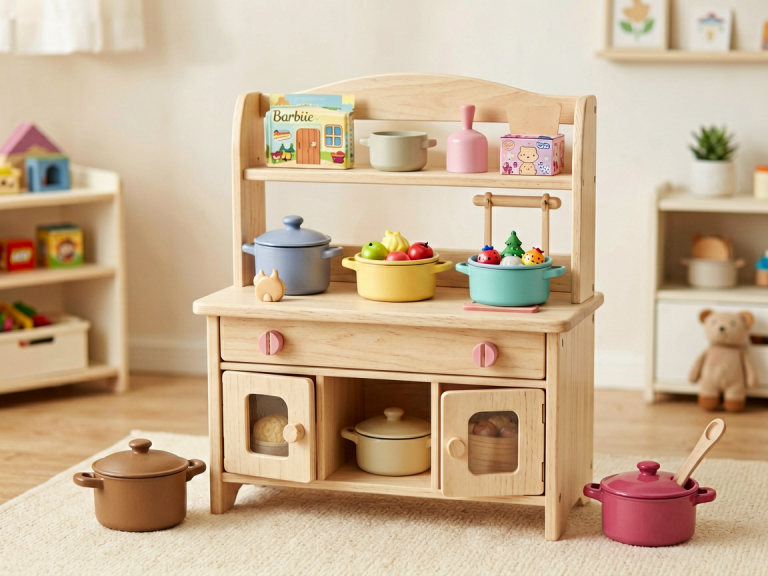
Once children begin to use language and engage in pretend play, toys that support symbolic thinking become essential. This is the era of dolls, action figures, train sets, play kitchens, and simple construction sets like Duplo or large wooden blocks. Hands-on learning at this stage is about building narratives and exploring roles. A child who pretends to cook a meal is not just imitating adults; they are practicing sequencing (first chop, then stir, then serve), social skills (sharing food with a teddy bear), and emotional regulation (calming a crying doll).
Puzzles also become more sophisticated: from simple knob puzzles with single shapes to jigsaw puzzles with 12 to 24 pieces. The progression is marked by increasing piece count, more complex shapes, and the introduction of themes (animals, vehicles, letters). Similarly, art materials like crayons, safety scissors, and playdough allow children to create symbolic representations—a scribble that “is” a dog, or a lump of clay that “is” a spaceship. The hands-on act of transforming materials reinforces the connection between mental images and physical outcomes.
Systematic-Abstract Stage (Ages 6–12+)
As children enter school age, their cognitive abilities expand to include systematic reasoning, logical deduction, and abstraction. Toy progression in this stage shifts toward construction kits with instructions, science experiments, strategy games, and programmable robotics. LEGO sets that build specific models (like a crane or a castle) teach children to follow step-by-step diagrams, recognize patterns, and develop spatial visualization. More advanced sets introduce gears, pulleys, and motors, transforming play into an introduction to engineering principles.
Board games like Chess, Scrabble, or Settlers of Catan require planning, resource management, and adaptability. These are hands-on in the sense that players move pieces, manipulate cards, and compute scores—but the learning is increasingly abstract. Similarly, electronic kits (e.g., Snap Circuits or Arduino starter kits) allow children to build circuits and write simple code, bridging the gap between physical tinkering and digital logic. The progression here is from guided projects (building a pre-designed robot) to open-ended challenges (creating a unique device). This stage culminates in the ability to design, test, and iterate—a process that mirrors scientific inquiry and engineering design thinking.
Practical Examples of Toy Progression Across Age Groups
To illustrate how toy progression works in real life, consider the following sequences for three common play categories: building, puzzles, and art.
Building: From Soft Blocks to Motorized Machines
- Ages 6–12 months: Large, lightweight foam or fabric blocks for stacking and knocking down.
- Ages 1–2 years: Hard plastic or wooden cubes and rectangular prisms that can be stacked 2–3 high.
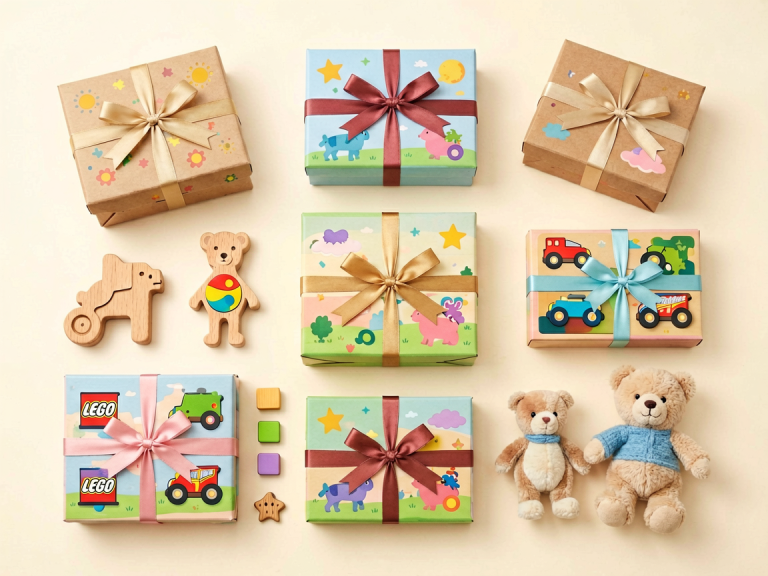
- Ages 2–3 years: Duplo bricks (larger LEGO-compatible blocks) that interlock, plus simple vehicles with wheels.
- Ages 3–5 years: LEGO Classic sets with basic bricks and a few special pieces (windows, doors); magnetic tiles (e.g., Magna-Tiles) for building 3D structures.
- Ages 5–7 years: LEGO sets with small pieces and step-by-step instructions (e.g., LEGO City or Friends); marble runs with tracks and ramps.
- Ages 7–10 years: LEGO Technic sets with gears, axles, and motors; wooden construction kits (e.g., K’Nex) for working models like bridges or Ferris wheels.
- Ages 10+: Programmable robotics kits (e.g., LEGO Mindstorms, VEX) that require assembling, coding, and debugging.
Puzzles: From Single Shapes to 1000-Piece Landscapes
- Ages 6–12 months: Knob puzzles with one or two large pieces (e.g., a circle, a square) that fit into corresponding cutouts.
- Ages 12–18 months: Multi-piece peg puzzles with 3–5 pieces each depicting a familiar object (apple, ball, cat).
- Ages 18–24 months: Chunky wooden puzzles with 4–8 pieces that have straight or slightly curved edges.
- Ages 2–3 years: Floor puzzles with 12–24 large pieces featuring animals or vehicles.
- Ages 3–5 years: Jigsaw puzzles with 24–48 pieces, increasingly complex images.
- Ages 5–7 years: Puzzles with 50–100 pieces, including those shaped like maps or characters.
- Ages 7–10 years: Puzzles with 150–300 pieces, introducing gradients and patterns.
- Ages 10+: 500–1000 piece puzzles, often with fine art or photographic images, requiring sustained attention and strategy.
Art and Craft: From Scribbling to Sculpting
- Ages 6–12 months: Non-toxic finger paints (supervised) and large paper for sensory exploration.
- Ages 1–2 years: Crayons with wide barrel, washable markers, and a single color; finger painting still valuable.
- Ages 2–3 years: Child-safe scissors (rounded tips) for cutting paper strips; playdough with simple tools (cookie cutters, rolling pin).
- Ages 3–5 years: Washable paints with brushes; glue sticks; collage materials (feathers, fabric scraps); safety scissors for more complex cuts.
- Ages 5–7 years: Drawing with colored pencils and graphite; modeling clay (air-dry or oven-bake) for small sculptures; basic weaving looms.
- Ages 7–10 years: Watercolor paints, charcoal, and pastels; advanced clay techniques (coil pots, pinch pots); sewing kits with blunt needles.
- Ages 10+: Acrylic paints on canvas; wire sculpting; jewelry-making kits; 3D pens for freeform plastic creations.
Designing a Toy Progression at Home: Guiding Principles
Parents and educators can create their own toy progression without purchasing an overwhelming number of toys. The key is to observe the child’s current interests and abilities, then introduce a slightly more complex variant of what they already enjoy. Here are some principles to follow:
Start with open-ended materials. Toys that can be used in multiple ways—like wooden blocks, playdough, or a set of loose parts (stones, shells, bottle caps)—provide a strong foundation. They allow the child to set their own challenge level, which naturally evolves as they grow. For example, a toddler might simply stack blocks; a preschooler builds a tower; an older child constructs a castle with arches and tunnels.
Introduce constraints gradually. While open-ended play is crucial, children also benefit from structured challenges. A puzzle has a specific solution; a LEGO set has a target model. The progression often alternates between open-ended and closed-ended toys. A week of free building with magnetic tiles might be followed by a day of assembling a specific model from a set. This balance fosters both creativity and persistence.
Rotate rather than accumulate. A common pitfall is owning too many toys, which can overwhelm a child and reduce deep engagement. Instead, maintain a small collection and rotate toys every few weeks. This keeps the learning fresh and allows each toy to be revisited with new skills. A 4-year-old who struggled with a 24-piece puzzle at age 3 may now complete it effortlessly, experiencing a satisfying sense of growth.
Incorporate real-world tools. Toy progression should eventually blur the line between play and real work. A child who has mastered using a toy screwdriver with a plastic construction set may be ready to help a parent with a real screwdriver (under supervision) to tighten a loose door handle. Similarly, a child who loves pretend cooking can graduate to a simple cooking task, like stirring batter or washing vegetables. This transition is the ultimate triumph of hands-on learning: skills practiced in play become competencies in life.
Conclusion: Play as a Scaffold for Lifelong Learning
Toy progression for hands-on learning is not about purchasing the latest gadget or following a rigid curriculum. It is about honoring the developmental trajectory of every child, providing them with the right tool at the right moment—a tool that challenges without overwhelming, engages without exhausting, and teaches without overt instruction. The rattle gives way to the block, the block to the gear, the gear to the code. Each step is a small miracle of learning: the brain forms new connections, the hands acquire new dexterity, and the mind learns to persist through failure. In the end, a well-sequenced toy progression does far more than prepare a child for school; it cultivates a lifelong love for solving problems with one’s own hands. And that is a lesson no lecture can teach.