The Transformative Power of Early Learning Toys in Classroom Environments
Introduction
In the formative years of childhood, education is not merely about the transmission of facts or the drilling of basic skills. It is a holistic journey that nurtures curiosity, fosters social interaction, and builds the cognitive architecture for lifelong learning. Among the most effective yet often underestimated tools in this journey are early learning toys. When thoughtfully integrated into classrooms—whether in preschools, kindergarten settings, or early primary grades—these toys transcend their playful appearance to become powerful pedagogical instruments. They transform sterile learning spaces into vibrant laboratories of discovery, where children learn through touch, movement, imagination, and collaboration.
This article explores the multifaceted role of early learning toys in classroom settings, examining their educational value, developmental benefits, practical selection criteria, and implementation strategies. By understanding how these toys function as catalysts for growth, educators can harness their potential to create more engaging, inclusive, and effective early learning environments.
The Educational Value of Early Learning Toys
Early learning toys are not mere distractions or time-fillers. They are carefully designed tools that align with developmental milestones and educational objectives. In a classroom, these toys serve three foundational purposes: they concretize abstract concepts, they encourage active rather than passive learning, and they provide opportunities for differentiation.
Firstly, young children think in concrete terms. A set of counting bears, for instance, makes the abstract idea of number sense tangible. A child can physically group, sort, and count the bears, experiencing mathematical relationships with their hands before their minds can fully grasp them. Similarly, a simple wooden puzzle with shapes teaches geometry, spatial reasoning, and problem-solving without a single worksheet. Toys bridge the gap between the physical world and the world of ideas—a gap that traditional lecture-style teaching cannot easily cross for early learners.
Secondly, active learning is central to early childhood pedagogy. When children manipulate toys, they are not passively receiving information; they are constructing knowledge. A block tower that falls teaches cause and effect far more powerfully than a teacher’s explanation. A pretend kitchen set teaches sequencing, language, and social roles through dramatic play. This active engagement leads to deeper retention and a genuine love for learning.
Finally, toys naturally allow for differentiation. A classroom of twenty five-year-olds will have diverse abilities and interests. A set of magnetic letters can be used by one child to practice letter recognition, while another uses them to spell simple words, and yet another to create sentences. The single toy serves multiple levels, empowering teachers to meet each child where they are without needing separate materials for every skill level.
Types of Early Learning Toys for Classrooms
Understanding the variety of early learning toys available helps educators make intentional choices. Broadly, they can be categorized into several groups based on their primary learning domain.
1. Sensory and Fine Motor Toys
These include play dough, sand tables, water trays, threading beads, and building blocks. They strengthen hand muscles, refine coordination, and stimulate tactile, visual, and sometimes auditory senses. For young children, sensory play is not just fun—it is the foundation of neural development. In a classroom, these toys are invaluable for calming overstimulated children and for supporting children with sensory processing differences.
2. Construction and Building Toys
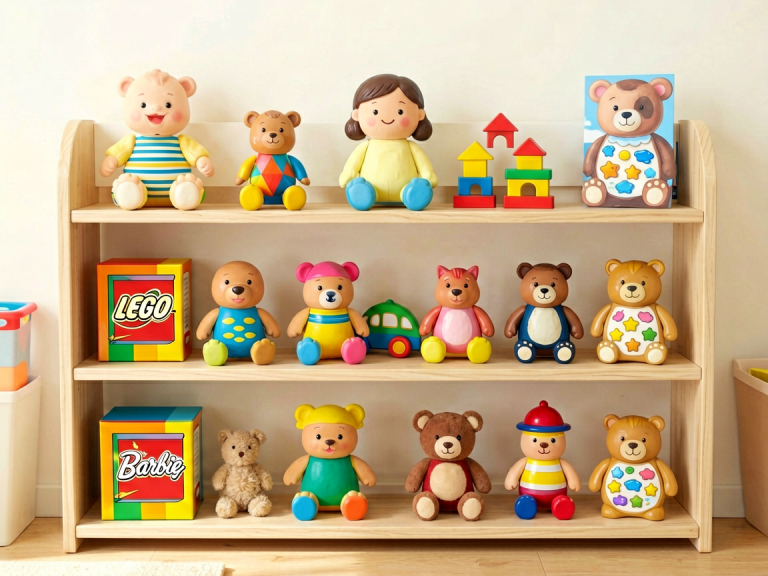
Classics like LEGO Duplo, wooden unit blocks, magnetic tiles, and interlocking gears fall into this category. They promote spatial awareness, engineering thinking, creativity, and persistence. When children work together to build a castle or a bridge, they also practice negotiation, turn-taking, and collaborative problem-solving. These toys are especially effective in STEM-focused early learning curricula.
3. Pretend Play and Dramatic Play Toys
Dress-up clothes, kitchen sets, tool benches, doctor kits, and dollhouses encourage role-playing, language development, emotional regulation, and social understanding. Through pretend play, children make sense of the adult world, experiment with different identities, and develop empathy. In classrooms, these toys can be rotated to align with thematic units—for example, a post office set during a community helpers unit.
4. Manipulative and Math Toys
Counting bears, pattern blocks, number puzzles, abacuses, and sorting trays are designed specifically to teach early mathematical concepts. They make counting, matching, patterning, and measuring hands-on and engaging. Teachers can use them in small-group instruction or as independent learning stations.
5. Language and Literacy Toys
Alphabet puzzles, letter magnets, rhyming games, storytelling puppets, and sequencing cards support pre-reading and early writing skills. They help children understand that print carries meaning, practice phonemic awareness, and expand vocabulary. A classroom library corner enriched with puppets and felt boards encourages children to retell stories, building comprehension and narrative skills.
6. Science and Discovery Toys
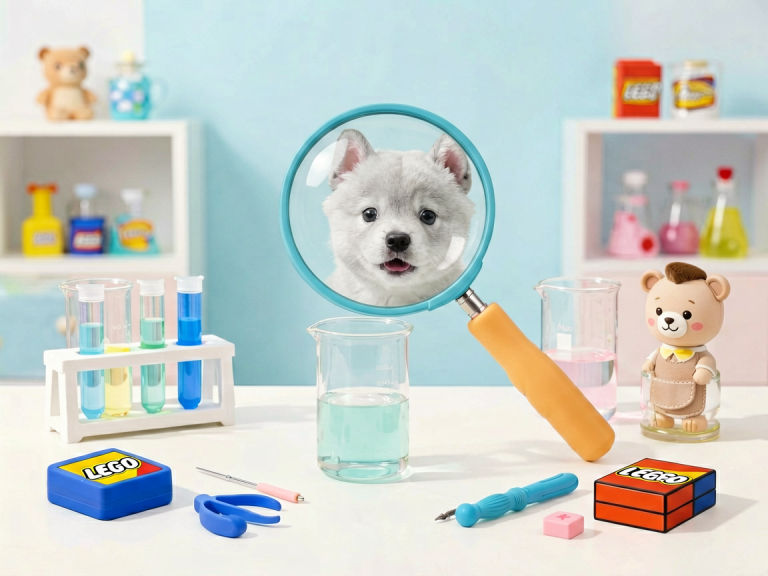
Magnifying glasses, bug viewers, simple microscopes, magnet sets, and plant-growing kits ignite curiosity about the natural world. They encourage observation, prediction, and inquiry—the essence of scientific thinking. Even young children can engage in simple experiments and record their findings with drawings, laying the groundwork for formal science education.
Cognitive and Developmental Benefits
The benefits of incorporating early learning toys in classrooms extend far beyond academic readiness. They support the whole child—cognitively, socially, emotionally, and physically.
Cognitive Development
Toys challenge children to think critically and creatively. A child trying to fit a shape into a sorter must analyze, compare, and modify her actions. This process develops executive functions such as working memory, cognitive flexibility, and self-control. Research shows that children who engage in regular, unstructured play with open-ended toys score higher on measures of creativity and problem-solving later in life. Furthermore, toys that require sequencing (e.g., building a pattern) enhance logical reasoning, while those that involve storytelling boost narrative skills and imagination.
Social and Emotional Growth
Classroom toys are often shared, necessitating cooperation, negotiation, and conflict resolution. A group of children building a block tower must agree on a plan, take turns placing blocks, and handle disappointment when the tower falls. These interactions teach emotional regulation and resilience. Dramatic play toys allow children to express feelings in a safe, controlled environment—for example, acting out a visit to the doctor can help a child process anxiety about a real appointment. Moreover, when children play together, they develop language skills, learn to read social cues, and build friendships.
Language and Communication
Toys naturally generate conversation. A child playing with a farm set might say, “The cow is eating grass,” while a teacher can extend the language by asking, “What does the cow give us?” This back-and-forth dialogue, known as “serve and return” interaction, is critical for language acquisition. In classrooms where toys are used intentionally, teachers can introduce new vocabulary (e.g., “cylinder,” “symmetry,” “prediction”) in a meaningful context, making words stick.
Physical Development
Fine motor skills—the ability to make small, precise movements with hands and fingers—are directly strengthened by toys like lacing beads, pegboards, and play dough. Gross motor skills are developed through larger toys like ride-on cars, balance beams, and large building blocks. In an era where screen time often replaces physical activity, classroom toys provide essential opportunities for active movement.
Selecting the Right Toys for the Classroom
Not all toys are created equal, and the classroom context imposes specific requirements. Educators must consider durability, safety, age-appropriateness, versatility, and cultural relevance.
Durability and Safety
Classroom toys endure heavy use and frequent cleaning. They must be made of non-toxic materials, free of small parts that pose choking hazards, and sturdy enough to withstand drops and rough handling. Wooden toys, high-quality plastics, and fabrics that can be machine-washed are good choices. Additionally, toys should be free of sharp edges and lead-based paints. Always check for certifications like ASTM or CE marks.
Open-Ended vs. Closed-Ended
Open-ended toys—those that can be used in multiple ways, such as blocks, loose parts, and art materials—are generally preferable for fostering creativity and problem-solving. Closed-ended toys, like a puzzle with a single solution, have their place for teaching specific skills (e.g., shape recognition) but should not dominate the classroom. A balanced selection includes both types.
Developmental Appropriateness
Toys must match the developmental level of the children. A two-year-old needs larger, simpler toys that focus on sensory exploration, while a five-year-old can handle more complex construction sets or games with rules. Teachers should observe how children interact with toys and rotate them to maintain novelty and challenge.
Cultural Inclusivity
Toys should reflect the diversity of the classroom and the wider world. Dolls of different ethnicities, books featuring varied family structures, and play food from different cuisines help all children see themselves represented and learn about others. This promotes equity and reduces bias.
Learning Objectives
Each toy should ideally align with specific learning goals. A set of magnetic letters supports literacy; a balance scale supports math and science. However, teachers should also allow for free, exploratory play where learning happens organically. The key is intentionality: choosing toys not just because they are popular, but because they serve a purpose.
Practical Implementation Strategies
Merely having a collection of toys in a classroom is not enough. Effective integration requires thoughtful planning and pedagogy.
Learning Centers
Organize toys into distinct learning centers—a block center, a dramatic play center, a sensory table, a math manipulative station, and a literacy corner. Children rotate through these centers during free play time, allowing them to choose based on interest while ensuring exposure to different domains. Teachers can facilitate learning by asking open-ended questions at each center: “What happens if you put the big block on the bottom?” or “How can you make the tower taller?”
Teacher-Guided vs. Child-Directed
Strike a balance between structured activities (e.g., a teacher leading a group with a shape-sorting game) and unstructured play (e.g., children exploring patterns with colored tiles independently). Both are essential: guided activities introduce new vocabulary and skills, while free play consolidates and deepens learning.
Thematic Integration
Link toys to classroom themes to create coherence. During a unit on “Under the Sea,” add blue play dough, ocean animal figurines, and sea-themed puzzles. This contextualization helps children make connections across subjects and deepens engagement.
Inclusive Practices
For children with special needs, adapt toys or provide alternative options. A child with fine motor difficulties might use larger blocks or magnetic tiles with easier handles. A child with autism might benefit from a calm-down corner with sensory toys. Training staff to observe and respond to individual needs is crucial.
Assessment through Play
Teachers can use toy-based play as an informal assessment tool. Observing whether a child can sort objects by color, build a stable structure, or narrate a story provides rich data on developmental progress. Document these observations with photos or anecdotal notes to inform instruction and communicate with families.
Challenges and Considerations
Despite their benefits, early learning toys in classrooms come with challenges. Budget constraints often limit the quantity and quality of toys available. Educators can mitigate this by seeking grants, partnering with parents for donations, or opting for versatile toys that serve multiple purposes. Storage and organization can also be problematic; clear labeling, low shelves, and consistent routines help children learn to care for materials.
Another challenge is the potential for overstimulation. An overly cluttered classroom can overwhelm young children, leading to chaotic play rather than focused learning. Rotate toys in and out of circulation, keeping only a manageable number available at a time. Finally, teachers must resist the temptation to use toys solely as “rewards” or “time-fillers.” Their true value lies in purposeful, integrated use that respects the child’s agency and developmental rhythm.
Conclusion
Early learning toys are far more than playthings—they are the building blocks of education in the most literal sense. In classrooms, they provide the hands-on, minds-on experiences that young children need to grow intellectually, socially, and emotionally. By selecting high-quality, developmentally appropriate toys and integrating them thoughtfully into daily routines, educators can create environments where learning feels like discovery, where mistakes are opportunities, and where every child has the tools to construct their own understanding of the world.
As we look to the future of early childhood education, the humble toy deserves a place of honor. It is a silent teacher, an unfailing motivator, and a bridge between the child’s inner world and the rich landscape of knowledge. Let us equip our classrooms with toys that inspire, challenge, and delight—and in doing so, let us give our youngest learners the gift of joyful, meaningful education.