Unlocking Imagination: The Best Toys for Creativity for 2-Year-Olds
Introduction: Why Creativity Matters at Age Two
The age of two is a magical threshold in early childhood development. Toddlers are no longer passive observers of the world; they are active explorers, eager to touch, taste, stack, and dismantle everything within reach. At this stage, the brain is forming neural connections at an astonishing rate—over one million new connections per second, according to neuroscientists. Creativity, often misunderstood as a gift reserved for artists, is actually a foundational cognitive skill. It encompasses problem-solving, flexible thinking, emotional expression, and the ability to see multiple possibilities in a single object. For a two-year-old, creativity is not about producing a masterpiece; it is about the process of discovering, experimenting, and inventing. The right toys can fuel this process, turning ordinary play into a launchpad for lifelong learning. This article explores the best toys for fostering creativity in two-year-olds, focusing on open-ended design, sensory engagement, and developmental appropriateness. Each recommendation is grounded in research on child development and practical parenting wisdom.
Section 1: The Philosophy of Open-Ended Play
Before diving into specific toys, it is essential to understand what makes a toy “creative.” The most powerful toys for toddlers are open-ended—meaning they have no single correct use or predetermined outcome. Unlike a battery-operated car that only moves forward when a button is pressed, an open-ended toy invites the child to decide its purpose. A set of wooden blocks can become a tower, a bridge, a castle, or a spaceship. A pile of colorful scarves can be a cape, a tent, a river, or a nest for a stuffed animal. This flexibility is the essence of creative play. It encourages divergent thinking, where the child generates many different ideas rather than converging on one correct answer. Research by psychologist Kyung Hee Kim shows that divergent thinking peaks in early childhood but declines sharply once formal schooling begins. Therefore, the toys we choose for two-year-olds should preserve and nurture this natural inventiveness. Avoid toys that flash lights, sing songs, or perform tasks automatically. Instead, look for toys that are simple, durable, and rich in potential—toys that ask, “What will you do with me?” rather than “Watch what I can do.”
Section 2: Sensory Exploration and Messy Play
Creativity often begins with the senses. Two-year-olds learn through touch, sight, sound, smell, and even taste. Toys that engage multiple senses simultaneously offer rich opportunities for creative expression. One outstanding category is play dough and modeling compounds. A simple set of non-toxic, soft play dough in primary colors allows a toddler to squeeze, roll, flatten, pinch, and poke. With the addition of child-safe tools—plastic knives, rolling pins, cookie cutters, and stampers—the possibilities multiply. A two-year-old can pretend to bake a cake, make a snake, or simply enjoy the tactile feedback of squishing the dough between fingers. This type of play strengthens fine motor skills, hand-eye coordination, and spatial awareness, all while encouraging storytelling and imaginative scenarios. Choose dough that is soft enough for small hands to manipulate but firm enough to hold shape. Homemade dough with natural dyes is an excellent option for parents who want to avoid artificial additives.
Another essential sensory toy is water and sand play. A small water table or a shallow bin filled with rice, beans, or kinetic sand can captivate a two-year-old for hours. Add cups, funnels, spoons, and small plastic animals, and watch the child experiment with pouring, scooping, and burying. Kinetic sand, which sticks together without being wet, is particularly satisfying because it can be molded into shapes and then crumbled. This type of play is inherently creative because there is no right or wrong way to interact with the material. The child discovers cause and effect: “If I pour water into this funnel, it comes out the bottom.” “If I press the sand into a cup, it holds its shape.” These are not just physics lessons; they are invitations to imagine a world where sand becomes a mountain and water becomes a river. Parents should embrace the mess, knowing that a little cleanup is a small price for a major developmental win.
Section 3: Building and Construction Toys
Construction toys are perhaps the most iconic category for fostering creativity, and for good reason. They teach spatial reasoning, symmetry, balance, and persistence—all within a playful context. For two-year-olds, the best building toys are large, lightweight, and easy to connect. Mega Bloks or large wooden unit blocks are classic choices. Unlike small LEGO bricks, which require precise finger pressure and pose a choking hazard, these blocks are sized for toddler hands. A set of 50 to 100 blocks in various shapes—rectangles, squares, arches, cylinders—allows the child to build towers, roads, walls, and simple enclosures. The key is to let the child lead. Resist the urge to show them how to build a perfect house. Instead, sit nearby and comment on their process: “I see you placed the red block on top of the blue one. That makes a tall tower!” This encourages the child to continue experimenting.
Another excellent construction toy is magnetic tiles. Brands like Magna-Tiles or PicassoTiles offer translucent, magnetic squares and triangles that snap together easily. Two-year-olds love the satisfying click when two tiles connect, and the colorful, see-through surfaces create beautiful light effects when held up to a window. With magnetic tiles, children can build flat patterns, 3D cubes, or simple houses. Because the magnets hold the pieces firmly, frustration is minimized, and the child can focus on creative exploration. These toys also introduce basic geometry and symmetry in an intuitive, hands-on way. As the child grows, the same tiles can be used for more complex constructions, making them a long-lasting investment.
Section 4: Imaginative Role-Play and Props
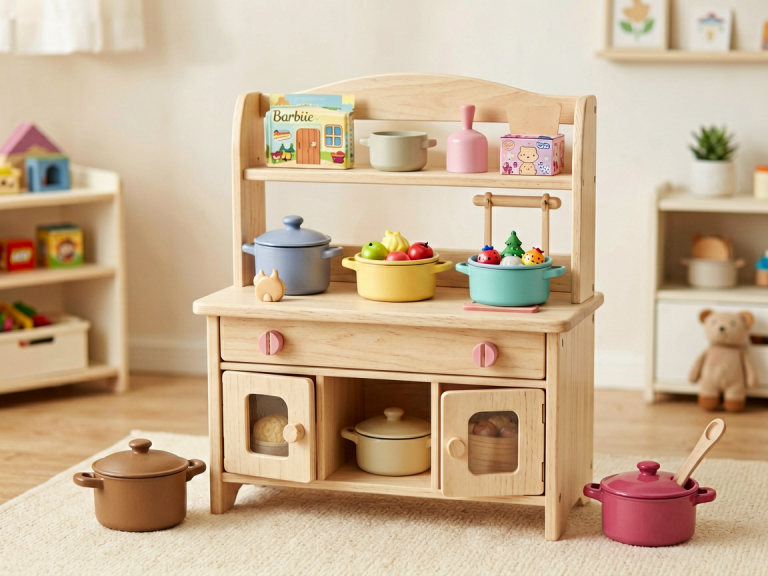
At age two, children begin to engage in symbolic play—using one object to represent another. A banana becomes a telephone; a cardboard box becomes a car. This is the beginning of abstract thinking, a cornerstone of creativity. Toys that support role-play are therefore invaluable. A simple play kitchen with pots, pans, plastic food, and utensils can inspire endless scenarios. The toddler can “cook” a meal for a teddy bear, “wash” dishes, or “shop” for groceries using a small basket. Adding realistic props like a wooden knife and a cutting board with Velcro food (that “chops” into pieces) adds an extra layer of engagement. The child learns to sequence actions, imitate adult behavior, and negotiate roles if playing with a sibling or parent.
Another powerful role-play toy is dress-up clothes and accessories. A collection of scarves, hats, capes, masks, and simple costumes (like a firefighter jacket or a doctor’s coat) allows the toddler to transform into a character. Two-year-olds may not have elaborate narratives yet, but they will enjoy putting on a hat and pretending to be a chef or wrapping a scarf around their shoulders and announcing “I’m a superhero!” The physical act of dressing up supports gross motor skills (buttoning, zipping, pulling) and body awareness, while the imaginative leap builds emotional intelligence. Parents can enhance this play by providing a mirror and a small stage area, encouraging the child to perform or simply admire their new identity.
Section 5: Art Supplies for Little Hands
Art is the most direct outlet for creative expression, but traditional art supplies like markers and paint can be challenging for two-year-olds. The best art toys for this age group are designed for safety, ease of use, and maximal sensory experience. Crayons are a must-have, but choose chunky, egg-shaped or triangular crayons that are easy for small hands to grasp. These crayons are less likely to break and allow the child to make broad strokes or tiny dots. Washable finger paints are another fantastic choice. Spread a large sheet of paper on a high chair tray or a washable table, and let the child squish, smear, and swirl the paint with their hands. This is not about creating a recognizable image; it is about the joy of color mixing, texture exploration, and cause and effect. Finger painting also integrates sensory processing, as the child feels the cool, slippery paint and sees the marks they produce.
For a cleaner alternative, water painting mats or magic coloring books that reveal colors when wet with a water pen are excellent. They require no messy cleanup but still allow the child to “draw” and watch their marks appear. Another favorite is sticker books with reusable stickers. Peeling and placing stickers strengthens fine motor control and hand-eye coordination, while the open-ended nature of the activity (stick the fish in the pond, or on the moon? Why not?) fuels imagination. Sticker books with scenes (farm, ocean, house) provide a gentle framework, but the child can ignore it entirely and create their own world.
Section 6: Musical Toys and Rhythm Play
Creativity is not limited to visual arts; music and rhythm are equally powerful forms of expression. Two-year-olds are naturally drawn to sound-making objects. Simple percussion instruments—maracas, tambourines, drums, xylophones, and shakers—allow the child to experiment with volume, tempo, and pattern. Unlike electronic keyboards with preset songs, these instruments are open-ended: the child decides when to shake, tap, or bang. This autonomy is crucial for creative development. Parents can join in, creating simple rhythms for the child to imitate, or let the child lead and follow their beat.
Another wonderful musical toy is the rainstick or ocean drum. These instruments produce gentle, soothing sounds that fascinate toddlers. Turning the rainstick over and watching the beads cascade inside, accompanied by the soft patter, is a calming yet engaging sensory experience. Some rainsticks are made from cardboard and filled with rice, but durable wooden versions are worth the investment. Musical play also supports language development, as children often chant or sing along with the sounds. It encourages self-expression, emotional regulation, and social bonding when played with others.
Section 7: Nature-Based and Loose Parts Toys
Finally, one of the most creative toys a two-year-old can have is nothing manufactured at all—but rather loose parts from nature. A collection of pinecones, smooth stones, acorns, leaves, sticks, and shells can be arranged, sorted, stacked, and combined in infinite ways. These items have no predetermined function, so they become whatever the child imagines: a stone is a boat, a leaf is a blanket, a pinecone is a spiky monster. Loose parts play is deeply rooted in the Reggio Emilia approach to early childhood education, which emphasizes the child’s ability to construct knowledge through interaction with the environment. Parents can create a small “nature treasure basket” and rotate the items seasonally. Always supervise to ensure safety, as small objects can be choking hazards, but with proper care, nature toys offer a wealth of creative possibilities.
Conclusion: Choosing Toys That Inspire, Not Distract
Selecting the best toys for creativity for a two-year-old is not about buying the most expensive or the most popular items. It is about choosing tools that invite exploration, tolerate mess, and celebrate process over product. Open-ended blocks, sensory materials, art supplies, musical instruments, and natural loose parts all share one crucial feature: they leave room for the child’s imagination to take the lead. In a world increasingly filled with screens and passive entertainment, these toys are a quiet rebellion—a reminder that the most powerful learning happens when a child’s hands are busy and their mind is free. As parents and caregivers, our role is not to direct the play, but to provide the raw materials and then step back with wonder, watching as our toddlers build, paint, sing, and dream their way into understanding the world. The investment in these creative toys is an investment in a child’s ability to think divergently, solve problems resiliently, and express themselves authentically—skills that will serve them far beyond the toddler years.