Unlocking Language Potential: Top Toys for 7-Year-Olds to Build Strong Communication Skills
Introduction
At seven years old, children are at a remarkable crossroads in their language development. They have moved beyond simple sentences and are now capable of understanding complex instructions, telling detailed stories, and engaging in logical discussions. Their vocabulary expands rapidly—often by several thousand words per year—and they begin to grasp more abstract concepts like irony, jokes, and figurative language. Yet this growth does not happen in a vacuum. The right environment, rich with stimulating interactions, is essential. Toys, often dismissed as mere entertainment, can be powerful catalysts for language acquisition. When thoughtfully selected, toys for 7-year-olds can ignite conversations, challenge thinking, and build the foundational oral and written language skills that children will carry into their academic and social lives. This article explores the categories of toys that most effectively foster language development, explaining how each type works and offering concrete examples to guide parents, educators, and caregivers.
—
The Power of Pretend Play: Dollhouses, Puppets, and Play Sets
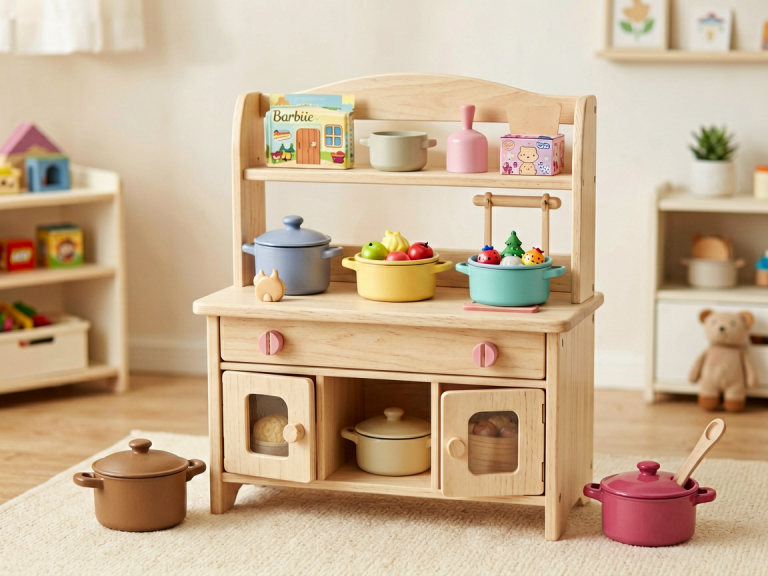
Pretend play is arguably one of the most potent language-building tools for a seven-year-old. At this age, children engage in what developmental psychologists call "sociodramatic play"—they create scenarios with multiple characters, assign roles, and negotiate rules. This kind of play demands constant verbal exchange. Toys like dollhouses, puppet theaters, doctor’s kits, grocery store sets, and castle playscapes invite children to inhabit different personas. For example, a child playing with a dollhouse might speak for the mother, the baby, and the pet dog, shifting voice and perspective. They might narrate actions: “Now the mom is cooking dinner, but the baby is crying because he wants a toy.” This narrative practice strengthens sentence structure, verb tense usage, and storytelling coherence.
Moreover, when two or more children play together with such toys, they must negotiate: “You be the shopkeeper, and I’ll be the customer. How much does this apple cost?” They learn to ask questions, clarify misunderstandings, and use polite requests. Puppets are especially valuable because they lower the affective filter—children who are shy in direct conversation often feel braver speaking through a puppet. A simple puppet theater set with hand puppets representing animals or people can generate hours of dialogue. For 7-year-olds, adding props like miniature furniture, food items, or vehicles expands the vocabulary range. A doctor’s kit introduces terms like “stethoscope,” “bandage,” “temperature,” and “prescription.” A grocery set introduces “checkout,” “receipt,” “credit card,” and “budget.” The key is that these toys are open-ended: there is no right or wrong way to play, so the language flows organically.
—
Storytelling and Narrative Construction: Building Blocks and Story Cubes
Seven-year-olds are developmentally ready to construct narratives with a clear beginning, middle, and end. They can sequence events, describe cause and effect, and add emotional detail. Toys that explicitly support narrative skills can take their storytelling to the next level. One classic example is Rory’s Story Cubes: a set of dice with pictures on each face. A child rolls several dice and must weave a story that incorporates all the images. This game forces them to think on their feet, connect disparate ideas, and articulate a coherent plot. It naturally expands vocabulary because they have to name the objects (a diamond, a lightning bolt, a crown) and then invent relationships between them.
Another powerful tool is magnetic storyboards or felt boards with characters and scenery. A child can rearrange pieces to create different scenes, then describe what is happening. For instance, a magnetic farm set allows them to move animals, change the weather (sun, rain, snow), and narrate a day on the farm. This hands-on manipulation supports the pairing of action with language. LEGO StoryTales kits are purpose-built for this age: they include base plates and special pieces like doors, windows, and people, along with prompt cards that ask “Who lives in this house?” or “What happened next?” Building a physical model and then explaining it to someone else requires using spatial language (“behind,” “next to,” “underneath”), sequencing words (“first,” “then,” “finally”), and descriptive adjectives (“tall,” “crooked,” “colorful”). The act of constructing a story from scratch—without a predetermined script—is a high-level cognitive and linguistic challenge that these toys make enjoyable.
—
Vocabulary and Phonics Games: Board Games and Card Games
By age seven, many children are also beginning to read and write independently. They are ready for structured games that target spelling, word recognition, and vocabulary expansion. Board games and card games designed for this age group combine competition or cooperation with deliberate language practice. Scrabble Junior, for instance, has a simpler board with pre-printed words for younger players, a picture version, and a “challenge” side where kids can form their own words. Playing the game exposes children to new words as they see combinations made by others. More importantly, parents or older siblings can model thinking aloud: “I see a C and an A. Can I make ‘CAT’? No, I already used the T… What about ‘CAR’?” This explicit verbalization of the thought process is a powerful language lesson.
Bananagrams is another excellent choice. It involves drawing letter tiles and racing to create a crossword grid of words. The pressure to think quickly and the need to rearrange letters fosters phonemic awareness—the ability to hear and manipulate individual sounds in words. For 7-year-olds who are just gaining reading fluency, manipulating tiles provides a tactile, visual, and kinetic learning experience. Zingo! (a bingo-style game with pictures and words) helps with sight-word recognition. Yet vocabulary games don’t have to be solely about letters. Games like “I Spy” card sets or “Spot It! Alphabet” encourage children to name objects and describe their attributes. Each round of “Spot It!” requires quick verbal description (“I see a red apple and a green frog!”), which practices adjective use and speed of retrieval. Even simple card games like “Go Fish” can be adapted: instead of matches, children must name three things about each card they ask for. The social context of game-playing also teaches turn-taking, polite requests (“Do you have…?”), and handling disappointment—all of which are vital pragmatic language skills.
—
Cooperative and Question-Based Games: Encouraging Dialogue
Many 7-year-olds thrive on interaction, but they may still need guided structures to sustain meaningful dialogue. Cooperative games—where players work together toward a common goal—remove the pressure of competition and encourage natural conversation. For instance, “Hoot Owl Hoot!” is a cooperative board game where players must help owls fly home before sunrise. The game requires discussing strategy: “Should we move the blue owl or the green one? Let’s see which card we have.” Such discussions force children to use persuasive language, listen to others’ ideas, and reach consensus. Similarly, “Race to the Treasure” has players build a path while talking through decisions.
Question-based games are even more directly language-focused. “Hedbanz” (also known as “Headbanz”) is a classic: each player wears a headband with a card showing an object, animal, or person, and must ask yes/no questions to deduce what they are. For a 7-year-old, formulating effective questions is a complex skill. They learn to be strategic: “Am I a living thing? Do I have four legs? Am I found on a farm?” This game builds grammatical skills (forming interrogatives), logic, and vocabulary. “Guess Who?” (the classic face-guessing game) does the same, with the added benefit of physical descriptions: “Does your person have red hair? Are they wearing glasses?” The repetition of descriptive language reinforces adjectives, nouns for facial features, and comparative structures. For children who are ready for more advanced play, “Storytelling Guessing Games” like “A Little Wordy” or “Word on the Street” pit teams against each other in describing words without saying them, forcing children to use synonyms, definitions, and context clues. All of these games turn language practice into a dynamic, enjoyable social experience.
—
Digital and Interactive Toys: Audiobooks and Talking Devices
While screen time requires careful moderation, high-quality digital toys can be exceptional language builders for 7-year-olds. Interactive toys that respond to voice or touch—like the Toniebox, LeapFrog LeapReader, or Osmo Words—engage children in a feedback loop. The Toniebox, for example, allows a child to place a character figurine on top of a speaker to hear a pre-recorded story or song. But the magic lies in the fact that the child controls the experience: they can speed up, slow down, skip, or repeat sections by tapping the sides. This control encourages active listening and comprehension. Children often mimic the narrator’s intonation, rhythm, and phrasing, internalizing patterns of fluent speech. The LeapReader pen works similarly: when a child touches the pen to a special book, it pronounces words, sounds out letters, or asks comprehension questions. At seven, children can use it independently, building reading fluency and vocabulary in a low-pressure, self-paced manner.
Another powerful tool is the “Osmo Words” game for tablets. It uses reflective AI to combine physical letter tiles with digital gameplay. A picture appears on the screen, and the child must spell the word using their letter tiles. The game provides immediate feedback—if a letter is wrong, the tile is rejected; if correct, the spelling is celebrated. This instant feedback loop reinforces correct spelling and phonics. Furthermore, many digital toys now include recording features that allow children to narrate their own stories. For instance, “Puppet Pals” (an app) lets children create animated puppet shows by recording their voice while moving characters. The process of planning a scene, writing dialogue, and speaking clearly for a recording is an advanced language activity that combines composition, oral fluency, and editing skills. Of course, it is crucial that digital toys supplement—not replace—human interaction. The American Academy of Pediatrics recommends that parents co-play with digital tools at this age, discussing what the child is hearing or making. When used intentionally, these tools become springboards for rich parent-child conversations.
—
How to Choose and Use Toys Effectively
Even the best toys cannot build language on their own. The way adults and peers interact around the toy determines its impact. Parents and educators should look for toys that are “open-ended”—meaning they allow for multiple uses and creative interpretations. A set of wooden blocks is more language-rich than a battery-operated toy that only says four phrases. The blocks require children to describe, plan, and problem-solve. Additionally, choose toys that invite collaboration rather than solitary play. Games that require two or more players naturally generate conversation. When selecting a toy, read the box to see whether it includes prompts for discussion or storytelling. For instance, many new board games include “conversation cards” that ask kids to explain a choice or tell a story.
Equally important is the adult’s role. During play, parents can “scaffold” language by modeling richer vocabulary. If a child says, “The car goes there,” a parent can expand: “Yes, the shiny red car zooms under the bridge and into the garage.” This technique, called “recasting,” introduces new words and sentence structures without correcting the child. Asking open-ended questions—like “What happens next?” or “Why do you think the princess hid?”—encourages children to produce longer responses. For digital toys, set clear time limits (e.g., 20 minutes of Osmo) and then discuss what the child learned: “What new word did you spell? Can you use it in a sentence?” By actively participating, adults turn even a simple building set into a vocabulary lesson.
Finally, remember that language development is not just about vocabulary; it includes social cues, tone of voice, listening, and empathy. Toys that involve emotion—like puppets acting out feelings, or board games that require rescue and kindness—help children use language to express and understand emotions. The goal is to create a holistic environment where language is practiced naturally, joyfully, and repeatedly.
—
Conclusion
At age seven, a child’s mind is hungry for words, stories, and connections. The toys we choose can feed that hunger or leave it unsatisfied. From the imaginative dialogues of puppet play to the strategic questions of guessing games, from the narrative weaving of story cubes to the phonics practice of interactive pens—each category of toy offers a unique doorway into language growth. But the true magic happens when a child picks up a toy and turns to a parent, friend, or sibling and says, “Let’s play together.” That invitation is the first sentence of a conversation that can stretch into a lifetime of fluent, confident communication. By investing in the right toys and, more importantly, in our own presence and curiosity, we give 7-year-olds the best gift of all: the tools to build their own worlds with words.