Unlocking Learning Through Play: A Parent’s Guide to Educational Play
Introduction
Play is the language of childhood. For decades, developmental psychologists and educators have emphasized that children learn best when they are actively engaged, curious, and having fun. Yet many parents struggle to translate this principle into everyday life. How can a Lego tower teach physics? How does a simple board game build emotional intelligence? The answer lies in educational play—purposeful, guided activities that blend enjoyment with learning objectives. This article explores how parents can harness the power of play to foster cognitive, social, emotional, and motor skills in their children, without turning the living room into a classroom. By understanding the science behind play, choosing appropriate materials, and adopting a supportive mindset, parents can transform ordinary moments into extraordinary learning opportunities.
Why Educational Play Matters More Than You Think
The modern parenting landscape is filled with pressure: flashcards, online tutoring, and structured lessons often overshadow the simple joy of play. Yet research consistently shows that play-based learning yields deeper, longer-lasting understanding than rote memorization. When children play, their brains are actively building neural connections. A child stacking blocks is not just stacking; she is experimenting with balance, gravity, and spatial relationships. A child pretending to run a grocery store is practicing counting, social negotiation, and language.
Educational play also nurtures executive function—the set of mental skills that includes working memory, flexible thinking, and self-control. These skills are better predictors of academic success than IQ. Moreover, play reduces stress, strengthens the parent-child bond, and instills a love of learning that no worksheet can replicate. Parents who embrace educational play are not “wasting time”; they are investing in their child’s future resilience and creativity.
Choosing the Right Types of Play for Learning
Not all play is equally educational. The key is to match the type of play to the child’s developmental stage and interests. Here are three broad categories parents can use:
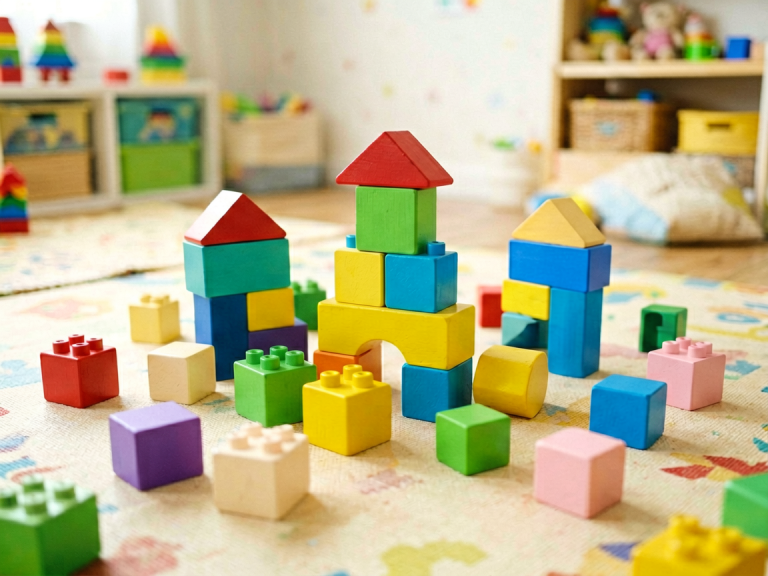
- Constructive Play: Building, creating, and designing. This includes blocks, puzzles, craft projects, and building sets. Constructive play develops problem-solving skills, fine motor control, and mathematical thinking (e.g., measuring, symmetry, patterns). Parents can scaffold learning by asking open-ended questions: “What would happen if you added one more block?” or “Can you make a bridge that holds this toy car?”
- Pretend or Dramatic Play: Role-playing, dress-up, and imaginative scenarios. This type of play is crucial for language development, empathy, and understanding social roles. A child playing “doctor” learns vocabulary, cause-and-effect (giving a shot makes the patient better), and emotional regulation. Parents can join in without taking over—let the child lead the story while you ask questions that extend the narrative: “What does the patient need next?” or “How do you feel when the doctor helps you?”
- Games with Rules: Board games, card games, and organized outdoor games like tag or hopscotch. These teach turn-taking, fairness, counting, strategy, and resilience in the face of losing. Parents should choose games slightly above the child’s current ability to provide a “just-right challenge.” For young children, simple matching games or dice games work wonders; for older kids, strategy games like chess or Settlers of Catan build logical reasoning.
Strategies for Integrating Learning into Everyday Play
Parents don’t need to buy expensive educational toys. The most effective educational play often uses household items and intentional interaction. Here are actionable strategies:
- Follow the Child’s Lead
The golden rule of educational play is to let the child direct the activity. When a child chooses what to play, they are more motivated and receptive to learning. Instead of saying “Now let’s learn numbers,” observe what they are already doing. If they are lining up toy cars, count them together. If they are playing with sand, talk about volume and measurement: “Which bucket holds more sand?”
- Embed Academic Concepts Naturally
Learning doesn’t have to feel like school. During a pretend tea party, practice counting cups and pouring “equal” amounts. While building a fort, discuss shapes (triangles for the roof, rectangles for the walls) and stability. When baking cookies, let the child measure ingredients—this is practical math. The key is to weave the learning into the play so seamlessly that the child barely notices.
- Ask Open-Ended Questions
Questions that begin with “What”, “How”, “Why”, or “What if” stimulate critical thinking. Instead of “Is that a red block?” ask “Why do you think the red block is at the bottom?” Or “How else could you arrange these blocks so they don’t fall?” Such questions encourage prediction, analysis, and experimentation.
- Provide Tools for Exploration
Stock your home with low-cost, open-ended materials: cardboard boxes, fabric scraps, natural objects (pinecones, stones), water, sand, and art supplies. These items invite endless creative possibilities. A cardboard box can become a spaceship, a store, or a castle—each scenario teaching different skills. Rotate materials to keep curiosity alive.
- Model a Growth Mindset
Children watch how parents handle challenges during play. If you make a mistake in a game, say “Oops, I need to try a different strategy.” If a tower falls, say “That’s okay—now we know that base needs to be wider.” This teaches persistence and that failure is part of learning.
Age-Appropriate Educational Play Ideas
Tailoring play to developmental stages ensures that the activity is neither too boring nor too frustrating.
- Ages 0–2: Sensory and Motor Play
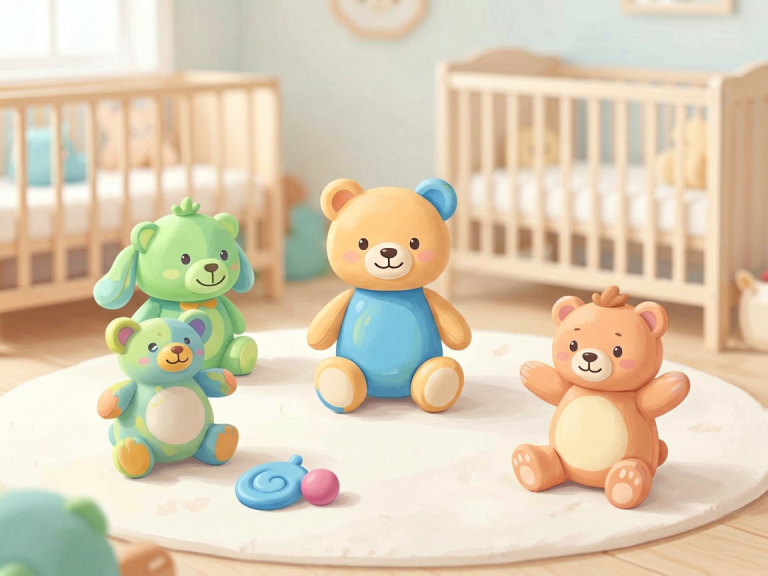
Infants and toddlers learn through their senses. Provide safe objects with different textures, shapes, and sounds. Peek-a-boo teaches object permanence. Simple rhymes and songs build phonemic awareness. Parents can narrate actions: “You dropped the rattle! It made a sound. Now you picked it up again.” This language-rich environment fuels early vocabulary.
- Ages 3–5: Imaginative and Early Academic Play
Preschoolers thrive on pretend play and simple patterns. Use counting bears, magnetic letters, and puzzles. Set up a “post office” with envelopes and stamps (practice writing names). Play “I Spy” with colors and shapes. At this age, short, guided activities work best—10 to 15 minutes of focused play followed by free exploration.
- Ages 6–8: Strategic and Collaborative Play
Elementary-aged children can handle more complex rules. Board games like Monopoly Junior teach money management; card games like Uno reinforce number sequencing and strategy. Science experiments (e.g., baking soda volcanoes) are wildly engaging. Parents can introduce simple coding toys or app-based games that require logical steps.
- Ages 9–12: Project-Based and Cooperative Play
Older children enjoy long-term projects: building a model bridge, planning a family board game tournament, or creating a mini-garden. These activities teach planning, time management, and teamwork. Parent-child book clubs or collaborative storytelling (taking turns adding sentences) strengthen literacy and creativity.
Overcoming Common Challenges
Even well-intentioned parents encounter obstacles. Here’s how to address them:
- “I don’t have time.”
Educational play doesn’t require hours. Even 10 minutes of focused interaction—a quick game of “I Spy” during a car ride, or counting steps while climbing stairs—adds up. Quality matters more than duration.
- “My child only wants screen time.”
Use digital tools as a springboard. After an educational app about animals, suggest reenacting the animal behaviors with stuffed toys. Or set a timer for screen time, then transition to a related hands-on activity like drawing the animals.
- “I feel pressure to teach formally.”
Remind yourself that play is the primary way children learn in early years. Studies show that children in play-based preschools perform as well or better academically later on. Trust the process.
- “My child refuses to play with me.”
Sometimes children need space to play independently. Respect that, but also gently initiate parallel play—engage in your own activity nearby. Often, children will eventually invite you in.
Conclusion
Educational play is not about turning every moment into a lesson; it is about embracing the joyful, messy, and creative process of discovery. Parents who use educational play effectively are not teachers but facilitators—providing the raw materials, asking the right questions, and celebrating the journey. The benefits extend far beyond academic readiness: children develop confidence, curiosity, and a lifelong love of learning. So next time your child asks you to build a castle or play a silly game, remember that you are not just passing time. You are building the foundation of their future. Pick up that building block, roll the dice, or don the pirate hat—and watch the magic of learning unfold.