Unlocking Nature’s Classroom: The Best Toys for Outdoor Learning
Introduction: Why Outdoor Learning Matters
In an age dominated by screens, structured schedules, and indoor entertainment, the value of outdoor learning has never been more critical. Research consistently shows that children who engage with nature develop stronger problem-solving skills, greater physical resilience, enhanced creativity, and improved emotional regulation. Yet effective outdoor learning doesn’t happen by accident; it requires intentional tools — toys that transform a backyard, park, or forest into a living laboratory. The best toys for outdoor learning are those that spark curiosity, encourage hands-on exploration, and seamlessly blend play with real-world discovery. This article explores the top categories of outdoor learning toys, from scientific investigation kits to creative construction sets, and explains how each fosters cognitive, physical, and social growth.
1. Nature Exploration and Science Kits: Turning Children into Junior Naturalists
The first and arguably most fundamental category is nature exploration tools. These toys empower children to observe, collect, and analyze the natural world around them. A high-quality magnifying glass, for example, is a deceptively simple yet powerful instrument. When a child holds a magnifying glass over a leaf, they instantly enter a micro-universe — they see tiny veins, crawling insects, and the shimmer of water droplets. This act of focused observation builds scientific thinking: asking questions, forming hypotheses, and testing ideas. Similarly, binoculars designed for small hands allow children to spot birds, squirrels, or distant clouds, cultivating patience and attention to detail.
But the best toys in this category go beyond passive observation. Consider a portable bug catcher with a built-in magnifying dome. This tool enables children to capture a ladybug or a caterpillar temporarily, examine it closely, and then release it — teaching respect for living creatures. Likewise, a field guidebook (or a waterproof identification card) specific to local flora and fauna turns a simple walk into a treasure hunt: “Can we find three different types of oak leaves?” or “What is the name of that yellow flower?” Some kits include a mini-journal and colored pencils for sketching findings, which integrates art and writing into the scientific process. For more advanced young learners, a soil testing kit or a simple pH strip set introduces basic chemistry concepts. These toys do not merely entertain; they foster the habits of observation, classification, and recording that form the bedrock of all scientific inquiry.
2. Building and Construction Toys: Engineering in the Open Air
Outdoor spaces offer the ultimate freedom for construction: no walls, no ceilings, and unlimited raw materials. The best building toys for outdoor learning capitalize on this flexibility. Take, for example, large interlocking plastic bricks or modular blocks designed specifically for outdoor use. Unlike their indoor cousins, these pieces are oversized, weather-resistant, and encourage whole-body movement. Children can build forts, ramps, bridges, or even simple machines. As they struggle to keep a tower upright or adjust the angle of a ramp so a ball rolls faster, they are intuitively learning principles of physics — balance, gravity, leverage, and friction.
Another outstanding option is a set of flexible wooden planks and connectors, often marketed as “loose parts” kits. These allow for endless creativity: a child might build a small bird feeder one day, a bridge for toy cars the next, and a castle for imaginary play the day after. The open-ended nature of such toys means no single “correct” outcome, which promotes divergent thinking and resilience. When a structure collapses, the child must diagnose why and try again — a powerful lesson in persistence and problem-solving.
Even simpler are ropes, pulleys, and tarps. These “low-tech” building materials transform a tree into a crane or a tent. A child who learns to tie a secure knot and lift a bucket of sand is developing fine motor skills, spatial reasoning, and an understanding of mechanical advantage. Construction toys for outdoor learning are not just about stacking; they are about designing, testing, and iterating — exactly what engineers do.
3. Active Play and Gross Motor Development: The Foundation of Physical Literacy
Outdoor learning is incomplete without movement. The best toys in this category challenge children to run, jump, balance, and coordinate — all while solving physical puzzles. Consider a set of colorful stepping stones, either plastic or natural wood. Children must plan their path: How far apart are the stones? Can I leap from this one to that one without falling? This activity builds proprioception (awareness of body position) and risk assessment. Similarly, a balance beam — even a simple log on the ground — improves core strength and stability. Adding a timer or a challenge (e.g., “carry this beanbag without dropping it”) turns a simple walking exercise into a cognitive-motor task.
Another remarkable toy is a large parachute for group play. While often used indoors, an outdoor parachute game on a grassy field is unmatched for cooperative learning. Children must communicate, synchronize their movements, and adjust their grip to keep a ball bouncing on the fabric. This teaches teamwork, leadership, and understanding of cause and effect. For individual play, a scooter or a balance bike (no pedals) teaches dynamic balance and spatial awareness. These toys are especially valuable because they offer immediate feedback: lean too far and you fall; adjust your weight and you glide smoothly.
Active toys also include traditional sports equipment reimagined for learning. For instance, a set of numbered cones can be used for math relays: run to cone number 5, then jump back to cone number 2. This integrates arithmetic with physical exercise, making learning multisensory. A simple skipping rope, when paired with a counting chant, reinforces number patterns and rhythm. The key is that these toys are not merely about exerting energy; they are about using the body as a learning instrument.
4. Creative and Imaginative Play: Storytelling Without Boundaries
Outdoor environments naturally lend themselves to imaginative worlds. The best toys for outdoor learning in this category provide loose, flexible props that spark narrative. A simple mud kitchen — a wooden shelf with old pots, spoons, and water — is a phenomenal learning tool. Children mix mud, sand, leaves, and water to create “soup” or “cake.” In doing so, they practice measurement (“a little more water”), chemistry (how does mud change when wet?), and role-playing (cooking for a family). There is also social negotiation: “I’ll stir while you add the pine needles.” This kind of play is rich with language development, cooperation, and emotional regulation.
Similarly, a set of durable costumes — capes, hats, animal masks — allows children to become explorers, knights, or forest creatures. Add a few large cardboard boxes, and the possibilities explode: a box becomes a rocket ship, a cave, or a magic portal. Unlike structured toys with predetermined outcomes, these open-ended materials invite children to construct their own learning narratives. A child pretending to be a bird might start observing real birds more closely — blending imagination with scientific curiosity.
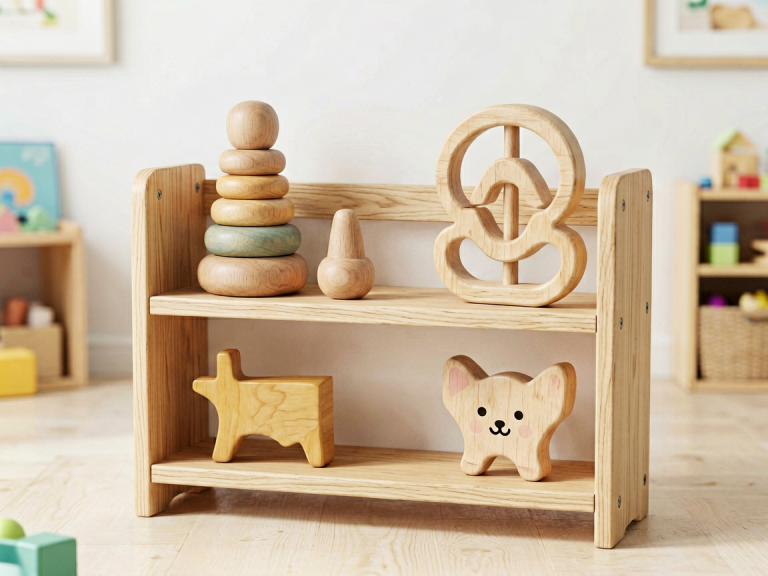
Another outstanding toy is a set of lightweight wooden figures or animal figurines specifically designed for outdoor use. Children can create habitats, act out stories of predators and prey, or mimic migration patterns. This type of play integrates biology, ecology, and storytelling. The best part? No batteries, no instructions, no limits.
5. Water and Sensory Play: Physics and Biology in Action
Water is perhaps the most versatile outdoor learning medium. A simple water table, either store-bought or homemade (such as a shallow plastic tub), becomes a platform for endless experimentation. Add funnels, tubes, cups, and floating objects. Children observe how water flows downhill, how different volumes fill containers at different rates, and how some objects float while others sink. This is fluid dynamics and buoyancy at its most intuitive. Adding a bit of food coloring or soap foam introduces concepts of mixing, dissolving, and surface tension.
For more structured learning, a rain gauge or a simple anemometer (wind-measuring device) turns a child into a meteorologist. They can track daily rainfall, compare wind speeds, and even predict weather patterns. Similarly, a set of sieves, nets, and buckets for pond dipping teaches children about aquatic ecosystems. They might catch tadpoles, water bugs, or algae — and then research what they found. This direct tactile experience is far more memorable than any textbook diagram.
Sensory play also includes sand, dirt, and gravel. A construction set with a mini-digger or dump truck encourages children to transport, dump, and level materials. These actions develop hand strength, spatial planning, and an understanding of volume and weight. When children create canals in the sand or build castles with moats, they are practicing engineering and hydrology — all while getting their hands delightfully dirty.
6. Gardening and Life Science Tools: Cultivating Patience and Responsibility
Finally, the best outdoor learning toys include those that connect children directly with the living world. A child-sized gardening set — trowel, fork, watering can, gloves — is not just a toy; it’s a gateway to understanding life cycles, nutrition, and ecology. Start with a simple seed packet: beans, sunflowers, or radishes grow quickly. Children learn to dig a hole, plant the seed, water it, and wait. The waiting is crucial; it teaches delayed gratification and responsibility. As the plant grows, they measure its height, count leaves, and note changes in color. This is hands-on biology, chemistry (photosynthesis), and even mathematics (growth charts).
Some gardening kits include a small greenhouse or a worm farm. A worm composting bin introduces the concept of decomposition and soil health. Children see firsthand how worms turn kitchen scraps into rich soil. This lays the groundwork for understanding ecosystems, recycling, and sustainable living. For older children, a simple hydrometer or pH tester for soil connects to chemistry concepts. A set of plant markers and a garden journal encourages writing and record-keeping.
Even beyond traditional gardening, a set of butterfly-raising nets and a caterpillar habitat allows children to witness metamorphosis — one of nature’s most astonishing phenomena. Watching a caterpillar form a chrysalis and emerge as a butterfly is a powerful lesson in transformation and life cycles. Such experiences cultivate empathy, wonder, and a lifelong appreciation for nature.
Conclusion: Choosing Toys That Grow with Children
The best toys for outdoor learning are not the flashiest, most expensive, or most technologically advanced. They are the ones that invite children to touch, wonder, question, and create. A magnifying glass, a set of building planks, a mud kitchen, a rain gauge, a trowel — these simple tools open doors to complex learning. They encourage children to become scientists, engineers, artists, and storytellers while breathing fresh air and moving their bodies. When selecting outdoor learning toys, parents and educators should prioritize durability, open-endedness, and alignment with natural curiosity. The greatest classroom has no walls; the best toys are those that help children discover it for themselves. By investing in these thoughtful, nature-connected playthings, we invest in a generation of learners who are not only knowledgeable but also curious, resilient, and deeply connected to the world around them.