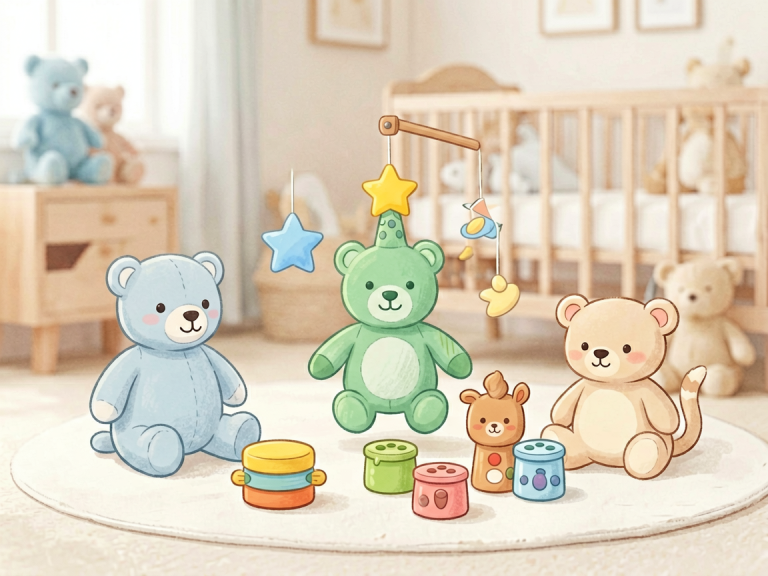
Maximizing Play: The Art of Screen-Free Toy Rotation for Toddlers
Introduction
In an age where digital devices are omnipresent, many parents find themselves wrestling with the challenge of keeping their toddlers engaged without resorting to screens. The temptation to hand over a tablet or turn on a cartoon is understandable—it buys a few minutes of peace. Yet research increasingly warns that excessive screen time in early childhood can hinder language development, reduce attention span, and disrupt sleep patterns. The question then becomes: How can we provide rich, stimulating play experiences that rival the allure of glowing screens?
One surprisingly effective answer lies in an old-fashioned yet scientifically backed practice: screen-free toy rotation. This strategy involves deliberately limiting the number of toys available at any given time and periodically swapping them out. Far from being a simple decluttering trick, toy rotation reshapes a toddler’s environment into a space that fosters deep focus, creativity, and independent play. In this article, we will explore the philosophy behind toy rotation, its manifold benefits, a step-by-step implementation guide, and practical tips for choosing the right toys—all while keeping screens at bay.
—
What Is Screen-Free Toy Rotation?
At its core, toy rotation is a system for managing a child’s playthings by dividing them into small, curated sets that are rotated on a regular schedule—typically weekly or biweekly. Only one set is accessible at a time; the rest are stored out of sight. The term “screen-free” emphasizes that the toys themselves are analog, open-ended, and designed to spark imaginative play rather than passive consumption.
This approach stands in stark contrast to the typical toy-laden nursery, where bins overflow with plastic gadgets, electronic sound-makers, and themed playsets. When a toddler is surrounded by dozens of choices, their developing brain can become overwhelmed. They may flit from one toy to the next, never truly engaging with any. By contrast, a rotated selection of just eight to twelve carefully chosen items invites deeper exploration. The novelty of a “new” set (which is actually a set of old toys that have been out of sight for a while) rekindles interest without requiring a trip to the store.
—
The Benefits of Toy Rotation for Toddlers
1. Boosts Focus and Deep Play
Toddlers are naturally curious but have short attention spans. A cluttered environment scatters their focus. When only a limited array of toys is available, they are more likely to settle into a single activity for longer periods. This “deep play” is crucial for cognitive development—it is during these sustained moments that children practice problem-solving, experiment with cause and effect, and build narratives. For example, a set of wooden blocks becomes a castle, a bridge, or a spaceship, depending on the day. Rotation prevents the blocks from being ignored in favor of a louder, flashier toy.
2. Encourages Creativity and Resourcefulness
Screen-free toys—building sets, art supplies, pretend-play props, simple puzzles—require children to use their imagination. When a toy is only available for a limited window, toddlers learn to make the most of it. They invent new ways to use the same items. A simple set of stacking cups can become a drum, a tower, a sorting game, or a tea party set. Rotation ensures that no toy becomes stale; each reappearance feels fresh, prompting novel creative applications.
3. Reduces Overstimulation and Fosters Calm
The overabundance of toys is a well-documented contributor to toddler meltdowns. Too many choices can lead to decision fatigue and sensory overload. By contrast, a minimalist play area (a small shelf with a few baskets) creates a calm, orderly environment. When a toddler knows exactly what is available, they can approach play with confidence. This serenity extends to nap times and mealtimes, as the reduced visual chaos helps regulate a young child’s nervous system.
4. Promotes Independence and Self-Directed Learning
With fewer toys, toddlers are more likely to initiate their own activities rather than passively waiting for an adult to suggest something. They learn to pick up a toy, explore it, and put it away—a precursor to executive function skills. Rotation also makes tidying up manageable; a child can easily sort a dozen items back into their designated baskets, fostering a sense of ownership and responsibility.
5. Curbs Materialistic Cravings
When you rotate toys, you effectively create a “recycling” of interest. Your toddler learns that they do not need a constant stream of new purchases to be entertained. Over time, this reduces the “gimme” mentality that often emerges around age two. A well-rotated toy collection also saves money and reduces clutter in the home—a win-win for both parent and planet.
—
How to Implement a Toy Rotation System
Step 1: Declutter and Categorize
Begin by gathering every toy in your home. Remove any that are broken, missing pieces, or inappropriate for your child’s developmental stage. Then sort the remaining toys into broad categories: construction (blocks, LEGO Duplo), pretend play (kitchen sets, action figures, dress-up clothes), art (crayons, play-dough, stickers), sensory (water beads, kinetic sand, texture balls), and puzzles/games. Aim for about five to six categories.
Step 2: Create Rotating Sets
From your sorted piles, compose three to five distinct sets. Each set should contain roughly eight to twelve items, representing a balanced mix of categories. For instance, Set A might include a wooden train set, a set of stacking cups, two board books, a shape sorter, and a play scarf. Set B could be a dollhouse with miniature furniture, a string of large beads, a chunky puzzle, and a set of rhythm instruments. The key is variety: include at least one open-ended toy (blocks, loose parts, fabric), one fine-motor toy, and one imaginative-play item per set.
Step 3: Choose a Rotation Schedule
Most families find a weekly rotation works well. On a designated day (Sunday evening, for example), swap out the current set for the next one. Store the inactive sets in opaque bins in a closet or garage—out of sight, out of mind. If your toddler seems bored with the current set before the week ends, you can rotate early, but try to stick to the schedule for at least a few weeks to let the novelty wear off naturally.
Step 4: Involve Your Toddler
Once your child is old enough (around 18 months), let them help with the rotation. They can carry toys to the storage bin or select which set to bring out next. This involvement gives them a sense of control and excitement. You might also introduce a special “surprise” toy once a month—a thrift store find or a handmade item—to make rotation day feel like a mini celebration.
Step 5: Observe and Adjust
Pay attention to which toys spark the longest engagement. If a particular set is repeatedly ignored, swap it out sooner and consider whether those toys are developmentally appropriate. Conversely, if a certain toy (like a favorite stuffed animal or a beloved puzzle) is constantly in use, you might keep it permanently available as a “anchor toy” and rotate everything else around it.
—
Choosing the Right Toys for Rotation
Not all toys are suitable for a rotation system. The best choices are those that are open-ended, durable, and screen-free. Here are guidelines:
- Open-ended toys invite multiple uses. Wooden blocks, magnetic tiles, play silks, stacking rings, and simple dolls are excellent. Avoid toys that only do one thing—like a plastic cash register that only makes sounds when a button is pressed.
- Real-world objects can be surprisingly engaging. A wooden spoon, a stainless steel bowl, a cardboard box, or a collection of pinecones can become the center of a toddler’s play for an entire morning. Rotate these in alongside store-bought toys.
- Avoid batteries and screens. Battery-operated toys that talk, sing, or flash lights often lead to passive play (the toy entertains the child rather than the child entertaining the toy). They also tend to break quickly and are less versatile. Save your budget for simple, sturdy items.
- Include sensory elements. Toddlers learn through their senses. Rotate in items with different textures (smooth wooden animals, bumpy sensory balls, crinkly fabric), sounds (shakers, bells, drums), and scents (scented play-dough, lavender-filled sachets).
- Rotate books, too. A small basket of three to five board books can be swapped each week. This keeps storytime fresh and encourages repeated reading of the same books, which builds vocabulary and comprehension.
—
Common Mistakes to Avoid
- Keeping too many toys out. Even with rotation, it is tempting to leave out a few extra favorites. Resist. The magic of rotation relies on scarcity. If your child has access to 30 toys, the system fails. Stick to fewer than 15 items at a time.
- Rotating too frequently or too rarely. Daily rotation can be chaotic and prevents deep engagement. Monthly rotation may lead to boredom mid-cycle. Weekly or biweekly is ideal for most toddlers.
- Ignoring your child’s developmental stage. A 12-month-old needs different toys than a 24-month-old. Ensure each set contains items that challenge without frustrating. For example, a 16-month-old might enjoy a simple shape sorter, while a 2-year-old might be ready for a three- or four-piece puzzle.
- Forgetting to rotate in “familiar favorites.” Some toddlers take comfort in a few constant items. If your child has a special lovey or a favorite car, keep that permanently available. It provides a secure anchor while everything else changes.
- Expecting instant results. Toy rotation is not a magic fix for every toddler’s behavior. Some children need time to adjust to the new system. Give it two to three weeks before evaluating whether it is working.
—
Conclusion
Screen-free toy rotation is more than a clever organizing strategy—it is a philosophy of intentional play. By curating a small, changing selection of analog toys, we give our toddlers the gift of focused attention, limitless creativity, and a calm environment that screens can never replicate. The process requires an initial investment of time—sorting, categorizing, and scheduling—but the payoff is immense: a child who plays more independently, complains less about boredom, and develops a genuine relationship with the objects around them.
As parents, we often feel pressured to provide endless entertainment. Yet the most profound learning happens in the quiet moments when a toddler stacks one block on another, studies the pattern on a shell, or wraps a scarf around a doll. Toy rotation creates the conditions for those moments to flourish. So put away the tablet, clear the shelves, and trust the power of less. Your toddler’s imagination will do the rest.