Unlocking Potential: The Best Early Learning Toys for 10-Year-Olds
Introduction
At age ten, children stand at a fascinating crossroads. They have outgrown the simple stacking blocks and picture books of toddlerhood, yet they are not quite teenagers navigating the complexities of abstract logic and social dynamics. This is a golden window for “early learning” in a deeper sense: not learning the alphabet or numbers, but learning how to think, solve problems, collaborate, and create. The right toys can transform play into a powerful engine for cognitive, emotional, and social growth. While the phrase “early learning” often evokes images of preschoolers, for 10-year-olds it refers to the early stages of mastering advanced skills—coding, engineering, strategic reasoning, and artistic expression. This article explores the best early learning toys for this age group, carefully selected to challenge their growing minds while keeping the joy of play front and centre. Each recommendation is grounded in developmental psychology and practical classroom experience, ensuring that the time spent with these toys is both fun and formative.
—
1. STEM Building Kits: The Foundation of Engineering Thinking
STEM (Science, Technology, Engineering, and Mathematics) toys are arguably the most impactful category for 10-year-olds. At this age, children have the manual dexterity to handle small parts and the patience to follow multi-step instructions. Building kits such as *LEGO Technic* or *Meccano* sets go beyond basic construction; they introduce gears, pulleys, motors, and even programmable elements. A child who builds a working crane or a solar-powered car is not just assembling plastic pieces—they are internalizing principles of physics, mechanics, and design thinking. These toys encourage trial and error. When a structure collapses, the child must analyze why the load was unbalanced or the gear slipped. This iterative process builds resilience and a scientific mindset. Moreover, many modern STEM kits come with companion apps that allow children to experiment with variables like speed or angle, merging physical play with digital simulation. The best options are those that offer open-ended challenges after the initial model is built, such as *Snap Circuits* or *Thames & Kosmos* engineering sets, which allow children to design their own inventions. By engaging with these toys, 10-year-olds learn that failure is simply a stepping stone to a better solution—a lesson that serves them well in school and life.
—
2. Coding and Robotics Kits: Programming the Future
Digital literacy is no longer optional, and the best way to introduce it is through tangible, screen-balanced play. Coding and robotics kits for 10-year-olds bridge the gap between abstract code and physical action. Products like *Sphero BOLT*, *LEGO Boost*, or the *Makeblock mBot* allow children to drag-and-drop blocks of code on a tablet, then watch their robot roll, spin, or light up in real time. This immediate feedback loop demystifies programming and makes it concrete. For instance, a child who wants their robot to follow a black line must sequence commands, use loops, and debug errors when the bot veers off course. These skills—logical sequencing, pattern recognition, and systematic debugging—are transferable to mathematics, writing, and even music. More advanced options, such as *Raspberry Pi* starter kits, introduce Python or Scratch in a project-based way, such as building a weather station or a simple game. Importantly, these toys do not isolate children in front of a screen; they involve building physical structures, testing them on the floor, and often collaborating with siblings or friends. The social dimension is crucial: explaining a bug to a peer forces the child to articulate their thinking clearly. For a 10-year-old, mastering a coding toy provides a powerful sense of agency—they become creators, not just consumers, of technology.
—
3. Strategy Board Games: The Gym for Critical Thinking
While digital games have their merits, analog board games offer an irreplaceable training ground for strategic thought, patience, and social interaction. Games like *Settlers of Catan*, *Ticket to Ride*, or *Carcassonne* require 10-year-olds to manage resources, anticipate opponents’ moves, and adapt to changing situations. These are not luck-based games; they demand planning and flexible reasoning. For example, a player in *Catan* must decide whether to trade resources for a quick road or hoard them for a city, weighing short-term gains against long-term victory. Such decisions exercise the prefrontal cortex, the part of the brain responsible for executive functions like inhibition and cognitive flexibility. Additionally, cooperative games like *Forbidden Island* or *Pandemic* teach teamwork and communication. Children learn to share information, negotiate roles, and manage collective resources. Unlike solo screen time, board games create a shared space where reading facial expressions, taking turns, and handling loss gracefully are part of the experience. For a 10-year-old who is beginning to navigate more complex peer relationships, these social skills are invaluable. A well-stocked game shelf also promotes family bonding, turning Friday nights into a low-tech, high-engagement learning ritual.
—
4. Art and Craft Kits: Cultivating Creativity and Fine Motor Skills
At ten, children have developed enough fine motor control to tackle sophisticated art projects, but they still benefit from structured guidance. Art kits that go beyond coloring books—such as *Klutz* sewing kits, *Sculpey* clay modeling sets, or *Alex Brands* origami sets—provide step-by-step instructions while leaving room for personal flair. These activities strengthen hand-eye coordination and dexterity, which are still developing at this age. More importantly, they nurture divergent thinking: the ability to generate multiple solutions to an open-ended problem. A child who is given a kit to design a felt-animal keychain might deviate from the pattern to add their own features, thereby practicing creative decision-making. Advanced kits, such as those for weaving or embroidery, also teach patience and the satisfaction of completing a long-term project. In a world of instant gratification, the slow, meditative act of threading a needle or shaping clay offers a calming counterbalance. Furthermore, art serves as an emotional outlet. Ten-year-olds often experience heightened self-awareness and social pressure; a focus on creating something beautiful can be therapeutic. For early learning, these toys remind children that intelligence is not just about solving equations—it is also about seeing possibilities, taking aesthetic risks, and expressing individuality.
—
5. Science Experiment Kits: Hands-On Discovery
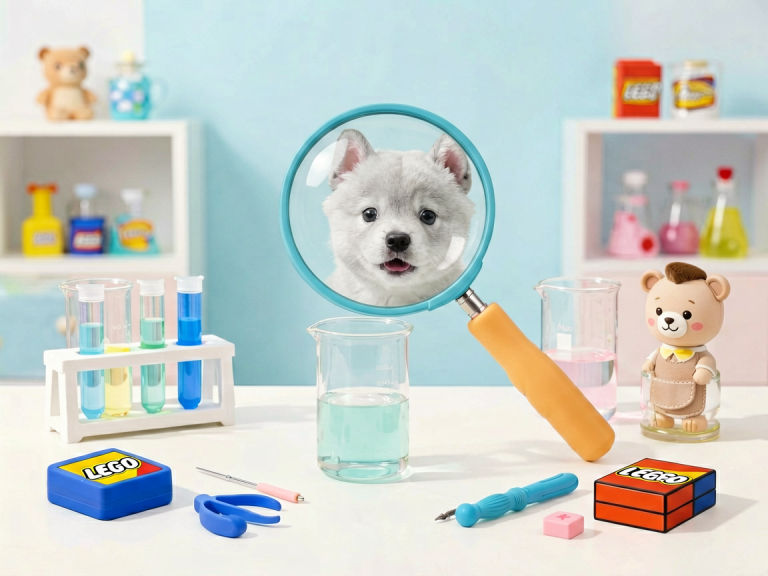
Nothing sparks curiosity like a chemical reaction or a growing crystal. Science experiment kits designed for 10-year-olds transform the abstract concepts they learn in school into tangible, memorable experiences. Kits from *National Geographic*, *Thames & Kosmos*, or *4M* offer projects such as building a volcano, extracting DNA from fruit, or constructing a simple electric motor. What sets these apart from mere “science fair” projects is the emphasis on the process: children are guided through hypothesizing, observing, and recording results. For instance, a crystal-growing kit teaches about supersaturation and evaporation, but the hands-on experience of watching delicate crystals form over days instills a sense of wonder that a textbook cannot replicate. Many kits also come with child-friendly instruction manuals that explain the underlying science in clear, age-appropriate language. This builds vocabulary and comprehension skills. Moreover, the element of surprise—such as a color change in a pH test—makes learning sticky. Parents and educators often note that children who engage with these kits develop a more positive attitude toward science subjects in school. The best kits are safe, reusable, and aligned with the 10-year-old’s growing ability to follow multi-step procedures independently, fostering both scientific literacy and self-reliance.
—
6. Books and Interactive Reading Games: The Gateway to Complex Literacy
While not a “toy” in the traditional sense, the right book or reading-related game can be the most powerful early learning tool for a 10-year-old. At this age, children transition from “learning to read” to “reading to learn,” and their vocabulary, comprehension, and ability to infer meaning expand rapidly. Interactive series like *Choose Your Own Adventure* books combine reading with decision-making, engaging reluctant readers. More advanced options include puzzle-based novels such as *The Mysterious Benedict Society* or *Escape Room* style book kits that require readers to solve clues to progress. Augmented reality books (e.g., those from *Quiver*) bring pages to life via a smartphone app, merging literacy with technology in a controlled way. Furthermore, word games like *Bananagrams*, *Scrabble Junior*, or *Rory’s Story Cubes* turn vocabulary building into a social, fast-paced activity. These games require children to think quickly, make connections, and use words in context—a far cry from rote memorization. For a 10-year-old struggling with reading fluency, games lower the stakes and build confidence. Meanwhile, advanced readers can be challenged with logic puzzles that require reading comprehension, such as *Deduction Board Games* like *Sherlock Holmes: Consulting Detective*. The goal is to make reading an active, exploratory experience rather than a passive one. By embedding literacy in play, these toys ensure that language skills continue to develop naturally and joyfully.
—
Conclusion
Choosing the best early learning toys for a 10-year-old is about honoring their unique developmental stage: they are not babies, but they are still highly receptive to learning through play. The toys highlighted here—STEM kits, coding and robotics, strategy board games, art and craft sets, science experiments, and interactive reading tools—each address different facets of a child’s growth. They build cognitive flexibility, technical literacy, social intelligence, creativity, and emotional resilience. Most importantly, they do so in a way that feels like play, not homework. When a child spends an hour debugging a robot or negotiating a trade in *Catan*, they are practicing skills that will serve them for a lifetime. Parents and educators should look for toys that encourage open-ended exploration, allow for mistakes, and spark intrinsic motivation. The goal is not to produce a prodigy but to cultivate a curious, confident, and resourceful young person. In a world that increasingly demands adaptive thinking and collaboration, these toys are not mere pastimes—they are investments in a child’s future. So the next time you are searching for a gift, remember that the best toy is one that makes a 10-year-old ask “what if?” and then gives them the tools to find out.