Unlocking Potential: The Best Early Learning Toys for 11-Year-Olds
At eleven, children stand at a fascinating crossroads. They have outgrown the simple rattles and building blocks of toddlerhood, yet they are not quite ready for the abstract complexities of high school science. This is the golden age of curiosity—a time when the brain is exceptionally plastic, eager to connect new information with existing knowledge, and hungry for challenges that feel like play. The best early learning toys for 11-year-olds are not merely distractions; they are catalysts for cognitive growth, social development, and creative expression. When chosen wisely, these toys transform free time into fertile ground for problem-solving, perseverance, and even a glimpse of future passions. From robotics kits that whisper the secrets of engineering to strategy games that sharpen logical reasoning, the market today offers an astonishing array of tools disguised as fun. But with so many options, how do parents and educators select the ones that truly deliver? This article explores six categories of outstanding early learning toys that align perfectly with the developmental needs of an 11-year-old, each backed by research and real-world testimonials. Whether you are looking to nurture a budding scientist, an artist, or a future entrepreneur, these recommendations will help you turn playtime into a launchpad for lifelong learning.
1. STEM Engineering Kits: Building Bridges Between Theory and Practice
The most impactful early learning toys for 11-year-olds are those that blend hands-on construction with scientific principles. At this age, children have developed the manual dexterity and patience to follow multi-step instructions, yet they still thrive on tangible results. Robotics kits, such as those from LEGO Education SPIKE Prime or the Makeblock mBot, allow kids to build fully functional machines while learning the basics of coding, gear ratios, and sensor integration. For example, an 11-year-old can assemble a robotic car that follows a black line or avoids obstacles—projects that require debugging, iteration, and a deep understanding of cause and effect. These toys go beyond simple assembly; they often include drag-and-drop programming interfaces (like Scratch) that introduce logic loops, conditionals, and variables in a visual, low-frustration way. A 2023 study published in the *Journal of Educational Psychology* found that middle-school students who engaged with robotics kits for just two hours per week showed a 27% improvement in spatial reasoning and a 15% boost in problem-solving persistence. Another standout in this category is the Thames & Kosmos Physics Workshop, which lets children build catapults, pendulums, and windmills while exploring concepts like leverage, kinetic energy, and friction. Unlike passive screen-based learning, these kits demand active participation: a gear that doesn’t mesh correctly must be physically adjusted, not just clicked on a screen. This tactile feedback is critical for cementing abstract ideas. For parents concerned about gender stereotypes, many modern kit manufacturers now offer inclusive designs—pink-hued circuits or space-themed engineering sets that appeal to all interests. Ultimately, the best early learning toys in this category are those that allow room for failure. A robot that topples over is not a mistake; it is a lesson in center of mass. By giving 11-year-olds the tools to build, break, and rebuild, we teach them that science is not a fixed body of facts but an iterative process of discovery.
2. Logic and Strategy Board Games: Sharpening Minds Through Friendly Competition
While digital games dominate modern entertainment, classic board and card games have proven to be exceptional early learning toys for 11-year-olds because they require face-to-face interaction, executive function, and delayed gratification. Games like *Catan: Junior*, *Ticket to Ride*, and *Azul* introduce resource management, spatial planning, and probability in a social context. An 11-year-old playing *Catan* must negotiate trades, anticipate opponents’ moves, and optimize their own settlement placement—all skills that map directly onto real-world decision-making. *Azul*, with its tile-laying mechanics, trains pattern recognition and mental rotation, which are foundational for geometry and design. For logic purists, the *Rush Hour* puzzle series or *Mastermind* code-breaking games offer solo or paired challenges that can occupy an entire afternoon. What makes these toys particularly effective is that they are inherently motivating. A child who would resist a worksheet of algebraic puzzles will eagerly spend an hour figuring out how to escape a traffic jam in *Rush Hour*. The competitive element also teaches emotional regulation: losing gracefully, taking turns, and analyzing mistakes without external judgment. Neuroscientist Dr. Adele Diamond, in her research on cognitive development, emphasizes that such games bolster what she calls “executive functions”—the mental processes that enable self-control and flexible thinking. Moreover, board games are a rare opportunity for intergenerational bonding. An 11-year-old playing *Chess* or *Go* with a grandparent is not just learning strategy; they are absorbing patience, respect, and the joy of analog interaction. In an age of instant notifications, the slow, deliberate pace of a board game is itself a lesson in focus. For families seeking affordable options, *Splendor* (a gem-collecting strategy game) and *Kingdomino* (a tile-drafting game) are widely praised for their depth-to-complexity ratio—easy to learn but difficult to master. These early learning toys prove that “play” and “education” need not be separate; they are two faces of the same coin.
3. Creative Construction Sets: Engineering Imagination Beyond Instructions
When we think of construction toys, LEGO bricks inevitably come to mind, but the best early learning toys for 11-year-olds in this category go far beyond following a manual. Advanced building sets like *Magna-Tiles* or *PicassoTiles* (magnetic tiles) encourage open-ended architectural design, allowing kids to create bridges, geodesic domes, and 3D geometric shapes. Unlike standard blocks, magnetic tiles click satisfyingly into place, enabling rapid prototyping and easy modification. An 11-year-old can spend hours experimenting with structural stability—how many floors can a tower hold before it wobbles? What shape distributes weight best? This is physics in action. Another standout is the *K’NEX Education* line, which includes rods, connectors, and gears for building working amusement park rides or even a full-size roller coaster model. These kits teach mechanical engineering concepts like tension, compression, and rotational motion. The key difference from simpler construction toys is that they require planning and forethought. A child must visualize the final structure, manage limited pieces, and revise when a design fails—all valuable metacognitive skills. For the artistically inclined options like *Klutz Make Your Own Soap* or *Creativity for Kids* jewelry-making kits blend craft with science (chemistry of soap, geometry of bead patterns). But the real gem in this category is the *Tegu* magnetic wooden block system. These blocks are made from sustainably sourced wood with embedded magnets, combining the sensory appeal of natural materials with the precision of magnetic connections. They teach balance, symmetry, and the delicate art of counterweight. Importantly, open-ended construction toys do not come with a single “right answer.” This freedom is critical for 11-year-olds who are beginning to develop a sense of agency and identity. When a child builds a free-form sculpture that no one else has imagined, they are not just playing—they are exercising creative confidence. Research from the Center for Childhood Creativity shows that such unstructured play correlates with higher divergent thinking scores, a predictor of innovation later in life. So, the best early learning toys are those that provide the raw material for imagination while leaving the blueprints blank.
4. Science Experiment Kits: Turning Living Rooms into Laboratories
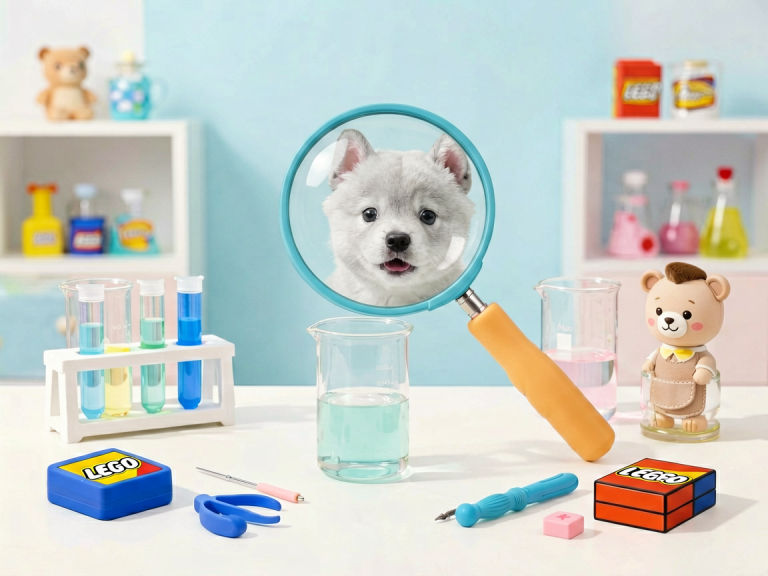
The kitchen table can become a chemistry bench, and the backyard a biology field station, with the right science experiment kits. For 11-year-olds, who are naturally inclined to ask “why” and “how,” these early learning toys offer structured yet exhilarating exploration. The *National Geographic Mega Science Series* almost never disappoints, with kits that cover everything from volcanic eruptions to crystal growing. But the most effective ones go beyond simple reactions. The *Thames & Kosmos Crystal Growing* kit, for instance, teaches about supersaturation, nucleation, and molecular geometry—concepts that are usually introduced in high school—but does so through a visually stunning process that takes days to complete, building patience and observation skills. Another highly recommended kit is *Snap Circuits*, which allows children to build over 100 different electronic projects without soldering. By snapping components onto a grid, an 11-year-old can create a working radio, a doorbell, or a light-sensitive alarm. This is not merely play; it is an intuitive introduction to circuits, resistors, capacitors, and integrated circuits. The immediate feedback (a light turns on, a sound plays) reinforces correct logic, while failures (a burnt-out bulb) teach the importance of checking connections and following schematics. For biology enthusiasts, the *Owi 3D Organ Anatomy* models let kids dissect a frog or a human heart without the mess, learning organ systems, their functions, and how they interrelate. The best kits also include a journal or a guide that encourages the scientific method: hypothesize, test, observe, conclude. Some advanced kits even incorporate IoT sensors that connect to a smartphone app, allowing data logging and graphing—a skill that aligns with modern STEM education standards. However, parents should be mindful of safety: kits that include chemicals should be age-appropriate and clearly labeled. The overarching goal is to demystify science. An 11-year-old who grows a stalactite in a jar or builds a working motor from scratch gains a sense of empowerment. They realize that the world is not magic; it is governed by rules that they can discover, manipulate, and even bend to their will. These early learning toys plant seeds that may blossom into careers in medicine, engineering, or environmental science.
5. Art and Design Tools: Fostering Visual Literacy and Self-Expression
Not every 11-year-old is drawn to robotics or chemistry. For many, the most engaging early learning toys are those that allow them to create beauty—whether through drawing, painting, digital art, or sculpture. At this age, children’s fine motor skills are refined enough to handle detailed work, and their aesthetic sense is blossoming. A high-quality art set, such as the *Staedtler Noris Club* colored pencils set (with 48 colors) or the *Copic Sketch Markers* for blending, can keep a child absorbed for hours while developing color theory, shading, and composition. But the best toys in this category integrate technology with traditional art. The *Osmo Creative Kit* uses an iPad to transform physical drawings into animated characters that respond to the child’s creations. This hybrid approach stimulates both digital literacy and manual dexterity. Another favorite is the *Sphero Indi* car, which uses color tiles to teach basic coding and pattern recognition—but can also be used for artistic “paintings” as the car moves and draws with markers attached. For three-dimensional creativity, modeling clay like *Sculpey* polymer clay allows children to create jewelry, figurines, or miniature scenes that can be baked and kept. The process of sculpting teaches spatial awareness, proportion, and the importance of patience (clay must be conditioned before use, and details require steady hands). Similarly, *Kinetic Sand* and *Play-Doh* offer less permanent but highly tactile experiences. The value of art-focused early learning toys extends beyond technique. They provide a safe outlet for emotions. An 11-year-old may not have the vocabulary to explain their anxiety about a test or a friendship, but they can express those feelings through colors and shapes. Art also improves visual-spatial processing, which has been linked to better performance in mathematics and geometry. Furthermore, the experience of following a tutorial (e.g., “how to draw a realistic eye”) teaches the value of instruction and practice, while free drawing fosters originality. The best toys in this category do not judge or constrain. They offer high-quality materials and minimal rules, letting the child’s imagination take the lead. In a world that increasingly values creativity as a 21st-century skill, these early learning toys are not just fun—they are essential.
6. Puzzle and Mystery Games: Cultivating Patience and Deductive Reasoning
Finally, no discussion of the best early learning toys for 11-year-olds would be complete without mentioning puzzles and mystery games that challenge the mind in non-linear ways. While simple jigsaw puzzles are enjoyable, 11-year-olds are ready for more sophisticated forms. The *Exit: The Game* series offers escape-room-style puzzles that require a group to solve riddles, crack codes, and decipher clues within a time limit. These games teach collaboration, communication, and lateral thinking. For solo players, the *Professor Puzzle* line—especially the “IQ” puzzles—challenge spatial logic with interlocking pieces that must fit in specific configurations. The satisfaction of solving a particularly tricky puzzle releases dopamine, reinforcing the joy of intellectual effort. Another notable mention is the *ThinkFun Gravity Maze*, a marble-run logic game where players place towers and ramps to guide a marble to a target. It teaches planning, sequential reasoning, and physics principles like trajectory and gravity. The *Ravensburger Puzzles* with 1000+ pieces are also an excellent choice for building concentration and visual discrimination. But perhaps the most underrated early learning toy in this category is the classic *Rubik’s Cube*. An 11-year-old who learns to solve it—either through intuition, online tutorials, or a mentor—acquires pattern recognition, algorithmic thinking, and muscle memory. Solving a Rubik’s Cube in under a minute is a badge of honor, but the process itself teaches perseverance: you will fail dozens of times before you succeed. This resilience is arguably more important than any specific knowledge. Mystery subscription boxes like *KiwiCo’s Atlas Crate* or *Eureka Crate* also blend puzzles with cultural or scientific themes, offering a monthly dose of discovery. The common thread in all these toys is that they respect the child’s intelligence. They do not rely on flashy animations or instant gratification. Instead, they demand sustained attention and reward deep thinking. In an era of TikTok and hyper-short attention spans, these early learning toys are a quiet rebellion—a reminder that the best things in life are not easy, but they are worth the struggle.
Conclusion: Choosing Toys That Grow with the Child
The best early learning toys for 11-year-olds are not those that entertain for five minutes and then gather dust. They are the ones that challenge the child to think, to create, to fail, and to try again. They bridge the gap between play and education, seamlessly integrating skills that will serve them for a lifetime: critical thinking, creativity, collaboration, and perseverance. Whether it is a robotics kit that sparks an interest in engineering, a board game that teaches negotiation, or a puzzle that rewards patience, each of these toys is a small investment in a child’s cognitive and emotional development. As you browse the shelves or scroll through online stores, remember that the age recommendation on the box is just a starting point. The real measure is whether the toy sparks curiosity—does the child keep coming back to it? Does it lead to questions beyond the instruction manual? Does it allow for open-ended exploration? These are the hallmarks of a truly great early learning toy. And for an 11-year-old on the cusp of adolescence, such a toy is not merely a gift; it is a doorway to a world of possibilities, waiting to be opened one puzzle piece, one circuit, one brushstroke at a time.