Unlocking Potential: Engaging Play Activities for 6-Year-Olds
Introduction
The age of six marks a remarkable transition in a child's development. Having left the preschool years behind, six-year-olds step into the structured world of formal schooling, yet their need for unstructured, joyful, and developmentally appropriate play remains as vital as ever. At this stage, play is not merely a break from learning; it is the very engine that drives cognitive, social, emotional, and physical growth. Six-year-olds are curious, energetic, and increasingly capable of complex thought, but they still require activities that allow them to explore, experiment, and express themselves freely. Designing effective play activities for this age group requires a careful balance between guided instruction and open-ended exploration, between solo concentration and group cooperation. This article provides a comprehensive guide to play activities for six-year-olds, organized by developmental domain and setting, ensuring that every moment of fun also builds essential skills for life.
Developmental Milestones at Age Six
Before diving into specific activities, it is crucial to understand what six-year-olds are capable of and what they are striving to achieve. Cognitively, they begin to think more logically, can understand simple cause-and-effect relationships, and enjoy games that involve rules and strategies. Their attention span lengthens to about 15 to 20 minutes for focused tasks, though they still need frequent physical breaks. Socially, peer relationships become increasingly important; they learn to negotiate, take turns, and resolve minor conflicts, although emotions can still run high. Physically, gross motor skills like running, jumping, hopping, and climbing are well-developed, while fine motor skills improve steadily, enabling better handwriting, cutting, and drawing. Language skills blossom: they can tell longer stories, ask “why” questions incessantly, and engage in meaningful conversations. Emotionally, they begin to understand concepts like fairness and empathy but still need adult guidance to manage frustration and disappointment. Play activities should challenge these emerging abilities without overwhelming them, providing opportunities for success and gradual growth.
Outdoor Play Activities: Building Bodies and Brains
Outdoor play is non-negotiable for six-year-olds. The open air offers freedom, sensory stimulation, and space for large muscle movements that indoor environments cannot replicate. One classic activity is the obstacle course. Using playground equipment, cones, jump ropes, and hula hoops, parents or teachers can create a simple course that requires crawling under tables, hopping on one foot, balancing on a beam, and throwing a beanbag into a bucket. This not only enhances gross motor coordination but also encourages planning and sequencing—cognitive skills essential for academic tasks. Another highly beneficial activity is nature scavenger hunts. Give each child a list with pictures or simple words: a smooth stone, a yellow leaf, a feather, a pinecone shaped like an umbrella. Six-year-olds love the thrill of discovery, and this activity sharpens observation skills, vocabulary, and patience. For cooperative outdoor fun, try parachute games. With a large play parachute, children can lift it high, make waves, run underneath, or place balls on top and shake them off. Such games teach teamwork, rhythm, and spatial awareness. Don’t forget classic tag variations: “Freeze Tag” and “Shadow Tag” require quick decision-making and help regulate high energy. Importantly, outdoor play should include unstructured time—letting children dig in sand, climb trees (with supervision), or simply race across a field. These moments allow creativity and risk-taking in a safe context, building resilience and physical confidence.
Indoor Play Activities: Creativity and Concentration
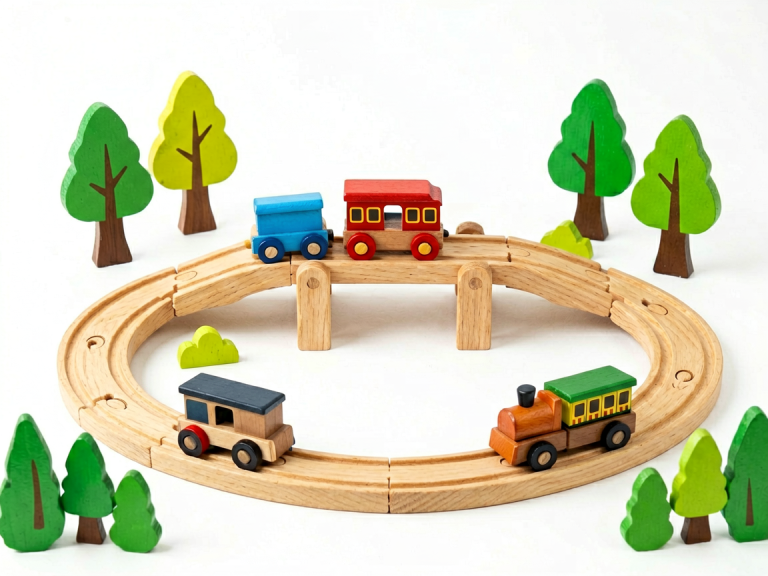
When weather or schedules force children indoors, the play opportunities are just as rich, though they require more thoughtful preparation. Fine motor activities are especially valuable for six-year-olds who are refining their writing and drawing skills. Play-dough with tools—rolling pins, cookie cutters, plastic knives—lets them sculpt letters, animals, or imaginary creatures, strengthening hand muscles. For a more structured activity, provide bead threading with different shapes and colors; children can create patterns (red-blue-red-blue) or make necklaces for friends, which reinforces mathematical patterning while fostering social bonds. Board games are another cornerstone of indoor play for this age. Games like “Candy Land,” “Chutes and Ladders,” or “Memory” teach turn-taking, counting, and short-term memory. For more advanced six-year-olds, “Simple Simon” or “I Spy” can be played without materials. Building with LEGO or wooden blocks remains a favorite; challenge them to build a tower taller than themselves, a bridge that can hold a toy car, or a house for a small stuffed animal. This promotes spatial reasoning, problem-solving, and persistence when structures collapse. Art projects are equally important. Set up a station with washable paints, crayons, glue, scissors, and recycled materials. Encourage them to create a “story quilt” where each square depicts a scene from a favorite book, or to make puppets out of paper bags and perform a short play. These activities integrate fine motor practice with literacy, imagination, and emotional expression.
Creative and Imaginative Play: The Gateway to Emotional Intelligence
At age six, imaginative play reaches new heights of sophistication. Children no longer just pretend to be animals or superheroes; they create entire worlds with rules, characters, and plots. Encouraging this kind of play is essential for emotional regulation, empathy, and narrative thinking. One powerful activity is the “dress-up and role-play” corner. Provide costumes like doctor’s coat, chef’s hat, firefighter helmet, or simply scarves and hats that can be anything. Six-year-olds love acting out real-life scenarios: a restaurant where they take orders and “cook” play food, a hospital where they comfort a sick teddy bear, or a school where one child is the teacher and others are students. These scenes allow them to process their own experiences, practice social scripts, and experiment with different perspectives. Another imaginative activity is “story building” using small figurines or puppets. Start with a prompt: “A rabbit finds a magic key under a mushroom. What happens next?” Children can take turns adding one sentence or action, building a collaborative narrative. This develops sequencing, listening skills, and creative thinking. You can also create a “fort” using blankets and chairs—a secret hideout where children can read, draw, or simply be alone. The fort becomes a safe space for quiet reflection, which is just as important as active play. For children who enjoy pretend play with structure, try “treasure map” games. Draw a simple map of the living room with an X marking a hidden object. Give verbal or written clues (“walk five big steps from the couch, then turn left”). This blends imagination with early map-reading and directional language, all while fueling the thrill of discovery.
Social and Cooperative Play: Learning to Navigate Relationships
Six-year-olds are gradually learning that play is more fun when everyone contributes. Cooperative games—where the goal is to succeed together, not to beat an opponent—are especially valuable at this age. “The Human Knot” is a classic: children stand in a circle, each grabbing the hands of two different people (not the person next to them), then work together to untangle themselves without letting go. This teaches communication, patience, and problem-solving under mild pressure. “Group drawing” is another excellent activity: give one large sheet of paper and a set of markers. Each child takes a turn adding one element to the picture, agreeing on a theme (e.g., “underwater city” or “space station”). They must negotiate space, share materials, and sometimes adapt their vision to incorporate others’ ideas. For quieter cooperation, try “parachute reading” or “buddy reading”—pair a six-year-old with a slightly older child or a classmate to read a short book together, taking turns reading pages. This builds literacy skills while strengthening social bonds. Also, consider “team building obstacle courses” where children must carry a ball on a spoon together or move a balloon from one end of the room to the other without using hands. Such games highlight the interdependence of group members and the joy of collective achievement. Of course, conflicts will arise. Use these moments as teaching opportunities: guide children to use “I feel” statements, listen to each other’s perspectives, and brainstorm fair solutions. By embedding conflict resolution within play, six-year-olds internalize social skills that will serve them for years.
The Role of Parents and Educators in Play
Adults play a crucial supporting role in facilitating play for six-year-olds. First, provide a safe, well-stocked environment with a variety of materials—both open-ended (blocks, art supplies, costumes) and structured (board games, puzzles). Rotate toys and activities regularly to maintain novelty and challenge. Second, be an engaged observer. Watch how children interact, what they struggle with, and what excites them. Use this insight to introduce new activities that stretch their abilities just beyond their comfort zone. For example, if a child loves building with blocks but tends to build only towers, suggest a challenge: “Can you build a bridge that lets a car go underneath and a person walk on top?” Third, participate in play when invited, but avoid taking over. Join a pretend tea party or a game of hide-and-seek, following the child’s lead. Your presence validates their imagination and strengthens your bond. Fourth, model positive play behaviors: show enthusiasm, use polite language, and handle frustration calmly. Children learn by imitation. Finally, respect the child’s need for unscheduled playtime. In a world of extracurricular classes and screen time, the most valuable gift may be an afternoon with no agenda, just a pile of cardboard boxes, markers, and a willing adult who says, “What can we build today?”
Conclusion
Play activities for six-year-olds are far more than a way to pass the time; they are the building blocks of a happy, healthy, and capable childhood. Through outdoor challenges, indoor creativity, imaginative adventures, and cooperative games, children develop physical strength, cognitive flexibility, emotional resilience, and social grace. As parents, educators, and caregivers, our responsibility is not to steer every moment of play toward a specific academic outcome, but to create a rich environment where play can flourish naturally. When we trust children to lead their own play—with our gentle support—we give them the greatest gift: the confidence that they are capable of exploring their world, solving problems, and connecting with others. So let them run, pretend, build, and negotiate. Let them fall and get up again. In the laughter and the occasional tear, in the messy art and the shouted rules of a made-up game, a six-year-old is writing the first chapters of who they will become.