The Ultimate Parent Guide to Choosing Age-Appropriate Toys for 7-Year-Olds
Introduction
Selecting the perfect toy for a 7-year-old can feel like navigating a maze. Walk into any toy store or scroll through online marketplaces, and you are bombarded with flashing lights, cartoon characters, and vague age recommendations like “ages 5+” that offer little real guidance. At age seven, children are in a fascinating developmental sweet spot. They have left the purely imaginative world of early childhood behind but have not yet entered the complex social and academic demands of pre-adolescence. Their cognitive abilities are expanding rapidly, their motor skills are becoming more refined, and their social awareness is deepening. The right toy can nurture these emerging skills, boost confidence, and spark a lifelong love for learning. The wrong toy can lead to boredom, frustration, or even safety hazards. This guide will help you cut through the marketing noise and choose toys that are truly age-appropriate for your seven-year-old, balancing fun, education, and emotional development.
Why Age‑Appropriateness Matters More Than You Think
It is tempting to buy a toy labeled for “8+” or even “10+” thinking it will challenge your child and give them a head start. However, age labels are not arbitrary marketing tricks; they are based on developmental research and safety standards. A toy that is too advanced can overwhelm a 7-year-old, causing them to give up in frustration or rely entirely on adult help, which undermines their sense of independence. Conversely, a toy that is too simple—designed for a 4- or 5-year-old—fails to stimulate their growing brain and may be dismissed as “babyish.” Moreover, safety hazards such as small parts, long cords, or sharp edges are more common in toys intended for older children. At 7, children are still prone to putting small objects in their mouths when distracted, and their fine‑motor control is still developing. The sweet spot is a toy that is just slightly above their current skill level, offering a manageable challenge that invites problem‑solving, creativity, and repeated play.
Key Developmental Milestones at Age 7
To choose wisely, you need a clear picture of what a typical 7-year-old is capable of and what they are curious about. Every child develops at their own pace, but most 7-year-olds share these common traits:
- Cognitive: They can think logically about concrete objects and events. They understand cause and effect, can follow multi‑step instructions (3–4 steps), and are beginning to grasp concepts like time, money, and simple fractions. Their attention span has lengthened to about 15–20 minutes for a focused activity.
- Social & Emotional: Friendships become more important, and they start to understand rules, fairness, and teamwork. They can handle losing in a game without a meltdown, though they may still need encouragement. They enjoy cooperative play and are beginning to form small clubs or secret groups.
- Physical: Gross motor skills are strong enough for biking, jumping rope, and basic sports. Fine motor skills allow for more precise tasks like tying shoes, using scissors with accuracy, and drawing detailed pictures with recognizable shapes.
- Language & Literacy: Most 7-year-olds read simple chapter books independently and can write short sentences. They love jokes, riddles, and wordplay. They can follow a storyline and ask “why” and “how” questions.
Types of Toys That Shine for 7-Year-Olds
*STEM & Construction Toys*
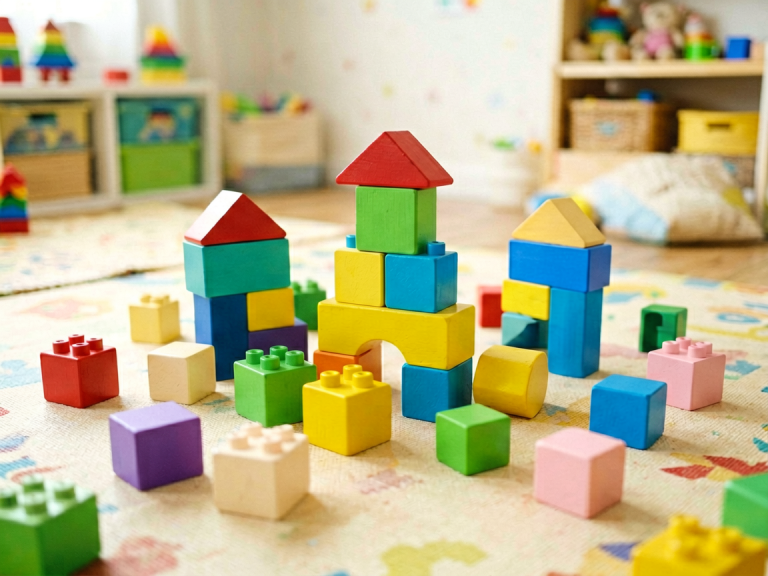
At this age, children are natural engineers. Building sets like LEGO Classic or LEGO Creator (with 200–500 pieces) allow them to follow instructions or create their own structures. Magnetic tiles, marble runs, and simple coding kits (e.g., Botley or Code-a-Pillar) introduce basic logic and sequencing. A snap-together electronics kit that lets them build a working light or buzzer is a huge hit. These toys reward persistence and spatial reasoning, two skills that will serve them well in school.
*Board Games & Card Games*
Seven is the golden age for board games. Games that require strategy, turn‑taking, and a bit of luck—such as Ticket to Ride: First Journey, Dragonwood, or Outfoxed—teach sportsmanship and planning. Classic card games like Uno, Crazy Eights, or even a simple deck of playing cards for Go Fish or War are excellent for number recognition and social interaction. Cooperative games (where players work together against the game) are especially good for building empathy and teamwork.
*Arts, Crafts & Creative Kits*
Children this age love projects with a tangible result. Look for kits that allow them to make their own jewelry, sew simple stuffed animals, paint by number (with smaller sections), or build models (airplanes, dinosaurs, or solar system mobiles). A sketchbook with quality colored pencils or watercolors encourages self‑expression. Slime and clay kits are also popular, but always check that they are non‑toxic and washable.
*Outdoor & Active Play*
Physical play is crucial for health and stress relief. A good bicycle with training wheels (or without, if they’re ready), a scooter, or a jump rope are classics for a reason. Consider a beginner’s archery set with suction‑cup arrows, a basketball hoop that adjusts to their height, or a simple kite. For group play, a large parachute or a set of sidewalk chalk for hopscotch and four‑square encourages social gross‑motor fun.
*Science & Nature Exploration*
Seven-year-olds are curious about the world. A bug catcher with a magnifying glass, a simple microscope, a rock‑tumbling kit, or a butterfly‑raising kit can turn the backyard into a laboratory. A basic chemistry set with safe, non‑toxic experiments (growing crystals, making volcanoes) is also excellent. These toys satisfy their “why” questions and foster a scientific mindset.
*Reading & Storytelling*
Chapter books and graphic novels are perfect for this age. The “Magic Tree House” series, “Dog Man,” and “Diary of a Wimpy Kid” are beloved. Beyond reading, consider a storytelling game—such as Rory’s Story Cubes or a magnetic storyboard—that lets them invent their own narratives. A simple journal with a lock and key gives them a private space to write or draw, supporting literacy and emotional expression.
Toys to Avoid for a 7-Year-Old
Just as there are great options, there are also traps to avoid. First, steer clear of toys with overly complex rules or instructions that require heavy adult intervention—this can create frustration rather than fun. Avoid toys that are purely passive, such as tablets loaded with mindless tap‑and‑swipe games that offer no creative or critical thinking. Also, be wary of toys that focus on competition and speed to the point of causing anxiety (e.g., many timed electronic games). For safety, avoid toys with small magnets, lithium‑button batteries that are easily swallowed, or long cords that could become a strangulation hazard. Finally, while action figures and superhero toys are fine in moderation, avoid those that glorify violence or come with weapons that look realistic. At 7, children are still learning to distinguish fantasy from reality, and overly aggressive play can sometimes spill into real‑life conflict.
Practical Tips for Parents
- Observe before you buy. Spend time watching your child at play with friends or in a classroom. What activities draw their attention? Do they prefer solitary building or group games? Use these clues to guide your purchase.
- Involve your child in the decision—but set boundaries. Let them choose from a short list of two or three age‑appropriate options. This gives them a sense of autonomy while ensuring the choice is suitable.
- Think about open‑endedness. The best toys can be used in multiple ways. A set of wooden blocks, for example, can become a castle, a spaceship, or a bridge. Toys that have only one function (like a plastic figure that merely makes a sound) will be abandoned quickly.
- Consider the play environment. Will the toy be used indoors or outdoors? Solo or with siblings? A noisy electronic drum set might be fine in the backyard but a nightmare in a small apartment. Plan accordingly.
- Don’t forget the power of “old‑fashioned” toys. A jump rope, a deck of cards, a jigsaw puzzle with 100–200 pieces, or a collection of marbles can provide hours of rich play without batteries. These staples often cost less and last longer.
- Read the instructions and warnings thoroughly. Even if a toy says “ages 6+” on the box, check for choking‑hazard warnings and recommended adult supervision. When in doubt, choose a toy that is rated for 7–12 rather than 3–7.
- Rotate toys to keep interest alive. Instead of buying more and more, pack away half of your child’s toys for a few months. When you bring them back out, they will feel new again. This approach also prevents overwhelming clutter.
Conclusion
Choosing the right toy for a 7-year-old is not about finding the most expensive or the trendiest item on the shelf. It is about understanding who your child is at this moment—their curiosity, their energy, their need for both challenge and comfort. The best toys are those that invite them to explore, create, socialize, and think. They build bridges between the classroom and the living room, between imagination and reality. As a parent, you are not just a shopper; you are a curator of experiences. Each thoughtful choice can spark a new passion, strengthen a friendship, or teach a lesson in perseverance. Trust your instincts, keep this guide in mind, and watch your 7-year-old grow through the joy of purposeful play. After all, a child with the right toy is not just playing—they are building the person they will become.