The Minimalist Parent’s Guide to Avoiding Toy Clutter for Your 1-Year-Old
Introduction
Every new parent quickly discovers a universal truth: babies attract toys like magnets attract metal. Well-meaning relatives, friends, and even your own excitement can turn a cozy nursery into a miniature warehouse of plastic, fabric, and noise. By the time your child reaches their first birthday, the toy collection often multiplies exponentially. Yet, for a one-year-old, an overwhelming quantity of playthings is not only unnecessary—it can actually hinder development. A cluttered environment overstimulates a toddler’s still-maturing brain, making it harder for them to focus, explore deeply, and learn cause-and-effect relationships. This guide offers practical, research-backed strategies to help parents curate a toy collection that sparks joy, supports developmental milestones, and—most importantly—keeps your home from being overrun. Let’s embrace the philosophy that less really is more, especially when it comes to toys for a one-year-old.
—
Understanding the Developmental Needs of a One-Year-Old
Before you can reduce clutter, you must understand what a one-year-old truly needs from their toys. At this age, children are in the sensorimotor stage of cognitive development, as described by Jean Piaget. They learn primarily through their senses—touching, tasting, hearing, and seeing—and through physical movement. A one-year-old is likely pulling up to stand, cruising along furniture, and may even take their first steps. They practice grasping, releasing, stacking, and, inevitably, dropping everything on the floor. Their attention span is brief, but their capacity for deep focus on one object can be surprisingly long if that object is interesting and not competing with a dozen others.
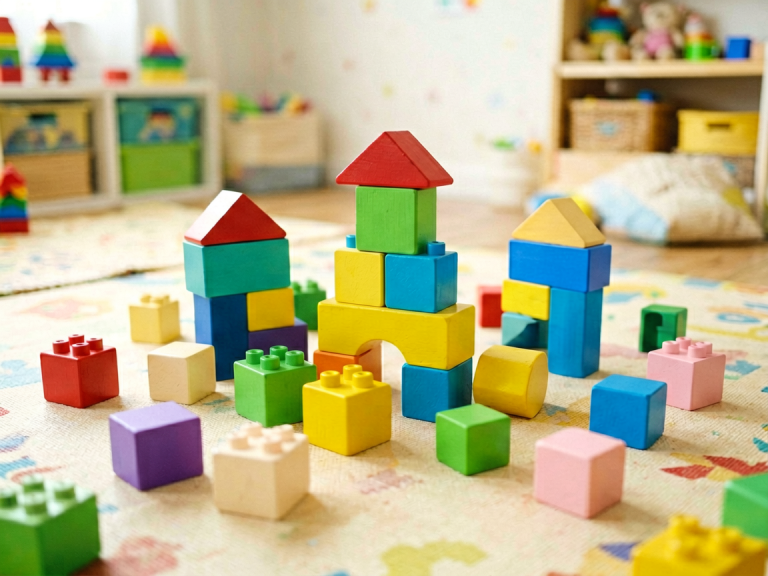
The best toys for this stage are open-ended: blocks, simple shape sorters, stacking rings, push-and-pull toys, soft balls, and board books with high-contrast images. These items encourage problem-solving, fine motor skills, and spatial awareness. Notice that most commercial electronic toys with flashing lights and loud sounds are not on this list—they often overstimulate and teach passive interaction rather than active exploration. By only keeping toys that align with these developmental benchmarks, you automatically reduce the number of items in your home without sacrificing fun or learning.
—
The Core Principle: Less Is More
The most effective clutter-control strategy is to embrace minimalism from the start. For a one-year-old, a curated selection of five to eight toys available at any given time is more than sufficient. Why? Because toddlers thrive on repetition. Playing with the same stacking cups every day allows them to master the skill of nesting and stacking, building confidence and neural connections. When a child has too many options, they often flit from one toy to another without truly engaging, leading to frustration and mess.
Research in developmental psychology suggests that a manageable number of toys—around four to six—encourages deeper play and longer attention spans. A 2017 study from the University of Toledo found that toddlers with fewer toys played more creatively and for longer periods compared to those with an abundance of options. So, start by auditing your current collection. Remove anything that is broken, missing pieces, or no longer age-appropriate. Then, keep only the toys that your child actively seeks out. Store the rest out of sight. This single step can cut clutter in half immediately.
—
Strategies for Toy Rotation
Toy rotation is the superhero of clutter management. Instead of leaving every toy accessible all the time, organize your collection into several “sets” and rotate them weekly or biweekly. For example, Set A might include a set of wooden blocks, a push cart, and a soft ball. Set B could contain stacking rings, a shape sorter, and a sensory book. Every Sunday, swap out the current set with a fresh one.
This technique works brilliantly for a one-year-old because novelty is key—but novelty does not require endless new purchases. When a toy “returns” after being away for a month, it feels brand new to your child. Rotation also dramatically reduces the physical clutter in your living space. You only need a small basket or shelf to display the current rotation, and the rest can live in a closet or under a bed. Additionally, this practice teaches your toddler (indirectly) that playtime is about exploration, not accumulation. As they grow, you can involve them in choosing which toys to “hide” for next week, turning clean-up into a game.
—
Choosing Quality over Quantity
When buying toys for a one-year-old, quality should always trump quantity. A single well-made wooden puzzle with chunky pieces will outlast ten cheap plastic rattles that break or lose batteries. Quality toys are often more durable, safer (no sharp edges or toxic paint), and more aesthetically pleasing, which helps maintain a visually calm home environment.
Consider the classic “open-ended” toy category: a set of unit blocks, a silicone teether, a simple ball, a stacking cup set, and a few board books. Together, these items can support dozens of different play scenarios—building a tower, rolling, sorting, dropping, chewing, and carrying. Compare that to a battery-operated dancing robot that only does one thing and eventually ends up in a landfill. By choosing toys that grow with your child, you also avoid the need to buy replacements frequently. This approach saves money, reduces waste, and keeps clutter at bay.
—
Creating a Clutter-Free Play Space
The physical layout of your home plays a huge role in toy clutter. Designate a small, defined area for play—perhaps a corner of the living room or a section of the nursery. Use low, open shelving or a simple cubby where your toddler can see and reach toys independently. Avoid large toy boxes or bins where things get dumped and lost; these often become black holes of mess. Instead, use shallow trays or baskets for each category (e.g., “blocks,” “books,” “cars”).
Make sure the play space has clear boundaries. A soft rug or play mat visually signals “this is where toys live.” Keep storage furniture to a minimum; one small bookshelf and one basket is plenty. The rest of the room should remain toy-free. This not only reduces visual noise but also helps your one-year-old learn that toys belong in a specific spot. When clean-up time comes, you can model putting items back on the shelf, using a simple song or chant. Over time, your child will begin to mimic this behavior (though patience is needed—toddlers are not natural organizers).
—
Involving Your Child in Clean-Up (Yes, Even at One Year Old)
You might think a one-year-old is too young to participate in tidying up, but you would be surprised. Around 12 to 15 months, children begin to understand simple commands and enjoy mimicking adult actions. Start by making clean-up a daily ritual. Sing a clean-up song, and for every toy you pick up, hand it to your toddler and say, “Let’s put the ball in the basket!” Guide their hand to drop it in. This is not about perfection—most toys will end up thrown, dropped, or ignored—but the habit of “all done, put away” is being planted.
By making clean-up playful and consistent, you reduce the amount of time that toys lie scattered on the floor. Even if your child only returns one toy out of ten, that is still progress. More importantly, this ritual prevents you from having to do all the work yourself at the end of the day. And because you have only a small number of toys available, clean-up takes only two minutes, not an hour.
—
Mindful Gifting and Hand-Me-Downs
One of the biggest sources of toy clutter comes from outside the home: gifts from grandparents, aunts, friends, and even party favors. For a one-year-old’s birthday or holidays, the influx can be overwhelming. Take control by politely communicating your preferences. Create a wish list of high-quality, open-ended toys that align with your minimalist approach, and share it with family members. You can say something like, “We really appreciate your love, but we have limited space. If you’d like to gift something, here are a few ideas he’ll truly enjoy.”
Another tactic is to gently suggest experience-based gifts: a subscription to a children’s museum, a pass to a local zoo, or even a small contribution to a college savings fund. For hand-me-downs, be ruthless. Accept only those that are in excellent condition and fit your criteria. Politely decline anything that duplicates what you already own or that is overly electronic or noisy. Each new toy that enters your home should replace one that leaves. This “one in, one out” rule is simple but powerful. Keep a donation box in the garage, and whenever a new toy arrives, choose an old one to pass on to a friend or charity.
—
The Emotional Aspect: Letting Go of Attachment
Parents often struggle to part with toys because of sentimental value. That rattle your aunt gave you at the baby shower? The soft elephant your child slept with for months? It is natural to hold onto memories, but remember that the toy itself is not the memory—it is just an object. Take a photo of your child playing with a special toy before donating it. That image will preserve the memory far better than a dusty plastic block sitting in a bin.
Moreover, children at one year old have no emotional attachment to most toys; they are attached to the experience of play. A simple cardboard box can be just as thrilling as an expensive activity table. Letting go of the idea that “more toys equal more love” is freeing. You are not depriving your child; you are giving them the gift of a calm, organized environment where they can truly engage with what is in front of them. Embrace the Japanese concept of *kurashi*—living with only what you need, with intention and gratitude.
—
Conclusion
Avoiding toy clutter for your one-year-old is not about banning fun or being a stern minimalist. It is about creating a nurturing space where your child can thrive without sensory overload. By understanding developmental needs, adopting a rotation system, choosing quality over quantity, designing a contained play area, teaching early clean-up habits, managing gifts thoughtfully, and learning to let go, you can keep your home peaceful and your child satisfied. Remember, the goal is not a sterile, toy-free home—it is a home where every toy has a purpose and a place. Your one-year-old will play more deeply, learn more effectively, and you will enjoy far less cleanup. In the end, the biggest gift you can give your child is not another flashing gadget—it is your calm, present attention, uncluttered by the chaos of too many things.