The Art of Less: A Parent’s Guide to Avoiding Toy Clutter for 4-Year-Olds
Introduction
Every parent knows the scene: you walk into the living room and it looks like a toy store exploded. Plastic dinosaurs mingle with puzzle pieces, half-built train tracks snake under the sofa, and tiny action figures lurk in every corner. For parents of four-year-olds, toy clutter is not just an eyesore—it’s a genuine source of stress, wasted time, and even developmental hiccups. At this age, children are bursting with energy, curiosity, and a rapidly expanding sense of independence. They want to touch, build, imagine, and destroy. But when toys overwhelm the environment, the magic fades. Too many choices can lead to decision fatigue, shorter attention spans, and a reduced ability to engage deeply with any single activity.
Yet, the solution isn’t to swear off toys forever. Rather, it’s to adopt a mindful, strategic approach to managing them. This guide offers practical, research-backed advice for parents who want to reclaim their living spaces while still nurturing their child’s imagination, learning, and joy. By understanding the psychology of toy clutter, implementing smart systems, and teaching your four-year-old healthy habits, you can transform your home from a chaotic play zone into a calm, organized environment that supports both play and peace.
Understanding Why Toy Clutter Happens—and Why It Matters
Before diving into solutions, it helps to appreciate the root causes of toy clutter. For four-year-olds, the world is a sensory feast. They are driven by novelty—new colors, sounds, textures, and functions capture their attention like magnets. They also lack the cognitive maturity to organize, prioritize, or voluntarily clean up. Their brains are wired for exploration, not for tidiness. Add to that the influence of well-meaning relatives, birthday parties, and holiday gift-giving, and it’s no wonder toy collections can balloon.
The consequences of excessive toy clutter go beyond aesthetics. Research in child development suggests that when children are surrounded by too many options, they often engage in “shallow play”—flitting from one toy to another without sustained focus. This can hinder the development of executive functions like attention regulation and problem-solving. Moreover, clutter raises stress levels for parents, which in turn affects the parent-child dynamic. A messy playroom can make it harder for children to find what they need, leading to frustration and tantrums. On the flip side, a well-organized, curated toy environment can promote deeper engagement, creativity, and even a sense of calm.
Strategic Curation: Quality Over Quantity
The first and most powerful step in avoiding toy clutter is to adopt a mindset of curation rather than accumulation. Instead of asking “What can I add?” ask “What does my child truly need?” A four-year-old’s developmental needs are specific: they benefit from toys that encourage open-ended play, fine motor skills, language development, and social interaction. A few high-quality, versatile toys far outweigh a mountain of cheap plastic gadgets.
Begin by conducting a thorough audit of your child’s current toy collection. Set aside a dedicated time (perhaps when your child is napping or at preschool) and sort through everything. Create three piles: keep, donate, and discard. Be honest—are there toys your child hasn’t touched in weeks? Are there broken items that can’t be repaired? Are there duplicates? For the “keep” pile, aim for no more than 20 to 30 well-chosen toys at a time. This may sound extreme, but it aligns with the concept of a “capsule toy collection.” Rotating toys (discussed in the next section) allows you to keep the selection fresh without overwhelming the space.
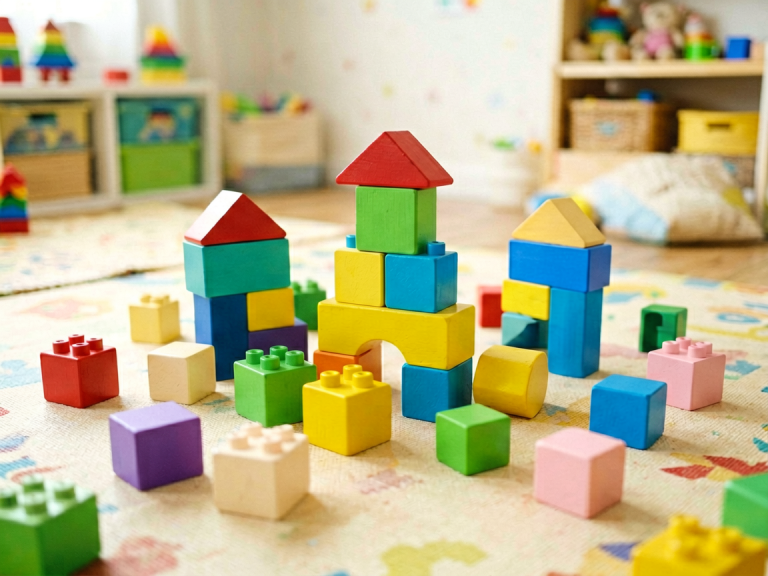
When selecting which toys to keep, prioritize those that grow with the child. Building blocks, magnetic tiles, simple art supplies, play dough, dress-up clothes, and a few sturdy vehicles or animal figures offer endless possibilities. Avoid toys that do one thing and then become boring—battery-operated singing toys, for instance, often lose appeal quickly. Instead, look for toys that require the child’s active participation: puzzles, matching games, construction sets, and pretend-play props.
The Rotation System: Less Is More, But Freshness Matters
One of the most effective strategies for preventing clutter while maintaining your child’s interest is the toy rotation system. The idea is simple: keep only a small subset of toys accessible at any given time, and store the rest out of sight. Every week or two, swap out some toys for others from the storage. This creates a sense of novelty without adding new purchases.
Start by dividing your curated toy collection into three to five groups. For example, Group A might contain building blocks, a wooden train set, and a small farm animal set. Group B could include art supplies, play dough, and a few puzzles. Group C might have dress-up costumes, a doctor’s kit, and a dollhouse. Store the groups in clear plastic bins or fabric baskets, labeled for easy identification. Place only one group in the play area at a time. When your child begins to lose interest (usually after a week or two), simply swap out the entire group.
The benefits are multifold. First, fewer toys mean less clutter. Second, your child will engage more deeply with the available items because there are fewer distractions. Third, the “new” group that reappears after a rotation feels exciting and novel—like a surprise gift. Fourth, the system teaches your child that toys have a designated home and that variety comes from within, not from buying more. For a four-year-old, you can even involve them in the swapping process: “Let’s put these blocks away and bring out the dress-up clothes!” This turns cleanup into a game.
Practical Storage Solutions That Work for Four-Year-Olds
Storage is the backbone of clutter management. But for a four-year-old, storage must be accessible, simple, and visually inviting. The golden rule is: if they can’t reach it, they won’t put it away. Low, open shelves are ideal. Avoid deep bins where smaller items disappear; instead, use shallow bins, trays, or baskets. Clear containers help children see what’s inside, which reduces the “dump everything out” syndrome.
Categorize toys by type and label with pictures or simple words. Since four-year-olds are often emergent readers, using picture labels (a photo of a car for the car bin, a photo of a puzzle for the puzzle bin) empowers them to participate in cleanup. Place one type of toy per bin to avoid mix-and-match chaos. For example, one bin for all blocks, another for all vehicles, another for all art supplies. This makes tidying a logical task: “All cars go in the car bin.”
Consider using vertical space. Wall-mounted pegboards with small buckets can hold action figures, art supplies, or craft items. A low bookshelf with cubbies works wonders for storing puzzles and board games upright. For larger items like play tents or dollhouses, designate a specific corner and stick to it. The key is consistency—every toy should have a home, and you’ll need to reinforce that home over and over.
Another often overlooked storage trick is to use furniture that doubles as storage. An ottoman with a lid can hold soft toys or stuffed animals. A bench with a lift-up seat can store dress-up costumes. A coffee table with built-in drawers can house art supplies or board games. These dual-purpose pieces keep clutter hidden while remaining functional.
Teaching Your Child to Clean Up: Age-Appropriate Strategies
You can have the most elegant storage system in the world, but if your four-year-old refuses to participate, clutter will still accumulate. The good news: four-year-olds are developmentally ready to learn basic cleanup routines, provided those routines are clear, fun, and consistent.
First, make cleanup a predictable part of the day. For example, before snack time, before leaving the house, and before bed, announce a “cleanup time.” Use a visual timer or a song to signal the transition. Keep the duration short—five to ten minutes is plenty for a four-year-old’s attention span. Never expect perfection; the goal is participation, not a magazine-cover tidy room.
Second, use positive reinforcement. Praise specific efforts: “I love how you put all the blocks back in the bin!” Avoid bribes or punishments. Instead, make cleanup a game. Race against the clock, pretend you’re a cleanup monster, or sing a silly cleanup song. For example, “Let’s see if we can put all the cars away before the song ends!” This turns a chore into a shared, joyful activity.
Third, model the behavior. Children learn by watching. If you consistently tidy up your own space, they will internalize that habit. Moreover, clean up alongside them rather than barking orders from the sofa. Say, “I’ll put these books back while you put the dinosaurs in the basket.” This collaborative approach fosters teamwork and reduces resistance.
Fourth, keep expectations realistic. A four-year-old cannot independently manage a massive cleanup after a play session that took over the entire living room. That’s why the rotation system and limited toy access are crucial. When the number of toys is small, cleanup becomes achievable. Also, accept that some mess is inevitable—and even desirable. Play is messy work. The goal is not to eliminate mess but to contain it and restore order within a reasonable timeframe.
Managing Gift-Giving and External Inflows
One of the biggest sources of toy clutter is the influx from relatives, friends, and birthday parties. You can’t control what others give, but you can control how you respond. Start by having an honest conversation with close family members. Politely explain that you are trying to minimize toy clutter and would appreciate experiential gifts—museum passes, art classes, zoo memberships, or subscriptions to a craft kit service. Alternatively, suggest a “one in, one out” rule: for every new toy that enters the home, an old one must be donated or passed along.
For birthday parties, consider asking guests to bring a book instead of a toy. Or implement a “no gift” policy and instead organize a group activity like a treasure hunt. If you do receive physical toys, have a plan in place. Keep a “donation bin” in a closet. When a new toy arrives, your child can choose one current toy to donate. This teaches generosity and the value of making space for new things. Be careful not to force the choice harshly; instead, frame it as a positive decision: “You’re making room for this new train set by letting another child enjoy your puzzles!”
Another tactic is to delay gratification. When a new toy appears, don’t bring it out immediately. Place it in a “toy rotation” storage bin. That way, it feels like a surprise gift weeks later, and you avoid the immediate chaos of multiple new items.
Creating Zones: Different Areas for Different Play
Beyond storage and rotation, consider creating distinct play zones within your home. A four-year-old benefits from having clear spaces for different types of play: a quiet corner for reading and puzzles, a larger area for building and movement, a small table for art, and perhaps a cozy nook for imaginative play (like a play kitchen or dress-up area). These zones naturally limit clutter because each zone has its own designated toys.
For example, keep all small parts (puzzles, blocks, toy animals) on a low shelf in the building zone. Art supplies live in the craft zone, and all costumes stay in the dress-up corner. When play spills over from one zone to another, you can gently redirect: “Oh, I see you brought the farm animals into the art zone. Let’s finish this drawing, and then the animals can go back to their barn.” Over time, your child will internalize that toys belong in their zones.
Zoning also helps parents maintain sanity. If the building zone is in the playroom but the dress-up zone is in the living room, you can at least limit the mess to defined areas. This is especially helpful in smaller homes where managing clutter is a constant challenge.
The Role of Digital and Screen-Based “Toys”
In today’s world, screens are part of the toy landscape. Tablets, educational apps, and digital drawing tools can be valuable learning resources for a four-year-old, but they also contribute to clutter—not physical clutter, but mental and visual clutter. Set clear boundaries for screen time. Use a timer and a consistent schedule. Keep digital devices stored out of reach when not in use. Designate a single charging station in a common area, rather than allowing devices to migrate around the house. This prevents the “where is the tablet?” frantic searches and keeps digital toys under control.
Moreover, consider whether digital toys are truly adding value. A four-year-old’s brain thrives on hands-on, sensory, and social experiences. While a well-designed learning app can be helpful, it should never replace physical play. Use screens sparingly and deliberately, and ensure that they don’t become another source of clutter in your child’s attention span.
Maintaining the System: Consistency and Flexibility
No toy management system is perfect forever. Your child will grow, interests will shift, and life will get busy. The key is to build habits that are sustainable. Schedule a monthly or quarterly toy audit. Spend 15 minutes reassessing what’s being played with and what’s collecting dust. Donate or store away the forgotten items. Refresh the rotation groups.
Involve your child in these audits. Ask, “Which toys do you love the most? Which ones are your best friends?” This helps them take ownership. Also, be prepared to let go of toys that are outgrown. A four-year-old’s rapid development means that last year’s favorite shape-sorter might now be boring, while a more complex puzzle becomes captivating. Keep the collection dynamic.
Finally, remember that your home is not a museum. A little mess is a sign of a happy, engaged child. The goal of this guide is not to create a sterile, toy-free environment but to curb the overwhelming tide of clutter that can leave both parent and child frustrated. By curating strategically, rotating thoughtfully, storing smartly, and teaching cleanup as a shared ritual, you can create a home where play flourishes—and where you can breathe easy at the end of the day. Your four-year-old will learn that having fewer toys actually means more fun, more focus, and more room for imagination. And you will reclaim your living room, your time, and your peace of mind.