Taming the Toy Tornado: A Parents Guide to Avoiding Toy Clutter for 3-Year-Olds
Introduction
If you have a three-year-old, you know the drill. One moment, the living room floor is clean; the next, it’s buried under a kaleidoscope of plastic animals, building blocks, puzzle pieces, and half-eaten crayons. Toy clutter is not just an eyesore—it can overwhelm your child, increase your stress, and even hinder your toddler’s ability to focus and play deeply. Yet, eliminating toys entirely is neither realistic nor desirable. Three-year-olds are at a magical developmental stage: they are curious, imaginative, and increasingly independent. They need toys to explore, but they also need a structured environment that supports their growth without drowning them in choices.
This guide offers a comprehensive, practical approach to managing toy clutter specifically for families with three-year-olds. We will delve into the psychology of toy overload, explore organizational systems designed for small hands, and share routines that keep the chaos at bay—all while fostering your child’s autonomy and creativity. By the end of this article, you will have a clear, actionable plan to transform your home from a toy battlefield into a calm, inviting space where both you and your three-year-old can thrive.
—
Understanding the Toy Clutter Problem: Why Less Really Is More
Before we dive into solutions, it is essential to understand why toy clutter is particularly problematic for three-year-olds. At this age, children are developing executive function skills—the ability to plan, focus attention, and regulate impulses. When a child is surrounded by dozens of toys, their attention is fragmented. They may flit from a truck to a doll to a puzzle, never fully engaging with any single item. This “shallow play” prevents them from entering the deep, imaginative play that is so crucial for cognitive and emotional development.
Moreover, a cluttered environment can be visually and mentally exhausting for a toddler. Imagine trying to choose one book from a library of five hundred—it’s paralyzing. Similarly, three-year-olds often become overstimulated when too many options are visible. This can lead to tantrums, resistance to clean-up time, and even a decreased appreciation for the toys they do have.
On a practical level, toy clutter creates safety hazards (tripping over blocks, misplaced small parts) and consumes precious family space. It also adds a significant mental load to parents who must constantly tidy, sort, and negotiate with their child. Understanding these dynamics helps us shift from a mindset of “accumulating toys” to “curating experiences.”
—
The Philosophy of Less Is More: Quality Over Quantity
The foundational principle of any successful parent guide to avoiding toy clutter is the “less is more” philosophy. This does not mean your child should have only three toys—that would be unrealistic and arguably too restrictive. Instead, it means being intentional about what comes into your home. For a three-year-old, the ideal toy collection is small but diverse, targeting different developmental domains:
- Fine motor skills: Simple wooden puzzles, lacing beads, Duplo bricks.
- Gross motor skills: A small slide, ride-on toys, balls.
- Imaginative play: A wooden kitchen set, animal figurines, dress-up clothes.
- Sensory play: Play-dough, water table toys, sand tools.
- Cognitive skills: Shape sorters, memory cards, simple board games.
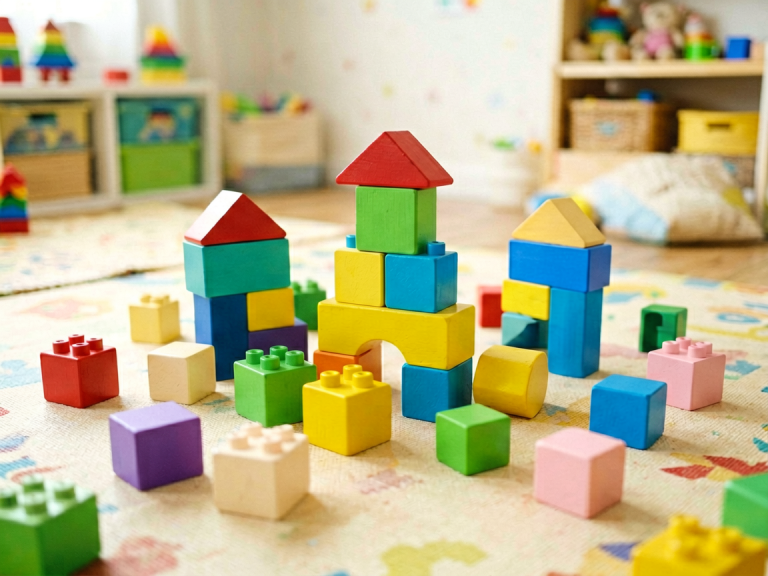
When you prioritize quality, you choose toys that are open-ended (can be used in many ways), durable, and aesthetically pleasing. A set of wooden blocks can be a castle, a road, a tower, or a spaceship. A plastic, battery-operated police car that only makes loud sirens, however, offers limited play value and quickly becomes boring. By curating a smaller number of high-quality toys, you naturally reduce clutter while offering richer play experiences.
—
Practical Strategies for Managing Toy Influx
Even the most disciplined parent will face the steady stream of toys that arrive unbidden: birthday gifts from well-meaning relatives, hand-me-downs from friends, holiday surprises, and impulse buys from the grocery store checkout. Here are concrete strategies to control the inflow:
1. Adopt a “One In, One Out” Rule. This classic decluttering tactic works beautifully with children. Whenever a new toy enters the home (whether purchased or gifted), one existing toy must leave. The leaving toy can be donated, passed to a younger child, stored for later rotation, or even recycled if broken. Explain the rule to your three-year-old in simple terms: “We have space for a new toy only if we make space by letting go of an old one.” Over time, this teaches a valuable lesson about mindful consumption.
2. Create a “Wish List” for Gifts. Before birthdays and holidays, communicate with friends and relatives about your family’s toy philosophy. Suggest specific items that are open-ended or align with your child’s current interests. Many family members will appreciate the guidance—they want to give a gift that is actually used and loved, rather than something that sits in a corner. You can also ask for consumable gifts (art supplies, play-dough refills, tickets to a children’s museum) or contributions to a savings account for a future big-ticket item.
3. Resist the Urge to Buy “Just Because.” Three-year-olds are experts at spotting colorful packaging in stores and demanding toys. Instead of giving in to those “pester moments,” establish a family ritual: for example, “We will put it on your birthday wish list,” or “Let’s take a photo of it and we can think about it.” This reduces impulse purchases and helps your child feel heard without accumulating clutter.
4. Limit Seasonal and Holiday Overload. Holidays like Christmas can turn a tidy playroom into a disaster zone overnight. Consider a “three-gift rule” (something they want, something they need, something to read) or a “slow reveal” approach where a few gifts are opened each day over a week. This extends the joy and prevents the overwhelm of a mountain of new toys.
—
Organizational Systems That Work for 3-Year-Olds
A clutter-free home relies on smart storage that is accessible and intuitive for a three-year-old. The goal is not to hide toys away in opaque, adult-height bins—out of sight, out of mind—but to create a system that empowers your child to both access and return toys independently.
1. Use Open, Low-Level Shelving. Closed toy boxes, where everything is dumped together, are the enemy of organization. Instead, invest in a low bookshelf (no taller than your child’s shoulders) with open cubbies or bins. This allows each category of toy to have a designated home. For example, one bin for blocks, one for stuffed animals, one for cars. Use visual labels: your three-year-old cannot read yet, so attach a small picture (e.g., a sticker of a block on the block bin) to help them remember where things go.
2. Limit the Number of Toys Displayed. Even with good shelving, if you display all toys at once, the shelf will look cluttered and your child will quickly become overwhelmed. The ideal is to keep only 10–15 “toy types” accessible at any given time. This is where toy rotation becomes invaluable (see next section). The remaining toys are stored in a closet, garage, or under-bed bin, waiting for their turn.
3. Create “Play Zones.” Designate specific areas for different types of play. For example, a quiet corner with a rug and bookshelf for reading/puzzles, a low table for art activities, and an open floor area for building or movement. This spatial organization helps your child transition between play modes and reduces the likelihood that puzzle pieces will end up in the art box.
4. Simplify Clean-Up with “Clean-Up Songs.” Three-year-olds respond well to routines. Choose a catchy, upbeat clean-up song (many are available on streaming platforms) and make tidying a daily habit. Instead of saying “Clean up everything,” break it down: “First, put all the blocks in the blue bin. Next, the cars in the red bin.” With an organized system, clean-up becomes a manageable puzzle rather than an impossible chore.
—
Involving Your Child: Teaching Organizational Skills
Avoiding toy clutter is not solely the parent’s responsibility—it is an opportunity to teach your three-year-old valuable life skills. Children who learn to care for their belongings early develop self-regulation and pride in their environment. Here’s how to involve your child without turning clean-up into a power struggle:
1. Make Clean-Up a Game. Use a timer and challenge your child to put away toys before the buzzer. Or pretend the toys are “sleeping” and need to be tucked into their bins. Use playful language: “The blocks are going home to their house—the blue bin!”
2. Offer Limited Choices. Your three-year-old needs autonomy, but not too many options. Instead of “What do you want to clean up?” say, “Do you want to put away the dolls or the cars first?” This gives them control within a structured framework.
3. Model the Behavior. Children learn by imitation. When you tidy your own belongings (books, clothes, shoes), narrate what you are doing: “I’m putting my book on the shelf so I can find it later. Can you help me put your book on your shelf?” Over time, your child will internalize these habits.
4. Celebrate Effort, Not Perfection. A three-year-old’s clean-up will never look like a professional organizer’s. Praise the process: “Wow, you put three blocks in the bin! That’s great helping!” Avoid criticizing messes; instead, focus on the positive steps your child took.
—
Rotating Toys: The Secret to Keeping Things Fresh
Toy rotation is perhaps the most powerful tool in your clutter-fighting arsenal. The concept is simple: rather than having all toys available all the time, you store a majority of them out of sight and rotate a small selection every two to four weeks. This offers several benefits:
- Reduced clutter: The play area stays tidy because only a fraction of toys are out.
- Renewed interest: A toy that has been stored for a few weeks feels new and exciting again.
- Deeper engagement: With fewer options, your child is more likely to explore a toy thoroughly.
- Slower toy wear and tear: Toys last longer when they are used in smaller bursts.
How to Implement:
- Sort your toys into 4–6 groups based on category or complexity. For example, Group A: building toys; Group B: pretend play; Group C: fine motor; Group D: puzzles and books; etc.
- Store each group in a clear bin labeled with the category (and a picture).
- Place only one group on the shelves at a time.
- After 2–3 weeks, return that group to storage and bring out the next group. When you bring out an old group, you can add one or two new items (e.g., a new puzzle) to keep it interesting.
- Observe your child. If they show little interest in a particular group, swap it out sooner. If they are deeply engaged with a set of blocks, leave that group out longer.
For three-year-olds, the rotation cycle can be shorter (every two weeks) because their attention spans are still developing. You’ll quickly notice that toys you thought were “boring” become fascinating again after a break.
—
Dealing with Gifts and Hand-Me-Downs
No matter how minimalist your philosophy, gifts and hand-me-downs will arrive. The key is to handle them gracefully without accumulating clutter.
1. The “Thank You and Store” Approach. When a child receives a gift, thank the giver enthusiastically. Then, quietly decide whether the toy will enter the current rotation. If not, store it immediately in the “for later” bin. You can explain to your child, “This is a special toy from Grandma. We will save it for when it’s time to swap toys.” This prevents the toy from being lost or broken while still honoring the gift.
2. Say No to Duplicates. Three-year-olds often receive multiple versions of the same toy (e.g., three sets of plastic food). Keep the best quality one and donate or re-gift the duplicates. A simple “We already have one just like this—would you mind if we donate it to a child who doesn’t have any?” can be said to the giver if you feel comfortable.
3. Create a “Donation Bin” Visible to Your Child. Have a bin in the closet where your child can place toys they no longer want. Make donating a positive ritual: “Let’s give this toy to another child so they can have fun with it.” Even a three-year-old can understand the concept of sharing and helping.
4. Be Firm with Yourself. Hand-me-downs from friends can be especially tempting because they are free. But remember: free toys still take up physical and mental space. Only accept hand-me-downs if they genuinely fill a gap in your toy collection or if you are willing to remove a comparable number of existing toys.
—
Maintaining the System: Regular Decluttering Routines
A clutter-free home does not happen by accident; it requires consistent maintenance. Establish a regular decluttering rhythm that works for your family.
Weekly Mini-Cull (15 minutes): Go through the current rotation with your child and quickly identify any broken toys, missing pieces, or items your child has completely lost interest in. Remove these immediately. This keeps the active toy set fresh and prevents accumulation of “junk.”
Monthly Deep-Sort (30 minutes): Pull out all toys (including those in storage) and reassess. Are there toys your child has genuinely outgrown? (For example, a simple rattle meant for infants is no longer appropriate for a three-year-old.) Donate or sell these. Check for any seasonal items (beach toys in winter, etc.) and swap them out.
Seasonal Purge (1 hour): Every three months (coinciding with a change of season or a birthday), do a thorough purge. Sort toys into three piles: Keep, Donate, Trash. Be ruthless. If your child hasn’t touched a toy in three months, it’s unlikely they will miss it. For sentimental toys, take a photo before donating—this preserves the memory without the clutter.
Involve Your Child in the Process. Even a three-year-old can help decide which toys to keep. Use a simple question: “Do you still love this toy? Yes or no?” If they say no, let them place it in the donation bin. This empowers them and reduces later resistance.
—
Conclusion
Toy clutter does not have to be an inevitable part of parenting a three-year-old. By adopting a mindset of intentional curation, implementing smart organizational systems, and teaching your child the basics of caring for their belongings, you can create a home that feels calm, spacious, and conducive to deep, joyful play. Remember that the goal is not sterile perfection—occasional messes are normal and healthy. But when you reduce the volume of toys, rotate them thoughtfully, and involve your child in the process, you free up mental energy for what truly matters: connecting with your child, watching them grow, and enjoying the precious, fleeting years of early childhood.
Start small. Choose one strategy from this guide—perhaps the rotation system or the one-in-one-out rule—and try it for a week. You will be amazed at how quickly the toy tornado subsides, replaced by a peaceful playroom where your child can truly thrive.