Mastering Minimalism: A Parent’s Guide to Avoiding Toy Clutter for 2-Year-Olds
Introduction: The Clutter Trap We All Fall Into
If you have a two-year-old, you already know the truth: toys are like rabbits. They multiply overnight. One moment you have a neat little basket of blocks; the next, your living room looks like a tornado hit a toy store. Every birthday, holiday, or generous grandparent visit adds another plastic dinosaur, another singing book, another set of stacking cups. Before you know it, you are drowning in a sea of primary colors, missing puzzle pieces, and half-chewed teethers.
But here is the hidden cost: toy clutter is not just an eyesore. For a two-year-old, an overwhelming number of choices can actually hinder development. Research in early childhood development shows that toddlers focus better, play more creatively, and develop longer attention spans when they have fewer toys available. Too many options lead to “choice overload” – the child flits from one toy to another without deep engagement. Additionally, clutter causes stress for parents, creates safety hazards (think tripping over a toy car in the dark), and makes cleanup a daily battle.
This guide will walk you through practical, actionable strategies to take control of the toy chaos. Whether you are preparing for your child’s second birthday or already buried under a pile of plush animals, these steps will help you create a calmer, more intentional play environment for your little one – and for yourself.
Understanding the Toddler Brain: Why Less Is Truly More
Before diving into tactics, it helps to understand your two-year-old’s cognitive and emotional needs at this stage. Toddlers thrive on routine, predictability, and mastery. When a child sees a dozen stuffed animals scattered on the floor, the brain must process each one, decide which to pick up, and then switch attention constantly. This mental juggling is exhausting for a developing mind.
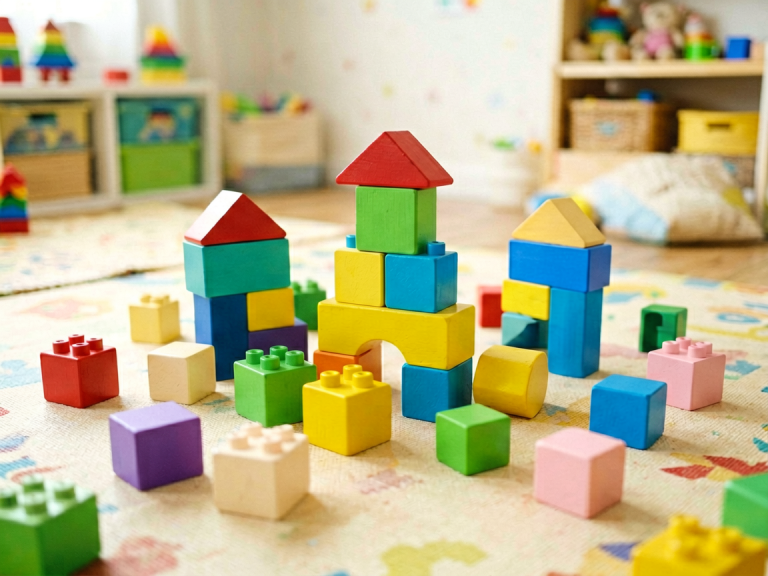
The “Open-Ended Toy” Principle. Two-year-olds learn best through open-ended play – toys that can be used in multiple ways, like blocks, stacking cups, or play dough. These encourage creativity, problem-solving, and fine motor skills. In contrast, battery-operated, single-purpose toys (a plastic phone that only beeps) often hold a child’s attention for minutes before being discarded. By reducing the clutter of low-quality, passive toys, you naturally invite deeper, more meaningful play.
The Power of the “Rotation System.” One of the most effective strategies recommended by child-development experts is rotating toys. Instead of having all toys available at once, you keep only a small selection visible (say, 8-12 items) and store the rest out of sight. Every two weeks or so, you swap the available toys. This not only prevents clutter but also makes “new” toys appear regularly, reigniting your child’s interest without buying anything new.
Strategic Decluttering: How to Decide What Stays and What Goes
You cannot avoid clutter if you keep every single toy that enters your home. The first step is a ruthless but thoughtful purge. Here is a simple framework for a two-year-old’s toy inventory:
Step 1: Sort by Category. Gather all toys into one central area. Separate them into piles: building toys (blocks, Duplos), pretend play (kitchen sets, dolls), sensory toys (play dough, water toys), vehicles, puzzles, stuffed animals, books, and “noise makers” (anything with batteries or sound).
Step 2: Apply the “Keep or Toss” Test. Ask yourself these questions for each item:
- Does my child actually play with this toy at least once a week? If not, it likely contributes to noise and clutter rather than joy.
- Is the toy developmentally appropriate for a 2-year-old? If it requires complex rules or small parts (choking hazards), remove it.
- Is it broken, missing pieces, or stained? Trash or recycle those that cannot be repaired.
- Does the toy have sentimental value for you, but your child shows zero interest? Take a photo and let it go.
Step 3: The “Container Rule.” Decide how much space you are willing to devote to toys. For example, you might allow one low shelf in the living room, one small bin in the bedroom, and one basket in the car. Whatever does not fit inside these designated containers must either be stored in the rotation stash or donated. This physical constraint forces you to be honest about what truly earns its place in your home.
What about gifts from grandparents? Politely ask family members to contribute to a “toy fund” or request experience gifts (swimming lessons, museum passes) instead. If you receive an unwanted toy, you can thank the giver warmly and quietly donate it later. You are not being ungrateful; you are being intentional about your child’s environment.
Smart Storage Solutions: Making Cleanup Manageable
Once you have reduced the number of toys, the next challenge is storage that works for both parent and toddler. Two-year-olds can learn to put toys away, but only if the system is simple and visual.
Low, Open Shelving. Toddlers are unable to reach high shelves or open heavy drawers. Use low, open bins or baskets at their eye level. Label each basket with a simple picture (a photo of a block for the block bin, a car for the vehicle bin). This teaches categorization and makes cleanup a matching game rather than a chore.
The “One Out, One In” Rule. When a new toy arrives (birthday present, holiday), one old toy must leave the active rotation. You can donate it or store it for later. This keeps the total volume constant and prevents gradual accumulation.
Designated “Zone” Areas. Instead of allowing toys to wander into every room, create specific play zones. Keep toys only in the child’s bedroom, a playroom, or a corner of the living room. Set a strict rule: toys are not allowed in the kitchen, dining area, or parent’s bedroom. This containment saves your sanity and teaches boundaries.
The “Final Cleanup” Ritual. Every evening, before bath or bedtime, do a five-minute “cleanup blitz” with your toddler. Put on a favorite song, race to pick up toys, or narrate what you are doing: “The blocks go in the blue basket! The teddy bear goes on the shelf!” This ritual not only keeps clutter from snowballing but also builds a habit of responsibility.
Thoughtful Toy Selection: Buying Less, Buying Better
Prevention is better than cure. To avoid future clutter, change how you choose toys for your two-year-old. Follow these principles:
1. Prioritize Quality and Longevity. A well-made wooden block set will last years and can be passed to siblings. A cheap plastic, battery-operated toy may break in a week. Invest in classic toys: stacking rings, shape sorters, simple puzzles, a wagon or push toy, a set of nesting cups. These encourage multiple types of play and grow with the child.
2. Avoid “Trendy” or “Character-Linked” Toys. Licensed characters (Peppa Pig, Paw Patrol) often come with a higher price tag and a shorter shelf life. Once your child outgrows a character, the toy loses appeal. Stick to generic, open-ended options that stimulate imagination.
3. Limit Electronic and Sound Toys. Two of the biggest clutter-causers are singing toys and flashy light toys. They are often large, awkward to store, and quickly become annoying. Plus, they teach passive consumption rather than active play. If you do allow a few, set a strict limit – for example, only three battery-operated toys in rotation at any time.
4. Use the “Wait Three Days” Rule. Before buying any toy, wait three days. This curbs impulse purchases. Often, the desire fades, and you realize your child is perfectly happy with what they already have.
5. Consider “Toy Libraries” or Borrowing. Many communities have toy lending libraries where you can borrow toys for a few weeks. This is perfect for two-year-olds who love novelty but quickly lose interest. You get the variety without the permanent clutter.
Teaching Your Toddler Organization Skills (Yes, It’s Possible)
A two-year-old cannot fully grasp “clean up after yourself,” but you can start laying the foundation. Use these gentle techniques:
- Model the behavior. Your child watches everything you do. If you tidy up your own items (putting away your shoes, your book) while narrating, they will imitate.
- Make cleanup a game. “Can you put the red block in the basket before I count to three?” Or “Let’s see who can pick up five toys faster!”
- Use visual cues. A picture chart showing where each toy belongs helps a toddler who cannot read.
- Praise the effort, not perfection. “Good job putting the car away!” beats any lecture about leaving toys out.
The Emotional Side of Letting Go
One of the hardest parts of toy decluttering is the guilt. “But Grandma gave that toy.” “He played with it once.” “It cost a lot.” Remember: Your child’s well-being and your family’s peace are more important than any object. A cluttered home creates a cluttered mind. By choosing to have fewer toys, you are giving your two-year-old the gift of focused play, deeper learning, and a calmer environment.
If you struggle to part with toys, store them in a sealed box for one month. If your child does not ask for a single item from that box, donate it without looking back. You will be surprised how little they miss.
Conclusion: A Cleaner Home, a Happier Toddler
Avoiding toy clutter for a two-year-old is not about being cruel or depriving your child of fun. It is about intentionality. It is about creating space – both physical and mental – for the kind of play that matters. With a strategic approach to decluttering, a rotation system, smart storage, and mindful purchasing, you can reclaim your living space and give your toddler a richer, less overwhelming play experience.
Start small. Pick one corner of one room. Sort, purge, and organize. You will feel the weight lift. And as you watch your child sit calmly with a single set of blocks, building a tower higher than ever before – without distraction – you will know you made the right choice.
(Word count: approximately 1,150)