The Sandbox of the Mind: How Open-Ended Play Forges Learning in Six-Year-Old Boys
—
Introduction: Beyond the Worksheet
At six years old, a boy stands at a crossroads of development. His fine motor skills are sharpening, his imagination is exploding, and his social awareness is waking up. Yet, in many modern classrooms and homes, the dominant learning tools are worksheets, apps, and structured activities with single correct answers. These have their place, but for a six-year-old boy—whose brain is wired for movement, exploration, and cause-and-effect experimentation—there is a more powerful teacher: open-ended play.
Open-ended play is play without a predetermined outcome, a fixed set of instructions, or a “right” way to finish. It is the cardboard box that becomes a spaceship, the pile of wooden blocks that becomes a castle, the mud puddle that becomes an ocean. This form of play is not merely entertainment; it is a sophisticated, organic learning engine. For a six-year-old boy, it builds cognitive flexibility, emotional resilience, social negotiation skills, and a deep, intuitive understanding of the physical world. This article explores the multi-layered learning that unfolds when we let a six-year-old boy lead his own play, without a script.
—
1. Cognitive Architecture: How Open-Ended Play Builds Executive Function
Under the secondary heading of Building the Executive Brain, we must understand that the prefrontal cortex—the part of the brain responsible for impulse control, working memory, and mental flexibility—is under rapid construction at age six. Open-ended play is the gymnasium for these skills.
When a boy decides to build a city with wooden blocks, he must hold multiple variables in his mind: the size of the base, the weight distribution, the need for a door. He plans, executes, fails, and replans. This iterative process is a direct workout for working memory. If his tower collapses, he does not receive a grade; he receives feedback from reality. He must inhibit his frustration (impulse control) and shift his strategy (cognitive flexibility). Contrast this with a puzzle that has only one solution. The puzzle teaches compliance; open-ended building teaches adaptive problem-solving.
Furthermore, research from developmental psychologists like Dr. Alison Gopnik emphasizes that children in open-ended environments are better at exploring “hypothetical possibilities.” A six-year-old boy playing with a set of magnetic tiles is not just stacking; he is running tiny experiments: “What happens if I place the triangle here? Will the rectangle hold if I push this side?” He is, in essence, acting as a miniature scientist, forming and testing hypotheses in real time. This kind of self-directed discovery is far more durable than rote memorization because the knowledge is earned, not delivered.
—
2. The Physics of Mud and Motion: Kinesthetic Learning in the Wild
The subtitle Learning Through the Body captures a crucial reality for six-year-old boys. At this age, many boys are kinesthetic learners—they understand the world through physical movement. Open-ended play that involves gross motor skills—digging, climbing, running, throwing—is not a break from learning; it is a form of learning that cannot be replicated in a chair.
Consider a boy playing in a sandbox with a system of ramps, water, and toy cars. He will, through trial and error, discover basic principles of physics: gravity (objects roll downhill), inertia (a heavier car rolls farther), fluid dynamics (water flows along the path of least resistance), and friction (rough sand slows the car). No textbook diagram can match the visceral understanding that comes from watching your own car stall at the foot of a ramp because the angle was too shallow. He is building an intuitive physics engine in his head.
Moreover, this type of play engages the proprioceptive system—the sense of body position and movement. When a boy jumps from a low wall or balances on a fallen log during imaginative play (perhaps he is a superhero escaping a lava pit), he is calibrating his sense of risk and bodily capability. This builds confidence and spatial awareness. In an age where children are increasingly sedentary, open-ended outdoor play gives a six-year-old boy the high-intensity, multi-sensory feedback his developing nervous system craves.
—
3. The Social Laboratory: Negotiation, Language, and Theory of Mind
Under Playing with Others: The Unscripted Curriculum, we examine how open-ended play becomes a social training ground, especially for boys, who often express emotions and resolve conflicts through action rather than words.
When two six-year-old boys engage in open-ended pretend play—say, “space explorers on Mars”—they must negotiate the entire narrative in real time. “I’m the captain.” “No, I’m the captain.” “Okay, you be the captain but I fly the spaceship.” This is not argument; it is complex social negotiation. They practice perspective-taking (Theory of Mind): “He wants to be the captain because it makes him feel powerful. If I let him be captain, I can control the ship’s destination.” They learn to read facial expressions, tone of voice, and body language. They discover that collaboration yields a richer game than competition.
Importantly, open-ended play allows for the safe exploration of social roles. A quiet, introverted boy might take on the role of a loud, commanding general. An impulsive boy might be forced into the role of the careful medic who must wait and listen. These role reversals build empathy. Unlike a teacher-assigned group project with a rubric, open-ended play has no external grader—only the natural social consequences of being excluded if you are too bossy, or being celebrated if you bring a creative idea. The stakes are authentic, and the learning is internalized.
—
4. Emotional Alchemy: Failure, Frustration, and the Growth Mindset
The secondary heading The Gift of Productive Failure addresses a critical piece of emotional development. Six-year-old boys are often labeled as “frustrated” or “aggressive” when they don’t succeed. Open-ended play offers a low-stakes environment to practice managing these strong emotions.
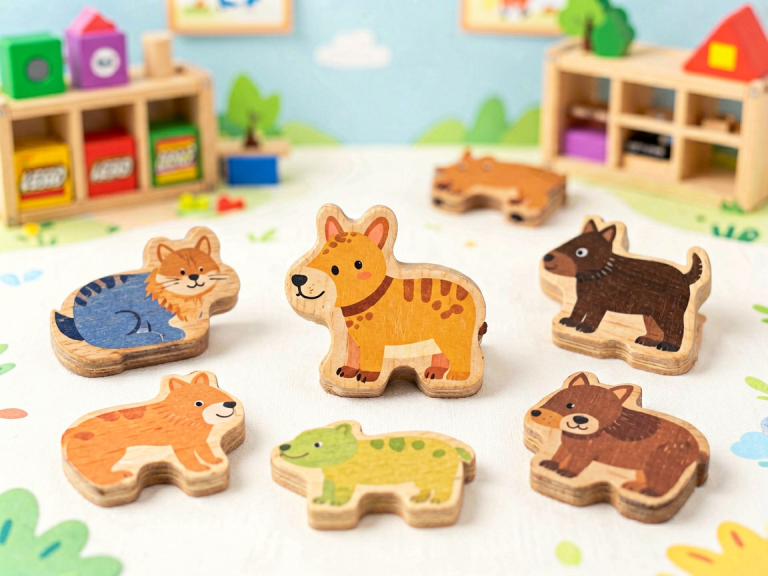
Imagine a boy constructing a complex LEGO bridge without instructions. It collapses halfway. In a structured activity, this could be a source of tears and a feeling of incompetence. In open-ended play, he has the autonomy to try again. He may scream, kick the blocks, and lie on the floor for a minute. But because there is no adult rushing in with the “right” answer, he eventually retrieves a block and tries a different design. He is learning that frustration is temporary, that failure is data, and that persistence is rewarded. This is the essence of Carol Dweck’s *growth mindset*—the belief that abilities can be developed through effort.
Open-ended play also provides a safe container for aggression. A boy who feels powerless in his daily life (bombarded by instructions from parents and teachers) can, in play, become a powerful dragon or a destroying monster. He knocks over the block tower he just built—not out of malice, but out of a need to experience the satisfying crash and the subsequent act of rebuilding. This cycle of destruction and creation teaches emotional regulation: he learns that he can feel big, chaotic emotions and then return to order. He is the master of his own emotional narrative.
—
5. Language and Narrative: The Story-Making Brain
Under Words from Worlds: Literacy Through Imagination, we consider how open-ended play is a powerful precursor to literacy. For a six-year-old boy, the act of storytelling through play is essentially composing a narrative without a pencil.
When a boy creates a “rescue mission” with action figures, he is constructing plot: a problem (the cat is stuck in the tree), a plan (the fire truck must extend its ladder), a conflict (the ladder is too short), and a resolution (he builds a ramp from a book). He is using sequences, cause-and-effect, and character motivation. He often talks aloud to himself or his playmates, generating rich dialogue. This oral language practice directly feeds into reading comprehension and writing skills. He is learning that stories have structure, that problems can be solved, and that his mind can invent worlds.
Moreover, open-ended play encourages the use of symbolic thinking—a foundational skill for literacy. A stick becomes a sword, and a cardboard tube becomes a telescope. This ability to let one thing stand for another is the exact cognitive leap needed to understand that a squiggle on a page (a letter) can represent a sound, and that a string of sounds (a word) can represent an object. The more a boy engages in symbolic play, the more fluent his brain becomes in abstract representation. A 2021 study in the journal *Child Development* found that children who engaged in more complex pretend play at age five showed stronger narrative comprehension and vocabulary growth at age six.
—
6. The Role of the Adult: Curator, Not Director
A final secondary heading, Setting the Stage Without Writing the Script, addresses the adult’s role. Many parents and teachers want to help, but they often unknowingly diminish the open-ended nature of play by asking too many leading questions or providing “good ideas.”
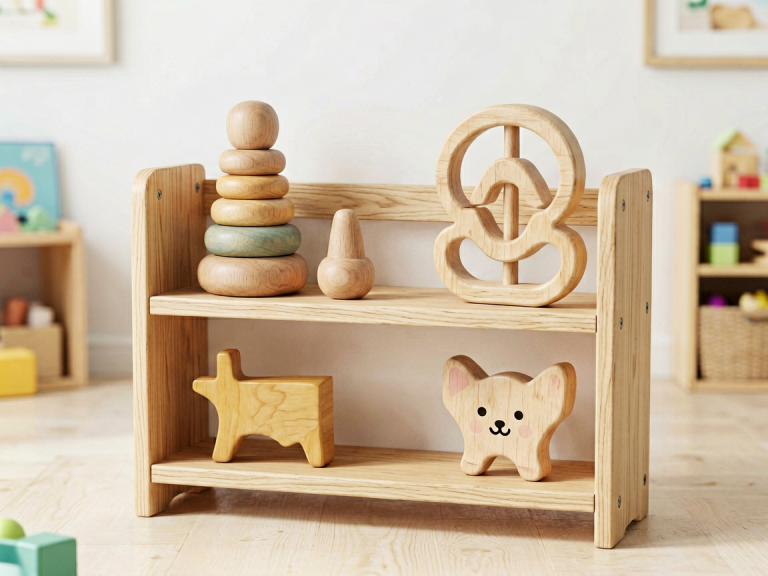
The most powerful thing an adult can do is to provide rich, loose-part materials—blocks, fabric scraps, sand, water, recycled containers, natural objects—and then step back. This is not neglect; it is intentional scaffolding. The adult can observe, take notes, and occasionally ask open-ended questions like, “I wonder what would happen if you added more water?” or “Tell me about your world.” But the moment an adult says, “Let’s build a castle, and here’s how you do it,” the learning shifts from exploratory to compliance-based. For a six-year-old boy who may already feel pressure to perform in school, the freedom of truly open-ended play is a psychological reset button.
Furthermore, adults can model a curious, playful attitude. If a father sits on the floor and builds a wobbling, asymmetrical tower himself, then laughs and rebuilds when it falls, he is teaching resilience non-verbally. The boy absorbs the message: “This is a safe space to try, fail, and try again.”
—
Conclusion: The Unfinished Masterpiece
Open-ended play for a six-year-old boy is not a luxury or an add-on to a “real” curriculum. It is the real curriculum—one that teaches the most enduring lessons: how to think, how to feel, how to relate to others, and how to navigate an unpredictable world. The block tower will be knocked down. The mud castle will dry and crack. But the neural pathways forged in that process—the ability to imagine, to persist, to negotiate, and to find joy in the act of creation—will last a lifetime.
In a culture that rushes to measure, assess, and optimize, we must preserve the sacred, messy, profound space of open-ended play. We give a boy not a set of answers, but the tools to ask his own questions. And that, ultimately, is the most important thing we can teach.
*(Word count: ~1,350)*