Unlocking Imagination: Open-Ended Play Activities for 6-Year-Old Boys
Introduction: Why Open-Ended Play Matters for Six-Year-Old Boys
At the age of six, boys are bursting with energy, curiosity, and a rapidly developing sense of independence. They have moved beyond the simple cause-and-effect play of toddlerhood and are now ready for more complex, imaginative experiences. Yet in an era of screens, structured sports, and pre-packaged toys with predetermined outcomes, the value of open-ended play—play without fixed rules, instructions, or end goals—cannot be overstated. Open-ended play activities give six-year-old boys the freedom to explore, create, problem-solve, and express themselves in ways that closed-ended tasks simply cannot match. These activities nurture cognitive flexibility, social skills, emotional regulation, and fine and gross motor development. More importantly, they allow a boy to become the architect of his own world, fostering a lifelong love for learning and discovery. The following sections offer a rich variety of open-ended play ideas specifically tailored for six-year-old boys, each designed to spark imagination and encourage self-directed exploration.
Building Worlds: Construction and Loose Parts Play
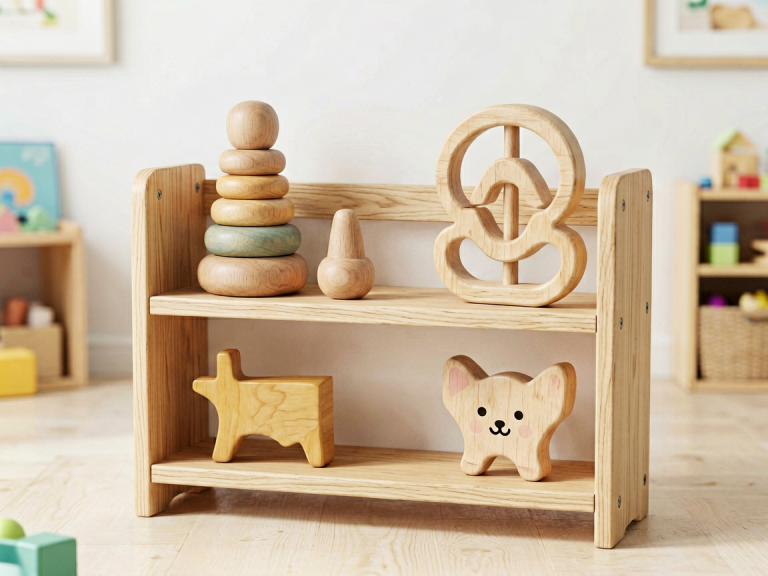
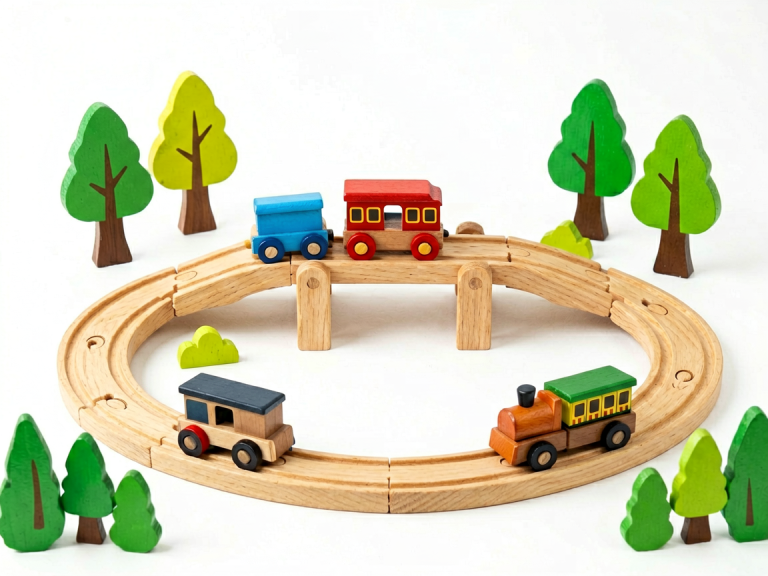
One of the most powerful forms of open-ended play for six-year-old boys involves construction and loose parts. Loose parts are any materials that can be moved, combined, redesigned, and repurposed—think wooden blocks, cardboard tubes, plastic pipes, fabric scraps, bottle caps, stones, sticks, and even old keys. Unlike a Lego set that builds only one specific model, loose parts invite a boy to create whatever his mind can conceive: a spaceship, a castle, a robot, or a marble run. The beauty lies in the absence of instructions. A six-year-old boy might spend an hour stacking and balancing flat wooden planks to build a bridge for his toy cars, only to knock it down and start again as a pirate ship. This process teaches engineering fundamentals, spatial reasoning, and perseverance. Parents and educators can facilitate by providing a "loose parts bin" or a designated corner of the room with a rotating selection of materials. Adding a few simple tools like child-safe hammers, screwdrivers, and measuring tapes transforms the activity into a mini workshop. The boy learns to plan, test, and iterate—<a href="https://www.playlearningguide.com/category/skills/”>skills that are far more valuable than following a pre-printed diagram. Moreover, construction play often becomes social when two or three boys collaborate, negotiating roles, sharing resources, and resolving conflicts over design ideas. This kind of collaboration builds empathy and communication skills in a natural, pressure-free environment.
Outdoor Adventures: Nature as an Open-Ended Playground
No open-ended play repertoire is complete without the great outdoors. For a six-year-old boy, nature is the ultimate open-ended toy. A simple backyard, park, or woodland trail becomes a limitless landscape for exploration. Encourage activities like building forts from fallen branches and leaves, digging in the dirt for worms and bugs, creating mud pies with water and soil, or designing obstacle courses using logs, rocks, and hula hoops. Water play is particularly engaging: provide a hose, buckets, plastic cups, and funnels, and let him experiment with flow, volume, and pressure. He might construct a dam in a small stream or race leaf boats down a rain gutter. These activities engage his senses—touch, smell, sound—and connect him with the natural world in a way that no app can replicate. Outdoor open-ended play also supports physical development: climbing trees builds strength and coordination; running across uneven terrain improves balance; and carrying heavy rocks or buckets builds endurance. Additionally, the unpredictability of nature—a sudden breeze, a hidden animal, a change in weather—teaches adaptability and resilience. To maximize the potential, parents can resist the urge to structure outdoor time. Instead of suggesting "Let's play soccer," offer open invitations like "Let's see what we can make with these sticks" or "What do you think is under that log?" The boy takes the lead, following his curiosity wherever it goes.
Dramatic Play: Costumes, Storytelling, and Role-Playing
Six-year-old boys are natural storytellers, and open-ended dramatic play allows them to act out the narratives swirling in their heads. Unlike scripted plays or video games, dramatic play has no fixed plot. A simple box of costumes—old hats, capes, scarves, masks, and shoes—can launch a thousand adventures. One moment he is a brave knight defending a castle made of couch cushions; the next he is a doctor caring for stuffed animals in a makeshift clinic; later he might be a space explorer building a rocket from cardboard boxes. This type of play is deeply cognitive: it requires planning (what role will I play? what props do I need?), language development (creating dialogue and explaining the storyline), and emotional regulation (negotiating who gets to be the hero). For boys who are naturally active and physical, dramatic play can incorporate movement. Set up a "city" in the living room with masking-tape roads, blocks as buildings, and toy cars. Let him be the traffic controller, a construction worker, or a delivery driver. The key is to provide minimal interference. Adults can enrich the environment by adding new props occasionally—a cardboard steering wheel, a plastic stethoscope, a wooden sword—but should never dictate the plot. When a six-year-old boy invents his own story, he is practicing executive function skills: working memory, cognitive flexibility, and inhibitory control. He learns to hold a complex scenario in his mind, adapt when something doesn't work, and control impulses to stick with the narrative. This is the kind of deep, meaningful play that builds the foundation for later academic and social success.
Art and Sensory Exploration: Process Over Product
Art for a six-year-old boy should be about process, not product. Open-ended art activities emphasize exploration of materials rather than creating a specific finished piece. Set up a "creation station" with washable tempera paints, finger paints, Play-Doh, clay, glue, scissors, magazine clippings, feathers, buttons, and yarn. Do not give him a coloring book or a craft kit with step-by-step instructions. Instead, say, "Here are some materials—what can you make?" He might mix colors on paper, squish clay into abstract shapes, or glue random objects onto cardboard in wild patterns. The sensory feedback—the squelch of paint between fingers, the resistance of clay, the texture of sand or rice—is deeply satisfying for a six-year-old boy's developing nervous system. You can extend this to sensory bins: fill a plastic tub with dry beans, rice, sand, or shaving cream, and add scoops, small toys, and containers. He can pour, hide, dig, and sort for long stretches. This type of play calms anxiety, improves focus, and strengthens fine motor muscles used later for writing. Another powerful activity is collage making with natural objects—leaves, acorns, bark, flowers—collected from a walk. He arranges them on paper or clay without any expectation of what the final piece should look like. The adult's role is to ask open questions: "Tell me about your picture," or "How did you decide to put the button there?" This validates his creative choices and encourages verbal expression. Avoid praising with "That's beautiful" too often; instead, say "I see you used lots of blue today—what made you choose that?" This shifts the focus from external validation to internal satisfaction, fostering true creativity.
Problem-Solving Challenges: Puzzles, Mazes, and Engineering Stunts
While puzzles with a single solution are not strictly open-ended, there is a category of problem-solving activities that are highly open-ended because they allow multiple approaches and outcomes. For a six-year-old boy, these challenges tap into his natural desire to figure things out. Consider providing a set of simple tools and materials—tape, string, straws, cardboard, paper clips, wheels, and dowels—and posing a challenge: "Can you build a car that can roll down this ramp carrying a penny?" There is no right way; he must experiment, fail, and try again. Another classic is the marble run: give him cardboard tubes, paper plates, blocks, and tape, and ask him to design a track that gets a marble from a high point to a low point. He will learn about gravity, slope, and cause and effect through trial and error. Similarly, create a "maze" with chairs and blankets and challenge him to navigate a ball through it using only a broom. These activities require sustained attention, frustration tolerance, and creative thinking. Because the goal is broadly defined, he feels ownership over the process. If he gets stuck, resist the urge to show him the "correct" method. Instead, ask reflective questions: "What happened when you tried that? What could you change?" This builds a growth mindset. Over time, these challenges can become collaborative: two boys working together to build a bridge strong enough to hold a toy truck. They learn to listen to each other's ideas, compromise, and celebrate shared success. Such experiences are far richer than completing a worksheet or finishing a digital game level.
Conclusion: The Lasting Impact of Unstructured Play
In a world that increasingly pressures young children to achieve measurable outcomes—reading levels, sports scores, test results—it takes intentional effort to preserve space for open-ended play. Yet for a six-year-old boy, this type of play is not a luxury; it is a necessity. It is the training ground for creativity, resilience, social competence, and self-regulation. The activities described above—construction with loose parts, outdoor nature adventures, dramatic role-play, sensory art, and open-ended problem solving—are not just "fun." They are the means by which a boy makes sense of his world, tests his own limits, and discovers his own passions. Parents and caregivers can support this by providing a rich environment, resisting the urge to direct play, and embracing mess and chaos as signs of deep engagement. A six-year-old boy who spends time each day in open-ended play is more likely to become a flexible thinker, a confident problem-solver, and a collaborative friend. So put away the schedule, hide the glowing screens, and hand him a pile of sticks, a box of blocks, or an old bedsheet. Watch as he builds not just castles and spaceships, but the very architecture of his own mind. That is a gift that will last a lifetime.
Sources and further reading
For additional evidence-based guidance, consult these authoritative resources: