The Art of Less: Top Mistakes to Avoid When Choosing Fewer Toys for Your Child
Introduction
In recent years, the movement toward minimalism has swept through parenting circles, encouraging families to declutter, simplify, and embrace the philosophy of “fewer but better.” Choosing fewer toys for your child seems like a straightforward way to reduce mess, foster deeper engagement, and save money. However, the transition from a toy-overflowed nursery to a curated collection is not always smooth. Many well‑intentioned parents fall into traps that undermine the very benefits they hope to achieve. They may end up with toys that are quickly discarded, that fail to stimulate creativity, or that create new frustrations. Understanding these pitfalls is essential if you want to use fewer toys not as a rigid rule, but as a thoughtful strategy that truly supports your child’s development. Below are seven critical mistakes to avoid when embracing a “less is more” approach to toys.
—
Mistake 1: Ignoring Your Child’s Unique Interests and Developmental Stage
The most common error is assuming that any small set of toys will work for any child. Parents often purge toys based on their own aesthetic preferences or a generic “minimalist checklist” they find online. For example, they might keep only wooden blocks, a puzzle, and a few picture books, believing these are universally beneficial. But a two‑year‑old who is fascinated by motion and cause‑and‑effect may quickly become bored without a simple push‑and‑pull toy, while a four‑year‑old who loves storytelling might need a set of character figurines to fuel imaginative play. When you ignore your child’s current passions and developmental needs, “fewer toys” becomes synonymous with “fewer opportunities to learn.” Instead, observe what your child gravitates toward – do they prefer building, pretending, sorting, or moving? Choose toys that align with those inclinations, even if they seem less “classic.” A curated collection should reflect your child’s individuality, not a one‑size‑fits‑all ideal.
—
Mistake 2: Choosing Only “Educational” Toys and Neglecting Open‑Ended Play
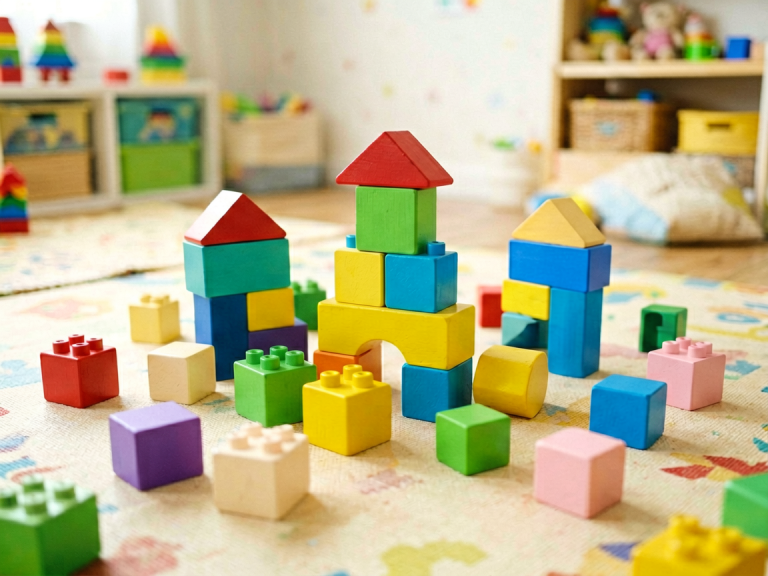
Many parents, in an effort to make every toy count, gravitate toward items marketed as “educational” – talking flashcards, electronic learning games, and single‑purpose puzzles. While these can have value, filling a small toy box exclusively with such items is a major mistake. Children learn best through open‑ended play, where a toy’s function is not predetermined. A set of wooden blocks, a few fabric scraps, a bowl, and a spoon can become a castle, a spaceship, a kitchen, or a stage for a puppet show. In contrast, a toy that lights up and says “A is for apple” leaves little room for imagination. When you prioritize overtly educational toys, you risk stifling creativity and reducing the cognitive flexibility that comes from unstructured play. An effective “fewer toys” strategy includes a healthy mix of open‑ended materials – loose parts, art supplies, natural objects – that allow your child to invent their own rules and scenarios. The goal is not to teach facts but to nurture a curious, resourceful mind.
—
Mistake 3: Forgetting About Rotation and Novelty
One of the biggest hidden dangers of owning fewer toys is monotony. Even the most beloved toy can become invisible if it sits in the same corner day after day, week after week. Many parents fall into the trap of keeping a tiny selection out permanently, assuming that “less is more” means a static collection. But children’s brains crave novelty within a familiar context. The solution is not to buy more, but to rotate. Store two‑thirds of your child’s toys out of sight and swap them every few weeks. This simple practice makes the available toys feel fresh and exciting, and it prevents the boredom that often leads to complaints. Without rotation, even a minimalist setup can feel stagnant, and children may begin to demand new toys because the old ones have lost their appeal. By systematically rotating, you actually extend the lifespan of each toy and deepen your child’s engagement. Avoid the mistake of thinking “fewer” means “always the same few.”
—
Mistake 4: Overlooking Toy Durability and Longevity
When you commit to fewer toys, each item must earn its keep. A poor‑quality toy that breaks after three uses not only wastes money but also creates a void in your carefully curated collection. Parents sometimes choose inexpensive, flimsy items to keep the total number low, thinking they are saving money. In reality, a fragile toy frustrates the child and leads to early discard, leaving a gap that may tempt you to buy replacements impulsively. The mistake is to prioritize low cost over durability. A well‑made wooden train, a sturdy doll with machine‑washable clothes, or a set of magnetic tiles that can take years of abuse will pay for itself many times over in joy and longevity. Also consider “longevity” in terms of developmental relevance: a toy that grows with the child (like building blocks that can be used for simple stacking at age 1 and complex structures at age 6) is far more valuable than a toy that is outgrown in months. When building a small collection, every toy should be a long‑term investment.
—
Mistake 5: Eliminating All “Junk” or Sensory Toys
In the quest for a clean, aesthetic playroom, some parents purge anything that doesn’t look like a classic educational tool. They throw away the plastic animal figurines, the spinning rainbow top, the container of slime, and the silly noise‑making crinkle toy. This is a mistake because children need a range of sensory experiences. Toys that seem “junky” often provide important tactile, auditory, or visual stimulation. A cheap light‑up wand might be the very item that helps a child with sensory regulation. A set of plastic dinosaurs – even if they are not wooden or “Montessori‑approved” – can be the foundation for hours of narrative play and language development. The goal of fewer toys is not to create a Pinterest‑worthy shelf; it is to support the whole child. Keep a small selection of toys that simply make your child smile, even if they are not educational in the traditional sense. Joy and sensory exploration are educational too.
—
Mistake 6: Making the Decision Alone Without Involving the Child
Parents often declutter toys in secret, fearing that their child will protest. They may donate a large bag of toys while the child is at daycare, hoping the child won’t notice. This approach can backfire emotionally. Children are deeply attached to their possessions, even ones they rarely play with. When toys disappear without warning, a child may feel powerless, anxious, or betrayed. The mistake is to treat the “fewer toys” decision as a parent‑only project. Instead, involve your child in the process. Set aside a time to talk about why you want to simplify. Let your child choose which toys to keep, which to pass on to a younger friend, and which to donate. This gives them a sense of agency and teaches valuable lessons about generosity and prioritization. Even if they choose to keep a few items you consider “clutter,” respecting their choice builds trust. Remember: the point is not to force minimalism onto your child, but to model intentionality and help them learn to make their own wise decisions about possessions.
—
Mistake 7: Confusing “Fewer” with “Boring” and Overcompensating
Finally, many parents, after reducing the toy count, feel guilty that their child might be missing out. To compensate, they start adding “just one more” educational subscription box, or they feel pressured to schedule constant structured activities to fill the perceived void. This mistake defeats the purpose of having fewer toys. The magic of fewer toys is that it creates space for deep play, boredom, and creativity. When a child has only a few items, they are forced to use their imagination, to combine materials in new ways, and to invent games. If you immediately fill every free moment with classes, playdates, and screen time, you rob your child of the opportunity to explore those empty spaces. Also, avoid buying expensive single‑purpose toys to justify the small number. A simple cardboard box can be more entertaining than a $50 plastic castle. Trust the process: a carefully chosen, small collection of toys, combined with unstructured time, leads to richer play than a cluttered room full of fancy gadgets. Don’t let guilt drive you back to overconsumption.
—
Conclusion
Choosing fewer toys is not a magic formula for a perfect childhood; it is a deliberate practice that requires ongoing reflection and adjustment. By avoiding these seven common mistakes – ignoring your child’s interests, prioritizing only educational toys, neglecting rotation, buying low‑quality items, eliminating sensory toys, excluding your child from decisions, and overcompensating out of guilt – you can create a toy environment that is both minimal and deeply enriching. The goal is not to win a medal for having the smallest collection, but to foster focused attention, creativity, and contentment in your child. When you select fewer toys wisely, you give your child the gift of depth over breadth, and that is a mistake you will never regret.