The Power of Touch: Designing a Hands-On Early Learning Environment at Home
Introduction: Why Hands-On Learning Matters in the Early Years
In the first five years of life, a child’s brain forms more than one million neural connections every second. This staggering pace of development is fueled not by passive screen time or rote memorization, but by active, sensory-rich experiences. The most effective early learning happens when children are allowed to touch, manipulate, build, pour, sort, and explore the physical world around them. This is the essence of hands-on early learning — an approach that engages multiple senses, fosters curiosity, and builds a strong foundation for cognitive, social, and motor skills.
For parents and caregivers, the home is the perfect laboratory for this kind of learning. Unlike a formal classroom, the home offers flexibility, intimacy, and the chance to integrate education into everyday routines. The kitchen, the living room, even the backyard can become rich settings for discovery. But how do you design a hands-on learning environment without expensive toys or elaborate setups? The answer lies in intentionality: using simple, everyday materials and structuring activities that encourage exploration, problem-solving, and play.
This article will provide a comprehensive guide to implementing hands-on early learning at home, organized into key areas of development. Each section includes practical, low-cost activity ideas, the underlying learning principles, and tips for adapting activities as your child grows.
I. Sensory Play: The Foundation of Early Cognition
Sensory play is any activity that stimulates a child’s senses: touch, smell, taste, sight, and hearing. For infants and toddlers, sensory experiences are the primary way they make sense of the world. A child who squishes a handful of cooked spaghetti is not just making a mess — she is learning about texture, temperature, pressure, and cause and effect.
Activities to Try:
- Sensory Bins: Fill a shallow plastic bin with rice, dried beans, sand, or water. Add scoops, cups, small toys, and spoons. Let your child scoop, pour, and bury objects. This develops fine motor skills and hand-eye coordination.
- Play Dough (Homemade): Mix flour, salt, water, and food coloring. Rolling, pinching, and cutting the dough strengthens small hand muscles and encourages creativity.
- Water Play: In the sink or a tub, provide cups, funnels, sponges, and plastic boats. Pouring water from one container to another teaches volume and gravity.
Why It Works: Sensory play activates the amygdala and hippocampus — brain regions involved in memory and emotion. When a child feels, hears, and sees simultaneously, multiple neural pathways fire together, strengthening learning. Moreover, sensory play is calming and helps regulate emotions, making it ideal for children who are easily overstimulated.
Adapting for Age: For babies under 12 months, use larger objects to avoid choking hazards, and supervise closely. For preschoolers, add challenges: ask them to sort beans by color or measure water with marked cups.
II. Everyday Math: Counting, Sorting, and Measuring Without Worksheets
Mathematics is often taught abstractly, but young children understand math best when it is concrete. Hands-on math activities at home transform abstract concepts into physical experiences. A child who lines up three toy cars is practicing one-to-one correspondence. A child who stacks blocks and watches them tumble is learning geometry and balance.
Activities to Try:
- Kitchen Math: While baking, ask your child to count eggs, measure flour, or divide a batch of cookie dough into equal pieces. This introduces fractions, counting, and estimation.
- Sorting Laundry: Have your child sort socks by color, size, or pattern. This develops classification skills, a precursor to algebra.
- Pattern Making: Use buttons, pasta shapes, or colored blocks to create patterns (red-blue-red-blue). Ask your child to continue the pattern or create their own.
- Nature Collections: On a walk, collect leaves, rocks, or acorns. At home, count them, arrange them from smallest to largest, or group them by type.
Why It Works: Hands-on math builds number sense — an intuitive understanding of quantity and relationships. When children physically move objects, they internalize concepts more deeply than by watching a video or completing a worksheet. They also develop persistence: when a block tower falls, they try again, learning that mistakes are part of problem-solving.
Adapting for Age: Toddlers can simply count objects aloud (1, 2, 3) and match shapes. Four- and five-year-olds can practice simple addition: “You have two apple slices, and I give you one more. How many do you have?”
III. Literacy Through Touch: Letter Recognition and Pre-Writing Skills
Literacy does not begin with flashcards or phonics apps. It begins with a child’s hands. Drawing, scribbling, tracing, and manipulating letters help the brain connect visual symbols with sounds and meaning. Hand-on literacy activities are especially important for kinesthetic learners — children who need to move to learn.
Activities to Try:
- Sand or Salt Trays: Pour a thin layer of sand or salt into a shallow tray. Show your child how to draw letters, shapes, or their name with a finger. The tactile feedback reinforces letter formation.
- Alphabet Play Dough Mats: Print or draw large letters. Ask your child to roll play dough into snakes and place them over the letter shapes. This builds muscle memory for writing.
- Magnetic Letters on a Cookie Sheet: Practice spelling simple words (cat, dog) by moving magnetic letters. Encourage your child to say the sounds as they place each letter.
- Storytelling with Objects: Gather small toys (animals, people, cars) and let your child create a story. Write down their words as they dictate; then read the story back together. This connects oral language to written text.
Why It Works: The act of physically forming a letter — whether in sand, dough, or clay — activates the same brain regions used for writing. Research shows that children who practice letter formation through multisensory methods learn letters more quickly and retain them longer than those who only see or hear them. Additionally, storytelling with objects builds narrative skills and vocabulary.
Adapting for Age: For two-year-olds, focus on scribbling and naming shapes. For three- and four-year-olds, introduce uppercase letters first, as they are easier to distinguish. For kindergarteners, work on lowercase letters and simple sight words.
IV. Science and Nature: Inquiry-Based Exploration at Home
Young children are natural scientists. They ask endless questions: “Why is the sky blue?” “What happens if I mix this with that?” Hands-on science at home nurtures this curiosity and teaches the scientific method — observation, hypothesis, experimentation, and conclusion — long before a child ever steps into a lab.
Activities to Try:
- Sink or Float: Fill a tub with water. Gather objects from around the house (a cork, a coin, a plastic cup, a pebble). Ask your child to predict whether each will sink or float, then test it. Talk about why some things float (they are less dense) in simple terms.
- Planting Seeds: Plant bean seeds in a clear cup with wet cotton balls. Place it near a window and watch the roots and stem grow. Water it and record changes daily with drawings or photos.
- Ice Melting Experiment: Freeze small toys in ice cubes. Give your child a bowl of warm water, salt, and tools (spoon, dropper). Let them experiment with how to melt the ice fastest. Talk about temperature and states of matter.
- Magnetic Exploration: Provide a magnet and a tray of objects (paper clips, pennies, aluminum foil, plastic buttons). Let your child test which items are magnetic and sort them into groups.
Why It Works: Hands-on science cultivates critical thinking and patience. A child who watches a seed sprout over a week learns that some processes take time. A child who repeatedly drops a toy into water to see if it sinks learns about consistency. These experiences build a foundation for later scientific reasoning — and they are far more memorable than a textbook diagram.
Adapting for Age: For toddlers, focus on simple cause-and-effect (e.g., dropping a ball always makes it fall). For preschoolers, introduce predictions and simple recording (drawing what they observed). For kindergarteners, ask open-ended questions: “What do you think will happen if we add more salt to the ice?”
V. Fine Motor Skills: Building the Hand Muscles for Writing and Self-Care
Before a child can hold a pencil properly, they need to develop fine motor skills — the small muscle movements in the fingers and hands. These skills are essential not only for writing but also for buttoning shirts, using scissors, and feeding themselves. Hands-on activities are the best way to strengthen these muscles.
Activities to Try:
- Threading and Lacing: Use large beads and a shoelace, or make a “sewing” card with holes punched in cardboard and a plastic needle. Stringing beads requires pincer grasp (thumb and forefinger) and hand-eye coordination.
- Tongs and Tweezers Transfer: Place small objects (cotton balls, pom-poms, dried beans) in one bowl. Give your child tongs or tweezers and ask them to move the objects to another bowl. This mimics the grip needed for writing tools.
- Tearing and Crumbling Paper: Old magazines or scrap paper provide endless fine motor work. Tearing paper strengthens hand muscles; crumbling it into balls works on grip strength. Use the paper balls for a playful “snowball” toss game.
- Clothespin Games: Clip clothespins onto the edge of a paper plate to make a “sun.” Alternatively, write numbers on clothespins and have your child clip them in order onto a strip of cardboard.
Why It Works: Fine motor activities build the intrinsic muscles of the hand, which are crucial for precision and endurance. Without these foundational skills, children may struggle with handwriting, become frustrated, or avoid fine-motor tasks altogether. Regular practice through play ensures that these muscles develop naturally and joyfully.
Adapting for Age: For infants and one-year-olds, offer large, easy-to-grasp objects like chunky rings. For two- and three-year-olds, increase complexity with smaller beads and more intricate lacing patterns. For four- and five-year-olds, introduce scissors with blunt tips and practice cutting along straight and curved lines.
VI. Social-Emotional Learning Through Cooperative Play
Hands-on early learning is not just about academics; it is also about learning to share, take turns, negotiate, and express emotions. When children engage in cooperative hands-on activities with siblings or parents, they practice these essential social-emotional skills in a natural context.
Activities to Try:
- Building Together: Use blocks, LEGO Duplo, or cardboard boxes to build a tower or a house. Emphasize teamwork: “You hold the base steady while I add the top block.”
- Role-Play with Props: Set up a pretend kitchen, grocery store, or doctor’s office. Provide simple props (empty food boxes, play money, a toy stethoscope). Children act out real-life scenarios, learning empathy and communication.
- Turn-Taking Games: Simple board games like Candyland or Hi-Ho! Cherry-O teach children to wait for their turn, handle disappointment, and celebrate others’ successes.
- Emotion Faces: Draw faces showing different emotions on paper plates. Use a mirror and let your child mimic the expressions. Talk about what makes them feel happy, sad, or angry. This builds emotional vocabulary and self-awareness.
Why It Works: Social-emotional skills are the bedrock of school readiness. A child who can regulate their emotions, collaborate with others, and express needs verbally is far more likely to succeed in a classroom than one who has advanced academic knowledge but poor social skills. Hands-on play provides a safe space to practice these skills with immediate feedback.
Adapting for Age: For toddlers, focus on parallel play (playing alongside another child) and simple sharing with adult guidance. For preschoolers, encourage cooperative play and problem-solving. For kindergarteners, introduce games with rules and discuss strategies for resolving conflicts.
VII. Creating a Home Environment That Supports Hands-On Learning
Finally, no amount of activity ideas will be effective if the home environment is not set up for exploration. Here are practical tips for designing a hands-on learning space:
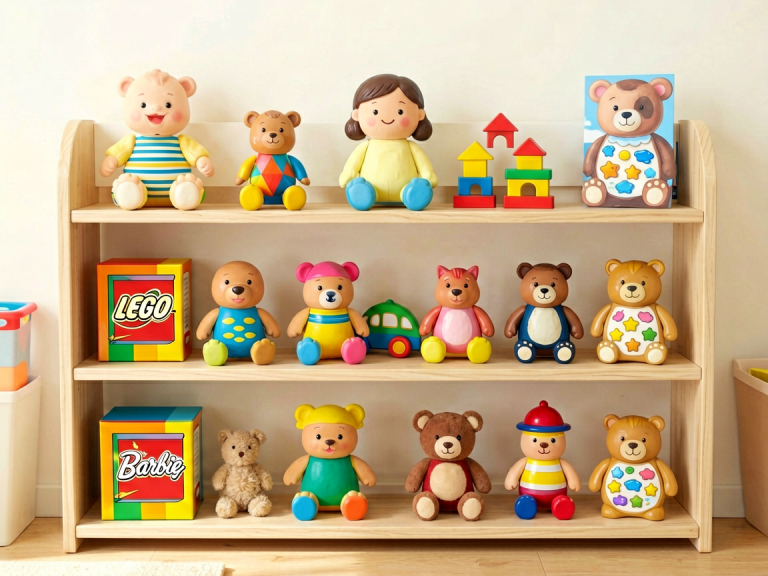
- Declutter and Rotate Toys: Too many options overwhelm young children. Keep only a few bins of materials accessible at a time, and rotate them every week or two. This keeps novelty alive without chaos.
- Low Shelves and Open Bins: Store materials on low, open shelves so children can independently access and return items. Clear bins let them see what is inside.
- Incorporate Natural Materials: Wood, fabric, metal, and stone offer richer sensory experiences than plastic. Include items like wooden blocks, silk scarves, and small rocks.
- Designate a Messy Zone: If possible, set up a small table with a wipe-clean surface or a plastic tablecloth. Accept that learning is messy; embrace it by providing easy cleanup tools (a broom and dustpan, a spray bottle of water).
- Model Curiosity: Children learn from watching adults. When you cook, narrate what you are doing. When you fix something, let them watch and hand you tools. Show them that learning is a lifelong adventure.
Conclusion
Hands-on early learning at home is not about creating a miniature classroom or drilling flashcards. It is about recognizing that a child’s natural mode of learning — through touch, movement, play, and sensory exploration — is the most powerful teacher of all. By providing simple materials, structuring unpressured activities, and following your child’s lead, you can build a rich foundation for cognitive, motor, and social-emotional development.
The beauty of this approach is that it costs little and yields immense returns. A cardboard box becomes a spaceship. A handful of dried beans becomes a math lesson. A cup of water and a spoon becomes a science experiment. And through it all, your child learns not just facts and skills, but the joy of discovery — a gift that will last a lifetime.
Start today. Grab a tray of sand. Open a cabinet of containers. Sit on the floor with your child and let your hands guide the way. The learning will flow naturally, and you will witness the miracle of a young mind building itself, one sensory experience at a time.
*(Word count: approximately 1,380 words)*