Taming the Toy Tornado: A Comprehensive Guide to Managing Toy Storage
For parents, guardians, and childcare professionals, toy storage is seldom a trivial matter. What starts as a cheerful collection of colorful blocks, stuffed animals, and miniature cars can quickly morph into a chaotic avalanche that covers every inch of the living room floor. The struggle is real: toys are essential for child development, but their sheer volume can overwhelm even the most organized home. However, with a strategic approach, managing toy storage can become a manageable—and even enjoyable—part of daily life. This guide offers a step-by-step system to transform toy clutter into a well-ordered space that encourages independence, creativity, and peace of mind.
The Foundation: Sort and Purge with Purpose
Before investing in bins, shelves, or labels, the first critical step is to reduce the quantity of toys. The idea of “less is more” applies powerfully to playthings. Begin by gathering all toys from every corner of the house—bedrooms, playroom, car, and even the diaper bag. Lay them out in a large open area so you can see the full inventory.
Now, sort them into four categories: keep, donate, store away, and trash. The “keep” pile should contain toys that are currently loved, age-appropriate, and in good condition. The “donate” pile includes items that are still usable but no longer spark joy. The “store away” pile is for special toys—like keepsakes or items for a younger sibling—that you want to preserve but not display right now. The “trash” pile is for broken, missing-piece, or unsafe toys. Be ruthless: research shows that children actually engage more deeply with fewer toys, as they are less distracted and more creative.
A good rule of thumb is the “one-in, one-out” policy: every time a new toy enters the house, an old one must leave. This prevents accumulation from the start. Once the purge is complete, you will have a clearer picture of what you truly need to store.
Smart Categorization Systems: Group by Use, Not by Ownership
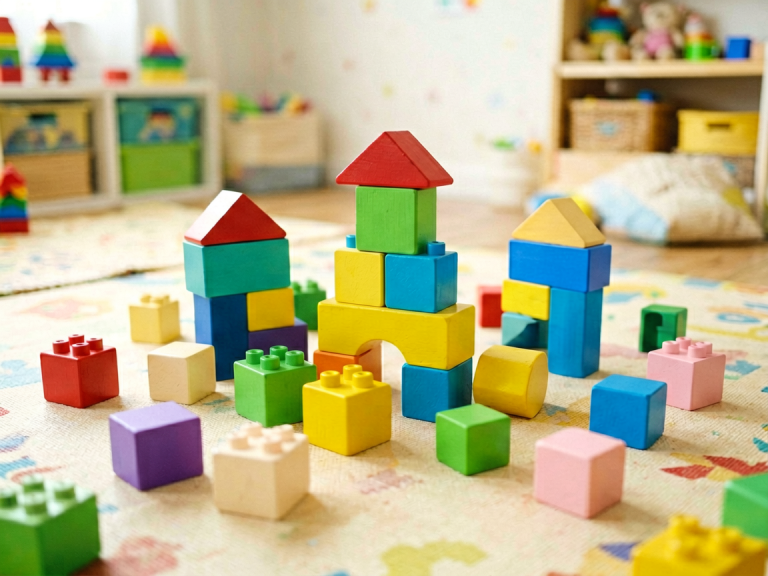
Now that you have a curated collection, it is time to create categories that make sense for your child’s play patterns. Avoid grouping toys solely by “whose they belong to,” especially if you have multiple children of different ages. Instead, categorize by “type” or “activity.” Common categories include building toys (blocks, LEGOs), pretend play (kitchen sets, costumes), arts and crafts (crayons, paper, stickers), puzzles and games, sensory toys (playdough, sand), and vehicles or figures.
For each category, use transparent, shallow containers so children can see what is inside without dumping everything out. Open bins or baskets work well for larger toys like stuffed animals or balls. For small pieces—such as LEGOs, puzzle pieces, or doll accessories—use clear plastic bins with lids or drawstring bags. Magnetic sheets or small organizer boxes can keep tiny items like beads or game tokens from getting lost.
Labeling is essential. Use pictures for pre-readers and text for older children. Attach labels to the front of bins or shelves at the child’s eye level. This empowers kids to find what they want and—more importantly—to put things back in the correct spot. A labeled system also speeds up cleanup, because no one has to guess where a toy “lives.”
Storage Solutions for Every Space: Making the Most of Vertical and Hidden Areas
The classic “toy box” is often a trap: it encourages dumping everything in one deep bin, making it hard to find anything and easy to forget toys at the bottom. Instead, think vertically and strategically.
Shelving units are your best friend. Use low, open shelves that are accessible to children. Bins or baskets on shelves allow you to separate categories while keeping items visible. Wall-mounted shelves can display favorite books or stuffed animals, freeing floor space. Over-the-door organizers (clear shoe pockets) are excellent for storing small toys, art supplies, or action figures. Under-bed storage boxes are ideal for storing “store away” items or extra sets of blocks. If you have unused wall space, consider a pegboard with small buckets for vehicles or craft tools.
In the living room, which often serves as a primary play area, use a beautiful basket or a chest that doubles as a coffee table. In the bedroom, a cube storage unit with fabric bins can blend into the decor. For shared spaces, assign each child a personal bin (labeled with their name) for special treasures, while communal categories remain in open bins. The key is to match storage to your home’s flow: keep the most frequently used toys in the most convenient locations, and rotate less-used toys to higher or harder-to-reach spots.
Establishing a Rotation Routine: Keeping Play Fresh Without Overwhelm
Even after sorting and organizing, having all toys available at once can lead to sensory overload for children and constant mess for parents. A toy rotation system solves this by dividing toys into “sets” and swapping them periodically.
First, divide your “keep” pile into three or four equal groups. For example, one group might include building toys and puzzles; another, pretend play and figures; a third, arts and crafts and sensory items; and a fourth, vehicles and games. Store out-of-rotation groups in closed bins or boxes in a closet, garage, or under the bed.
Every two to four weeks (or whenever your child shows signs of boredom), swap one set for another. The “new” toys will feel exciting and fresh, and your child will rediscover forgotten treasures. Rotation also reduces the amount of cleanup you need to do daily, because only a fraction of the toy collection is accessible at any time. It is a proven strategy used by many Montessori and minimalist families to foster deep, focused play.
Making Clean-Up a Game: Habits That Stick
The best storage system in the world fails if no one uses it. Teaching children to manage their own toys is an essential life skill. Start early and keep it positive.
Make cleanup a part of the daily routine, not a punishment. Use a timer: “Let’s see if we can put all the blocks away before the buzzer!” Sing a cleanup song, or turn it into a race. For younger children, break the task into small steps: “First, put all the red cars in their bin. Now, the blue ones.” Praise effort, not perfection.
Another effective technique is the “five-minute warning” before transition time. Announce, “In five minutes, we will clean up the puzzles. Everyone ready?” This gives children time to mentally prepare. Also, involve children in the original organizing process: let them help label bins or choose where their favorite toys go. When they feel ownership, they are more likely to take responsibility.
Maintaining the System Long-Term: Small Tweaks, Big Results
No storage system is set-and-forget. Life changes: children grow, interests shift, new toys arrive. Schedule a quick toy audit every season. Spend 15 minutes removing broken items, checking that labels still make sense, and adjusting categories. For example, a toddler’s large chunky puzzles may be replaced by more complex ones; a preschooler’s little figurines may become a “collector’s set” that needs a smaller box.
Also, resist the temptation to buy more storage before purging. Often, we think we need bigger bins when what we really need is fewer toys. Stick to the one-in, one-out rule religiously. Finally, involve your child in the maintenance process: ask them, “Do you still love this toy? Or is it ready to go to a new friend?” This teaches decision-making and gratitude.
In conclusion, managing toy storage is not about achieving perfection—it is about creating a system that works for your family’s rhythm. By purging purposefully, categorizing smartly, utilizing vertical space, rotating toys, and building cleanup habits, you can turn the toy tornado into an organized, joyful environment. Your child will benefit from a calmer space, deeper play, and the priceless skill of taking care of their own belongings. And you? You will finally be able to see the floor again.