The Power of Play: Unlocking the Best in Play-Based Early Learning
Introduction
In a world increasingly driven by academic benchmarks and standardized testing, the concept of “play” is often dismissed as a mere break from real learning. Yet a growing body of neuroscience, developmental psychology, and educational research tells a different story: play is the engine of optimal early learning. The best play-based early learning approaches do not simply let children run wild; they create carefully structured environments where curiosity, creativity, and critical thinking flourish naturally. This article explores what makes play-based early learning truly effective, why it outshines more rigid instructional methods, and how parents and educators can implement the best practices to nurture lifelong learners.
What Is Play-Based Early Learning?
Play-based early learning is an educational approach that uses child-directed, intrinsically motivated play as the primary vehicle for acquiring knowledge, skills, and dispositions. Unlike free play without guidance, the *best* play-based models involve intentional design by adults—educators and parents who observe, scaffold, and extend children’s interests without dominating the activity. Key characteristics include:
- Child choice and agency – Children select materials, themes, and partners.
- Process over product – The joy of exploration, experimentation, and problem-solving is valued more than a finished artifact.
- Integrated learning – Literacy, numeracy, science, and social-emotional skills emerge naturally through play scenarios.
- Responsive adults – Teachers ask open-ended questions, provide materials that challenge thinking, and join play to enrich vocabulary and reasoning.
This approach aligns with the work of pioneers such as Friedrich Froebel, who invented kindergarten as a “garden of children” where play was the root of learning; Maria Montessori, who emphasized self-directed activity in a prepared environment; and Lev Vygotsky, who highlighted the role of social interaction in the “zone of proximal development.” The best play-based early learning synthesizes these theories into a cohesive, evidence-based practice.
Why Play-Based Learning Is the Best Approach for Early Childhood
1. Brain Development and Neuroplasticity
The early years (birth to age 8) are a critical window for neural connections. Play stimulates multiple areas of the brain simultaneously. For instance, when a child builds a fort with blankets, they engage spatial reasoning, planning, motor skills, and social negotiation. Neuroscientific studies show that play increases the production of brain-derived neurotrophic factor (BDNF), a protein that supports neuron growth and synaptic plasticity. In short, play physically grows the brain.
2. Executive Function and Self-Regulation
The best play-based programs foster executive functions—working memory, cognitive flexibility, and inhibitory control. Consider a group of preschoolers playing “restaurant.” They must remember each other’s orders (working memory), adapt when a “customer” changes their mind (flexibility), and wait for their turn to serve (impulse control). These abilities predict later academic success better than early reading or math scores.
3. Social-Emotional Foundations
Through play, children learn to read emotions, negotiate conflicts, and develop empathy. A child who pretends to be a doctor caring for a sick teddy bear practices perspective-taking. Research from the American Academy of Pediatrics confirms that play reduces stress, anxiety, and depression while building resilience. The best early learning environments prioritize this emotional safety.
4. Intrinsic Motivation and Love of Learning
When learning feels like play, children become intrinsically motivated. They persist through challenges because they *want* to, not because they are rewarded or punished. This contrasts sharply with drill-based methods that can foster dependency on external rewards. The best play-based approaches cultivate a growth mindset: “I can’t do this yet, but I can try another way.”
Key Elements of the Best Play-Based Early Learning Programs
To achieve the “best” outcomes, play-based early learning must be implemented with intentionality. Below are the essential components:
1. A Rich, Responsive Environment
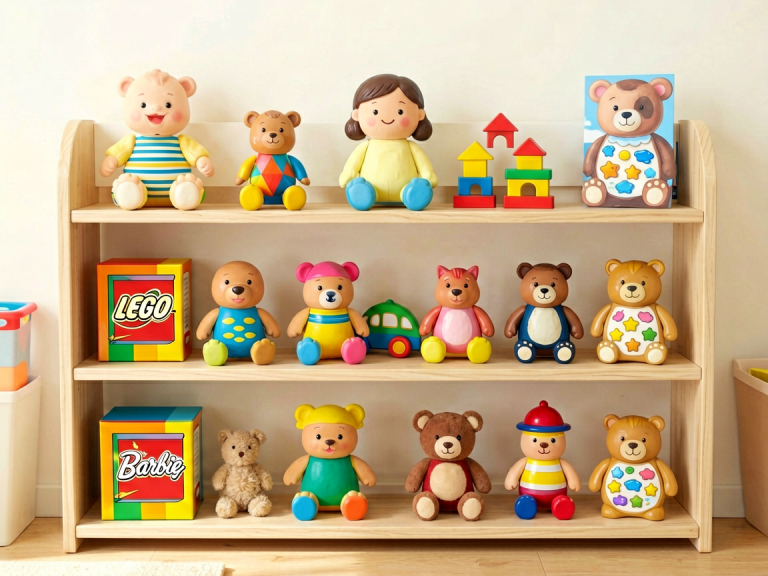
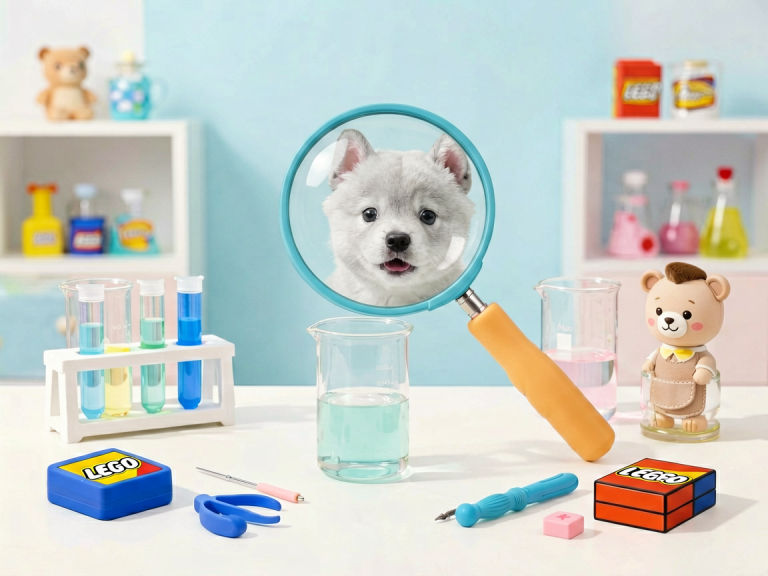
The physical space is the “third teacher.” In high-quality programs, classrooms are arranged into learning centers—blocks, dramatic play, art, sensory, reading nook, and outdoors. Materials are open-ended: wooden blocks that can become towers, roads, or animals; loose parts like pinecones and fabric scraps; and real tools like child-safe scissors and magnifying glasses. The environment invites exploration and allows for multiple uses of the same object, sparking divergent thinking.
2. The Role of the Adult: Observer, Facilitator, and Co-Player
The best play-based educators are not passive. They observe children’s play to assess development and interests. They then scaffold learning by:
- Asking probing questions (“What would happen if we added more water to the sand?”)
- Introducing new vocabulary naturally (“This dinosaur is *herbivorous*—it only eats plants.”)
- Modeling problem-solving (“I notice the bridge keeps falling. What could we use to make it sturdier?”)
- Extending play by adding props or challenges (e.g., providing clipboards and pencils for a “construction site” so children can draw blueprints).
This delicate balance between guidance and freedom is the hallmark of the best practice.
3. Emergent Literacy and Numeracy
Play-based learning does not ignore academics; it embeds them. A child playing with playdough practices fine motor skills essential for writing. A child sorting buttons by color and size builds classification and counting. A child acting out a story from a picture book develops narrative comprehension. The key is that skills are taught in meaningful contexts. For example, instead of flashcard drills, a teacher might create a “post office” where children “write” letters to friends, learning letter-sound correspondence through authentic purpose.
4. Ample Time for Deep Play
The best programs allow uninterrupted play periods of at least 45–60 minutes. Short, fragmented play prevents children from entering a state of “deep play” where complex problem-solving and sustained attention occur. Rushing from activity to activity undermines the very cognitive benefits play offers.
5. Outdoor and Risky Play
Nature is a powerful play-based learning environment. Climbing trees, balancing on logs, and digging in mud develop proprioception, risk assessment, and physical stamina. The best early learning settings provide daily outdoor time, even in inclement weather, and allow “risky play” under supervision—activities with perceived danger like jumping from a height or using tools. Such play builds confidence and resilience.
6. Social-Emotional Curriculum Through Play
Rather than separate “social skills” lessons, the best programs integrate conflict resolution into play. Teachers use “talking sticks,” role-play, and class meetings to help children articulate feelings and solve disputes. For instance, when two children want the same toy, the teacher might say, “I see a problem. How can we solve it together?” This teaches negotiation and empathy in real time.
Practical Strategies for Implementing the Best Play-Based Learning at Home
Parents can also embrace play-based early learning. Here are actionable tips:
- Follow your child’s lead. Notice what they gravitate toward—dinosaurs, cars, cooking—and provide related materials. If they love building, add tape, cardboard, and string for more complex constructions.
- Limit screen time and passive entertainment. The American Academy of Pediatrics recommends no screens for children under 18 months (except video calls). Instead, offer open-ended toys like blocks, dolls, and art supplies.
- Use “serve and return” language. When your child points to a bird, say, “Yes, that’s a robin. It has a red chest. What do you think it’s looking for?” This back-and-forth conversation enriches vocabulary and cognition.
- Create a “yes” space. Designate an area where your child can play freely without constant “no.” Put breakable items out of reach, but allow painting on easels, digging in a sandbox, or building with pillow forts.
- Value process over product. Resist the urge to correct or direct. If a child’s tower falls, ask, “What can we learn from that?” rather than showing them the “right” way. Mistakes are learning opportunities.
Conclusion
The best play-based early learning is not a laissez-faire free-for-all, nor is it a poorly disguised academic drill. It is a carefully crafted, evidence-based approach that respects children’s innate drive to explore and make sense of their world. By providing rich environments, skilled adult facilitation, and ample time for deep engagement, we give children the strongest foundation for cognitive, social, emotional, and physical development. In the words of psychologist Jean Piaget, “Play is the work of childhood.” And when we commit to the *best* play-based learning, we ensure that work is joyful, meaningful, and transformative—for a lifetime.
[Word count: approximately 1,150 words]