The Complete Early Learning Toys Guide for Parents – Choosing Wisely for Your Child’s Development
Introduction: Why the Right Toys Matter More Than You Think
As a parent, you’ve probably stood in a toy aisle, overwhelmed by flashing lights, noisy gadgets, and endless packaging promises. Every box claims to make your child smarter, faster, or more creative. But the truth is simpler: the best early learning toys are not the most expensive or the most high-tech. They are the ones that match your child’s developmental stage, spark genuine curiosity, and encourage hands-on exploration. Early childhood – from birth to around age six – is a critical window for brain development. During these years, play is not just fun; it is the primary way children learn about the world, build language, develop motor skills, and practice social interaction. This guide will help you cut through the marketing noise and select toys that truly support your child’s growth, from infancy through the preschool years. Whether you are a first-time parent or looking to refresh your toy collection, you will find practical advice rooted in child development research.
## Understanding Developmental Stages: A Roadmap for Toy Selection
Every child develops at their own pace, but general milestones provide a helpful framework. Choosing toys that are slightly challenging – but not frustrating – is key. Here is a breakdown of what to look for at each stage.
### 0–12 Months: Sensory Exploration and Cause-and-Effect
Newborns and infants learn primarily through their senses. They need toys that stimulate sight, sound, touch, and eventually, grasp. Look for high-contrast black-and-white patterns in the first few weeks, then gradually introduce bright colors. Soft rattles, crinkle books, and teething rings help babies understand that their actions produce results – shaking a rattle makes noise. At around six months, babies start reaching and grabbing. Activity gyms with hanging toys, simple mirrors, and soft blocks encourage tummy time and hand-eye coordination. Avoid toys with small parts that could be choking hazards. Remember: at this age, the best “toy” is often your face, your voice, and your touch.
### 12–24 Months: Movement, Problem-Solving, and Imitation
Toddlers are on the move – crawling, cruising, and walking. They also begin to imitate adult actions. Push-and-pull toys (like a wooden cart or a wagon) support gross motor development. Shape sorters, nesting cups, and large stacking rings introduce early problem-solving and spatial awareness. Simple puzzles with knobs help fine motor control. Toddlers love pretend play: a toy phone, a play kitchen with wooden utensils, or dolls that can be fed and dressed. At this stage, durability matters because toys will be dropped, chewed, and thrown. Choose natural materials like wood or BPA-free silicone over cheap plastic that breaks easily. Also, look for toys that encourage repetition – toddlers learn through doing the same action over and over.
### 24–36 Months: Language, Creativity, and Social Play
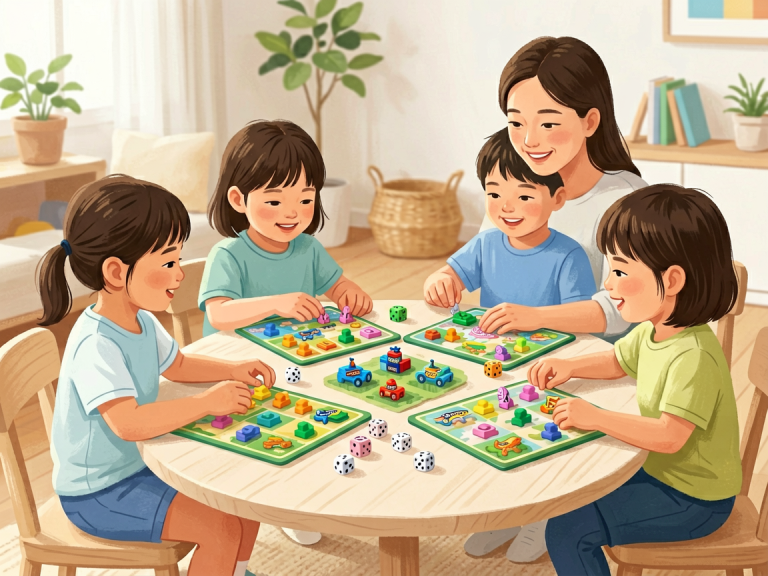
By age two, children’s vocabulary explodes, and they begin to engage in more complex pretend play. This is the golden age of playdough, crayons, and finger paints. Art supplies foster creativity and fine motor skills, but always supervise to avoid ingestion. Building blocks (like unit blocks or Duplo-style bricks) allow children to create structures and explore balance and gravity. Simple board games with large pieces and clear rules (like matching games or memory games) introduce turn-taking and social cooperation. Dress-up clothes, toy animals, and vehicle sets encourage storytelling and language development. Consider open-ended toys – items that can be used in many ways, such as a set of scarves, cardboard boxes, or wooden arches. These spark imagination far more than a single-purpose electronic toy.
### 3–5 Years: Pre-Reading, Math Concepts, and Cooperation
Preschoolers are ready for more structured learning, but it should still feel like play. Alphabet puzzles, magnetic letters, and simple word games build pre-reading skills. Counting bears, number puzzles, and sorting sets introduce early math concepts like counting, grouping, and patterns. Construction sets like magnetic tiles or linking cubes develop engineering thinking. At this age, children also benefit from cooperative games that emphasize teamwork over competition. Science kits for simple experiments (like color mixing or planting seeds) satisfy growing curiosity. Remember, screens are not toys – even “educational” apps cannot replace the tactile, social, and physical experience of real-world play. Limit screen time and prioritize hands-on activities.
## Key Qualities of High-Quality Early Learning Toys
Not all educational toys are created equal. Here are five criteria to evaluate any toy before buying it.
### Open-Ended Play Potential
The best toys have no single “correct” use. A set of wooden blocks can become a castle, a bridge, a tower, or a road. Open-ended toys grow with the child – a toddler might stack them, while a preschooler might use them to build a zoo for toy animals. In contrast, a toy that only does one thing, like a remote-controlled car that drives forward, offers limited learning opportunities. When in doubt, choose simplicity.
### Sensory Richness Without Overstimulation
Quality learning toys engage multiple senses: sight (color, pattern), hearing (pleasant sounds like a chime or bell), touch (different textures), and sometimes smell (natural wood). But beware of toys that are overwhelming – flashing lights, loud abrupt noises, and constant electronic chatter can actually hinder concentration. A calm, inviting toy invites deep focus.
### Safety and Durability
Check for non-toxic paints, rounded edges, and sturdy construction. For babies and toddlers, avoid small parts that can be swallowed. Look for certifications like ASTM or EN71. Natural materials like solid wood, organic cotton, and food-grade silicone are often safer and more environmentally friendly. Also consider how easy the toy is to clean – toys that go in mouths should be washable.
### Alignment with Your Child’s Interests
A toy that matches your child’s current passion will be played with more. Does your toddler love animals? Invest in a set of realistic animal figurines. Does your preschooler love music? Get a xylophone or a simple drum. Follow their lead rather than imposing a “developmental” toy that doesn’t spark joy.
### Promotes Interaction, Not Isolation
Some toys are designed for solo use (like a tablet), but research shows that children learn best through social interaction. Look for toys that encourage you to sit down and play together: board games, building sets, pretend play props. Even a simple set of stacking cups becomes a rich language experience when you narrate: “You put the red cup on top. Now let’s count them – one, two, three!”
## Common Pitfalls to Avoid When Buying Early Learning Toys
Even well-intentioned parents can make mistakes. Here are traps to sidestep.
### Mistake 1: Buying Too Many Toys
A cluttered playroom actually inhibits learning. When children have too many choices, they flit from one toy to another without deep engagement. Rotate toys – keep only a few out at a time and stash the rest. Every few weeks, swap them. This keeps old toys feeling new and encourages focused play.
### Mistake 2: Over-Educationalizing Play
Don’t turn every play session into a lesson. If you constantly ask “What color is this?” or “How many blocks are there?” the child may lose the joy of discovery. Let them lead. You can model language without quizzing: “You built a tall tower. I see you used blue blocks.” This natural narration builds vocabulary without pressure.
### Mistake 3: Ignoring Your Child’s True Preferences
Some children love puzzles, others love movement. If your child resists a certain toy, respect that. A child who hates sitting still may prefer an indoor climber or a balance bike over a desk activity. Forcing a toy will backfire. Instead, observe what your child gravitates toward and invest there.
### Mistake 4: Assuming “Educational” Labels Are Reliable
The toy industry uses the word “educational” loosely. A toy that claims to teach quantum physics to a two-year-old is probably nonsense. Stick to toys that support basic developmental domains: motor skills, language, creative thinking, social skills. Reviews from other parents and recommendations from early childhood educators are more trustworthy than marketing.
## Practical Recommendations: A Starter Toy List by Age
To make your shopping easier, here is a curated list of tried-and-true early learning toys that align with each stage. These are classic, durable, and backed by child development experts.
0–12 Months: O-ball (easy-grasp rattle), Manhattan Toy Winkel (teether and rattle), Lamaze soft books, Sassy Tummy Time Floor Mirror, Hape wooden rattles.
12–24 Months: Lovevery or similar wooden shape sorter, Green Toys stacking cups, Brio pull-along train, Fisher-Price Little People sets, simple knob puzzles.
24–36 Months: Magna-Tiles (magnetic building tiles), Melissa & Doug play food and kitchen, Crayon Rocks or large crayons, Play-Doh (non-toxic, with supervision), beginner puzzles (8–12 pieces).
3–5 Years: LEGO Duplo sets, ThinkFun Zingo (game for vocabulary/social skills), Hape matching game, learning resources counting bears, wooden alphabet and number blocks.
## The Role of Parental Involvement: The Secret Ingredient
No toy is magical on its own. The real learning happens when you sit on the floor, make eye contact, ask open-ended questions (“What do you think happens if we put this block on top?”), and celebrate your child’s ideas. A simple cardboard box becomes a spaceship when you pretend to blast off together. Your attention and enthusiasm are the most powerful “toys” you can offer. So while this guide helps you choose wisely, remember: the best gift is your time.
## Conclusion: Quality Over Quantity, Connection Over Instruction
Choosing early learning toys for your child does not have to be stressful. Focus on the child, not the trend. Look for toys that invite touch, imagination, and conversation. Avoid products that promise shortcuts to genius – real learning takes time, repetition, and joy. Trust your intuition: you know your child best. A well-chosen toy will not replace you, but it will become a tool for connection and discovery. Rotate toys, stay involved, and watch your child’s curiosity unfold. After all, the best early learning toy is one that makes both of you smile and wonder together.