The Power of Play: Unlocking Early Learning Potential in Preschoolers Through Play-Based Approaches
Introduction: Redefining Preschool Education
In recent decades, the landscape of early childhood education has undergone a profound transformation. Gone are the days when preschool was merely a place for children to sit quietly, memorize letters, and complete worksheets. Today, a growing body of research from developmental psychology, neuroscience, and education confirms what generations of parents and teachers have intuitively known: young children learn best through play. Play-based early learning for preschoolers is not a luxury or an optional add‑on; it is the very engine of cognitive, social, emotional, and physical development. This article explores the core principles, benefits, practical strategies, and common challenges of implementing a play‑based approach in preschool settings, offering a comprehensive guide for educators, parents, and caregivers who wish to nurture curious, resilient, and joyful learners.
What Is Play‑Based Early Learning?
Play‑based early learning is an educational philosophy that places child‑initiated, self‑directed, and intrinsically motivated play at the center of the curriculum. Unlike traditional direct instruction, where the teacher transmits knowledge and the child passively receives it, play‑based learning recognizes that young children actively construct understanding through hands‑on exploration, social interaction, and imaginative experimentation. In a play‑based classroom, the teacher’s role shifts from “sage on the stage” to “guide on the side.” Adults design rich, inviting environments, observe children’s interests, ask open‑ended questions, and scaffold learning without imposing rigid outcomes.
Play itself takes many forms. Free play allows children to choose their activities, materials, and playmates. Guided play retains child agency but includes subtle adult involvement—for example, placing a measuring tape near the block area to encourage mathematical thinking. Games with rules, such as board games or group tag, teach turn‑taking, patience, and strategic reasoning. All of these are legitimate, valuable forms of learning when aligned with developmental milestones.
The Scientific Foundation: Why Play Works
Decades of research support the efficacy of play‑based learning. Jean Piaget’s constructivist theory emphasizes that children build knowledge by acting on their environment—pouring water into different containers to understand volume, for instance, or pretending to be a shopkeeper to grasp concepts of exchange. Lev Vygotsky’s sociocultural theory highlights the zone of proximal development (ZPD): children achieve more with a supportive peer or adult during play than they could alone. Through social pretend play, preschoolers practice language, negotiate roles, and internalize cultural norms.
Neuroscience adds another layer. Play stimulates the prefrontal cortex, responsible for executive functions like planning, impulse control, and flexible thinking. It also reduces cortisol (a stress hormone) and increases dopamine and oxytocin, chemicals linked to motivation, reward, and social bonding. The American Academy of Pediatrics has explicitly stated that play is essential to healthy brain development and that “the benefits of play cannot be overstated.”
Key Benefits of Play‑Based Learning for Preschoolers
Cognitive Development: Building Brains Through Exploration
When preschoolers build with blocks, they learn about balance, symmetry, and gravity. When they sort shells or buttons, they practice classification, pattern recognition, and one‑to‑one correspondence—foundational math and science skills. Dramatic play, such as pretending to cook or care for a baby doll, strengthens narrative thinking and theory of mind (the ability to understand others’ perspectives). A 2020 meta‑analysis published in the *Journal of Educational Psychology* found that children in play‑based programs outperformed peers in traditional settings on measures of creativity, problem‑solving, and later academic achievement.
Social and Emotional Growth: Learning to Be Human
Play is inherently social. Negotiating who gets the red truck, deciding whose turn it is to be the “mommy,” and comforting a friend who fell down are all real‑life lessons in empathy, cooperation, and emotional regulation. Through play, preschoolers experiment with different social roles—leader, follower, helper—and discover the consequences of their actions in a safe, low‑stakes environment. They learn to manage frustration when a tower falls, to share resources, and to apologize sincerely. These skills are far more important for long‑term success than early reading fluency.
Language and Literacy: From Babbling to Storytelling
A play‑based environment is naturally language‑rich. A child playing “restaurant” will spontaneously say, “What do you want to eat? We have pizza and carrots!”—using complex sentence structures in context. Adults can extend this by introducing new vocabulary (“Would you like a crispy crust or a thin one?”) or writing a simple menu together. Storytelling emerges from pretend play, and later, when children see their own words written down, they grasp the connection between spoken and written language. Research from the National Institute for Early Education Research shows that children in play‑based preschools develop stronger oral language skills than those in drill‑based programs.
Physical Development: Gross and Fine Motor Mastery
Climbing on a playground structure, digging in a sandbox, and dancing to music build gross motor strength and coordination. Play‑doh, puzzles, stringing beads, and drawing with chalk develop fine motor control crucial for later writing. Importantly, play encourages active movement, combating the sedentary habits that are increasingly common in modern childhood.
Practical Implementation: How to Create a Play‑Based Learning Environment
Designing the Physical Space
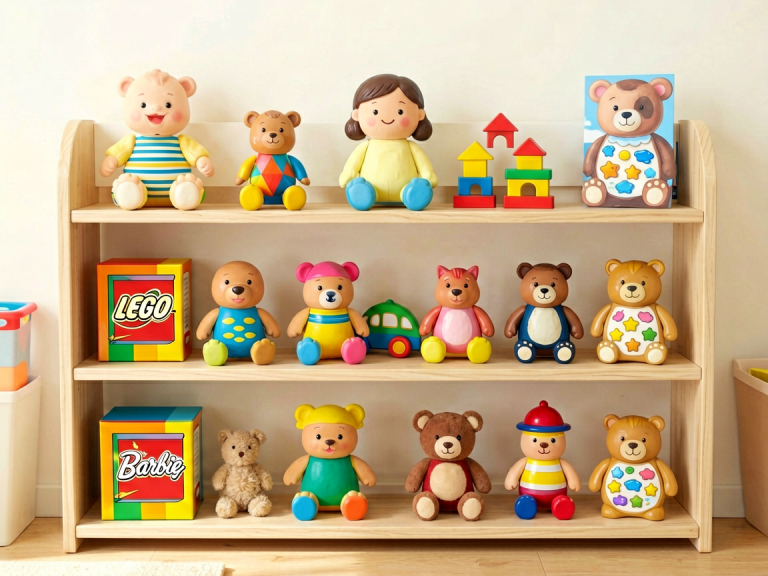
The classroom or home should be organized into clear interest centers: a block area with unit blocks and accessories (people, animals, cars); a dramatic play corner with costumes, kitchen tools, and props; a sensory table with sand, water, or rice; an art studio with open‑ended materials; a reading nook with cozy cushions and diverse books; and a quiet space for reflection. Materials should be accessible to children at their eye level, stored in low, open shelves, and rotated regularly to sustain curiosity. The environment itself should whisper, “You are capable. You can explore. You can create.”
The Role of the Adult: Observing, Supporting, Extending
Effective play‑based teachers spend much of their time observing—not directing. They note which children are drawn to which activities, what conflicts arise, and what questions emerge. When a child is stacking blocks, the teacher might say, “I wonder what would happen if you put the big block on the bottom?” This is not giving a solution; it is provoking thought. When two children argue over a toy, the teacher can mediate a conversation rather than imposing a rule: “It looks like you both want the red car. What could we do so everyone feels okay?” This approach teaches conflict resolution far more effectively than punishment.
Balancing Child‑Initiated and Teacher‑Initiated Activities
A purely child‑led environment can sometimes lack challenge or depth. Therefore, a balanced play‑based program includes brief, playful, whole‑group activities: singing songs with movement, reading an interactive story, or playing a simple math game like “How many bears are in the cave?” Small‑group, teacher‑directed explorations (e.g., painting with ice cubes to explore color mixing) can introduce new concepts without sacrificing child agency. The key is to keep the tone playful and to follow children’s leads as much as possible.
Challenges and Misconceptions
Despite its proven benefits, play‑based learning faces resistance. Some parents worry their child “isn’t learning” because they aren’t sitting at a desk. This misconception is fueled by the pressure of high‑stakes testing and a cultural belief that “hard work” must look serious. Educators must proactively communicate the learning that happens through play—by sending home photos with captions explaining the developmental skills involved, holding workshops, and inviting parents to observe the classroom. Another challenge is the demand for “school readiness.” Yet studies consistently show that children who experience rich play‑based programs develop stronger self‑regulation, intrinsic motivation, and a love of learning—which are far better predictors of first‑grade success than knowing the alphabet in preschool.
Budget constraints, large class sizes, and insufficient teacher training also pose obstacles. Many early childhood educators have been trained in didactic methods and feel uncomfortable stepping back. Professional development that provides concrete strategies—such as how to write anecdotal records during play, how to ask probing questions, and how to design flexible lesson plans—is essential.
Conclusion: Nurturing the Whole Child Through Joyful Exploration
Play‑based early learning for preschoolers is not a fad or a retreat from academic rigor. It is a deeply researched, developmentally appropriate approach that honors children’s natural ways of knowing and being. When a preschooler constructs a castle with blocks, she is learning physics and engineering. When he pretends to be a firefighter, he is building empathy and language. When they negotiate a game of tag, they are developing ethics and social skills. These are the foundations of a well‑educated, resilient, and compassionate human being.
As we look to the future, our greatest responsibility as educators and parents is not to push children toward narrow benchmarks but to cultivate their innate curiosity, creativity, and love of discovery. Play provides the richest soil for these seeds to grow. By embracing play‑based learning, we give every preschooler the gift of a childhood that is active, meaningful, and full of promise—a gift that will pay dividends for a lifetime.