The Power of Play Without Pixels: Why Screen-Free Early Learning Toys Matter More Than Ever
Introduction
In an era dominated by glowing screens, digital distractions, and endless notifications, the simple joy of a child stacking wooden blocks or threading beads onto a string can feel almost revolutionary. Yet research in early childhood development consistently underscores a powerful truth: the most profound learning in the first five years of life happens through hands-on, sensory-rich experiences—not through pixels and passive entertainment. Screen-free early learning toys, from classic puzzles to open-ended building sets, are not nostalgic relics; they are essential tools for nurturing cognitive, social, emotional, and physical growth. This article explores the multifaceted benefits of these toys, offers guidance on selecting high-quality options, and makes a compelling case for why parents and educators should prioritize unplugged play in a hyper-connected world.
The Neuroscience Behind Hands-On Play
Why do screens fall short when it comes to early learning? The answer lies in how a young brain develops. During the first three years, neural connections are formed at an astonishing rate—up to one million new synapses per second. These connections are built through active engagement: reaching, grasping, manipulating, and exploring cause and effect. A touchscreen, no matter how colorful or interactive, presents a flat, two-dimensional world that bypasses the crucial tactile feedback and proprioceptive input that real objects provide.
Screen-free toys, by contrast, offer rich, multi-sensory experiences. A set of wooden blocks requires a child to feel weight, balance textures, and coordinate hand-eye movement. A simple shape sorter demands problem-solving, spatial reasoning, and fine motor control. These activities stimulate the prefrontal cortex—the brain's executive control center—building the foundation for attention, impulse control, and flexible thinking later in life. Furthermore, unplugged play allows children to set their own pace. There are no flashing rewards, no automated nudges, no algorithms pushing them to the next level. This autonomy fosters intrinsic motivation and deep concentration—skills that are increasingly rare in a world of constant digital interruptions.
Key Categories of Screen-Free Early Learning Toys
Not all screen-free toys are created equal. The most beneficial ones are those that invite open-ended exploration, encourage creativity, and gradually increase in complexity as the child grows. Here are some of the most impactful categories:
*1. Building and Construction Sets*
From classic unit blocks to magnetic tiles and interlocking bricks, construction toys teach geometry, balance, and structural integrity. They also promote perseverance: a tower that falls is an invitation to rebuild, not a frustrating failure. When children collaborate on building projects, they practice negotiation, sharing, and verbal communication—skills no app can replicate.
*2. Puzzles and Matching Games*
Jigsaw puzzles, pattern boards, and memory cards develop visual discrimination, working memory, and logical sequencing. A child who struggles to fit a piece into the right spot is learning to analyze shapes, rotate mental images, and persist through difficulty. These experiences lay the groundwork for reading and mathematics.
*3. Sensory and Manipulative Toys*
Play dough, sand tables, water trays, and bins filled with rice or beans offer tactile stimulation that soothes and engages. Threading beads, lacing cards, and popping bubble wrap refine fine motor skills essential for writing. Sensory play also supports emotional regulation—kneading dough or pouring water can be deeply calming for an anxious toddler.
*4. Pretend Play and Role-Playing Sets*
Dress-up costumes, play kitchens, tool benches, and doctor kits ignite imagination and social understanding. Through pretend play, children experiment with adult roles, process real-life experiences, and develop empathy. A child who feeds a stuffed animal or "fixes" a broken toy car is building narrative skills and emotional intelligence.
*5. Art and Creativity Materials*
Crayons, washable paints, modeling clay, and collage supplies provide an unrestricted outlet for self-expression. Unlike a digital drawing app that limits colors or undoes mistakes, real art materials teach cause and effect: too much water makes the paper soggy; pressing harder makes a darker line. These messy, authentic experiences are invaluable for creative confidence and early scientific thinking.
Developmental Benefits: Beyond Entertainment
The advantages of screen-free toys extend far beyond keeping children occupied. Let us examine the specific domains of development they nurture:
*Cognitive Growth*
Open-ended toys like blocks, loose parts, and pattern blocks encourage divergent thinking—the ability to generate multiple solutions to a problem. A child given a set of wooden rings may stack them, sort them by size, roll them down a ramp, or use them as bracelets. This flexibility is the bedrock of innovation. Moreover, hands-on manipulation of physical objects strengthens the neural pathways associated with math and science. Studies show that children who play with construction toys score higher on spatial reasoning tests, which correlate with later success in STEM fields.
*Language and Communication*
When a child plays with a screen-free toy, they often talk to themselves, to the toy, or to a playmate. This self-talk—known as private speech—is crucial for developing vocabulary, narrative structure, and self-regulation. A child building a castle might say, "Now I need a big block for the door. Oh no, it fell! I'll try again." This running commentary is far richer than the passive language heard from a screen.
*Social and Emotional Skills*
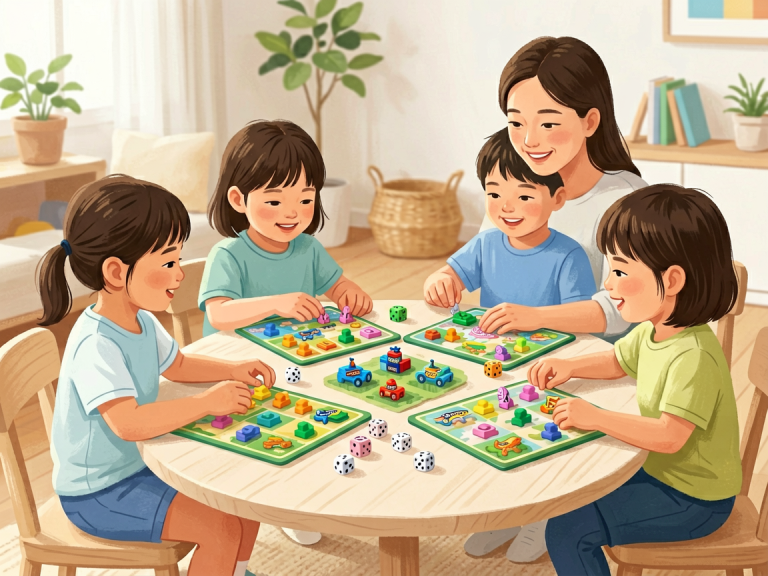
Screen-free toys naturally invite cooperation. A set of stacking cups becomes a shared game of taking turns; a dollhouse sparks collaborative storytelling. Through these interactions, children learn to read facial expressions, negotiate, compromise, and manage disappointment. They also develop patience: waiting for a turn, struggling to connect a stubborn train track, or accepting that a peer has a different idea. These are the emotional muscles that screen time, with its instant gratification and solitary focus, often fails to exercise.
*Physical Development*
Fine motor skills—the use of small muscles in the hands and fingers—are practiced every time a child grasps a crayon, twists a knob on a busy board, or snaps two Duplo bricks together. Gross motor development is supported by toys that encourage movement: ride-on cars, balance beams, and large foam blocks that require lifting and carrying. In contrast, screen use often leads to sedentary behavior and can delay motor milestones when it replaces active play.
How to Choose High-Quality Screen-Free Toys
With the market flooded with plastic gadgets that claim to be "educational," parents need a discerning eye. Here are guidelines for selecting toys that truly support screen-free learning:
*Prioritize Open-Endedness*
The best toys can be used in multiple ways. A set of wooden rings can be stacked, sorted, counted, or used as pretend bracelets. A simple cardboard box can become a spaceship, a castle, or a car. Avoid toys that dictate a single, prescribed outcome, such as electronic toys that play a specific song when a button is pressed. These limit creativity and quickly lose their appeal.
*Look for Natural Materials*
Wood, wool, cotton, metal, and stone offer varied textures, weights, and temperatures. They are also more durable and aesthetically pleasing than plastic. Wooden blocks, for instance, have a satisfying heft and a warm feel that plastic imitations cannot match. Natural materials also encourage a connection to the physical world, which is especially valuable in an age of virtual experiences.
*Ensure Age-Appropriate Challenge*
A toy that is too simple will bore the child; one that is too complex will frustrate them. For an 18-month-old, a simple stacking cup set is perfect. For a four-year-old, a 24-piece jigsaw puzzle provides an appropriate challenge. Look for toys that offer a "zone of proximal development"—just enough difficulty to require effort but not so much that the child gives up.
*Steer Clear of Screens and Batteries*
This may seem obvious, but many toys marketed as "educational" now include small screens, flashing lights, or pre-recorded sounds. These features often distract from genuine learning. A wooden shape sorter that requires the child to figure out which hole fits which shape is far more educational than a plastic version that beeps a triumphant sound when the correct shape is inserted. The beep robs the child of the intrinsic satisfaction of solving the problem themselves.
The Role of Parents and Caregivers
Screen-free toys are most powerful when paired with engaged adult interaction. A parent who sits on the floor and builds a tower alongside their child, commenting on the process ("Your block is bigger than mine—should I put mine on top?"), amplifies the learning exponentially. Likewise, a caregiver who asks open-ended questions ("What if we tried stacking them in a different order?") encourages higher-order thinking.
It is also crucial to model screen-free behavior ourselves. If children see adults constantly checking phones, they will naturally gravitate toward screens. Designating "unplugged zones"—such as the dining table or the playroom—and setting aside daily screen-free time for family play can transform a household culture. Even 20 minutes of uninterrupted, screen-free play each day can yield measurable benefits in a child's attention span, creativity, and emotional well-being.
Conclusion: A Call for Balance in a Digital Age
Screen-free early learning toys are not a rejection of technology but a recognition that childhood development demands real, tangible experiences. In a world where toddlers swipe before they can stack, and preschoolers watch videos instead of building with blocks, we must intentionally carve out space for hands-on play. The wooden train set, the set of watercolor paints, the bag of marbles—these are not just toys. They are the tools that shape curious, resilient, and creative human beings.
As parents, educators, and caregivers, we have the power to choose. We can hand a child a tablet that entertains them passively, or we can hand them a set of wooden blocks that invites them to build a world. The second choice requires more of us—more time, more patience, more presence. But the reward is a child who learns not from a screen but from their own hands, their own mind, and their own heart. And that is a learning that no algorithm can replace.
*(Word count: approximately 1,200 words)*