The Power of Play: A Comprehensive Guide to Early Learning Toys for Beginners
Introduction
The first few years of a child’s life are a period of extraordinary cognitive, emotional, and physical development. During this window, every interaction, every sound, and every object a child touches can shape the architecture of their brain. For parents, caregivers, and educators who are just beginning to explore the world of developmental play, the term “early learning toys” often surfaces as a promising yet overwhelming concept. What exactly qualifies as an early learning toy? How do you choose the right one for a beginner—whether that beginner is an infant, a toddler, or a preschooler? And why does the choice matter so much?
This article aims to demystify early learning toys for beginners. We will define the core principles behind these educational tools, explore their developmental benefits, and offer practical guidance on selecting the most effective toys for the earliest stages of learning. By the end, you will feel equipped to turn everyday playtime into a rich foundation for lifelong curiosity and success.
What Are Early Learning Toys?
Early learning toys are specifically designed items that encourage children to explore, experiment, and acquire new skills through hands-on play. Unlike generic toys that may only entertain, these toys are intentionally crafted to stimulate one or more areas of a child’s development—such as fine motor skills, language acquisition, sensory processing, problem-solving, or social-emotional awareness.
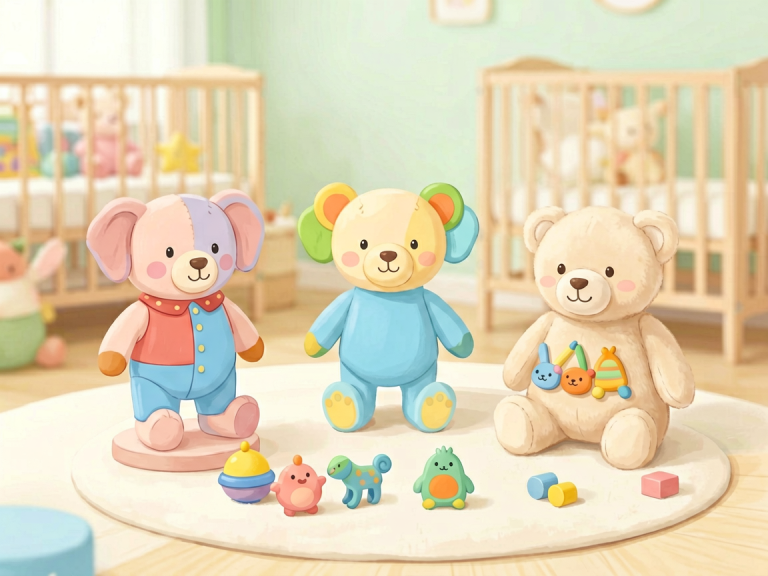
For beginners, the focus should be on simplicity and safety. Toys meant for the youngest learners (ages 0–3) emphasize cause-and-effect relationships, sensory feedback, and repetitive actions that build neural pathways. Examples include soft blocks, rattles, stacking rings, shape sorters, and textured balls. As children grow into the toddler and preschool years, early learning toys expand to include puzzles, matching games, simple musical instruments, and building sets.
The key is that these toys are “open-ended” or “purposeful.” They do not require a manual or a screen; instead, they invite the child to engage with their own curiosity. A cardboard box can be a learning toy if it sparks imagination, but a toy specifically marketed as an early learning tool usually incorporates pedagogical insights from child development research, such as Montessori, Reggio Emilia, or Piagetian principles.
Why Early Learning Toys Matter for Beginners
The phrase “play is the work of childhood” captures a deep truth: during the first years, play is not a luxury but a necessity. Neuroscientific studies show that the brain develops at a rate of more than one million neural connections per second during the first three years. Early learning toys serve as catalysts for these connections by providing structured, repetitive, and multisensory experiences.
One of the most immediate benefits is the development of fine motor skills. When a beginner grips a rattle, fits a peg into a hole, or turns the pages of a cloth book, they are strengthening the small muscles in their hands and fingers. These movements are prerequisites for later tasks such as writing, buttoning clothes, and using utensils.
Equally important is cognitive development. Early learning toys introduce concepts like size, shape, color, weight, and number in a tangible way. A simple nesting cup set, for instance, teaches relative size and spatial reasoning as the child tries to stack or nest the cups. This hands-on problem-solving lays the groundwork for mathematical thinking.
Language development is another crucial area. Toys that encourage naming, describing, and imitation—such as animal figurines, picture cards, or simple puzzles with images—help expand vocabulary. A parent who plays alongside the child, saying “This is a cow. The cow says moo,” turns the toy into a language lesson.
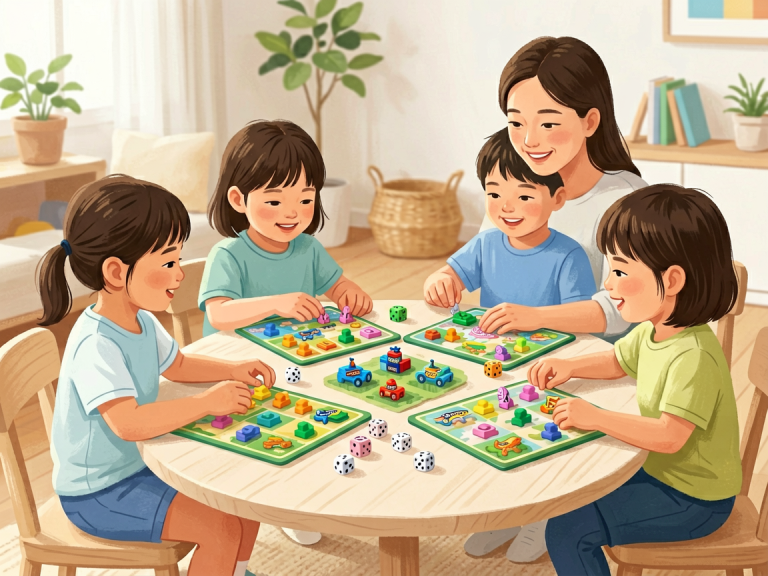
Social and emotional growth also flourishes. Many early learning toys are designed for shared play, such as cooperative board games for toddlers or pretend play sets. These experiences teach turn-taking, empathy, and communication. For a beginner, learning to share a stacking toy with a sibling or caregiver is a profound step in emotional regulation.
How to Choose the Right Early Learning Toys for a Beginner
Selecting the perfect toy can feel like navigating a maze of bright packages and marketing claims. To simplify the process, beginners should focus on three criteria: developmental appropriateness, safety, and engagement level.
1. Developmental Appropriateness
Not all toys marked “educational” are suitable for every age. A toy that is too advanced will frustrate the child, while one that is too simple will bore them. For instance, a shape sorter with large, easy-to-grasp pieces is ideal for a 12-month-old, but a 3-year-old might need a sorting toy with more complex shapes and a smaller margin of error. Look for the manufacturer’s age recommendation, but also observe the child’s actual abilities. A beginner who has just started sitting up will benefit from toys that encourage reaching and grasping, while a beginner who is walking might need toys that promote balance or cause-and-effect through movement, like a push toy.
2. Safety First
For very young children, safety is non-negotiable. Choose toys made from non-toxic materials, with no sharp edges, small parts that could become choking hazards, or long strings or cords. Look for certifications like ASTM (American Society for Testing and Materials) or CE (Conformité Européenne) marks. Organic or sustainably sourced wood is often a good choice because it is durable and free from harmful chemicals. Avoid toys with loud or jarring sounds that could damage hearing.
3. Engagement and Open-Endedness
The best early learning toys invite a child to use them in multiple ways rather than dictating a single outcome. A set of wooden blocks, for example, can be stacked, knocked down, lined up, sorted by color, or used as pretend food. This open-endedness encourages creativity and sustained play. Conversely, a battery-operated toy that only lights up and plays a song when a button is pressed may entertain for a few minutes but does not challenge the child to think or experiment.
Top Recommended Early Learning Toys for Beginners
To make the selection process even easier, here is a curated list of tried-and-true toy categories that consistently deliver developmental value. Each has been chosen because it is simple, safe, and highly effective for first-time learners.
Sensory Toys
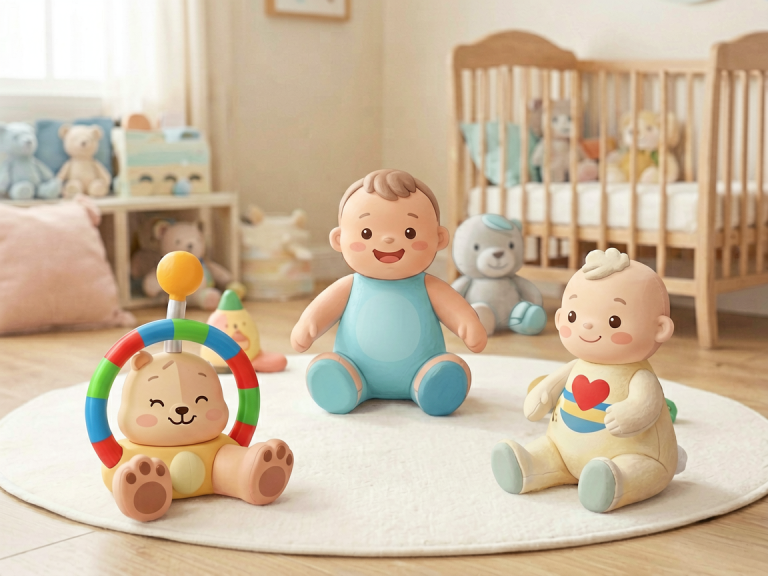
Babies and toddlers learn about the world through their senses. Sensory toys such as textured rattles, crinkle fabric books, soft mirrors, and water or sand tables allow children to explore different textures, sounds, and visual experiences. These toys stimulate the brain’s sensory integration centers, which help with later skills like handwriting and coordination.
Building and Stacking Toys
From classic wooden blocks to interlocking plastic connectors, building toys develop spatial awareness, hand-eye coordination, and early engineering concepts. For a beginner, large, lightweight blocks that are easy to grasp are ideal. As the child gains confidence, they can move to more complex systems like magnetic tiles or Duplo bricks.
Puzzles and Shape Sorters
Simple knob puzzles with large pieces (often with animal or vehicle themes) are excellent for beginning problem-solvers. Shape sorters teach the relationship between form and fit. They also encourage persistence, as the child learns to rotate a piece to make it fit.
Musical Instruments
Maracas, drums, xylophones, and simple shakers introduce rhythm, cause-and-effect, and auditory discrimination. A toddler who bangs a drum learns that a certain action produces a certain sound. Musical play also supports language development and emotional expression.
Pretend Play Sets
Toy kitchens, tool benches, doctor kits, or dollhouses encourage imaginative play, which is essential for social and cognitive development. Even a simple set of plastic food items and a small shopping cart can launch a world of role-playing, vocabulary building, and social negotiation.
Practical Tips for Maximizing the Benefit of Early Learning Toys
Having the right toys is only half the equation. How you use them with your beginner makes all the difference. Here are strategies to deepen the learning experience.
1. Follow the Child’s Lead
Observe what captures your child’s attention. If they are repeatedly banging a toy on the floor, they are exploring sound and vibration—not being destructive. Join them in that exploration by asking, “What sound does that make when you bang it?” or by handing them a different object to compare. This responsiveness strengthens the bond and shows the child that their curiosity is valued.
2. Rotate Toys to Maintain Interest
Too many toys overwhelm a beginner’s developing attention span. A simple rotation system—keeping only 5 to 8 toys accessible at a time and swapping them weekly—keeps novelty alive. This also helps the child focus deeply on each toy rather than flitting from one to the next.
3. Narrate and Describe
When playing with an early learning toy, talk to the child about what you are doing. For example, “I am putting the blue circle into the hole. Can you find the yellow square?” This language exposure enriches vocabulary and reinforces concepts. Even before the child can speak, they are absorbing words and sentence structures.
4. Embrace Imperfection and Repetition
A beginner learning to stack rings will likely knock them down many times before succeeding. That is the learning process. Resist the urge to “fix” the tower or show them the “correct” way immediately. Allow them to experiment, fail, and try again. Repetition is how the brain solidifies new skills.
Conclusion
Early learning toys for beginners are far more than commercial products; they are tools that empower children to construct their own understanding of the world. By choosing safe, developmentally appropriate, and open-ended toys—and by actively engaging with your child during play—you are sowing the seeds of curiosity, problem-solving, and a lifelong love of learning. Remember that the best toy is not the most expensive or the one adorned with the brightest colors. It is the one that invites a child to touch, manipulate, question, and imagine. In the hands of a beginner, a simple wooden block can become a castle, a car, or a bridge to the future.