Age-Appropriate Play Tips for Parents: Nurturing Development Through Every Stage
Play is the universal language of childhood. It is not merely a way to pass time; it is the primary vehicle through which children learn about themselves, others, and the world around them. For parents, understanding what kinds of play are most beneficial at each developmental stage can transform everyday moments into powerful opportunities for growth. This guide offers practical, age-appropriate play tips designed to support your child’s cognitive, physical, social, and emotional development from infancy through the early school years.
Play for Infants (0–12 Months): Building Bonds and Sensory Awareness
During the first year of life, play is all about sensory exploration and secure attachment. Your baby’s brain is developing at an astonishing rate, forming connections based on what they see, hear, feel, taste, and smell. The most important “toy” you can offer is yourself.
Tip 1: Engage in Face-to-Face Interaction
Babies are naturally drawn to human faces. Hold your baby close, make eye contact, and mimic their facial expressions. Stick out your tongue, raise your eyebrows, or smile broadly. This simple game, often called “mirroring,” helps your baby learn about social cues and emotional regulation. It also strengthens the parent-child bond, which is the foundation for all future learning.
Tip 2: Provide High-Contrast Visual Stimulation
Newborns have limited vision and prefer high-contrast patterns, such as black-and-white stripes or bold geometric shapes. Hang a simple mobile above the crib, or show them picture cards with strong contrasts. Around three to four months, begin introducing brightly colored toys with different textures—soft cloth books, crinkly fabric, or rattles with varied sounds. Let your baby grasp, shake, and mouth these objects safely.
Tip 3: Encourage Tummy Time Play
Tummy time is crucial for strengthening neck, shoulder, and arm muscles. Make it playful by lying on the floor face-to-face with your baby, placing a mirror in front of them, or offering a low, safe toy just out of reach. Keep sessions short at first—just a minute or two—and gradually increase the duration as your baby grows stronger. Singing songs or making funny noises can transform this essential exercise into a joyful game.
Tip 4: Create a Simple Treasure Basket
Around six to nine months, babies become fascinated with exploring objects using their hands and mouths. Fill a shallow basket with safe, everyday items: a wooden spoon, a silicone spatula, a large ring made of fabric, a soft ball, or a whisk. Supervision is essential, but letting your baby discover and manipulate these objects on their own encourages curiosity, problem-solving, and fine motor development.
Play for Toddlers (1–3 Years): Exploring Independence and Imagination
Toddlers are busy little scientists. They want to test cause and effect, practice new physical skills, and assert their independence. Play during this stage should be safe, engaging, and allow for plenty of trial and error.
Tip 1: Embrace Messy Play with Safe Materials
Sensory play is at its peak during toddlerhood. Set up a “messy play” station with activities like finger painting (using edible paint for younger toddlers), playing with kinetic sand, or scooping and pouring water into different-sized containers. These experiences help toddlers understand concepts like volume, texture, and cause and effect, while also strengthening hand-eye coordination. Remember: the mess is temporary; the learning is lasting.
Tip 2: Offer Simple Puzzles and Shape Sorters
Toddlers are beginning to understand logical relationships. Provide puzzles with large, chunky pieces or shape sorters that require matching objects to holes. Start with just two or three shapes and gradually increase the complexity. Sit alongside your child, narrating what you see: “The circle goes in the round hole. That’s it!” This type of play builds spatial reasoning, problem-solving, and persistence.
Tip 3: Encourage Pretend Play with Realistic Props
Around 18 to 24 months, your toddler may start imitating everyday activities. Provide toy telephones, plastic cups and plates, a child-sized broom, or a play kitchen. Join in their pretend world: call them on the toy phone, ask for a cup of imaginary tea, or pretend to eat the play pizza they “cooked.” This kind of cooperative pretend play supports language development, social skills, and the ability to think symbolically.
Tip 4: Create Simple Obstacle Courses
Toddlers need to move! Arrange pillows, soft blocks, and low tunnels (like a cardboard box open on both ends) to create a small obstacle course. Encourage your child to crawl over, under, and around the obstacles. This builds gross motor skills, balance, and confidence. Always stay close to ensure safety and to celebrate their successes with enthusiasm.
Play for Preschoolers (3–5 Years): Expanding Creativity and Social Skills
Preschoolers are bursting with imagination and are beginning to interact more cooperatively with peers. Their play becomes increasingly complex, involving stories, rules, and roles. This is a golden age for pretend play and early literacy activities.
Tip 1: Foster Dramatic Play with Open-Ended Costumes and Props
Keep a dress-up box filled with simple costumes—scarves, hats, capes, masks, and old adult clothes. Add props like cardboard boxes (which can become a spaceship, a castle, or a car), blankets for building forts, and empty containers for “shopping.” Dramatic play allows preschoolers to explore different identities, work through emotions, and practice negotiation skills when playing with others. Join in when invited, but let your child lead the story.
Tip 2: Introduce Board Games with Simple Rules
Around age three to four, children can start understanding brief game rules, like taking turns and rolling dice. Look for cooperative board games where everyone works together (e.g., “The Sneaky, Snacky Squirrel Game” or “Hoot Owl Hoot!”) rather than competitive ones. These games teach patience, following directions, and emotional regulation when things don’t go as planned. Keep game sessions short—10 to 15 minutes—and focus on fun, not winning.
Tip 3: Support Construction and Building Play
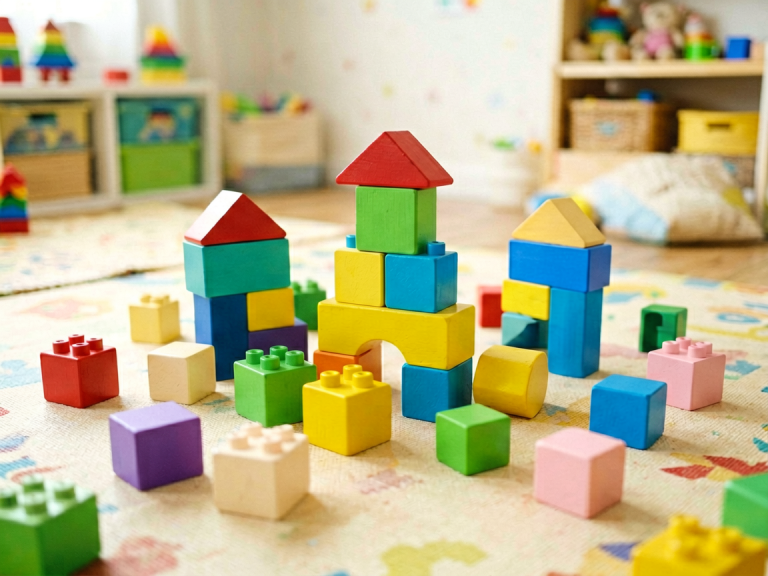
Blocks, LEGO Duplo, magnetic tiles, or wooden train tracks are fantastic tools for preschoolers. Building complex structures requires planning, spatial awareness, and fine motor control. Encourage your child to build a tower as tall as their own height, create a zoo for their toy animals, or design a bridge that can hold a small car. Ask open-ended questions like, “How can we make the bridge stronger?” to stimulate critical thinking.
Tip 4: Incorporate Early Literacy and Numeracy Through Play
You don’t need flashcards or formal lessons. Instead, weave counting, letters, and rhyming into everyday play. While playing with dolls, count the number of buttons on their dress. While building with blocks, sort them by color or size. While reading a favorite book, ask your child to “read” the story to you by looking at the pictures. Play alphabet games like “I spy something that starts with B.” The key is to keep it playful and pressure-free.
Play for School-Age Children (6–12 Years): Honing Skills and Cultivating Interests
As children enter the elementary school years, play becomes more structured and skill-based. They develop favorite games with complex rules, engage in team sports, and dive into hobbies like coding, art, or music. Play still matters enormously for social development, stress relief, and building resilience.
Tip 1: Encourage Strategy and Logic Games
Card games (like Go Fish, Uno, or Crazy Eights), classic board games (like Checkers, Chess, or Settlers of Catan Junior), and logic puzzles (like Sudoku for kids or Rubik’s Cube) challenge children to think ahead, plan moves, and adapt to changing situations. These games build executive function skills—working memory, cognitive flexibility, and self-control. Play together as a family to model good sportsmanship and to bond without screens.
Tip 2: Support Independent Projects and Hobbies
School-age children often develop intense interests in specific subjects—dinosaurs, space, drawing, coding, or sports. Provide materials that let them dive deep: books, craft supplies, a beginner’s chemistry set, or a subscription to a project-based online platform. Celebrate their creations by displaying artwork, building a model together, or attending their first coding club session. This autonomy in play builds confidence and a love for lifelong learning.
Tip 3: Promote Outdoor and Active Play
Physical play is still crucial. Organize neighborhood games like capture the flag, kickball, or obstacle races. Provide equipment for biking, skateboarding, jump ropes, or hula hoops. Outdoor play not only improves physical health but also fosters creativity (sticks become swords; leaves become treasure) and helps regulate emotions. Aim for at least an hour of active, unstructured outdoor play each day.
Tip 4: Teach Social Play through Cooperative Challenges
At this age, peer conflicts can arise during play. Instead of always intervening, help your child develop strategies for negotiation and problem-solving. Role-play scenarios: “What if two kids want to be the same character in the game?” Encourage games that require teamwork, such as building a blanket fort together, putting on a short play, or solving a scavenger hunt. These experiences teach compromise, empathy, and leadership.
A Final Note for Parents: The Power of Unstructured Play
Across all age groups, one principle remains constant: the best play is often the least structured. While it is valuable to plan activities and provide materials, resist the urge to over-schedule or to direct every moment. Unstructured play—where children choose what to do, how to do it, and when to stop—is the true engine of creativity and self-regulation. Allow boredom to exist; it is the seedbed of invention.
As a parent, your most important role is not to entertain but to *enable*. Provide a safe environment, offer open-ended toys, and then step back. Watch with wonder as your child builds, imagines, fails, tries again, and grows. Those messy floors and scattered toys are not signs of chaos; they are evidence of a rich, developmentally appropriate childhood. So go ahead—get down on the floor, join the game when invited, and remember that in the world of play, the process is always more important than the product.