The Ultimate Guide to Indoor Play Activities for Toddlers: Boosting Development Through Creative, Safe, and Fun Play
Title: The Ultimate Guide to Indoor Play Activities for Toddlers: Boosting Development Through Creative, Safe, and Fun Play
Toddlers are bundles of boundless energy, curiosity, and rapid development. Between the ages of one and three, their brains are forming connections at an astonishing rate, and every moment of play is an opportunity for learning. However, when weather, illness, or other circumstances keep you indoors, it can be challenging to channel that energy in constructive ways. This is where thoughtfully designed indoor play activities come to the rescue. Not only do they keep toddlers entertained, but they also support crucial developmental milestones—from fine and gross motor <a href="https://www.playlearningguide.com/category/skills/”>skills to language, social interaction, and problem-solving.
Indoor play for toddlers does not require expensive equipment or elaborate setups. Many of the best activities use everyday household items and a bit of creativity. The key is to provide a safe, stimulating environment where your toddler can explore, experiment, and repeat actions—because repetition is how toddlers master new skills. In this guide, I will walk you through a wide variety of indoor play activities organized into six main categories: sensory play, creative arts, imaginative role-play, gross motor movement, cognitive games, and quiet time activities. Each section includes detailed instructions, developmental benefits, and practical safety tips so you can set up the perfect indoor play session for your little one.
Sensory Play: Exploring Textures, Sounds, and Smells
Sensory play is the cornerstone of toddler learning. It engages multiple senses simultaneously, helping children understand the world around them while strengthening neural pathways. For toddlers, sensory activities are also calming and can reduce anxiety.
Homemade Sensory Bins
Fill a shallow plastic bin with a safe base material such as uncooked rice, dried beans, or oat flakes. Add scoops, small cups, spoons, and a few plastic animals or toy cars. Let your toddler dig, pour, and sift. The feel of the grains running through their fingers is mesmerizing. For extra fun, hide small objects inside and encourage your child to find them. Safety note: Always supervise closely to prevent ingestion of small items, and use materials that are non-toxic and not a choking hazard.
Play Dough Exploration
Store-bought or homemade play dough is a classic. Make a simple batch with flour, salt, water, and cream of tartar, then let your toddler squeeze, roll, and flatten it. Add child-safe cookie cutters, plastic knives, or rolling pins. This activity strengthens hand muscles required for later writing. To keep it fresh, mix in a few drops of lavender or peppermint essential oil (diluted and safe) for a calming sensory layer.
Water Play in the Sink or Tub
Fill a sink or a small plastic tub with a few inches of warm water. Provide plastic cups, funnels, sponges, and waterproof toys. Water play teaches concepts of volume, sinking and floating, and cause and effect. It’s also remarkably soothing. Place a towel underneath to contain messes, and never leave a toddler unattended near water.
Creative Arts: Messy Fun That Builds Fine Motor Skills
Art activities for toddlers are less about the final product and more about the process. The squish of paint, the drag of a crayon, and the stickiness of glue all contribute to sensory integration and creativity.
Finger Painting with Edible Paint
For very young toddlers who still put everything in their mouths, make paint from yogurt or pudding tinted with natural food coloring. Spread a big sheet of paper on a high-chair tray or a washable mat, and let your toddler smear colors with their fingers. This is a glorious, messy experience that builds tactile awareness. For older toddlers, use non-toxic washable finger paint and encourage them to make handprints or simple shapes.
Sticker Collages
Give your toddler a sheet of blank paper and a collection of large, easy-to-peel stickers (like dot stickers or animal shapes). Peeling stickers is a fantastic fine motor challenge—it requires the pincer grasp. Your child can place the stickers anywhere on the paper, creating a unique artwork. This activity also introduces early counting and color recognition if you narrate as they play: “You placed a red circle next to the blue star!”
Sponge Stamping
Cut a few kitchen sponges into simple shapes—stars, circles, squares. Pour shallow puddles of washable paint onto paper plates. Show your toddler how to dip the sponge lightly and press it onto paper. The repetitive stamping motion builds hand-eye coordination and introduces pattern-making. Plus, the mess is fairly contained compared to finger painting.
Imaginative Role-Play: Building Social and Emotional Skills
Toddlers are natural imitators. Through pretend play, they begin to understand social roles, emotions, and language. Indoor spaces can easily be transformed into a miniature world.
DIY Cardboard Box House
A large cardboard box becomes a castle, a car, a boat, or a cave. Cut a door and windows, and let your toddler decorate it with crayons or markers. Inside, add a small blanket and a few stuffed animals. This simple structure encourages hours of imaginative play—your child might “cook” breakfast in the box kitchen, “drive” to the store, or “hide” from a pretend dragon. Such play develops narrative thinking and emotional regulation.
Pretend Picnic
Spread a blanket on the living room floor. Use plastic plates, cups, and play food. Invite a few stuffed animals or dolls to the picnic. Your toddler can “pour” tea, “slice” a wooden banana, and feed their friends. This activity encourages turn-taking, simple language (e.g., “More, please”), and empathy as they care for their toys.
Dress-Up Corner
Gather old hats, scarves, shoes, purses, and vests. Place them in a low basket that your toddler can access independently. Dressing up allows children to experiment with identity and roles. A firefighter hat can lead to a pretend rescue; a princess dress might inspire twirling and dancing. The act of putting on and taking off clothes also fine-tunes self-help skills.
Gross Motor Movement: Burning Energy Safely Indoors
Toddlers need to run, jump, climb, and balance—even when it rains. Structured indoor movement activities channel that energy while developing coordination and muscle strength.
Indoor Obstacle Course
Use pillows, soft cushions, and couch cushions to create a safe obstacle course. Place them in a pathway: crawl under a table, step over a row of pillows, jump from one floor mat to another, then walk along a strip of masking tape on the floor. You can add a tunnel made from a large, open cardboard box. Guide your toddler through the course repeatedly. This builds gross motor planning, balance, and spatial awareness.
Dance Party with Freeze
Put on an upbeat, toddler-friendly playlist. Dance together, then pause the music and freeze in silly poses. The freeze game teaches body control and listening skills. Let your toddler lead sometimes—they love being the one to shout “Stop!” This is also a great way to release pent-up energy before nap time.
Balloon Keep-Up
Blow up a soft balloon (not latex if there is an allergy risk) and gently tap it into the air with your toddler. The slow, unpredictable movement of the balloon encourages hand-eye coordination. Keep it low so your child can bat it upward. Never use a latex balloon if there is any risk of choking or allergies; supervised play is essential because popped balloon pieces are a hazard.
Cognitive Games: Puzzles, Sorting, and Memory
Even simple cognitive activities can be thrilling for toddlers because they love solving small challenges that are just within their reach.
Muffin Tin Sorting
Take a muffin tin and a bowl of mixed large objects—like pompoms, bottle caps, or blocks. Provide a pair of child-safe tongs or just use fingers. Ask your toddler to sort the objects by color or size into the muffin cups. This teaches categorization, counting, and fine motor control. Narrate as you go: “You put the red pom-pom in the first cup. Now let’s find a blue one!”
Simple Shape or Animal Puzzles
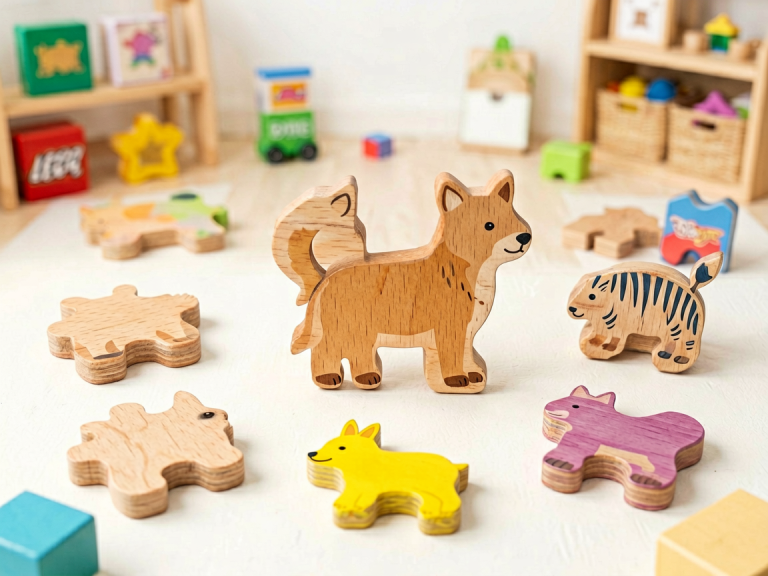
Wooden peg puzzles with large pieces are ideal. Offer a puzzle with only four to six pieces initially. Encourage your toddler to match the shapes to the outlines. If they struggle, guide their hand gently. Completing a puzzle gives a genuine sense of accomplishment and builds persistence.
Memory Matching Game (Pictures Only)
For toddlers just beginning, use a set of six pairs of identical picture cards (e.g., animal faces). Lay two or three pairs face-up first, and ask your child to find the match. As they improve, you can turn the cards face-down for a true memory challenge—though most toddlers under three will need the cards face-up. The simple act of finding pairs enhances visual discrimination and concentration.
Quiet Time Activities: Calming the Storm
Not all indoor play needs to be high-energy. Quiet activities help toddlers transition between active play and rest, and they foster independent focus.
Book Nook and Story Time
Create a cozy reading corner with pillows, a soft rug, and a small bookshelf within reach. Choose board books with bright illustrations, textures, or simple rhymes. Let your toddler “read” alone or sit with you. Point to pictures and ask, “Where is the dog?” or “What sound does the cow make?” Repeated reading builds vocabulary and a love of stories.
Pom-Pom Drop
Cut a hole in the lid of a plastic container (like a coffee can). Give your toddler large, soft pom-poms and show them how to drop one through the hole. The satisfying “plop” sound encourages repetition. This activity sharpens hand-eye coordination and is wonderfully quiet.
Sensory Bottles
Fill a clear plastic bottle with water, glitter, a few beads, and a drop of food coloring. Super-glue the lid shut. Your toddler can shake the bottle and watch the glitter swirl and slowly settle. This is a mesmerizing, self-directed activity that promotes calm focus and visual tracking.
Safety and Setup Tips for Indoor Toddler Play
Before diving into any activity, consider these universal guidelines to ensure a safe, enjoyable experience:
- Supervision is non-negotiable. Even with “safe” materials, toddlers can surprise you. Always stay within arm’s reach.
- Use age-appropriate materials. Avoid items smaller than a toilet paper roll to reduce choking risk. Check labels for non-toxic, lead-free certifications.
- Embrace mess with preparation. Lay down a plastic tablecloth, use a splat mat, or dress your toddler in a smock. Set up in a kitchen or bathroom where cleanup is easier.
- Follow your toddler’s lead. If they lose interest after two minutes, that’s normal. Rotate activities often and keep new ones in reserve.
- Involve your toddler in cleanup. Make wiping a table or putting blocks back into a bin a part of the play—it teaches responsibility and transitions.
Conclusion
Indoor play activities for toddlers are far more than just time-fillers. They are the building blocks of growth—cognitive, physical, emotional, and social. From squishing play dough to crawling through a pillow tunnel, each experience helps your child make sense of their world. The beauty is that you do not need a dedicated playroom or expensive toys. A cardboard box, a few kitchen utensils, and your loving participation are all it takes to transform a rainy afternoon into a developmental playground.
Remember, the goal is not to entertain your toddler constantly, but to provide open-ended opportunities for exploration. Let them dump the rice bin, smear the paint, and rearrange the cushions. These seemingly chaotic moments are actually structured by your thoughtful setup and your warm presence. So next time you are stuck indoors, take a deep breath, choose one activity from this guide, and watch your toddler dive in with joy. You are not just playing—you are nurturing a curious, capable, and confident little person.