The Active Learner: A Parent’s Guide to Supporting Home Learning for Preschool Boys
—
Introduction: Why a Different Approach Matters
If you have ever tried to sit a preschool boy down for a quiet worksheet session, you already know the challenge. His legs bounce, his eyes wander, and within minutes he is building a spaceship out of couch cushions instead of tracing the letter “B.” This is not a sign of defiance or disinterest—it is a developmental reality. Neuroscience and child development research consistently show that young boys often learn best through movement, hands-on exploration, and short bursts of focused activity. Their brains are wired for action, spatial reasoning, and physical engagement.
As a parent, you are your son’s first and most influential teacher. The home environment is where foundational skills—language, number sense, self-regulation, and curiosity—take root. But the traditional “sit-still-and-listen” model can actually hinder a preschool boy’s natural learning drive. This guide is designed to help you transform your home into a dynamic, boy-friendly learning space that honors his energy, builds his confidence, and makes learning feel like play.
By the end of this article, you will have a toolkit of strategies, activity ideas, and mindset shifts tailored specifically for supporting your preschool boy’s cognitive, social, and emotional growth at home.
—
1. Understanding the Preschool Boy Brain
Before diving into activities, it helps to know what makes your son’s learning process unique. Preschool boys typically exhibit:
- High physical energy – They need to move to regulate their nervous system and stay focused.
- Strong spatial and mechanical interests – Trucks, blocks, puzzles, and anything that can be taken apart or stacked often captivate them.
- Later-developing fine motor skills – Holding a pencil may be frustrating; using a paintbrush, scoop, or tongs can feel easier.
- Single-channel focus – They may appear not to listen because they are deeply absorbed in an activity. That is actually a good sign of concentration.
- A preference for active learning – They learn best when they can see, touch, and manipulate objects rather than simply hear instructions.
Actionable takeaway: Instead of fighting these traits, design your home learning experiences around them. Use movement as a tool, not a distraction.
—
2. Creating a Boy-Friendly Learning Environment
Your home’s physical setup can either support or undermine learning. For preschool boys, the goal is to make learning materials visible, accessible, and inviting—while also allowing for controlled chaos.
2.1 Designate a “Yes” Space
Create a low-shelf area where your son can reach all materials independently. Rotate toys and learning tools weekly to maintain novelty. Include:
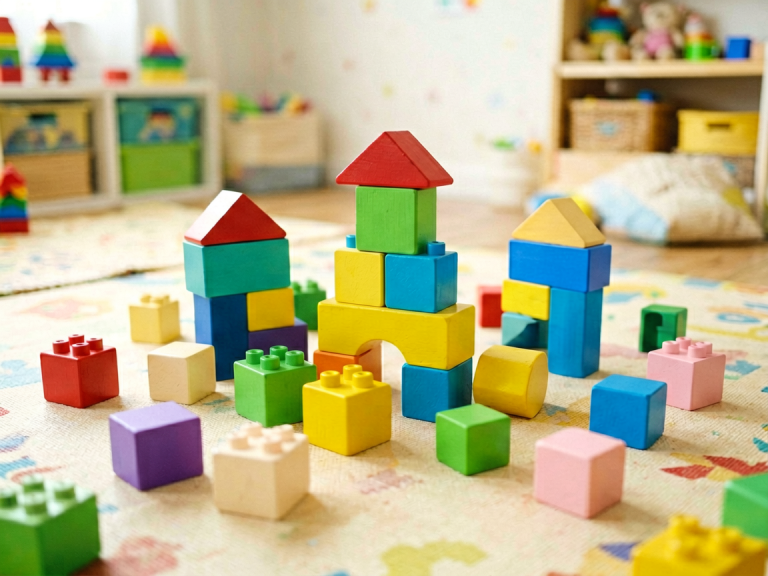
- Building supplies: Duplo, wooden blocks, magnetic tiles, train tracks.
- Sensory bins: Sand, rice, water (with cups and funnels), or kinetic sand.
- Art supplies: Washable markers, child-safe scissors, glue sticks, blank paper.
- Science tools: Magnifying glass, balance scale, magnets, simple bug viewer.
2.2 Embrace Vertical Surfaces
Boys often enjoy standing while working. Tape a large sheet of paper to the wall for drawing or painting. Use a whiteboard at eye level for letter tracing or number games. An easel works well. Vertical activities build shoulder strength and fine motor control.
2.3 Manage Distractions
Preschool boys are easily overstimulated. Keep the TV off during learning time. Have a consistent spot for “work” (a small table or floor mat) and a separate area for wild, loud play. The clearer the boundaries, the easier it is for him to transition.
—
3. Active Learning Strategies for Core Subjects
Preschool learning doesn’t need to look like formal school. Here is how to weave literacy, math, and science into active, boy-pleasing experiences.
3.1 Literacy: From Wriggling to Reading
Letter recognition and phonological awareness can feel tedious, but when you add whole-body movement, they become thrilling.
- Letter hopscotch: Write letters on the floor with chalk or tape. Call out a sound and have him jump to the correct letter.
- Alphabet obstacle course: Place letter cards across the room. He must crawl under a chair, hop over a pillow, then find the letter “M.”
- Sight word wall ball: Write a word on a wall. He throws a soft ball at it, then says the word.
- Storytelling with puppets: Boys often resist sitting for stories, but they will act them out. Use stuffed animals or homemade sock puppets to retell a simple book. Let him invent new endings.
Tip: Don’t force formal phonics worksheets. Instead, point out signs on walks, read menus at restaurants, and write his name everywhere—on a card, in shaving cream on a tray, or with sidewalk chalk.
3.2 Math: Counting with Motion
Math for preschool boys should be concrete, messy, and physical.
- Jumping jack counting: Do 10 jumping jacks together, counting aloud. Then 5 more. Then count down from 10.
- Car garage sorting: Sort toy cars by color, then by size. Line them up to compare length.
- Snack math: “If you have 3 crackers and eat 1, how many are left?” Use actual crackers.
- Shape scavenger hunt: Look for circles, squares, triangles around the house. “How many circles can you find in the kitchen?”
- Balance scale play: Use a simple pan balance with small blocks. Predict which object is heavier. This builds number sense and reasoning.
3.3 Science and Discovery: Feed the Curiosity
Preschool boys are natural scientists—they love to test, break, and rebuild.
- Water play for volume: Provide different-sized cups, measuring spoons, and a plastic tub. Ask: “Which cup holds more water?”
- Nature walks with a mission: Collect leaves, rocks, sticks. At home, sort them by texture, size, or color. Use a magnifying glass to examine details.
- Simple experiments: Baking soda and vinegar volcano. Sink or float test with bath toys. Freeze small toys in ice and let him “rescue” them with warm water.
- Building challenges: “Can you build a tower as tall as your knee?” or “Design a bridge that holds a toy car.” These open-ended tasks develop engineering thinking.
—
4. Social and Emotional Learning Through Play
Learning at home isn't just about academics. Preschool boys need help with emotional regulation, empathy, and self-control. Play is their language.
4.1 Emotion Charades
Use printed emoji faces or pictures of mad, sad, happy, scared. Act out the emotion together. Then role-play what to do when feeling angry (e.g., “take three deep breaths like a dragon” or “stomp your feet safely”). This builds emotional vocabulary.
4.2 Cooperative Games, Not Competitive Ones
Many preschool boys become frustrated with winners and losers. Instead, play games where everyone works toward a common goal: “Let’s work together to clean up the blocks before the timer goes off” or “Can we both roll the ball into the basket?” This reduces meltdowns and builds teamwork.
4.3 Turn-Taking with Toys
Use a visual timer (like a sand hourglass) for turn-taking. “When the sand runs out, it’s your brother’s turn.” Practice patience in low-stakes situations. Praise effort: “You waited so calmly—that was hard!”
—
5. Routines That Work for Boys
Predictable routines help boys feel secure and ready to learn. But they also need flexibility, especially on high-energy days.
- Morning movement first: Before any learning, allow 10–15 minutes of free play or exercise: dancing, jumping on a mini trampoline, or a short bike ride. This burns off cortisol and primes the brain.
- Learning in short bursts: Aim for 10–15 minute “learning pockets” throughout the day, not one long session. You can do a letter hunt before lunch, a math game after nap, and a science experiment in the late afternoon.
- Transitions with warnings: Give a five-minute and one-minute warning before ending an activity. Use a song or a funny sound to signal transition.
- Quiet winds-down: After active learning, include a quiet, low-stimulation activity like looking at a book, listening to an audiobook, or playing with Play-Doh. This helps his brain consolidate what he just learned.
—
6. The Power of Your Role: Parent as Play Partner
The most important factor in a preschool boy’s home learning success is your attitude and presence. You don’t need to be a teacher; you need to be an engaged playmate.
- Follow his lead. If he is obsessed with garbage trucks, build a learning unit around them: count wheels, read books about recycling, design a truck with cardboard boxes. Intrinsic motivation is the strongest engine.
- Narrate your actions. Talk through what you are doing: “I’m pouring the milk—first I need to lift the jug, now I tilt it. Watch the milk go down.” This builds vocabulary and modeling of thinking.
- Ask open-ended questions. Instead of “What color is this?” try “What do you notice about this leaf?” or “What do you think will happen if we add more water?”
- Celebrate effort, not correctness. Say “You worked really hard on that puzzle—you didn’t give up!” rather than “Good job, you got it right.” This builds a growth mindset that will serve him for life.
Avoid comparison. Your boy may not be interested in letters at age four, while his friend writes her name. That is completely normal. Learning trajectories vary widely among preschool boys.
—
7. When Learning Feels Hard: Troubleshooting Common Challenges
Even with the best strategies, some days will be tough. Here are solutions to three common issues:
- “He won’t sit still for any activity.” That is okay. He might need more sensory input. Offer a wiggle cushion, let him sit on a yoga ball, or try learning while lying on his belly (which can be calming). Some boys focus better while standing or moving.
- “He refuses to try writing.” Fine motor skills may be lagging. Build hand strength with activities like squeezing play dough, using spray bottles, threading beads, or tearing paper. Avoid pressuring pencil work. Use a chalkboard or write in sand.
- “He interrupts constantly.” He may have an idea he can’t hold in his working memory. Give him a “thought jar”—a place to put a card with his idea so he can share it later. Or set a timer: “In two minutes, it will be your turn to talk.”
—
Conclusion: Trust the Process
Supporting your preschool boy’s learning at home is not about replicating a classroom. It is about honoring his unique way of learning—through his body, his hands, and his imagination. The goal is not to produce a kindergarten-ready child who can recite the alphabet by age four; it is to nurture a lifelong love of learning, a resilient spirit, and the confidence to try new things.
Some days you will feel like you accomplished nothing. But look closer. The child who jumped on his bed while counting to twenty, who built a block tower taller than himself, who asked “Why is the sky blue?” for the tenth time—that child is learning. You are planting seeds that will bloom in elementary school and beyond.
Stay patient, stay playful, and above all, stay present. Your presence is the greatest curriculum your preschool boy will ever have.