Introduction: Why a Tailored Approach Matters
Title: The Thoughtful Parent’s Guide to Supporting Learning at Home for Preschool Girls: Nurturing Curiosity, Confidence, and Joy
The preschool years—typically ages three to five—are a period of extraordinary cognitive, social, and emotional growth. For parents of preschool girls, the home environment can serve as the most powerful classroom of all. Yet “supporting learning” does not mean replicating a formal school setting. Instead, it means weaving playful, intentional, and responsive experiences into daily life. Research in early childhood development consistently shows that girls at this age often demonstrate strong verbal skills, early interest in social relationships, and a growing capacity for symbolic play. However, they can also be susceptible to subtle messaging about what they “should” enjoy or excel at. This guide is designed to help parents nurture every facet of their preschool daughter’s development—from literacy and numeracy to emotional intelligence and creative expression—while avoiding stereotypes and fostering a lifelong love of learning. The following sections offer practical, research-backed strategies organized by key developmental domains.
—
1. Cultivating a Rich Language and Literacy Environment
The Power of Conversation, Not Just Reading Aloud
Preschool girls often thrive on verbal interaction. Rather than simply reading a book cover to cover, engage in “dialogic reading” where you pause, ask open-ended questions, and encourage your daughter to predict, retell, or imagine alternate endings. For example, while reading *The Very Hungry Caterpillar*, ask: “What do you think will happen if the caterpillar eats an entire watermelon?” This builds comprehension, vocabulary, and narrative skills far more effectively than passive listening.
Build a Print-Rich Space
Place labels on common household items—a “door” label, a “window” label—at your daughter’s eye level. Encourage her to “write” her own grocery lists using scribbles, letters, or invented spelling. Celebrate all attempts at writing, even if the letters are reversed or the “words” are unrecognizable. The goal is fluency and confidence, not perfection.
Storytelling as a Daily Ritual
Invite your daughter to tell you a story every day. You can scribe her words and read them back, or simply listen. This practice strengthens oral language, sequencing, and creativity. For an extra layer, ask her to illustrate her story. Display these “published” works on a refrigerator gallery—visible validation of her identity as a storyteller.
—
2. Math and Science: Breaking the “Not for Girls” Myth
Embedding Numeracy in Play
Too often, girls receive subtle messages that math is “hard” or “for boys.” Combat this by making numbers, shapes, and patterns a natural part of everyday life. Count the steps while climbing stairs. Sort laundry by color, size, or type. When baking, let her measure ingredients—“We need one cup of flour. Can you pour until it reaches this line?” This exposes her to fractions, volume, and one-to-one correspondence without a single worksheet.
Science through Sensory Play
Set up a “discovery table” with magnifying glasses, magnets, funnels, and natural objects like pinecones or seashells. Ask questions that prompt investigation: “What happens if we drop this rock in water? Does it sink or float? Why do you think?” Encourage her to hypothesize and test. Girls who engage in open-ended scientific exploration during preschool are more likely to maintain interest in STEM subjects later.
Gardening and Nature Walks
Plant a small garden or even a windowsill herb pot. Observe the growth of a bean sprout in a clear cup. On nature walks, collect leaves and compare their shapes. These activities develop observation, classification, and cause-and-effect reasoning. They also teach patience and responsibility—qualities that support all learning.
—
3. Social-Emotional Learning: The Hidden Curriculum
Emotion Vocabulary and Self-Regulation
Preschool girls are often highly attuned to others’ feelings, but they may lack the words to express their own complex emotions. Teach a rich emotion vocabulary: frustrated, excited, disappointed, proud. Use books with emotional themes (e.g., *The Color Monster* or *When Sophie Gets Angry…*) to discuss characters’ feelings and possible solutions. Role-play challenging scenarios, like sharing a toy or waiting for a turn. This explicit coaching builds the executive function skills that underlie academic success.
Friendship Skills and Conflict Resolution
Because social relationships are central to many preschool girls’ experience, learning to navigate conflict is crucial. When your daughter argues with a playmate, resist the urge to solve it for her. Instead, guide her through a simple protocol: “I see you’re upset. Can you tell your friend how you feel using your words? Then listen to how she feels. Can you think of a compromise?” This practice builds empathy and negotiation skills.
Building Confidence: The Power of Process Praise
Research by Carol Dweck shows that praising effort rather than ability (“You worked so hard on that puzzle!” vs. “You’re so smart!”) fosters a growth mindset. For preschool girls, who may receive many compliments on appearance or “niceness,” it is vital to praise specific actions, persistence, and problem-solving. This teaches that intelligence grows through effort, reducing later fear of failure.
—
4. Creative Arts and Physical Activity: Whole-Body Learning
Art as a Language, Not a Product
Provide open-ended art supplies—play dough, watercolors, collage materials, clay. Avoid coloring books that emphasize staying inside lines; instead, offer blank paper and let her create freely. Ask about her artwork: “Tell me about your picture!” rather than “What is that?” This validates her imagination and develops visual-spatial skills.
Music, Movement, and Rhythm
Singing, dancing, and playing simple instruments (shakers, drums, xylophone) support auditory processing and pattern recognition. Create a “dance party” playlist with diverse genres—classical, folk, jazz, world music. Encourage her to move in different ways: floating like a feather, stomping like an elephant. These gross motor activities develop coordination and body awareness, which are linked to later reading readiness.
Outdoor Play and Risky Play
Girls are often steered toward quieter, indoor activities, but outdoor play is essential for physical and cognitive development. Allow her to climb trees, balance on logs, jump in puddles, and dig in mud. Supervised “risky play”—climbing a little higher, running a little faster—builds spatial reasoning, resilience, and confidence. Let her get messy; the learning is worth the laundry.
—
5. Executive Functions: The Skills Behind All Learning
Working Memory Games
Play simple memory games: “I’m going to the market and I’m buying apples… bananas… and what do you remember?” Sing songs with repetition like “Old MacDonald” to strengthen recall. Ask her to help you remember a short list of errands. These activities improve working memory, a cornerstone of reading comprehension and math.
Inhibitory Control Through Games
Classic games like “Simon Says” or “Red Light, Green Light” teach children to stop and think before acting. Board games that require turn-taking, like Candy Land or Chutes and Ladders, also build inhibitory control. For a preschool girl who tends to be talkative or impulsive, these playful challenges strengthen self-regulation without pressure.
Flexible Thinking with “What If” Questions
Pose hypotheticals: “What if animals could talk? What would your stuffed bunny say?” or “What if our car turned into a boat? How would we get to the grocery store?” These open-ended questions stretch cognitive flexibility and creativity, skills that predict later academic adaptability.
—
6. Screen Time and Digital Learning: Mindful Choices
Quality Over Quantity
The American Academy of Pediatrics recommends no more than one hour of high-quality screen time per day for preschoolers. Choose apps and shows that are interactive, educational, and ad-free. For example, apps that require problem-solving (e.g., sorting shapes, matching letters) are better than passive video consumption. Watch together and talk about what you see: “Why do you think the character did that? What would you have done?”
Co-Viewing as a Learning Tool
When your daughter uses a tablet or watches a show, sit beside her. Pause and ask questions. Connect screen content to real life: “We saw a zebra in that show. Remember when we went to the zoo and saw zebras? What was different?” This co-viewing turns passive screen time into an active conversation, reinforcing vocabulary and comprehension.
Set Clear Boundaries
Create a family media plan that designates screen-free times (meals, one hour before bedtime) and screen-free zones (bedrooms). Model the same behavior—if you want your daughter to value reading, let her see you reading a book rather than scrolling on your phone.
—
7. Nurturing a Love of Learning Beyond Academics
Role-Modeling Intellectual Curiosity
Let your daughter see you exploring new topics: check out a library book about space, learn a new recipe, or take up a hobby. Talk aloud about your own learning process: “I don’t know how to fix this, but I’m going to look it up online and try.” This demonstrates that learning is a lifelong, joyful pursuit.
Avoiding Stereotypes in Toys and Activities
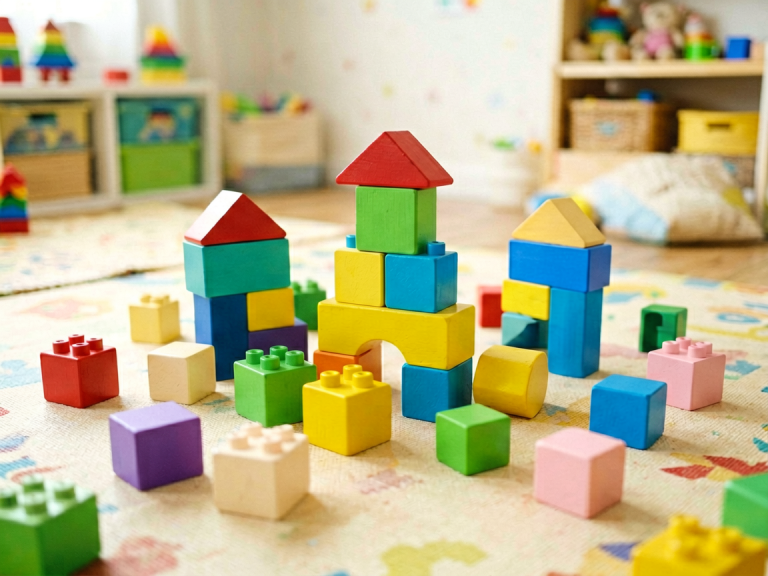
While many preschool girls gravitate toward dolls and dress-up, actively provide balance. Offer building blocks, puzzles, science kits, tool sets, and cars. Encourage her to be the “architect” of her block tower, the “engineer” of a ramp for a toy car. Avoid dismissing any interest as “too boyish” or “too girlish.” Let her explore all possibilities.
Celebrating Mistakes
Create a family culture where mistakes are seen as learning opportunities. Say, “Wow, that didn’t work! What did we learn? Let’s try another way.” When your daughter spills paint or breaks a toy, focus on the lesson rather than the mess. This psychological safety is the bedrock of a growth mindset.
—
Conclusion: The Parent as the Child’s First and Best Teacher
Supporting learning at home for a preschool girl is not about drilling flashcards or enrolling in expensive classes. It is about paying attention, responding to her cues, and creating an environment where curiosity is rewarded, effort is celebrated, and every day offers a chance to discover something new. As you read this guide, you may feel overwhelmed by the many strategies. Remember: you do not need to do everything. Choose two or three ideas that resonate with your family’s rhythm and interests. The most powerful learning tool you have is your warm, consistent, and engaged presence. When a preschool girl feels safe, respected, and genuinely interested in the world around her, she will learn—not to please others, but because learning itself is a delight. That intrinsic motivation will carry her through every stage of education that follows. And perhaps, in the quiet moments of reading a book together or building a tower that tumbles, you will find that you are learning too—learning to see the world again through fresh, wondering eyes.