Beginner Toys for Creativity: Unlocking the Imagination Through Play
In a world increasingly driven by screens, algorithms, and structured curricula, the importance of unstructured, open-ended play cannot be overstated. For children—and even adults—the first tools for creative thinking often come in the form of simple toys. These “beginner toys for creativity” are not merely distractions; they are the building blocks of innovation, problem-solving, and self-expression. Whether you are a parent looking for the perfect first gift for a toddler, an educator seeking to inspire young minds, or an adult rediscovering your own creative spark, understanding which toys truly foster creativity at the beginner level is essential. This article explores the philosophy behind creative toys, highlights specific examples, and offers practical guidance on how to choose and use them effectively.
—
1. The Philosophy of Creative Play: Why Beginners Need the Right Tools
Creativity is not a talent reserved for artists or inventors; it is a fundamental human capacity that can be nurtured from the earliest stages. At the beginner level, toys serve as a bridge between curiosity and expression. The best creative toys are those that are open-ended, meaning they have no single correct way to be used. A set of wooden blocks, for instance, can become a castle, a spaceship, or a mountain range, depending on the child’s imagination. In contrast, toys that dictate a specific outcome—such as a pre-programmed robot that only performs one function—often stifle creativity rather than encourage it.
Psychologists and educators have long championed the concept of divergent thinking: the ability to generate multiple solutions to a problem. Open-ended toys naturally promote divergent thinking because they invite exploration, experimentation, and failure without consequences. For a beginner, this low-stakes environment is crucial. It teaches that mistakes are not failures but opportunities to discover something new. Therefore, when selecting toys for creativity, we should prioritize those that allow for reconfiguration, combination, and transformation.
—
2. Classic Beginner Toys That Stand the Test of Time
Some toys have been sparking creativity for generations, and their simplicity is their genius. Here are a few timeless examples that are perfect for beginners.
2.1 Building Blocks and Construction Sets
Wooden blocks, LEGO Duplo, magnetic tiles, or even simple interlocking bricks are perhaps the most iconic beginner toys for creativity. They teach spatial reasoning, balance, and cause-and-effect relationships. A child stacking blocks discovers that a tower can fall if the base is uneven—that is a lesson in physics and resilience. Moreover, building sets can be used alone or collaboratively, making them ideal for social creativity. The key is to choose sets that do not come with rigid instructions. For a beginner, a bag of assorted blocks without a picture guide is far more valuable than a kit designed to build a specific model.
2.2 Art Supplies: The Original Creative Medium
Crayons, finger paints, clay, and play-dough are the oldest friends of creative beginners. They are tactile, forgiving, and infinitely variable. A toddler’s first scribble is not a chaotic mess but an act of mark-making that declares, “I exist, and I can change this paper.” As children grow, adding materials like scissors (with supervision), glue, recycled cardboard, and fabric scraps turns a simple art kit into a workshop for invention. The beauty of art supplies is that they require no literacy or technical skill—just the urge to manipulate and express.
2.3 Musical Instruments for Tiny Hands
Rhythm and sound are primal forms of creativity. Beginner instruments like maracas, tambourines, xylophones, and simple drums allow children to explore tempo, volume, and melody without the pressure of reading music. These toys also enhance fine motor skills and auditory processing. The most creative musical toys are those that can be played in different ways—for example, a shaker that can be tapped, rolled, or shaken. Even a cardboard box and a wooden spoon can become a drum set in the hands of a beginner.
—
3. Modern Twists on Classic Concepts: Tech-Enhanced Creative Toys
While traditional toys remain foundational, the digital age has introduced new tools that can enhance creativity when used wisely. The key is that technology should serve the imagination, not replace it.
3.1 Programmable Robotics for Beginners
Toys like the Osmo Genius Kit or LEGO Spike Essential introduce children to coding through physical manipulation. They combine tactile building with digital feedback, teaching logic and sequencing in a playful manner. For a beginner, the goal is not to write complex code but to understand that their actions can create a reaction—that a robot moves when they place a block in a certain order. This is a powerful lesson in cause and effect and a gateway to computational thinking, which is a form of creative problem-solving.
3.2 Digital Drawing and Animation Tools
Interactive tablets with styluses (e.g., the Boogie Board or Kano Drawing Kit) offer a clean, endless canvas for beginners. Unlike paper, they allow infinite undo and experimentation. Some apps are designed specifically for young children, with simple tools for drawing, coloring, and even basic animation. The danger, however, is that children may become passive consumers of digital content. To avoid this, choose devices that prioritize *creation* over consumption—for instance, those that require children to draw their own characters rather than select pre-made ones.
—
4. Role-Playing and Pretend Play: Building Narratives
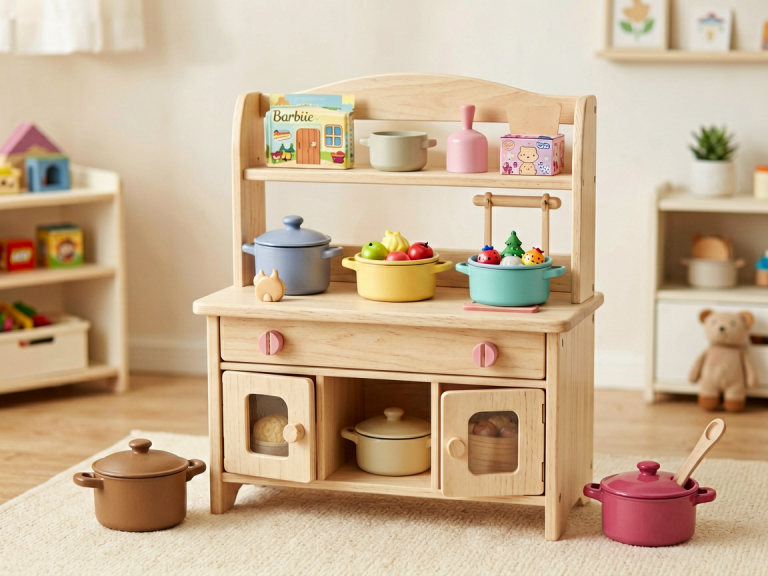
Perhaps the most powerful beginner toy for creativity is the human imagination itself, but it needs props. Dress-up costumes, puppet theaters, play kitchens, and tool sets allow children to step into different roles and create stories. Pretend play is essentially improvisational theater: a child who puts on a doctor’s coat must invent a patient, a problem, and a solution. This narrative building is a complex cognitive process that engages language, empathy, and abstract thinking.
For beginners, the best role-playing toys are those that require active participation rather than passive watching. A simple cape can turn a child into a superhero, while a cardboard box can become a spaceship or a castle. Parents and educators can encourage creativity by asking open questions: “Where is your spaceship going? What will you find there?” This dialogue turns the toy into a catalyst for storytelling.
—
5. The Role of Nature and Loose Parts
Not all creativity toys come in a box. In fact, some of the most inspiring materials are found in nature or around the house. Loose parts—such as pinecones, stones, sticks, bottle caps, fabric scraps, and wooden spools—are the ultimate open-ended toys. They encourage children to sort, stack, arrange, and combine them in endless ways. A rock can be a character in a story, a weight for a balance scale, or a building material for a tiny fortress.
This approach, known as the loose parts theory (popularized by architect Simon Nicholson), emphasizes that the environment itself should be malleable. For a beginner, having access to a collection of diverse, non-prescriptive objects invites creativity on a daily basis. Parents can create a “tinker tray” with a mix of these items and let the child explore freely. The lack of a specific purpose is precisely what makes them so powerful.
—
6. Choosing the Right Toy: A Practical Guide for Beginners
With so many options, how do you choose? Here are four criteria to consider when selecting a beginner toy for creativity:
- Open-endedness: Can the toy be used in multiple ways? Avoid toys with a single “correct” outcome.
- Adaptability: Does the toy grow with the child? For example, simple blocks can be used by a toddler for stacking and by a 10-year-old for complex structures.
- Sensory Engagement: Does it appeal to touch, sound, sight, or motion? Multi-sensory toys stimulate different areas of the brain.
- No Winner or Loser: Creative play should not be competitive. Avoid toys that have a clear “right answer” or that rank performance.
Additionally, consider the child’s current interests. A child fascinated by animals might benefit from a set of plastic animals that can be used in imaginative play, while a child who loves machines might prefer a simple gear set. The best creative toy is one that the child *wants* to play with, not one that an adult thinks is educational.
—
7. The Adult Role: Facilitating, Not Directing
Finally, it is important to understand that even the best toy cannot unlock creativity on its own. The environment and the attitude of the adults matter immensely. A beginner will be most creative when they feel safe to explore, make a mess, and even fail. Adults should resist the urge to correct or instruct. Instead, they can act as co-creators—asking questions, suggesting possibilities, and celebrating the process rather than the product.
For example, if a child builds a lopsided block tower that keeps falling, a parent might say, “I see you’re trying to make it taller. What happened when you put that piece on?” rather than “You need to make the base wider.” This approach encourages the child to analyze their own work and develop their own solutions, which is the very heart of creativity.
—
Conclusion: Begin with Simplicity, Endless Possibilities
Creativity is not a destination but a way of engaging with the world. Beginner toys for creativity are the humble beginnings of a lifelong journey. Whether it is a set of wooden blocks, a handful of sticks, or a digital drawing tablet, the right toy can ignite a spark that leads to invention, art, and joy. The key is to choose tools that invite exploration, tolerate mess, and celebrate the unexpected. As the famous children’s author Fred Rogers once said, “Play gives children a chance to practice what they are learning.” By providing open-ended, simple, and rich materials, we give beginners the most valuable gift of all: the permission to imagine.
So next time you look for a gift or a tool for learning, remember: the best toy is not the one with the most features, but the one that asks the most questions. And the best question a toy can ask is simply, “What will you do with me?”