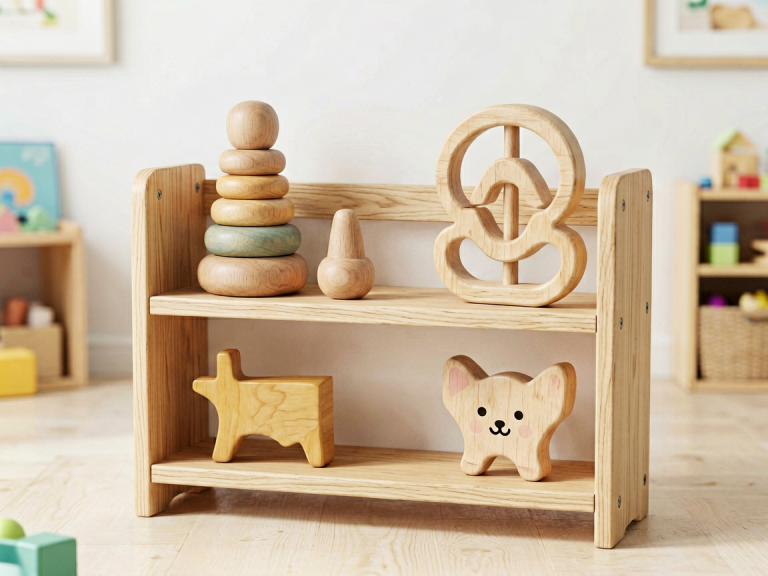
Learning Through Play at Home: Unlocking Your Child’s Full Potential
Introduction
In today’s fast‑paced, achievement‑oriented world, many parents feel pressured to turn every moment at home into a structured academic lesson. Flashcards, worksheets, and online drills have become the go‑to tools for early education. Yet mounting evidence from developmental psychology, neuroscience, and education research suggests that the most powerful learning happens not through forced instruction, but through play. Play is the natural language of childhood. When children build with blocks, pretend to run a grocery store, or splash water in the bathtub, they are not just having fun – they are actively constructing knowledge, developing critical thinking skills, and building social‑emotional resilience. The home, with its familiar objects, flexible schedule, and loving relationships, offers an ideal stage for this kind of deep, joyful learning. This article explores why learning through play at home is so effective, provides concrete activity ideas for different ages, and offers practical tips for creating an environment that nurtures curiosity and discovery.
—
The Science Behind Play‑Based Learning
Play is often dismissed as trivial, but from a neurological perspective it is anything but. During play, the brain releases a cocktail of neurotransmitters – dopamine (reward), norepinephrine (focus), and endorphins (pleasure) – that prime the brain for memory formation and skill acquisition. The prefrontal cortex, responsible for executive functions like planning, impulse control, and flexible thinking, is heavily engaged during unstructured, self‑directed play. A landmark 2007 study by the American Academy of Pediatrics concluded that play is essential for healthy brain development, enhancing creativity, problem‑solving, and language skills.
Moreover, play aligns with how children naturally learn: through trial and error, repetition, and social interaction. When a toddler stacks blocks and the tower falls, he learns about gravity, balance, and cause‑and‑effect not because an adult told him, but because his own body experienced it. This embodied learning creates stronger neural connections than passive instruction. At home, the stakes are low and the opportunities are endless. A child can “fail” at a pretend recipe, spill water during a sink experiment, or build a wobbly fort – and then try again without fear of judgment. This safe space for experimentation is the bedrock of a growth mindset.
—
Practical Play Activities for Different Age Groups
The beauty of home‑based play is that it can be tailored to a child’s developmental stage using ordinary household items. Below are age‑appropriate activities that target specific learning domains while keeping the spirit of play alive.
For Toddlers (1–3 Years)
Sensory Bins and Treasure Baskets
Fill a shallow plastic bin with uncooked rice, pasta, or dried beans. Add scoops, cups, and small toys (e.g., plastic animals, blocks). Toddlers pour, hide, and dig, building fine motor skills and learning concepts like full/empty, heavy/light, and wet/dry. Treasure baskets – collections of safe household objects like wooden spoons, fabric scraps, and cardboard tubes – encourage exploration and vocabulary growth as you name each item.
Object Permanence with Peek‑a‑Boo and Hide‑and‑Seek
Play “Where is teddy?” by partially hiding a stuffed animal under a blanket. This simple game reinforces the idea that objects continue to exist even when out of sight – a cognitive milestone that underpins memory and logical thinking. Variation: hide a small toy in one of three cups and shuffle them; your toddler guesses which cup holds the toy.
Water Play
In the bathtub or with a basin on the kitchen floor, provide cups, funnels, and waterproof toys. Pouring water from one container to another teaches volume, conservation (the amount doesn’t change even if the shape changes), and hand‑eye coordination. Add a drop of food coloring to observe how colors mix.
For Preschoolers (3–5 Years)
Pretend Play and Storytelling
Set up a “doctor’s office” with a toy stethoscope and bandages, or a “grocery store” with empty food boxes and a play cash register. As children assign roles and negotiate scenarios – “I’ll be the customer, you be the cashier” – they develop social skills (turn‑taking, empathy), narrative thinking (beginning‑middle‑end), and early math (counting money, sorting items). Join in by asking open‑ended questions: “What happens if the patient has a fever?” or “How much does the apple cost?”
Building and Construction
Beyond simple block towers, challenge your preschooler to build a bridge that can hold a toy car, or a castle with a drawbridge made from a cardboard flap. This stimulates spatial reasoning, engineering thinking, and persistence. Use recycled materials (egg cartons, toilet paper rolls) to add an eco‑friendly twist. When a structure collapses, ask, “What could we do differently to make it steadier?” – a perfect introduction to the scientific method.
Cooking Together
Measuring flour, counting eggs, and stirring batter are rich math and science activities. Let your child pour liquid into a measuring cup, count out 10 raisins, or observe dough rising. Cooking also builds sequencing (first, next, last) and literacy (reading a recipe with pictures). And the best part: a tasty reward at the end.
For School‑Age Children (6–12 Years)
Board Games and Card Games
Classic games like Chess, Monopoly, Scrabble, or Settlers of Catan teach strategy, probability, vocabulary, and financial literacy. Simpler card games (Uno, Go Fish, War) reinforce number comparison, pattern recognition, and rule‑following. Game night at home becomes a family ritual that sharpens executive function and emotional regulation (winning/losing gracefully).
Science Experiments and Engineering Challenges
With common kitchen ingredients, you can create a baking soda volcano, make slime, grow crystals, or build a simple circuit using a battery, wire, and light bulb. For an engineering challenge, give your child a pile of newspaper, tape, and a heavy book, and ask them to build a structure that can support the book for 30 seconds. These activities model the scientific process: hypothesis, test, observation, iteration. Encourage a “lab notebook” where they draw and write what happened.
Creative Writing and Dramatic Play
Encourage your child to write and perform a short play or puppet show. They can invent characters, a plot, and a setting, then create simple puppets from socks or paper bags. This strengthens language skills, empathy (imagining others’ perspectives), and confidence. Alternatively, start a family “story chain” where each person adds a sentence. The sillier the story, the more engaged the child becomes.
—
Creating an Environment That Encourages Playful Learning
The physical and emotional environment of your home significantly influences how freely a child plays. A few intentional adjustments can transform ordinary spaces into learning labs.
Designate a “Yes” Zone
Choose a corner of the living room, a section of the kitchen, or a spot in the backyard where the child is allowed to make a mess – paint, glue, sand, water. Cover the floor with a plastic tablecloth or old newspapers, and keep a basket of reused materials (cardboard, paper scraps, fabric) always accessible. When children know they won’t be scolded for mess, their creativity blossoms.
Follow the Child’s Lead
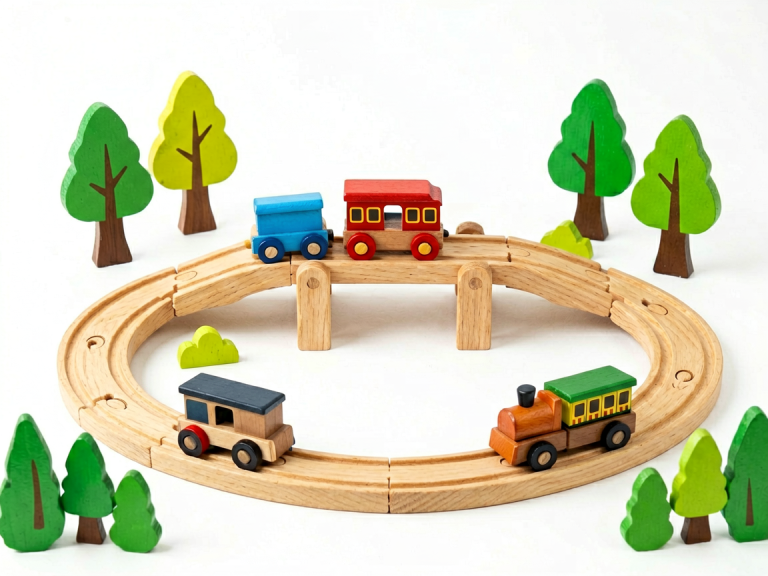
The most powerful play is child‑initiated. Observe what your child is naturally drawn to – dinosaurs, cars, bugs, cooking – and provide materials that extend that interest. A child obsessed with trains can build tracks, read about engines, measure distances between stations, and even write a ticket for a pretend ride. This “emergent curriculum” respects the child’s intrinsic motivation, making learning feel effortless.
Limit Screen Time, but Use It Wisely
Screens are not the enemy, but passive consumption (watching videos) does not equal learning through play. Instead, choose interactive apps that involve creation (e.g., coding games, drawing apps, music‑making) or that mimic hands‑on play (digital building blocks). Better yet, use screens as a springboard for offline play: after watching a video about volcanoes, go outside and build a sand volcano.
—
Overcoming Common Obstacles
Many parents worry that “play” is too unstructured or that they lack the time, energy, or materials to facilitate it. These concerns are valid, but manageable.
“I don’t have time to set up elaborate activities.”
Remember that simple, open‑ended play often requires very little setup. A cardboard box can become a car, a castle, or a time machine. A pile of pillows invites jumping and building. Even 10 minutes of focused, playful interaction each day – rolling a ball back and forth, singing a song with hand motions – yields significant benefits.
“My child just wants to watch TV.”
Start by joining the play yourself. Children often mirror adult involvement. Sit on the floor, pick up a toy, and begin playing alongside your child without any agenda. Your presence alone can spark curiosity. If the child is reluctant, try “parallel play” – doing your own creative activity (drawing, knitting) nearby. Soon they may wander over.
“I’m afraid my child will fall behind academically.”
Research consistently shows that children who engage in ample, high‑quality play in early years demonstrate stronger self‑regulation, creativity, and social skills – all of which predict long‑term academic success better than early reading or math drills. Academic skills will come; play builds the neural architecture to learn them efficiently later.
—
Conclusion
Learning through play at home is not a luxury or an optional extra – it is a fundamental strategy for raising curious, capable, and resilient children. Play transforms the home into a living classroom where every object is a potential learning tool, every interaction a lesson in collaboration, and every “mistake” a stepping‑stone to understanding. As parents, we do not need to become expert teachers; we simply need to trust the child’s natural drive to explore, to provide a rich but simple environment, and to join in with genuine joy. The child stacking blocks today may become the architect of tomorrow; the child bargaining in a pretend shop may design a social enterprise. The seeds of a lifetime of learning are sown in the laughter, mess, and wonder of play. So the next time your child asks you to “play with me,” say yes – and know that you are building a brain, a heart, and a future.